Sweden
Capital: Stockholm. Sweden is one of the 46 countries in the Europe quiz.
Quick answers: What is the capital of Sweden? · Which countries border Sweden?
Facts about Sweden
- CapitalStockholm
- Population10.6 million
- Area450,295 km²
- RegionsEurope, The Nordics
- LanguageSwedish
- CurrencySwedish krona (SEK)
Sweden is the 14th most populous of the 46 countries in Europe and the 5th largest by area. Worldwide it ranks 93rd by population and 55th by area.
Where is Sweden?
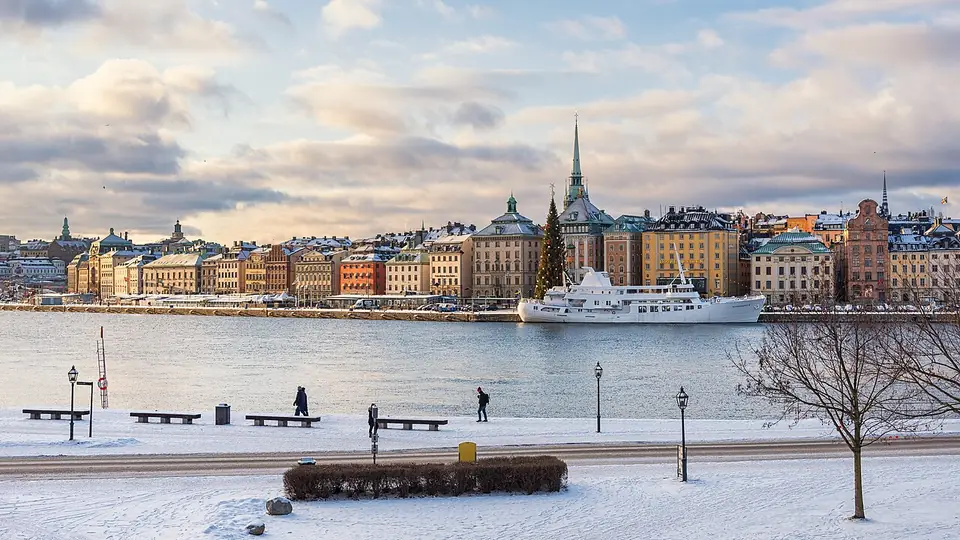
Sweden takes up the eastern side of the Scandinavian Peninsula, in Northern Europe. Norway runs along its entire western border, Finland touches it in the far north-east, and the rest of the country faces the Baltic Sea and its northern arm, the Gulf of Bothnia. Stockholm, the capital, is on the east coast, spread across islands where Lake Mälaren meets the Baltic.
On a world map, find the long peninsula that hangs down from the Arctic towards Denmark. The western half, facing the Atlantic, is Norway; the eastern half, facing the Baltic, is Sweden.
How to find Sweden on the map
- Start from Denmark. Sweden is the large country just across the water to the north-east.
- Look for the Gulf of Bothnia. The long inlet between Sweden and Finland is the clearest marker; Sweden is on its western shore.
- Find Gotland. The large island in the middle of the Baltic belongs to Sweden.
- Don't confuse it with Norway. Norway's coast is ragged with fjords and islands; Sweden's is smoother.
Flag
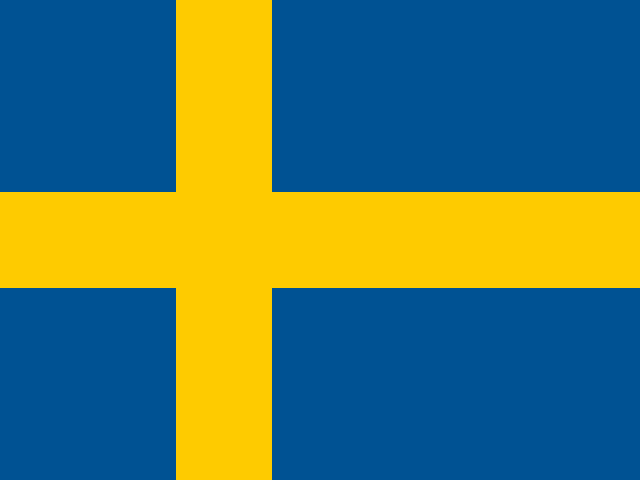
The Swedish flag is a yellow Nordic cross on a blue field, offset towards the hoist in the style borrowed from Denmark. The colours come from the national coat of arms, three gold crowns on blue.
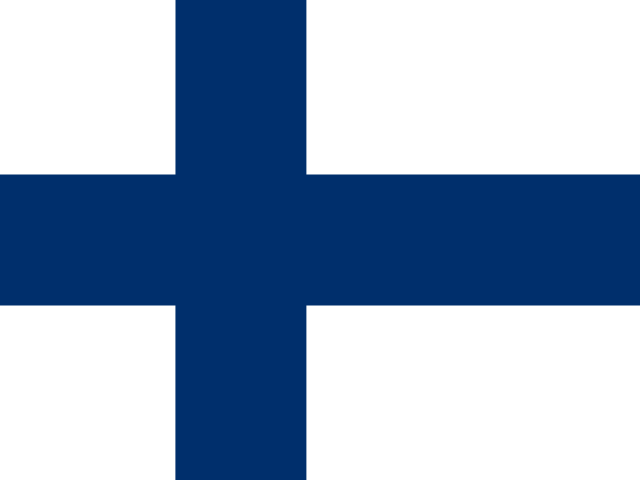
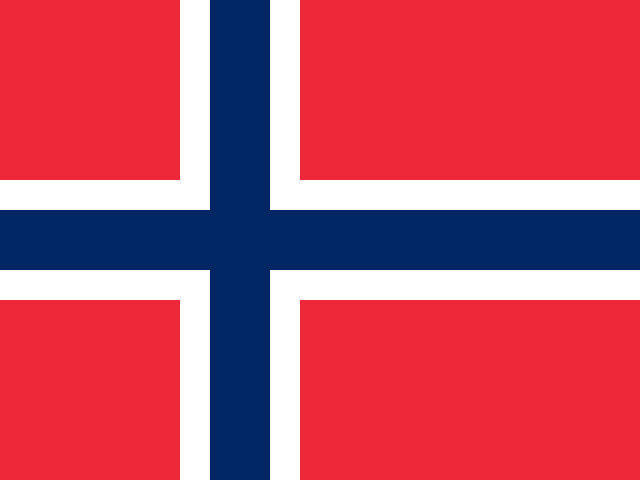
Finland's flag uses a blue cross on white. Norway and Iceland both have a two-colour cross. Sweden is the only Nordic flag that is blue with a plain yellow cross, so if you see those two colours and nothing else, it's Sweden.
A short history of Sweden
People moved into Sweden as the ice sheets melted after the last Ice Age. Bronze Age farmers left thousands of rock carvings of ships, animals and people, most famously at Tanum on the west coast. By the early Middle Ages two peoples, the Svear around Lake Mälaren and the Götar further south, had come together under one crown – the Svear gave Sweden its name.
Swedish Vikings mostly looked east. They traded and raided along the rivers of today's Russia and Ukraine, and the island town of Birka on Lake Mälaren was a busy trading hub. Christianity took hold in the 11th and 12th centuries. In 1397 Sweden joined Denmark and Norway in the Kalmar Union, but the Swedes resented Danish control. After the Danish king had leading Swedes executed in the Stockholm Bloodbath of 1520, Gustav Vasa led a revolt and was elected king in 1523. He also broke with Rome, making Sweden Lutheran.
The 1600s were Sweden's age as a great power. Under Gustavus Adolphus its armies fought deep into Germany in the Thirty Years' War, and the Baltic became almost a Swedish lake. In 1658 Sweden took Skåne and the other southern provinces from Denmark, giving the country the shape of its southern coast today. Defeat by Russia under Charles XII in the early 1700s ended the empire, and in 1809 Sweden lost Finland to Russia – which is why the border now runs up the Gulf of Bothnia.
In 1818 a French marshal, Jean-Baptiste Bernadotte, became king, founding the dynasty that still reigns. Sweden has not fought a war since 1814. Norway was joined to it in a union until 1905. Poverty in the 1800s drove more than a million Swedes to emigrate, mostly to the United States, but industry soon took off. Sweden stayed neutral in both World Wars, and in the 20th century the Social Democrats built a broad welfare state.
Today Sweden is a wealthy, export-led economy known for engineering, technology and design.
Culture and daily life in Sweden
Swedish is a North Germanic language, close enough to Norwegian and Danish that speakers can often understand each other. In the far north live the Sami, Indigenous reindeer herders whose languages are officially protected, along with Finnish and Meänkieli in border areas. The Church of Sweden is Lutheran but was separated from the state in 2000, and Sweden is one of the least religious countries in the world.
Swedes have given the world a lot of stories. Astrid Lindgren created Pippi Longstocking, Selma Lagerlöf was the first woman to win the Nobel Prize in Literature in 1909, and August Strindberg reshaped modern drama. The Nobel Prizes themselves were founded by the Swedish inventor Alfred Nobel. In film, Ingmar Bergman made classics such as The Seventh Seal.
Pop music is a major export: ABBA won Eurovision in 1974 with "Waterloo", and songwriters such as Max Martin have written hits for stars worldwide. IKEA, founded in Småland, spread Swedish design across the globe. Many Swedes describe their ideal as lagom – not too much, not too little. Famous sports names include tennis legend Björn Borg and footballer Zlatan Ibrahimović.
Five facts worth knowing
- Sweden is the largest Nordic country by both area and population, and the third largest country in the European Union by area after France and Spain.
- It joined NATO in 2024, ending more than two centuries outside military alliances. Sweden has been in the EU since 1995 but kept its own currency, the krona.
- Sweden is divided into 21 counties (län), from Skåne in the south to Norrbotten in the Arctic north.
- The Øresund Bridge connects Malmö to Copenhagen, so you can commute between Sweden and Denmark by train.
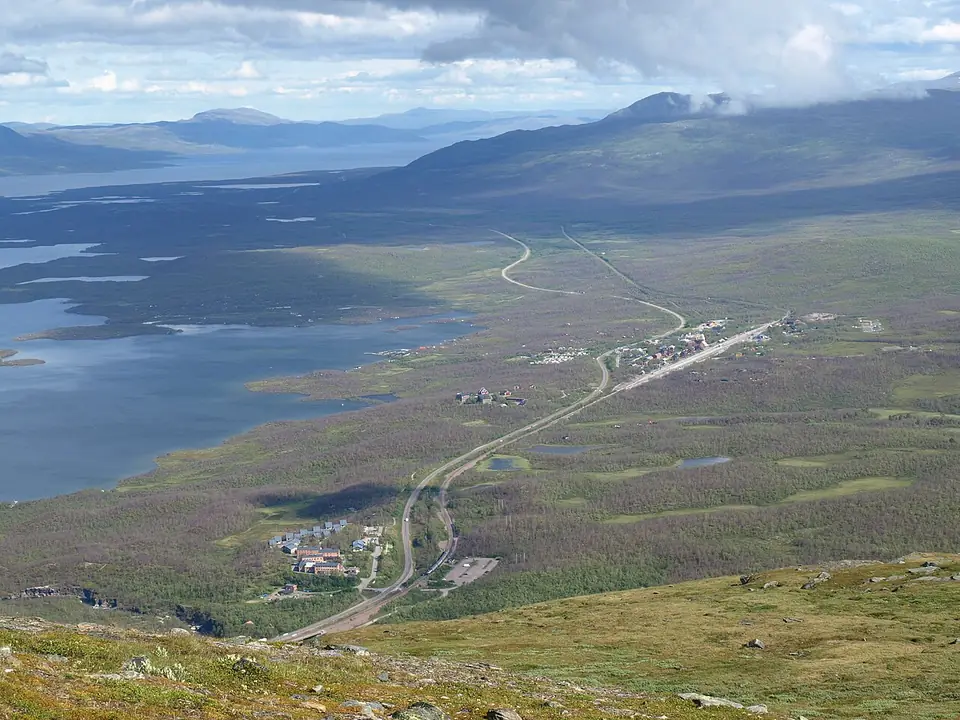
- Most of the north is sparsely populated. The great majority of Swedes live in the southern third, around Stockholm, Gothenburg and Malmö; the inland north is forest, mountains and lakes.
Culture and traditions in Sweden
- Saying hello
A handshake and a simple "Hej"; hugs are common between friends.
- Food and drink
Meatballs with lingonberry jam; kanelbulle (cinnamon buns); surströmming, a very pungent fermented herring.
- Festivals and traditions
Midsummer in late June, with maypole dancing; Lucia on 13 December, with candlelit processions.
- Everyday life
Fika, a daily coffee-and-cake break, is a cherished habit. Shoes come off indoors, and queue tickets are used in shops and pharmacies.
- Did you know?
Allemansrätten, the right of public access, lets everyone walk, camp and pick berries on most land, even privately owned.
Common mistakes
- Tapping Norway, the other half of the same peninsula.
- Tapping Finland, which sits across the Gulf of Bothnia and has a similar long, northern shape.
- Picking Finland's flag in the Flags quiz.
- Forgetting Gotland, which can look like it belongs to the Baltic states.
Practise with Sweden
- Europe quiz – the eastern half of the Scandinavian Peninsula.
- Nordics quiz – only five countries, so the Sweden–Norway split is easy to see.
- Swedish Counties – all 21 län.
- Europe flags – the blue field with the yellow cross.
- Mystery Country – a long outline with a flat Baltic coast and Gotland floating offshore.
Nearby countries
Quick check: how well do you know Sweden?
3 questions, no sign-up. Tap an answer.
1. Which flag belongs to Sweden?
That's the flag of Sweden.
2. What is the capital of Sweden?
The capital of Sweden is Stockholm.
3. Which of these countries borders Sweden?
Finland and Norway border Sweden.
Keep going on the Europe quiz – Sweden is one of 46 countries there.
More ways to practise: find Sweden on the blank map with no borders (hard mode), or play today's Globe and the other daily puzzles.
Frequently asked questions about Sweden
What language is spoken in Sweden?
Swedish is the national language and is spoken by almost everyone. Finnish, Meänkieli, Sami, Romani and Yiddish have official status as minority languages, and English is very widely spoken, especially by younger people.
What currency does Sweden use?
Sweden uses the Swedish krona (SEK), meaning "crown". Although Sweden is in the EU, voters rejected the euro in a 2003 referendum, and the krona floats freely. Cash is now rare, as most payments are made by card or phone.
What time zone is Sweden in?
Sweden uses Central European Time, UTC+1, in winter and Central European Summer Time, UTC+2, from late March to late October. The whole country, including the far north, shares one time zone.
Which side of the road do they drive on in Sweden?
Sweden drives on the right. It switched from the left on 3 September 1967, a day known as Dagen H, when all traffic stopped early in the morning and moved across to the other side of the road.
What is the highest point in Sweden?
The highest point is Kebnekaise in Lapland, at about 2,100 metres. Its southern summit is capped by a melting glacier and has shrunk below the rocky northern summit, which is now officially the highest.
Is Sweden in the EU and NATO?
Sweden joined the European Union in 1995 but kept its own currency. After two centuries of military non-alignment, it applied to join NATO following Russia's 2022 invasion of Ukraine and became a member in March 2024.
Quizzes with Sweden
Often confused with
Guides that help with this
- All 46 European capitals, with a memory trick for eachCapitals grouped by region, with hooks for the ones people forget.
- Flags that look alike (and how to tell them apart)Chad or Romania? Australia or New Zealand? The flag pairs that cost quiz points.
- The 25 hardest countries to find on a mapPacific islands, Caribbean islands and landlocked Africa – where they are.