Norway
Capital: Oslo. Norway is one of the 46 countries in the Europe quiz.
Quick answers: What is the capital of Norway? · Which countries border Norway?
Facts about Norway
- CapitalOslo
- Population5.6 million
- Area323,802 km²
- RegionsEurope, The Nordics
- LanguagesNorwegian Bokmål, Norwegian Nynorsk
- CurrencyNorwegian krone (NOK)
Norway is the 24th most populous of the 46 countries in Europe and the 8th largest by area. Worldwide it ranks 118th by population and 68th by area.
Where is Norway?
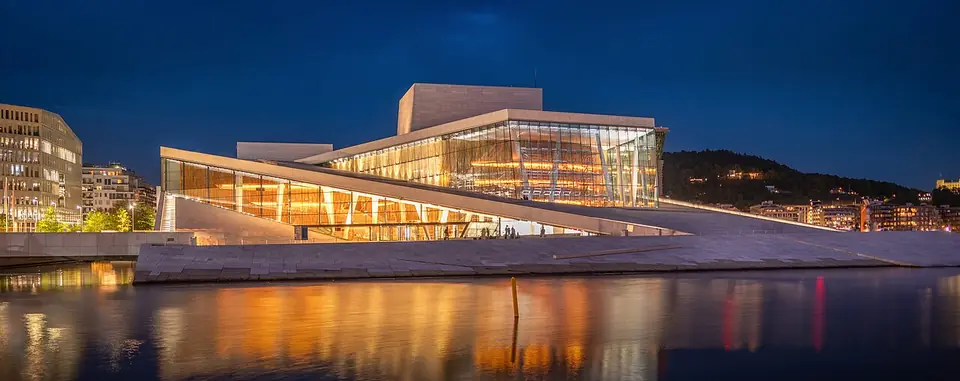
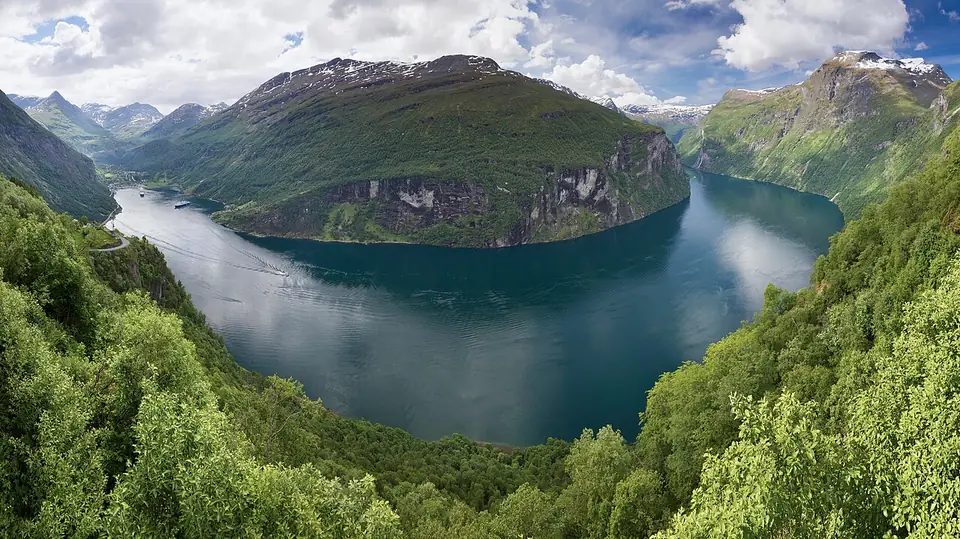
Norway occupies the western and northern edge of the Scandinavian Peninsula, facing the North Sea, the Norwegian Sea and, in the far north, the Barents Sea. Sweden lies along its long eastern border, and in the Arctic north it also touches Finland and, briefly, Russia. Oslo, the capital, is at the head of a long fjord in the south-east, closer to Sweden than most people expect.
On a world map, find the Scandinavian Peninsula and look at its Atlantic side. The ragged coastline that curls up and over the top of the peninsula to Russia is Norway.
How to find Norway on the map
- Start from the North Sea. Norway is the land on the opposite shore from Scotland and Denmark.
- Look for the fjords. If the coastline looks shredded, it's Norway; if it's smooth, it's Sweden.
- Follow it to the top. Norway wraps over the north of Sweden and Finland; the North Cape is Norwegian.
- Don't confuse it with Sweden. Sweden is the Baltic-facing half; Norway faces the open Atlantic.
Flag
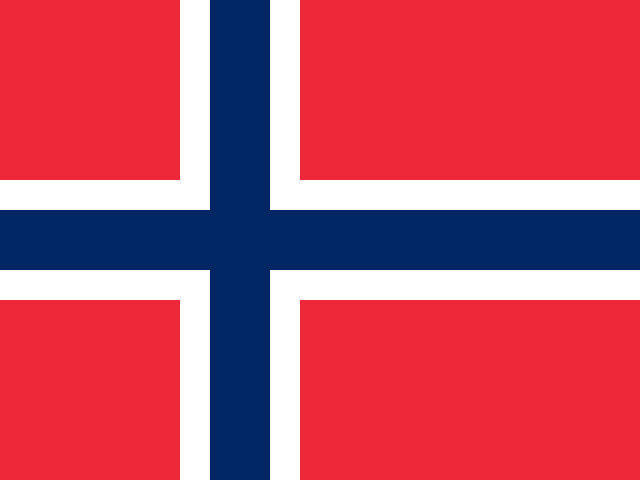
The Norwegian flag is a red field with a blue Nordic cross outlined in white. It was designed in 1821 and adds a blue cross to Denmark's red and white.
Iceland's flag is the same design with the colours reversed – a blue field with a white-bordered red cross. That is the pair to learn. Denmark is plain red with a white cross and no blue. If the flag is red with a thin blue cross sitting inside a white one, it's Norway.
A short history of Norway
People followed the retreating ice to Norway's coast more than 10,000 years ago, living by fishing and hunting. The country's name probably comes from "the way north", the sea route along the coast that tied scattered communities together. Rock carvings at Alta in the far north show reindeer, boats and hunters from thousands of years ago.
From the late 700s, Norwegian Vikings sailed west across the sea. They raided Britain and Ireland, founded Dublin, and settled the Faroe Islands, Iceland and Greenland. Leif Erikson reached North America around the year 1000. At home, Harald Fairhair is traditionally said to have first united Norway in the late 800s, and King Olaf II, later Saint Olaf, spread Christianity before his death in battle in 1030. Norway's medieval kingdom also ruled Iceland and Greenland at its height.
The Black Death in 1349 hit Norway very hard, and the weakened kingdom drifted into union with Denmark. For around four hundred years it was ruled from Copenhagen, which is why Danish became the written language of Norway's towns. In 1814, after Denmark backed the losing side in the Napoleonic Wars, Norway was handed to Sweden. Norwegians quickly wrote their own constitution at Eidsvoll on 17 May, and kept it under the Swedish crown. The union was peacefully dissolved in 1905, and Norway chose a Danish prince as its new king.
In the Second World War, Germany invaded in 1940. The king and government escaped to London and led the resistance from there, while a collaborator, Vidkun Quisling, headed a puppet regime – his name became an English word for traitor. After liberation in 1945, Norway rebuilt a strong welfare state.
Oil was discovered in the North Sea in 1969 and transformed the economy. Today Norway is one of the richest countries in the world, with a large fishing and seafood industry alongside energy.
Culture and daily life in Norway
Norway has two official written forms of Norwegian, Bokmål and Nynorsk. Bokmål grew out of the Danish used during the union, while Nynorsk was built in the 1800s from rural dialects to give the country a more Norwegian voice. Dialects are proudly used everywhere, even on national television. In the north, the Sámi people have their own languages, parliament and reindeer-herding traditions.
The Lutheran church has long shaped the country, and medieval wooden stave churches such as Urnes and Heddal are national treasures. Norway's artists and writers have travelled far: Edvard Munch painted The Scream, Henrik Ibsen wrote A Doll's House, and Edvard Grieg composed the music for Peer Gynt. Polar explorers Fridtjof Nansen and Roald Amundsen, the first to reach the South Pole in 1911, are national heroes.
Skiing is close to a religion. Norway leads the all-time medal table at the Winter Olympics, and cross-country races draw huge crowds. Many families also have a simple hytte, a cabin in the mountains or by the sea, for weekends and holidays.
Five facts worth knowing
- Norway is not in the European Union. It voted against joining in 1972 and 1994, but takes part in the single market through the European Economic Area and is a founding member of NATO.
- Svalbard is Norwegian. The Arctic archipelago sits roughly halfway between the mainland and the North Pole; its main settlement, Longyearbyen, is one of the northernmost towns in the world.
- The highest peak is Galdhøpiggen at 2,469 metres, in the Jotunheimen range, the highest point in the Nordic countries.
- Norway's coastline is the longest in Europe once the fjords and islands are counted. Sognefjord runs more than 200 km inland.
- Oil and gas made Norway wealthy, and the profits are saved in one of the largest sovereign wealth funds in the world. Despite this, most of the country's own electricity comes from hydropower.
Culture and traditions in Norway
- Saying hello
A firm handshake and "Hei" are standard; people are polite but reserved with strangers.
- Food and drink
Brunost, sweet brown cheese, and fårikål, mutton and cabbage stew, considered the national dish.
- Festivals and traditions
Constitution Day on 17 May features children's parades and traditional bunad costumes; Midsummer bonfires on 23 June.
- Everyday life
People value equality and time outdoors ("friluftsliv"). Shoes are taken off indoors, and punctuality is expected.
- Did you know?
Norway gave London its Trafalgar Square Christmas tree every year since 1947, as thanks for WWII support.
Common mistakes
- Tapping Sweden.
- Picking Iceland's flag in the Flags quiz.
- Forgetting that Norway touches Russia, far to the north-east near Kirkenes.
- Expecting Oslo to be on the west coast; it is in the south-east.
Practise with Norway
- Europe quiz – the fjord-cut western edge of the Scandinavian Peninsula.
- Nordics quiz – five countries, close-up.
- Europe flags – red with the white-bordered blue cross; learn it together with Iceland.
- Europe capitals quiz – Oslo.
- Mystery Country – the long, frayed outline is unmistakable.
Nearby countries
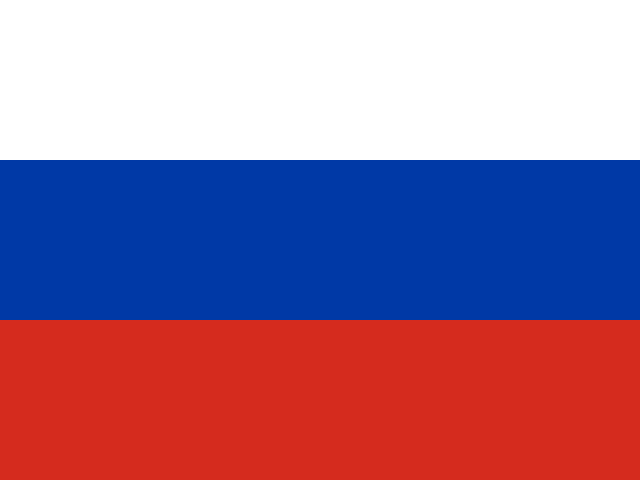
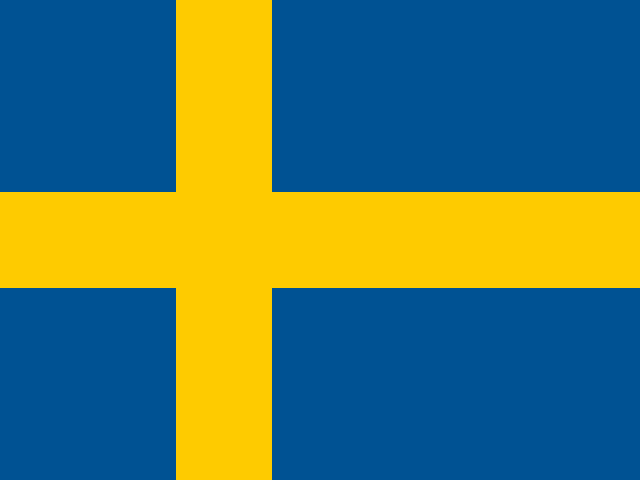
Quick check: how well do you know Norway?
3 questions, no sign-up. Tap an answer.
1. Which flag belongs to Norway?
That's the flag of Norway.
2. What is the capital of Norway?
The capital of Norway is Oslo.
3. Which of these countries borders Norway?
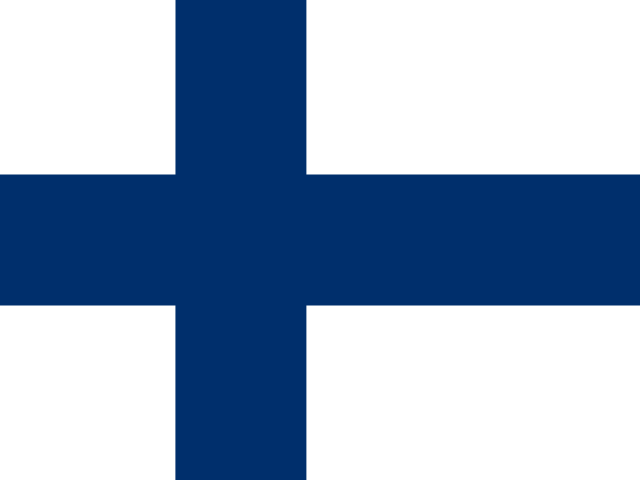
Finland, Russia and Sweden border Norway.
Keep going on the Europe quiz – Norway is one of 46 countries there.
More ways to practise: find Norway on the blank map with no borders (hard mode), or play today's Globe and the other daily puzzles.
Frequently asked questions about Norway
What language is spoken in Norway?
Norwegian is the main language, with two official written forms: Bokmål, used by most people, and Nynorsk, common in the west. Spoken dialects vary widely. Sámi languages are official alongside Norwegian in parts of the north, and Kven and Romani are also recognised minority languages.
What currency does Norway use?
Norway uses the Norwegian krone (NOK), divided into 100 øre. Norway has twice voted against joining the EU, so it kept its own currency. Card and mobile payments are so common that cash is rarely used.
What time zone is Norway in?
Norway uses Central European Time, UTC+1, in winter and UTC+2 in summer with daylight saving. The time is the same across the whole country, from Oslo to the far north, and on Svalbard.
Which side of the road do they drive on in Norway?
Norway drives on the right. Its roads include some of the world's longest road tunnels, such as the 24.5-kilometre Lærdal Tunnel, along with many ferry crossings over the fjords.
What is the highest point in Norway?
Galdhøpiggen, in the Jotunheimen mountains, is the highest point at about 2,469 metres. Jotunheimen means "home of the giants", and the summit is a popular guided hike across a glacier from Juvasshytta.
Where can you see the midnight sun in Norway?
Anywhere north of the Arctic Circle, which crosses Norway near Bodø. In Tromsø the sun stays up from about late May to late July, and at the North Cape for even longer. In winter the same regions have weeks of polar night with no sunrise.
Quizzes with Norway
Often confused with
Guides that help with this
- All 46 European capitals, with a memory trick for eachCapitals grouped by region, with hooks for the ones people forget.
- Flags that look alike (and how to tell them apart)Chad or Romania? Australia or New Zealand? The flag pairs that cost quiz points.
- The 25 hardest countries to find on a mapPacific islands, Caribbean islands and landlocked Africa – where they are.