Finland
Capital: Helsinki. Finland is one of the 46 countries in the Europe quiz.
Quick answers: What is the capital of Finland? · Which countries border Finland?
Facts about Finland
- CapitalHelsinki
- Population5.6 million
- Area338,424 km²
- RegionsEurope, The Nordics
- LanguagesFinnish, Swedish
- CurrencyEuro (EUR)
Finland is the 23rd most populous of the 46 countries in Europe and the 7th largest by area. Worldwide it ranks 117th by population and 65th by area.
Where is Finland?
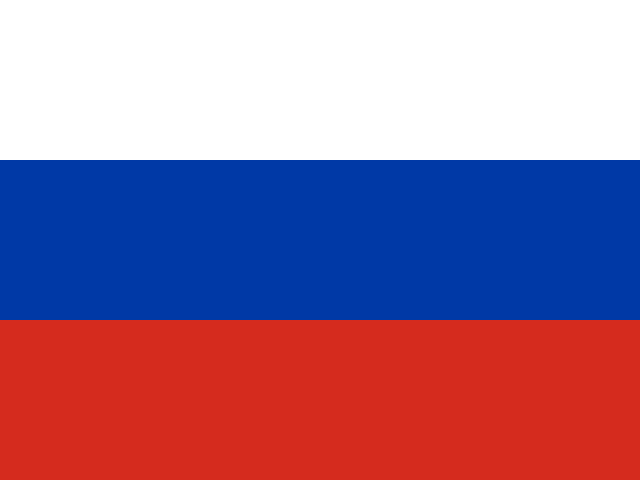
Finland is in Northern Europe, east of the Scandinavian Peninsula. Sweden lies to the west across the Gulf of Bothnia, Norway to the north, and Russia along a land border of more than 1,300 km in the east. To the south, the Gulf of Finland separates it from Estonia. Helsinki, the capital, is on that southern coast, directly across the water from Tallinn.
On a world map, find the Baltic Sea and follow its northern arm, the Gulf of Bothnia, up towards the Arctic. The land on its eastern side, between Sweden and Russia, is Finland.
How to find Finland on the map
- Start from Sweden. Finland is the next country east, across the Gulf of Bothnia, with a short land border in the far north.
- Look for the two gulfs. Finland is the country held between the Gulf of Bothnia on the west and the Gulf of Finland on the south.
- Don't confuse it with Sweden. Both are long and northern, but Sweden touches Norway all the way down its western side, Finland touches Russia all the way down its eastern side.
Flag
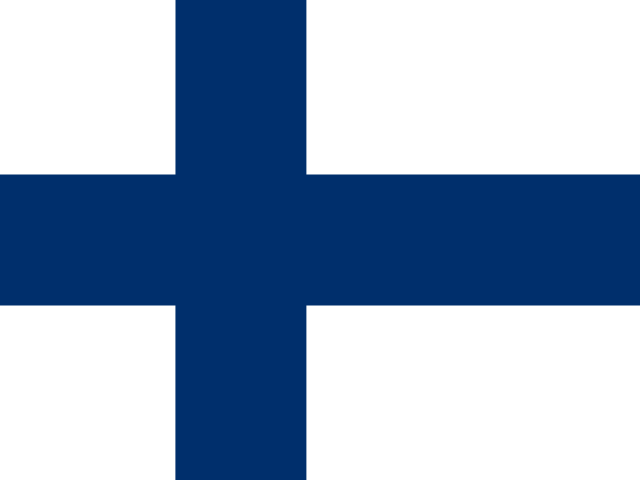
The Finnish flag is a blue Nordic cross on a white field – the blue of the lakes and the white of the snow, as the usual explanation goes. It was adopted in 1918, shortly after independence from Russia.
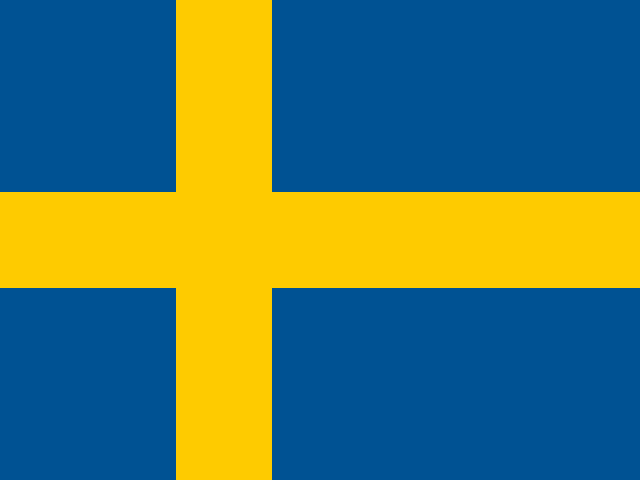
Sweden's flag is the one to compare it with: blue and yellow rather than blue and white. Finland is the only Nordic cross flag with a white background, so a white flag with a plain blue cross is always Finland.
A short history of Finland
As the ice sheets retreated, people followed into Finland about 10,000 years ago. Rock paintings and finds such as an ancient fishing net from Antrea show early hunter-fisher life. Finnic-speaking peoples, including the ancestors of the Finns, settled the south over thousands of years, while the Sámi lived further north.
From the 1100s and 1200s Swedish crusades brought Christianity and Swedish rule to Finland, which for about six hundred years was a part of the Swedish realm rather than a separate country. Turku was its main town, and Swedish became the language of the nobility, government and education. The Reformation reached Finland in the 1500s, and Mikael Agricola, a Lutheran bishop, wrote the first books in Finnish. Finland was often the battleground in Sweden's wars with Russia.
In 1809 Russia conquered Finland, and it became an autonomous Grand Duchy under the tsar, with its own laws and institutions. The capital moved from Turku to Helsinki in 1812, closer to St Petersburg and away from Swedish influence. In the 1800s a national movement grew, and Elias Lönnrot gathered folk poetry into the epic Kalevala. In 1906 Finland became one of the first places in the world to give women the vote, and the first in Europe.
Finland declared independence on 6 December 1917, during the Russian Revolution. A short, bitter civil war followed in 1918 between the conservative Whites and the socialist Reds. In the Winter War of 1939–40, Finland held off a Soviet invasion but lost much of Karelia, including its second city, Vyborg. More than 400,000 people were resettled, and the eastern border still follows that loss. Finland fought again from 1941 to 1944 alongside Germany against the Soviet Union, but stayed independent and democratic.
During the Cold War Finland stayed neutral, balancing between East and West. It then built a high-tech economy known for Nokia, forestry, engineering and video games, and a respected school system.
Culture and daily life in Finland
Swedish is still spoken as a first language by a small minority, mostly on the west and south coasts and in Åland, a legacy of the long Swedish era. Sámi languages are recognised in Lapland. Most Finns belong to the Evangelical Lutheran Church, though many are not regular churchgoers.
The composer Jean Sibelius, whose tone poem Finlandia became a symbol of independence, is the great national figure in music. Tove Jansson, a Swedish-speaking Finn, created the Moomins, and the architect Alvar Aalto shaped modern design with buildings, furniture and his wavy glass vase. The Kalevala inspired the paintings of Akseli Gallen-Kallela.
Ice hockey is the country's favourite sport, and Finland has won world championships and Olympic gold. Finns also love rally driving, cross-country skiing and the everyman's right, which lets anyone hike, camp and pick berries in forests. Heavy metal is surprisingly mainstream, and the band Lordi won Eurovision in 2006. The word sisu, meaning grit in the face of hardship, sums up how many see themselves.
Five facts worth knowing
- Finland has around 188,000 lakes, which makes "land of a thousand lakes" an undercount. Saimaa, in the south-east, is the largest.
- It joined NATO in 2023. Finland has been in the EU since 1995 and is the only Nordic country that uses the euro.
- Finnish is not related to Swedish or Norwegian. It belongs to the Finno-Ugric family, alongside Estonian and, more distantly, Hungarian. Swedish is also an official language.
- The Åland Islands, between Finland and Sweden, are an autonomous, Swedish-speaking part of Finland with their own parliament and flag.
- Finland is divided into 19 regions, from Uusimaa around Helsinki to Lapland in the north, which alone covers about a third of the country.
Culture and traditions in Finland
- Saying hello
A firm handshake and "Hei" or "Moi"; hugs are mostly kept for close friends.
- Food and drink
Karelian pies (karjalanpiirakka), rye-crust pastries filled with rice porridge; creamy salmon soup.
- Festivals and traditions
Midsummer (Juhannus) in late June with lakeside bonfires; Vappu, the student and spring festival, on 1 May.
- Everyday life
Comfortable silence is normal and punctuality matters. Tipping is not expected, and sauna is part of everyday life.
- Did you know?
Finland has around three million saunas for a population of about 5.5 million, and Finns drink more coffee per person than almost anyone.
Common mistakes
- Tapping Sweden – the mirror-image country on the other side of the Gulf of Bothnia.
- Picking Sweden's flag in the Flags quiz.
- Expecting Helsinki to be in the middle of the country; it is on the far southern coast.
Practise with Finland
- Europe quiz – the country between the Gulf of Bothnia and Russia.
- Nordics quiz – five countries at close range.
- Finnish Regions – all 19, from Åland to Lapland.
- Europe flags – the white field with the blue cross.
- Mystery Country – broad in the south, tapering to a narrow arm reaching north.
Nearby countries
Quick check: how well do you know Finland?
3 questions, no sign-up. Tap an answer.
1. Which flag belongs to Finland?
That's the flag of Finland.
2. What is the capital of Finland?
The capital of Finland is Helsinki.
3. Which of these countries borders Finland?
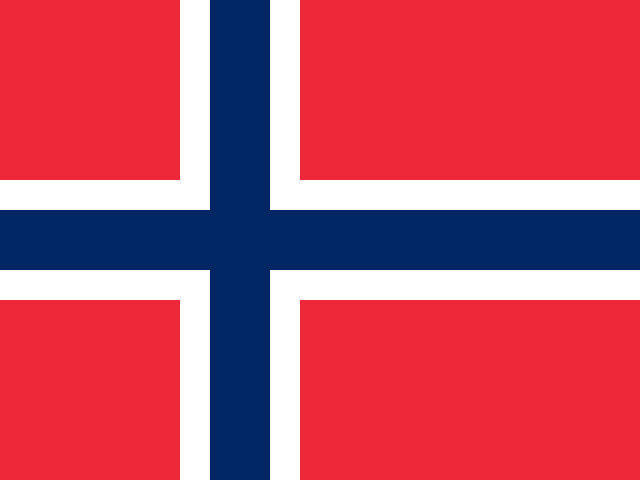
Norway, Russia and Sweden border Finland.
Keep going on the Europe quiz – Finland is one of 46 countries there.
More ways to practise: find Finland on the blank map with no borders (hard mode), or play today's Globe and the other daily puzzles.
Frequently asked questions about Finland
What language is spoken in Finland?
Finnish and Swedish are both official national languages. Around 85 per cent of people speak Finnish as their first language and about 5 per cent Swedish. Three Sámi languages are official in parts of Lapland, and English is widely spoken.
What currency does Finland use?
Finland uses the euro (EUR), which replaced the markka in 2002. Finland was one of the original euro countries, and it rounds cash payments to the nearest 5 cents, so 1- and 2-cent coins are rarely used.
What time zone is Finland in?
Finland uses Eastern European Time, UTC+2, and changes to UTC+3 for summer time from late March to late October. It is one hour ahead of Sweden.
Which side of the road do they drive on in Finland?
Finns drive on the right. Headlights must be on at all times, and road signs warn of elk and reindeer crossing. In winter, studded tyres are common, and ice roads are sometimes opened across frozen lakes and sea.
What is the highest point in Finland?
Halti, on the border with Norway in the far north-west, is the highest point in Finland at about 1,324 metres. The summit itself is in Norway, so Finland's high point is on the mountain's shoulder.
Is Finland part of Scandinavia?
Strictly, no. Scandinavia means Denmark, Norway and Sweden, which share closely related languages. Finland is a Nordic country, though, linked to the others by history, culture and close cooperation, and is often loosely included in Scandinavia.
Quizzes with Finland
Often confused with
Guides that help with this
- All 46 European capitals, with a memory trick for eachCapitals grouped by region, with hooks for the ones people forget.
- Flags that look alike (and how to tell them apart)Chad or Romania? Australia or New Zealand? The flag pairs that cost quiz points.
- The 25 hardest countries to find on a mapPacific islands, Caribbean islands and landlocked Africa – where they are.