Egypt
Capital: Cairo. Egypt is one of the 54 countries in the Africa quiz.
Quick answers: What is the capital of Egypt? · Which countries border Egypt?
Facts about Egypt
- CapitalCairo
- Population118.4 million
- Area1,002,450 km²
- RegionsAfrica, Middle East
- LanguageArabic
- CurrencyEgyptian pound (EGP)
Egypt is the 3rd most populous of the 54 countries in Africa and the 12th largest by area. Worldwide it ranks 13th by population and 29th by area.
Where is Egypt?
Egypt sits in the north-east corner of Africa, where the continent meets the Middle East. The Mediterranean Sea forms its northern coast and the Red Sea its eastern one. Libya lies to the west and Sudan to the south, both along long, almost perfectly straight desert borders. Across the Sinai Peninsula, Egypt also borders Israel and the Gaza Strip, which makes it the only African country with a land border into Asia. The Nile flows from south to north through the entire country and fans out into a delta on the Mediterranean. Cairo sits at the point where the river meets the delta.
How to find Egypt on the map
- Start from the Mediterranean. Egypt is the African country in its south-east corner, directly south of Turkey and Greece across the sea.
- Look for the straight lines. Egypt's western and southern borders are long ruler-straight lines drawn through the desert.
- Don't confuse it with Libya, the next country west – Libya is bigger and has no Red Sea coast.
- Find the Red Sea. Egypt is the country on its western shore, with the Sinai triangle at the top.
Flag
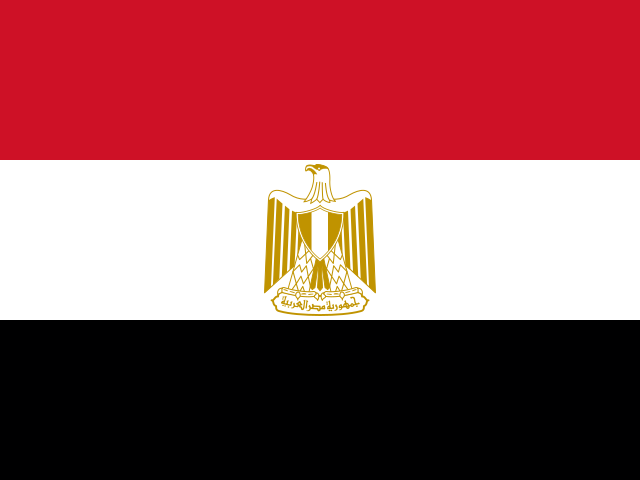
Three horizontal bands of red, white and black with a golden eagle (the Eagle of Saladin) in the centre of the white band. Three other flags use the same red-white-black bands: Iraq has green Arabic script in the middle, Syria has two green stars, and Yemen has nothing at all. In the Flags quiz, red-white-black with a gold eagle is Egypt.
A short history of Egypt
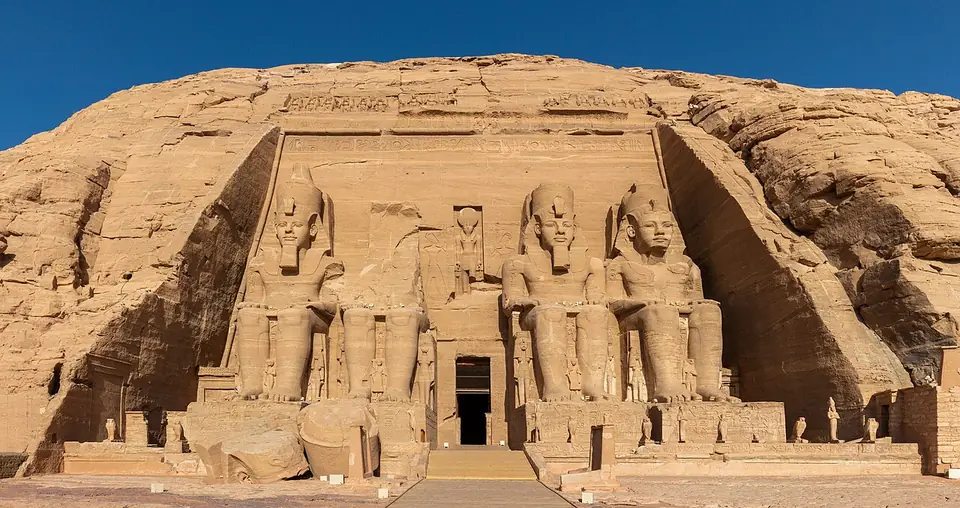
Farming communities settled along the Nile thousands of years ago, drawn by the yearly flood that left rich black soil on the riverbanks. Around 3100 BC Upper and Lower Egypt were united under one king, traditionally named Narmer or Menes, creating one of the world's first states. Over the next three thousand years the pharaohs built temples at Karnak and Luxor, carved royal tombs in the Valley of the Kings, and developed hieroglyphic writing. Rulers such as Hatshepsut, Akhenaten and Ramesses II became famous far beyond Egypt.
After the age of the pharaohs, Egypt fell to Persians and then to Alexander the Great in 332 BC. His general Ptolemy founded a Greek-speaking dynasty based in Alexandria, which ended with Cleopatra VII and the Roman conquest in 30 BC. Egypt became a Christian land under Rome and Byzantium, and the Coptic Church dates from this era.
Arab armies conquered Egypt in the 640s, bringing Islam and Arabic. Cairo was founded in 969 by the Fatimid dynasty, and al-Azhar mosque became one of the oldest centres of learning in the world. Saladin later ruled from Cairo, followed by the Mamluks, and in 1517 Egypt became part of the Ottoman Empire.
Napoleon invaded in 1798, and his soldiers found the Rosetta Stone, which allowed hieroglyphs to be decoded. Muhammad Ali, an Ottoman officer, modernised the country in the early 1800s. Britain occupied Egypt in 1882, partly to secure the Suez route, and granted it nominal independence in 1922. In 1952 army officers overthrew the king, and Gamal Abdel Nasser nationalised the canal in 1956 and built the Aswan High Dam. Egypt fought wars with Israel in 1967 and 1973, then signed a peace treaty in 1979. Mass protests in 2011 ended the long rule of Hosni Mubarak, followed by years of political upheaval.
Today Egypt is the most populous Arab country, earning money from tourism, Suez Canal fees, gas and remittances.
Culture and daily life in Egypt
Egyptian Arabic, the dialect of Cairo, is understood across the Arab world, largely thanks to Egypt's film and television industry. Most Egyptians are Sunni Muslims, while Coptic Christians form a significant minority with their own ancient liturgical language, descended from the language of the pharaohs.
Egypt has long been a cultural capital of the Arab world. The singer Umm Kulthum filled concert halls and radio waves for decades, and her long songs are still played in cafés. The novelist Naguib Mahfouz, whose Cairo Trilogy follows a family through the early 20th century, won the Nobel Prize in Literature in 1988.
Street life is lively and often late, with families walking along the Nile Corniche on summer nights. Football is a passion, and the rivalry between Cairo clubs Al Ahly and Zamalek is one of the fiercest in Africa. Mohamed Salah is the country's best-known modern star. Ful medames, stewed fava beans, is the classic breakfast, and koshari – rice, lentils and pasta under tomato sauce – is the best-known street food.
Five facts worth knowing
- The Nile is the longest river in Africa, and Egypt depends on it almost completely – nearly the whole population lives along the river and in the delta.
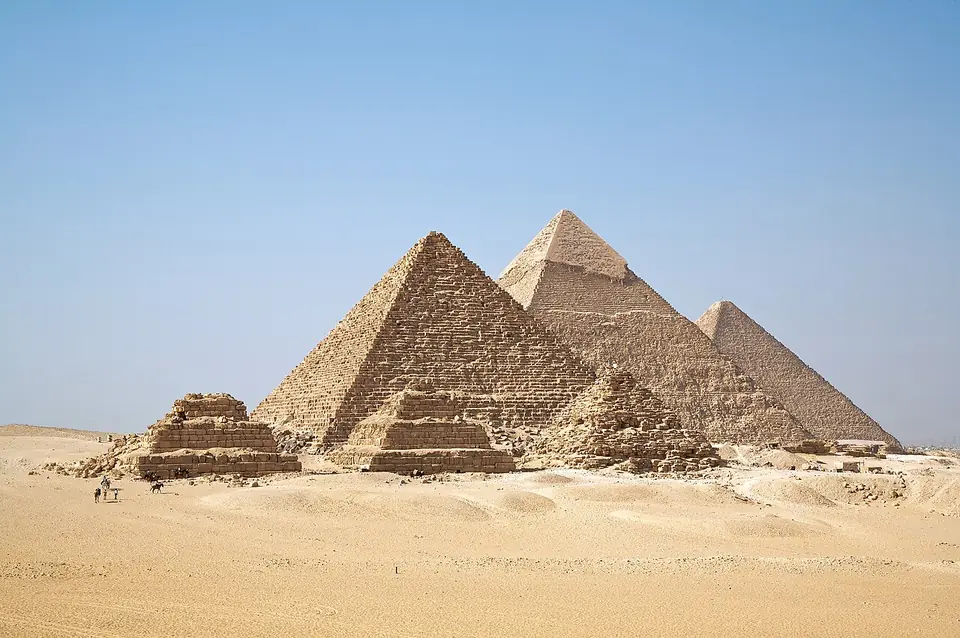
- The Great Pyramid of Giza is the only one of the Seven Wonders of the Ancient World still standing, built around 2560 BC.
- The Suez Canal, opened in 1869, links the Mediterranean to the Red Sea and carries a large share of the world's shipping between Europe and Asia.
- Cairo is the largest city in Africa by metropolitan population, with over 20 million people.
- Egypt is divided into 27 governorates.
Culture and traditions in Egypt
- Saying hello
People say "As-salamu alaykum" or "Ahlan" with a warm handshake, often followed by questions about family and health.
- Food and drink
Koshari, a hearty mix of rice, lentils, pasta and tomato sauce; ful medames, slow-cooked fava beans eaten at breakfast.
- Festivals and traditions
Sham el-Nessim, an ancient spring festival held the day after Coptic Easter, when families picnic outdoors; Eid feasts after Ramadan.
- Everyday life
Sweet tea and hospitality are central to social life. Friday is the main weekly day off, and small tips (baksheesh) for services are customary.
- Did you know?
Sham el-Nessim traces its roots back to ancient Egyptian spring celebrations, making it one of the oldest festivals still observed.
Common mistakes
- Tapping Libya or Sudan, the neighbours with the long straight borders.
- Tapping Saudi Arabia across the Red Sea when zoomed out.
- Picking Iraq's, Syria's or Yemen's flag in the Flags quiz – they share Egypt's colours.
- Forgetting that the Sinai Peninsula, east of the Suez Canal, is Egyptian.
Practise with Egypt
- Africa quiz – Egypt is the eastern end of the region, on the Red Sea.
- Middle East quiz – Egypt is often included here too, in the south-west corner.
- Africa quiz – 54 countries; Egypt is one of the easy ones in the top-right corner.
- Whole World flags – learn to separate the four red-white-black flags.
- Africa capitals quiz – Cairo.
- Mystery Country – almost a square with the Sinai triangle stuck on, one of the simplest outlines in Africa.
Nearby countries
Quick check: how well do you know Egypt?
3 questions, no sign-up. Tap an answer.
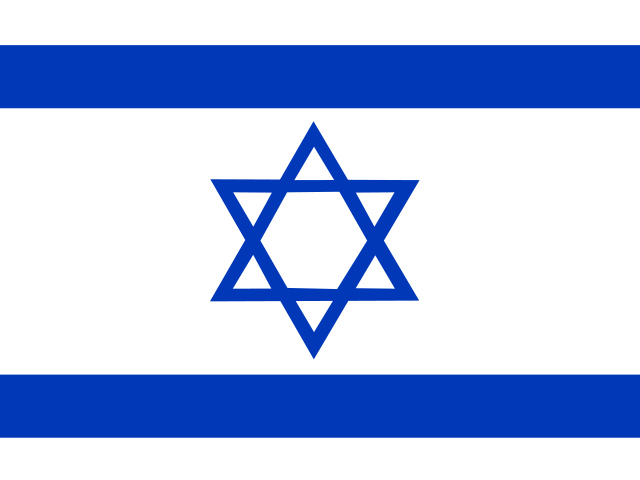
1. Which flag belongs to Egypt?
That's the flag of Egypt.
2. What is the capital of Egypt?
The capital of Egypt is Cairo.
3. Which of these countries borders Egypt?
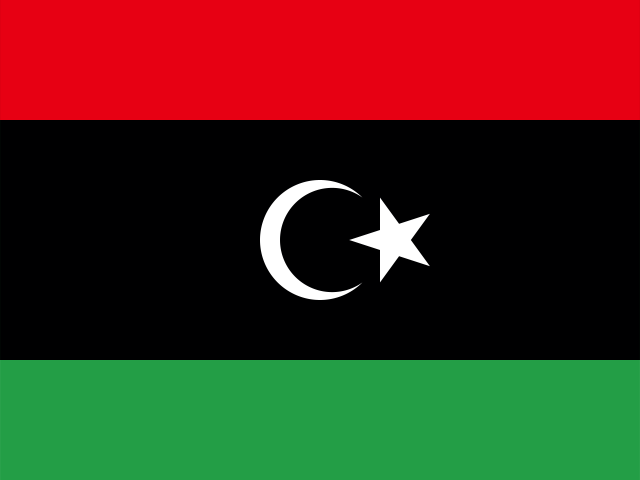
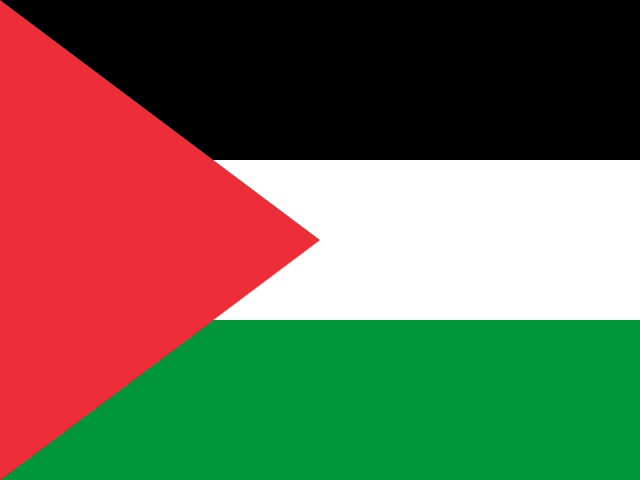
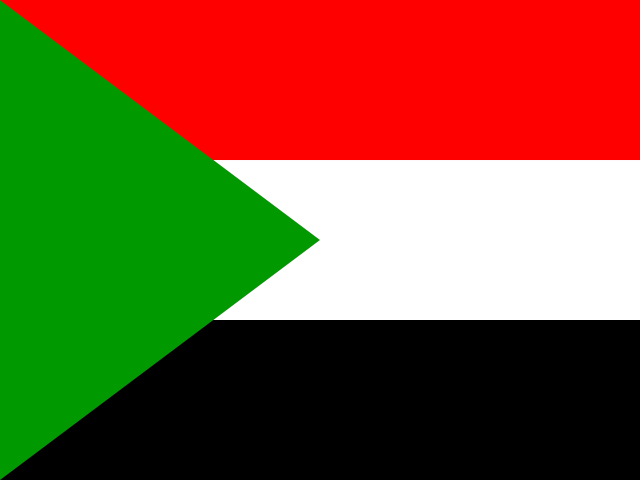
Israel, Libya, Palestine and Sudan border Egypt.
Keep going on the Africa quiz – Egypt is one of 54 countries there.
More ways to practise: find Egypt on the blank map with no borders (hard mode), or play today's Globe and the other daily puzzles.
Frequently asked questions about Egypt
What language is spoken in Egypt?
Arabic is the official language. Egyptians speak Egyptian Arabic in daily life, a dialect understood across the Arab world thanks to Egyptian films, music and television. Modern Standard Arabic is used in writing and news, and English and French are widely taught.
What currency does Egypt use?
Egypt uses the Egyptian pound (EGP), divided into 100 piastres. In Arabic it is called the geneih. The pound has been allowed to float since 2016 and has lost much of its value in several devaluations.
What time zone is Egypt in?
Egypt uses Eastern European Time, UTC+2. After a gap of several years, it reintroduced daylight saving time in 2023, moving to UTC+3 from late April to late October.
Which side of the road do they drive on in Egypt?
Egyptians drive on the right. Cairo's traffic is famously dense, and new ring roads, bridges and a monorail are being built to link the city with the New Administrative Capital to the east.
What is the highest point in Egypt?
Mount Catherine, in the south of the Sinai Peninsula, is Egypt's highest point at about 2,630 metres. It stands close to Mount Sinai and Saint Catherine's Monastery, one of the oldest working Christian monasteries.
Is Egypt in Africa or Asia?
Egypt is mainly in Africa, but it is a transcontinental country. The Sinai Peninsula, east of the Suez Canal, is in Asia. The canal and the Gulf of Suez are usually taken as the boundary between the two continents.
Quizzes with Egypt
Often confused with
Guides that help with this
- Learn all 54 African countries in a weekLearn the coastline in order, region by region.
- Flags that look alike (and how to tell them apart)Chad or Romania? Australia or New Zealand? The flag pairs that cost quiz points.
- The 25 hardest countries to find on a mapPacific islands, Caribbean islands and landlocked Africa – where they are.