Libya
Capital: Tripoli. Libya is one of the 54 countries in the Africa quiz.
Quick answers: What is the capital of Libya? · Which countries border Libya?
Facts about Libya
- CapitalTripoli
- Population7.5 million
- Area1,759,540 km²
- RegionAfrica
- LanguageArabic
- CurrencyLibyan dinar (LYD)
Libya is the 35th most populous of the 54 countries in Africa and the 4th largest by area. Worldwide it ranks 105th by population and 16th by area.
Where is Libya?
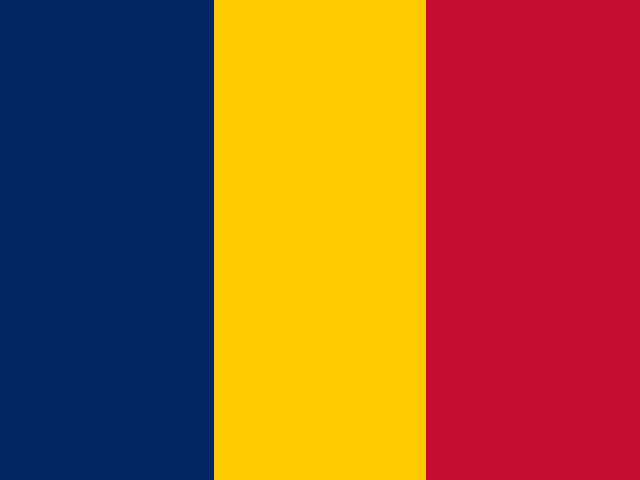
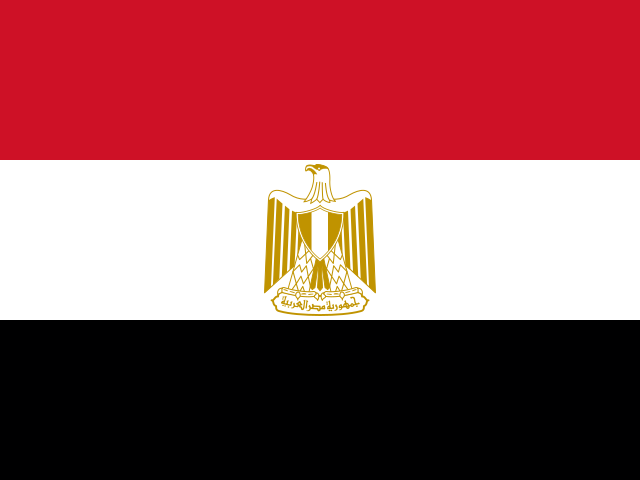
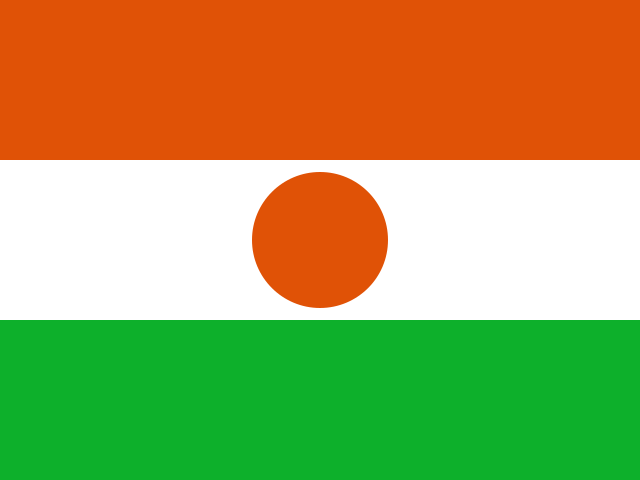
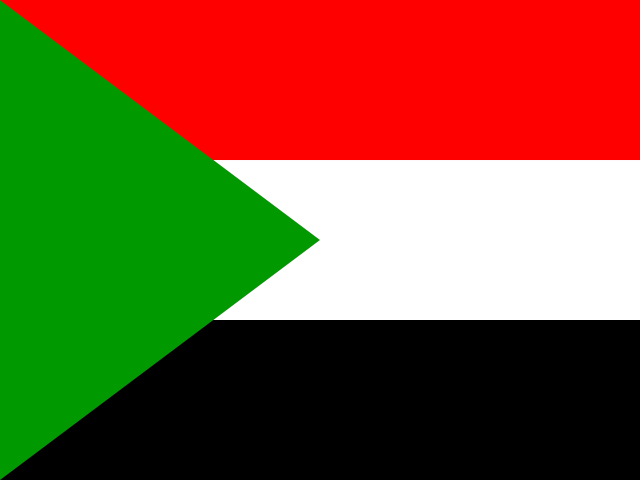
Libya is a large country on the Mediterranean coast of North Africa, between Tunisia and Algeria to the west and Egypt to the east. To the south it borders Niger, Chad and Sudan. Almost all of it is Sahara, and nearly everyone lives along the coast. The capital, Tripoli, is in the north-west; Benghazi, the second city, is in the east on the Gulf of Sidra.
On a world map, find the North African coast. Egypt is the squarish country in the east with the Nile. Libya is the big block immediately west of it, with a deep bay scooped out of its coastline.
How to find Libya on the map
- Start from Egypt. Libya is its western neighbour, sharing a long straight north-south border.
- Look for the bay. The Gulf of Sidra is the large curved notch in Libya's coast, the most distinctive feature of the North African shoreline.
- Find the opposite shore from Italy. Sicily and the toe of Italy point almost straight at Libya.
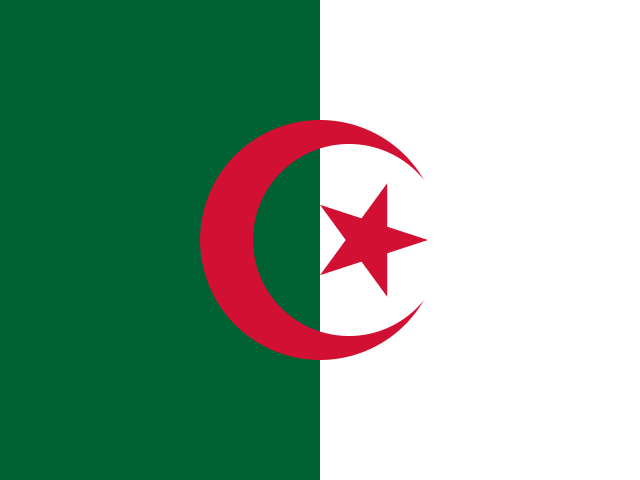
- Don't confuse it with Algeria. Algeria is further west and bigger, with a flatter coast.
Flag
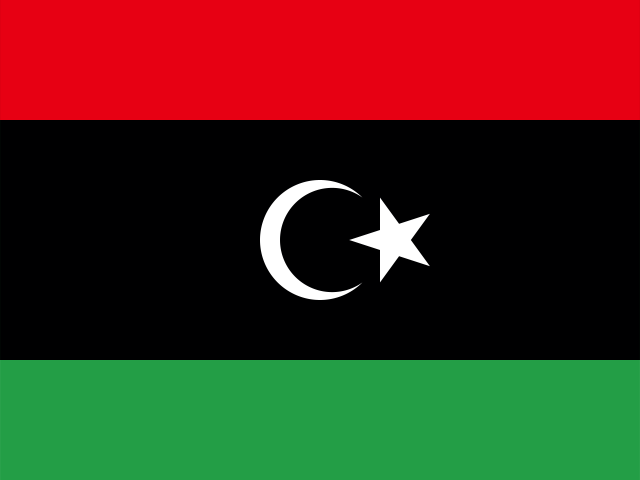
Libya's flag has three horizontal bands – red, black and green – with the black band twice the height of the others and a white crescent and star in its centre. This was the flag of the Kingdom of Libya from 1951 and was restored in 2011 after the fall of Muammar Gaddafi. Between 1977 and 2011, Libya used a plain green flag, the only single-colour national flag in the world at the time.
The lookalike is Malawi, which also uses red, black and green but with black on top and a rising sun. A crescent and star on a wide black band is Libya.
A short history of Libya
Libya's three historic regions explain much of its story. Tripolitania in the north-west faces Tunisia and Italy, Cyrenaica in the east looks towards Egypt and Greece, and Fezzan in the south-west is a land of desert oases. The first people were Berber, or Amazigh, peoples; in the Fezzan the Garamantes built a remarkable desert civilisation, using underground channels to bring water to their fields. Rock art in the Acacus Mountains shows that the Sahara was once green, with giraffes and cattle.
In the 600s BC Greeks founded Cyrene in the east, while Phoenicians from Carthage set up trading posts in the west, including Oea, the ancient name of Tripoli. Rome later ruled both coasts. Arab armies arrived in the 640s and brought Islam and the Arabic language, and Arab tribes migrating in the 1000s spread them further. The Ottoman Empire took Tripoli in 1551, and for a time the city was a base for the Barbary corsairs, who fought the young United States navy in the early 1800s.
Italy invaded in 1911 and took the land from the Ottomans. Resistance was fierce, especially in Cyrenaica, where Omar Mukhtar led a guerrilla war for nearly 20 years until he was captured and hanged in 1931. Tens of thousands of eastern Libyans died in Italian camps. During the Second World War, the desert war between Britain and the Axis powers raged along the coast, with famous battles around Tobruk.
Libya became independent in 1951 as a kingdom under King Idris, uniting the three regions; it was one of the first African countries to gain independence through the United Nations. Oil was discovered in 1959 and transformed the poor country. In 1969 a young army officer, Muammar Gaddafi, seized power and ruled for 42 years, using oil wealth for housing and welfare but crushing opposition and backing armed groups abroad.
An uprising in 2011, supported by NATO air strikes, ended his rule. Since then Libya has been divided between rival governments and armed groups, broadly based in the west and the east, and the country's oil wealth remains both its main hope and a cause of conflict.
Culture and daily life in Libya
Arabic is the main language, but Amazigh (Berber) communities in the western mountains and around Zuwara, as well as the Tuareg and Tebu peoples of the Sahara, keep their own languages and traditions. Almost all Libyans are Sunni Muslims, and religion shapes the rhythm of the day and the year. Family and tribe remain very important, especially outside the big cities.
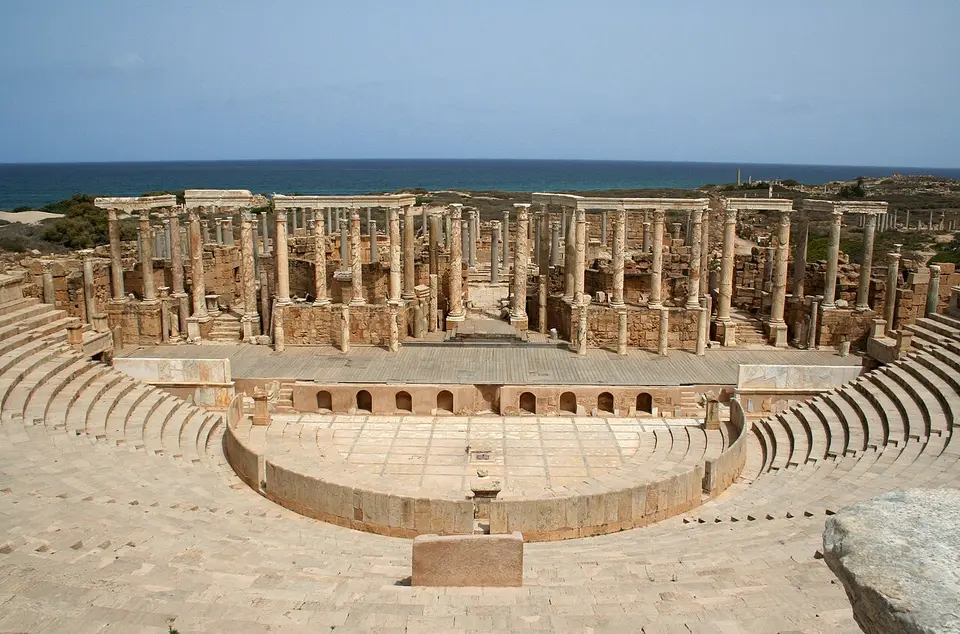
Libya has five UNESCO World Heritage sites, among them the Greek ruins of Cyrene and the Roman city of Sabratha, whose three-storey theatre stands near the sea. Tripoli's old walled city holds the Arch of Marcus Aurelius, Ottoman mosques and covered souks where coppersmiths and tailors still work.
Traditional music includes malouf, inherited from Andalusia, and lively wedding songs played on drums and bagpipe-like zukra. Hand-woven rugs and silver jewellery are common crafts. Football is by far the most popular sport, and Libya hosted the Africa Cup of Nations in 1982, finishing as runners-up. Evenings in summer are spent outdoors, with families meeting at seaside cafés once the heat of the day has passed.
Five facts worth knowing
- Libya is about 90 per cent desert, with some of the hottest and driest places on Earth.
- It has the largest proven oil reserves in Africa, and oil makes up the overwhelming majority of its exports.
- Leptis Magna, east of Tripoli, is one of the best-preserved Roman cities anywhere, expanded by the emperor Septimius Severus, who was born there.
- The Great Man-Made River carries water from desert aquifers to the coastal cities through a network of giant pipelines.
- Libya is the fourth-largest country in Africa by area, after Algeria, DR Congo and Sudan.
Culture and traditions in Libya
- Saying hello
"As-salamu alaykum" with a handshake, usually between people of the same gender.
- Food and drink
Bazin, a barley dough served with spicy stew; couscous; sweet mint tea.
- Festivals and traditions
Eid al-Fitr and Eid al-Adha, marked with family gatherings and feasts.
- Everyday life
Tea is often served in several rounds and is a key part of hospitality. Friday is the main weekly day off.
- Did you know?
The old town of Ghadames, the "pearl of the desert", has covered alleys and rooftop walkways and is a UNESCO World Heritage Site.
Common mistakes
- Tapping Algeria – the two big Saharan blocks are easy to swap.
- Tapping Egypt, the eastern neighbour.
- Picking Malawi's flag in the Flags quiz.
Practise with Libya
- Africa quiz – the block west of Egypt with a bay bitten out of its coast.
- Middle East quiz – Libya appears here too, on the western edge of the map.
- Africa flags – red, black and green with a crescent and star.
- Africa capitals quiz – Tripoli, not Benghazi.
- Mystery Country – a wide outline with straight desert borders and the curve of the Gulf of Sidra on top.
Nearby countries
Quick check: how well do you know Libya?
3 questions, no sign-up. Tap an answer.
1. Which flag belongs to Libya?
That's the flag of Libya.
2. What is the capital of Libya?
The capital of Libya is Tripoli.
3. Which of these countries borders Libya?
Algeria, Chad, Egypt, Niger, Sudan and Tunisia border Libya.
Keep going on the Africa quiz – Libya is one of 54 countries there.
More ways to practise: find Libya on the blank map with no borders (hard mode), or play today's Globe and the other daily puzzles.
Frequently asked questions about Libya
What language is spoken in Libya?
Arabic is the official language, spoken in Libyan dialects. Amazigh (Berber) languages are spoken in the Nafusa Mountains, at Zuwara and in some oases, and the Tuareg and Tebu speak their own languages in the south. Italian and English are known among some older and business people.
What currency does Libya use?
Libya uses the Libyan dinar (LYD), divided into 1,000 dirhams. It was introduced in 1971, replacing the Libyan pound. The dinar is managed by the Central Bank of Libya, and its official rate has often differed from the black market rate.
What time zone is Libya in?
Libya is on UTC+2, Eastern European Time, all year and does not use daylight saving time, even though it has tried switching in the past. It shares this time with Egypt in winter.
Which side of the road do they drive on in Libya?
Libya drives on the right. The coastal highway runs the length of the country from the Tunisian border through Tripoli and Benghazi to Egypt, while desert roads lead south to the oases of Sabha and Ghat.
What is the highest point in Libya?
The highest point is Bikku Bitti, about 2,267 metres, in the Tibesti Mountains on the border with Chad. It lies in one of the remotest parts of the Sahara and is very rarely visited.
What is Libya famous for?
Libya is famous for some of the best-preserved Roman and Greek ruins in the Mediterranean: Leptis Magna, Sabratha and Cyrene are all UNESCO World Heritage sites. It also has the old desert town of Ghadames and ancient rock art in the Acacus Mountains.
Quizzes with Libya
Often confused with
Guides that help with this
- Learn all 54 African countries in a weekLearn the coastline in order, region by region.
- Flags that look alike (and how to tell them apart)Chad or Romania? Australia or New Zealand? The flag pairs that cost quiz points.
- The 25 hardest countries to find on a mapPacific islands, Caribbean islands and landlocked Africa – where they are.