Sudan
Capital: Khartoum. Sudan is one of the 54 countries in the Africa quiz.
Quick answers: What is the capital of Sudan? · Which countries border Sudan?
Facts about Sudan
- CapitalKhartoum
- Population51.7 million
- Area1,886,068 km²
- RegionsAfrica, East Africa
- LanguagesArabic, English
- CurrencySudanese pound (SDG)
Sudan is the 8th most populous of the 54 countries in Africa and the 3rd largest by area. Worldwide it ranks 30th by population and 15th by area.
Where is Sudan?
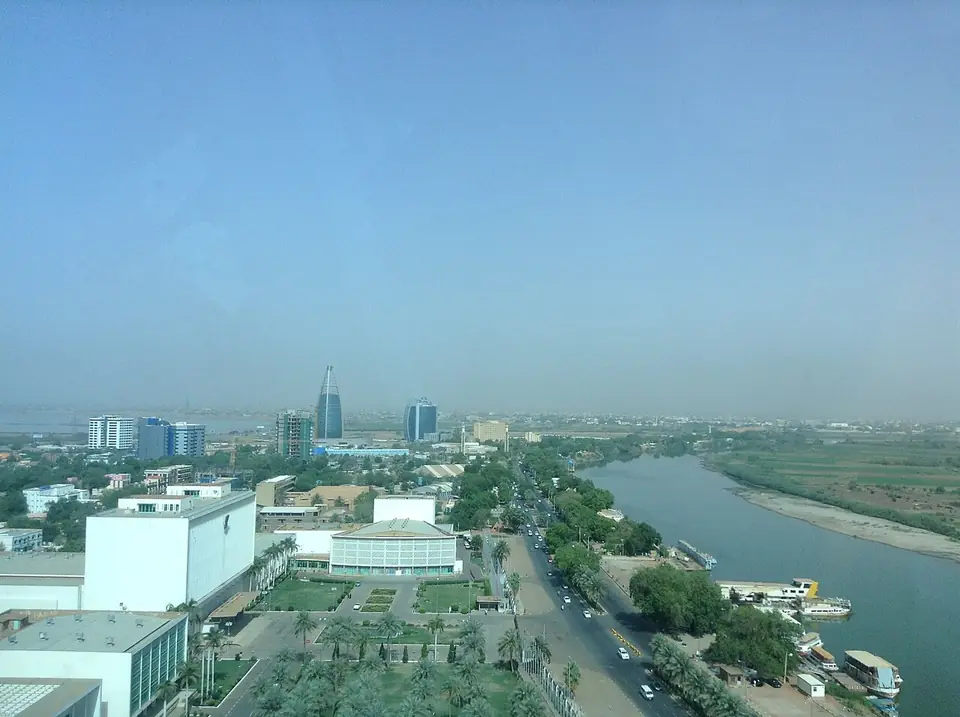
Sudan is a large country in north-east Africa, directly south of Egypt. It has a coastline on the Red Sea in the east and borders Eritrea and Ethiopia to the south-east, South Sudan to the south, the Central African Republic and Chad to the west, and Libya to the north-west. The Nile runs through the whole country from south to north, with the Blue Nile and White Nile meeting at the capital, Khartoum.
Until 2011 Sudan was the largest country in Africa. After South Sudan became independent it dropped to third, behind Algeria and the Democratic Republic of the Congo.
How to find Sudan on the map
- Start from Egypt. Sudan is the big country directly below it, sharing a long straight border along the 22nd parallel.
- Look for the Red Sea. Sudan's eastern edge is a stretch of Red Sea coast, facing Saudi Arabia.
- Follow the Nile. The river flows north from Khartoum through a series of cataracts into Egypt; the Nile valley is the thread linking the two countries.
- Don't confuse it with South Sudan, the smaller country cut from its southern end in 2011, or with Chad to the west, which has no coast.
Flag
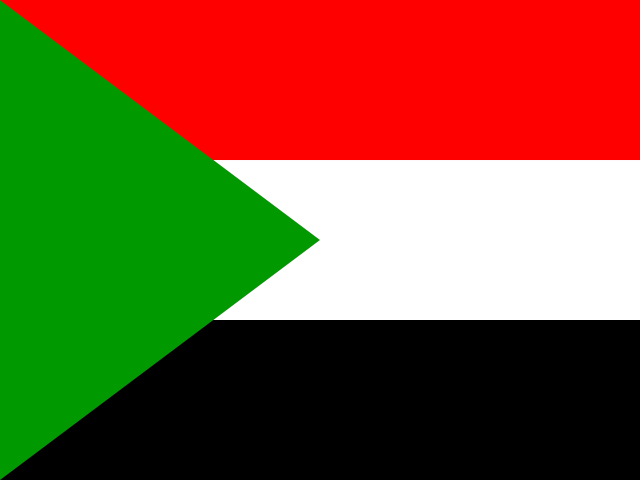
Sudan's flag has three horizontal bands – red, white and black – with a green triangle at the hoist. These are the pan-Arab colours, and the layout echoes the flags of several Arab states. Red stands for the struggle for independence, white for peace, black for Sudan itself and green for Islam and agriculture.
The flags of Jordan, Palestine, Kuwait and the United Arab Emirates use the same four colours in different arrangements. Jordan and Palestine both have black-white-green bands with a red triangle; Sudan is red-white-black with a green triangle. Watch the band order carefully.
A short history of Sudan
The Nile valley in Sudan has been home to great civilisations for over 4,000 years. The kingdom of Kerma traded and fought with ancient Egypt, and its successor, Kush, became powerful enough that its kings conquered Egypt and ruled it as the 25th Dynasty in the 700s BC. Later the Kushite capital moved south to Meroë, a centre of iron-working on the trade routes between Africa and the Mediterranean.
From the 500s AD, three Christian Nubian kingdoms grew along the river, and one of them, Makuria, made a treaty with the Arab rulers of Egypt that kept the peace for about 600 years. Islam and Arabic spread slowly through trade and migration. From the early 1500s the Funj Sultanate at Sennar controlled much of the Nile valley, and in the 1600s the Sultanate of Darfur rose in the west.
In 1821 Ottoman Egypt invaded and founded Khartoum as its base. Heavy taxes and the slave trade fuelled anger, and in the 1880s a religious leader known as the Mahdi led a revolt that captured Khartoum in 1885, killing the British general Charles Gordon. A British-led army retook the country after the Battle of Omdurman in 1898, and Sudan was ruled jointly by Britain and Egypt. The British ran the Muslim, Arabic-speaking north and the largely Christian and traditional south separately – a division that shaped the country's future.
Sudan became independent on 1 January 1956, but civil war between north and south broke out even before that date and, with a pause from 1972 to 1983, lasted until a peace deal in 2005. Military coups were frequent. Omar al-Bashir took power in 1989, and from 2003 a brutal conflict in Darfur drew worldwide attention. The south voted to leave and became South Sudan, taking most of the oil fields with it. Mass protests removed al-Bashir in 2019, but a military takeover in 2021 halted the transition, and in 2023 war broke out between the army and the Rapid Support Forces, causing one of the world's largest displacement crises.
Sudan's economy depends on farming, livestock and gold, and it is the world's main source of gum arabic.
Culture and daily life in Sudan
Arabic and English are official, and Sudanese Arabic is the common language of the north and centre. Yet many other languages survive, including Nubian along the northern Nile, Beja near the Red Sea and Fur in Darfur – reminders of the kingdoms that came before the Arab migrations. Most Sudanese are Sunni Muslim, with a strong Sufi tradition. Every Friday in Omdurman, Sufi followers gather at the tomb of Sheikh Hamed al-Nil to chant and whirl at sunset.
Music is loved across the country. Haqiba songs from the early 20th century laid the foundations, and the singer Mohammed Wardi became a national voice with songs in Arabic and Nubian. The best-known Sudanese novel is Tayeb Salih's Season of Migration to the North (1966), often counted among the great Arabic novels.
Men traditionally wear a white jalabiya and a wrapped turban called an imma, while women wear the toub, a long, colourful cloth draped over the body. Henna designs are a central part of weddings. In the Nuba Mountains, traditional wrestling draws big crowds.
Five facts worth knowing
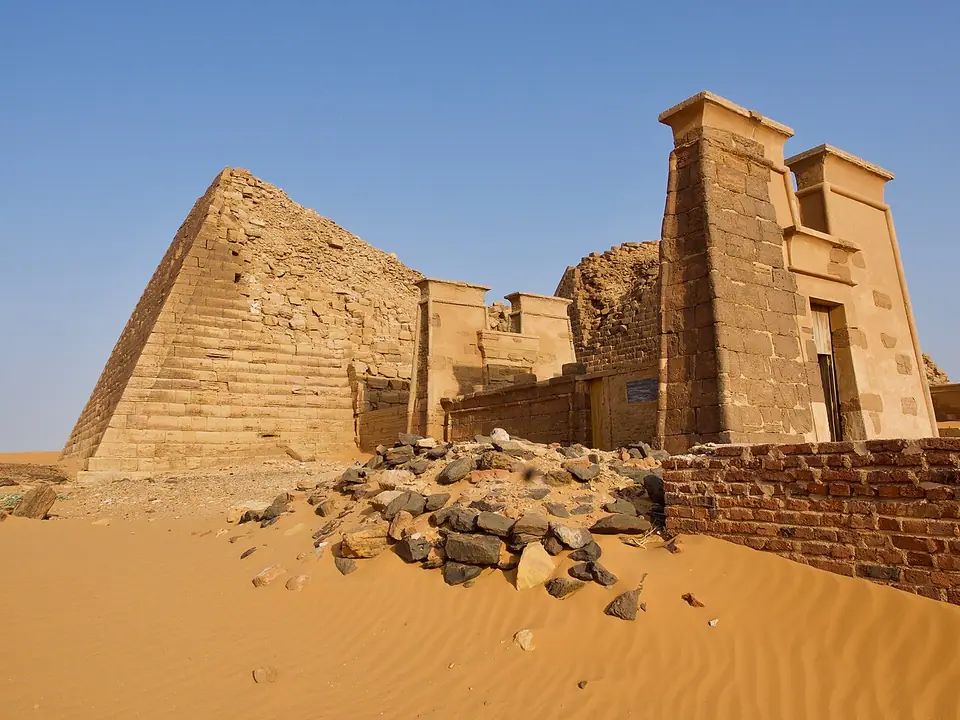
- Sudan has more pyramids than Egypt. The ancient Kingdom of Kush built more than 200 at sites such as Meroë, north of Khartoum.
- Khartoum sits at the confluence of the Blue Nile and the White Nile, which join there to form the main Nile.
- The Blue Nile comes from Ethiopia, the White Nile from Lake Victoria, and most of the Nile's water actually arrives via the Blue Nile.
- South Sudan separated from Sudan in July 2011, taking around a quarter of the old country's area with it.
- Port Sudan on the Red Sea is the country's main seaport, and the coral reefs offshore are among the least-dived in the world.
Culture and traditions in Sudan
- Saying hello
"Salam alaikum" with a handshake, usually between people of the same gender, followed by questions about family.
- Food and drink
Ful medames, slow-cooked fava beans; kisra, a thin sorghum flatbread; jabana coffee spiced with ginger.
- Festivals and traditions
Eid al-Fitr and Eid al-Adha are the main celebrations; Independence Day is on 1 January.
- Everyday life
Hospitality is very strong, and guests are always offered tea or coffee. Food is often shared from a common tray using the right hand.
- Did you know?
Sudan has more pyramids than Egypt, with around 200 built by the ancient Kushite kingdom at sites such as Meroë.
Common mistakes
- Tapping South Sudan – the newer, smaller country to the south.
- Tapping Chad, Sudan's large neighbour to the west, which is landlocked.
- Picking Jordan's or Palestine's flag in the Flags quiz; Sudan's top band is red.
Practise with Sudan
- Africa quiz – find Egypt, then tap the big country below it with the Red Sea coast.
- East Africa quiz – the regional zoom makes the Sudan–South Sudan border clear.
- Africa flags – the pan-Arab group on the African side: Sudan, Egypt, Libya.
- Africa capitals quiz – Khartoum.
- Mystery Country – a wide outline with a straight northern border and a bite out of the north-east corner where it meets the Red Sea.
Nearby countries
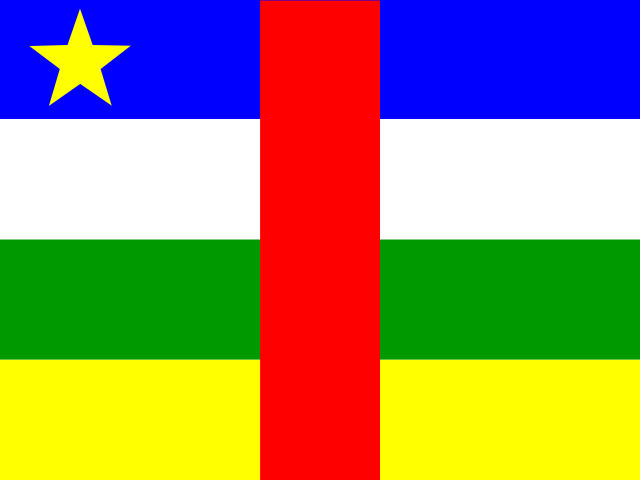 Central African RepublicBangui
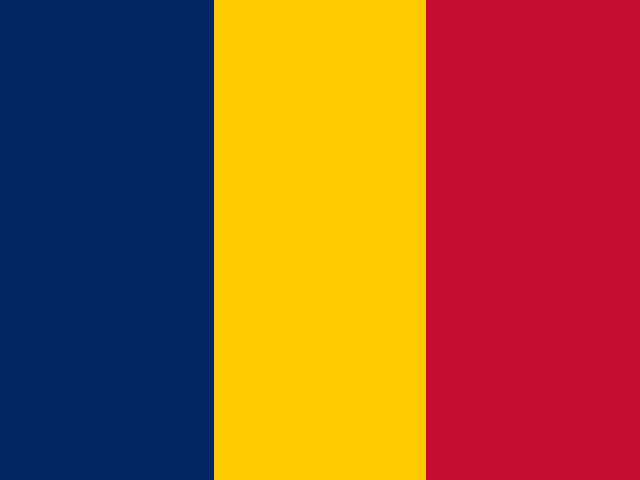 ChadN'Djamena
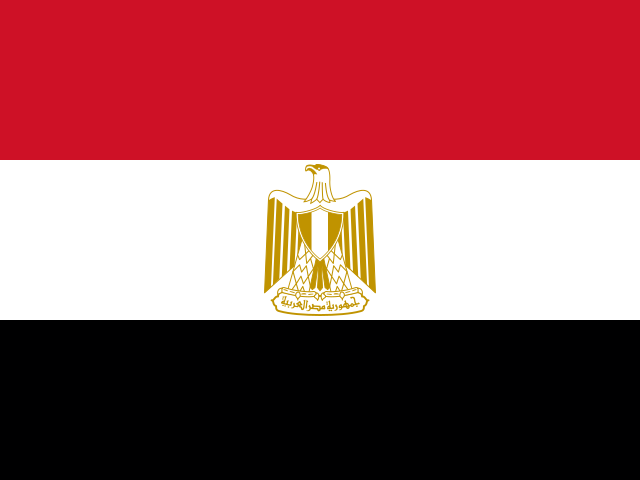 EgyptCairo
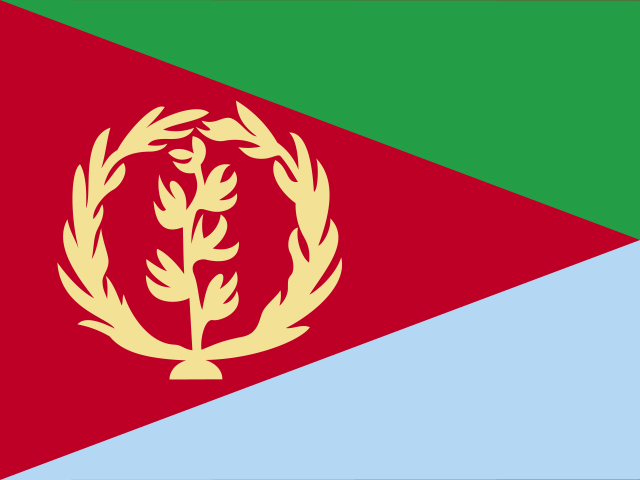 EritreaAsmara
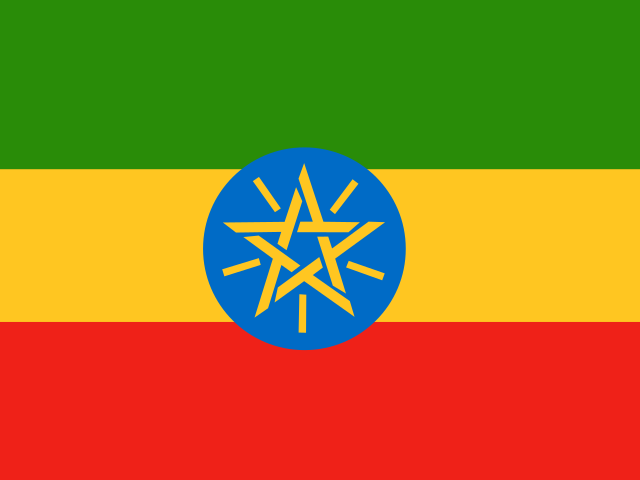 EthiopiaAddis Ababa
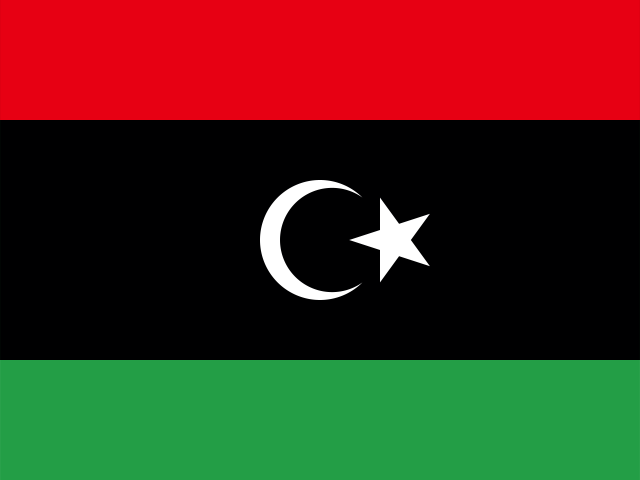 LibyaTripoli
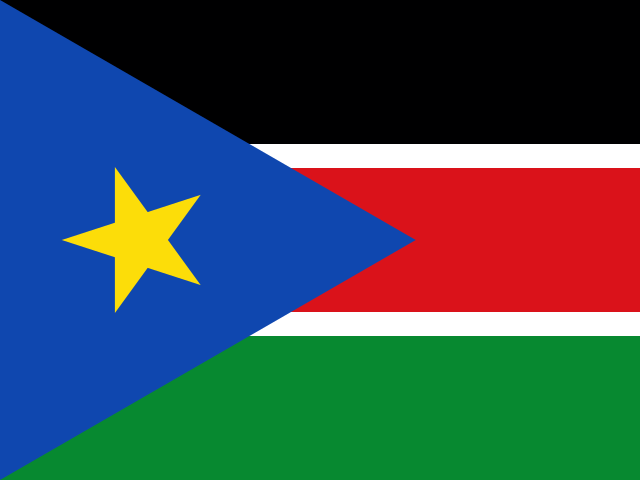 South SudanJuba
Quick check: how well do you know Sudan?
3 questions, no sign-up. Tap an answer.
1. Which flag belongs to Sudan?
That's the flag of Sudan.
2. What is the capital of Sudan?
The capital of Sudan is Khartoum.
3. Which of these countries borders Sudan?
Central African Republic, Chad, Egypt, Eritrea, Ethiopia, Libya and South Sudan border Sudan.
Keep going on the Africa quiz – Sudan is one of 54 countries there.
More ways to practise: find Sudan on the blank map with no borders (hard mode), or play today's Globe and the other daily puzzles.
Frequently asked questions about Sudan
What language is spoken in Sudan?
Arabic and English are the official languages, and Sudanese Arabic is the everyday language of most people. Dozens of other languages are spoken too, among them Nubian in the far north, Beja in the east and Fur in Darfur.
What currency does Sudan use?
Sudan uses the Sudanese pound (SDG). The current pound was introduced in 2007, replacing the Sudanese dinar, and it is not pegged to any other currency. It has lost much of its value during the country's recent conflicts.
What time zone is Sudan in?
Sudan is on UTC+2, the same as Egypt's standard time and South Sudan. It moved there from UTC+3 in 2017. The country does not use daylight saving time.
Which side of the road do they drive on in Sudan?
Traffic in Sudan drives on the right. The country switched from the left in 1973, a leftover of British rule, bringing it into line with Egypt and most of its other neighbours.
What is the highest point in Sudan?
The highest point is Deriba Caldera in the Jebel Marra massif of Darfur, at about 3,040 metres. Jebel Marra is an old volcano, and its crater holds two small lakes.
Why is Sudan called Sudan?
The name comes from the Arabic bilad al-sudan, "land of the Black peoples", which medieval Arab geographers used for the whole belt of Africa south of the Sahara. Only later did it narrow to the country on the Nile.
Quizzes with Sudan
Often confused with
Guides that help with this
- Learn all 54 African countries in a weekLearn the coastline in order, region by region.
- Flags that look alike (and how to tell them apart)Chad or Romania? Australia or New Zealand? The flag pairs that cost quiz points.
- The 25 hardest countries to find on a mapPacific islands, Caribbean islands and landlocked Africa – where they are.