Palestine
Capital: Ramallah. Palestine is one of the 48 countries in the Asia quiz.
Quick answers: What is the capital of Palestine? · Which countries border Palestine?
Facts about Palestine
- CapitalRamallah
- Population5.4 million
- Area6,220 km²
- RegionsAsia, Middle East
- LanguageArabic
- CurrencyIsraeli new shekel (ILS)
Palestine is the 38th most populous of the 48 countries in Asia and the 44th largest by area. Worldwide it ranks 123rd by population and 165th by area.
Where is Palestine?
Palestine, on the eastern shore of the Mediterranean in the Middle East, is made up of two separate territories. The West Bank is a landlocked area between Israel and Jordan, west of the Jordan River and the Dead Sea. The Gaza Strip is a narrow piece of coast on the Mediterranean, bordered by Israel and, at its southern tip, Egypt. The two areas are separated by Israeli territory. Ramallah in the West Bank is the administrative centre of the Palestinian Authority; East Jerusalem is claimed as the capital.
On a world map, find the eastern end of the Mediterranean where the coast turns south towards Egypt. The West Bank is the inland kidney-shaped area next to Jordan; Gaza is the small strip on the coast near the Egyptian border.
How to find Palestine on the map
- Start from Israel. The West Bank is the inland bulge on Israel's eastern side, against Jordan; Gaza is the sliver on the south-western coast.
- Find the Dead Sea. The West Bank's eastern edge runs along the Jordan River and the northern half of the Dead Sea.
- Find Egypt. The Gaza Strip touches Egypt's Sinai Peninsula at its southern end.
- Don't confuse it with Jordan. Jordan is the much larger country east of the river; the West Bank is on the western side.
Flag
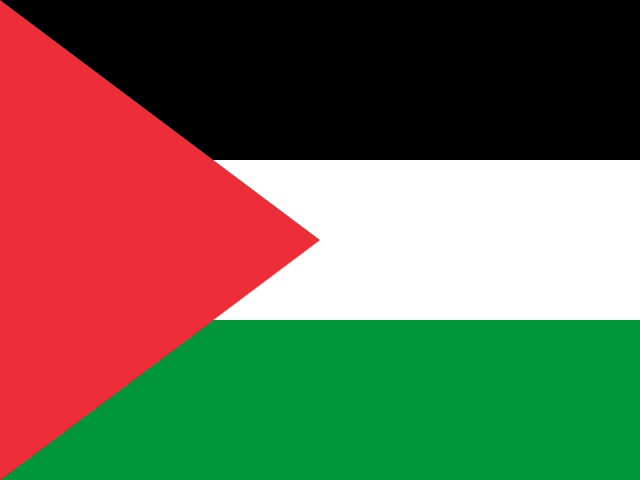
The Palestinian flag has three horizontal bands – black, white and green – with a red triangle at the hoist. These are the pan-Arab colours, and the design comes from the flag of the 1916 Arab Revolt.
Jordan's flag is nearly identical but has a small white seven-pointed star inside the red triangle. Sudan uses red-white-black horizontals with a green triangle, and Western Sahara adds a red star and crescent to the Palestinian layout. If the bands are black, white, green with a plain red triangle and no star, it's Palestine.
A short history of Palestine
The land between the Mediterranean and the Jordan River has been settled for many thousands of years. Canaanite cities stood here in the Bronze Age, followed by the kingdoms of Israel and Judah, and the Philistines on the southern coast, whose name gave the region its Greek and Roman name, Palaestina. Over the centuries it was ruled by Assyrians, Babylonians, Persians, Greeks and Romans, and it became sacred to Jews, Christians and, later, Muslims.
Arab Muslim armies took the region in the 630s, and Arabic gradually became the main language. The Dome of the Rock was built in Jerusalem in the late 600s. Crusaders held much of the land in the 1100s, before it returned to Muslim rule under Saladin and then the Mamluks. From 1517 it was part of the Ottoman Empire for four centuries.
Britain took the area during the First World War and governed it as the Mandate for Palestine from the early 1920s. Its 1917 Balfour Declaration had backed a "national home for the Jewish people", and Jewish immigration grew, as did conflict with the Arab majority. In 1947 the UN proposed splitting the land into Jewish and Arab states. Israel declared independence in 1948, and in the war that followed some 700,000 Palestinians fled or were driven from their homes, an event Palestinians call the Nakba, or "catastrophe". Jordan then held the West Bank and East Jerusalem, and Egypt held Gaza – which is why the two territories are separate today.
Israel captured both in the 1967 war. The Palestine Liberation Organization declared a State of Palestine in 1988. The Oslo Accords of the 1990s created the Palestinian Authority with limited self-rule. In 2007, after a split between Fatah and Hamas, Hamas took control of Gaza. Conflict has continued, including the major war in Gaza that began in 2023.
Palestinians seek an independent state in the West Bank and Gaza with East Jerusalem as its capital. Israel disputes these claims and treats Jerusalem as its undivided capital. The final borders remain unresolved, and the economy depends heavily on agriculture, services and outside aid.
Culture and daily life in Palestine
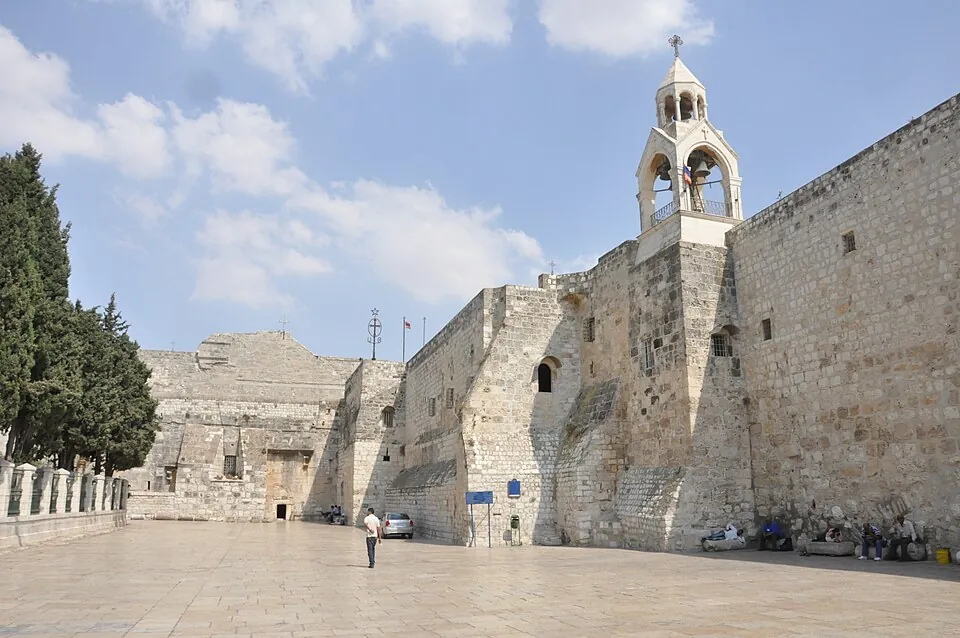
Arabic is the language of daily life, spoken in a Levantine dialect close to those of Jordan, Lebanon and Syria. Most Palestinians are Sunni Muslims, and there is an old Christian community centred on towns like Bethlehem and Ramallah. The Church of the Nativity in Bethlehem is one of Christianity's holiest sites.
Poetry holds a special place. Mahmoud Darwish is widely seen as the Palestinian national poet, and the scholar Edward Said, born in Jerusalem, became one of the best-known writers on culture and politics. The traditional circle dance dabke is performed at weddings, and the keffiyeh, the black-and-white checked scarf, has become a well-known symbol of Palestinian identity.
Crafts carry on in particular towns: Hebron is known for blown glass and pottery, Bethlehem for olive-wood carving and mother-of-pearl, and Nablus for its olive-oil soap and the cheese pastry knafeh. Football is the most popular sport. The olive tree itself is a powerful symbol, and many families have tended the same groves for generations. Palestinian films, such as Hany Abu-Assad's Omar, have been shown at major international festivals.
Five facts worth knowing
- The Dead Sea, on the West Bank's eastern border, is the lowest point on the Earth's land surface, more than 400 metres below sea level.
- Bethlehem, Hebron and Jericho are all in the West Bank; Jericho is often described as one of the oldest continuously inhabited cities in the world.
- The Gaza Strip is only about 41 km long and between 6 and 12 km wide, and is one of the most densely populated places on Earth.
- Palestine has been a non-member observer state at the United Nations since 2012 and is recognised by a large majority of UN member states.
- The West Bank and Gaza are not connected – Israeli territory lies between them, roughly 40 km apart at the closest points.
Culture and traditions in Palestine
- Saying hello
"Marhaba" or "As-salamu alaykum", usually with a handshake and warm questions about family.
- Food and drink
Maqluba, an upside-down dish of rice, vegetables and meat, and musakhan, roasted chicken with sumac and onions on taboon bread.
- Festivals and traditions
The olive harvest in October-November is a major family tradition; Eid celebrations are important.
- Everyday life
Hospitality is central, and guests are usually offered coffee or sweet tea. Families often gather for long meals.
- Did you know?
Palestinian embroidery (tatreez) was added to UNESCO's list of Intangible Cultural Heritage in 2021.
Common mistakes
- Tapping Jordan – it's directly across the river and has an almost identical flag.
- Tapping Israel, which surrounds both territories.
- Tapping only one of the two areas and assuming the other belongs to someone else.
Practise with Palestine
- Asia quiz – look for the two small pieces, the inland West Bank and coastal Gaza, at the eastern end of the Mediterranean.
- Middle East quiz – a zoomed-in map where both territories are easier to pick out.
- Asia flags – black, white and green with a red triangle; check for the missing star to rule out Jordan.
- Mystery Country – an unusual two-piece outline: a kidney shape and a thin coastal strip.
Nearby countries
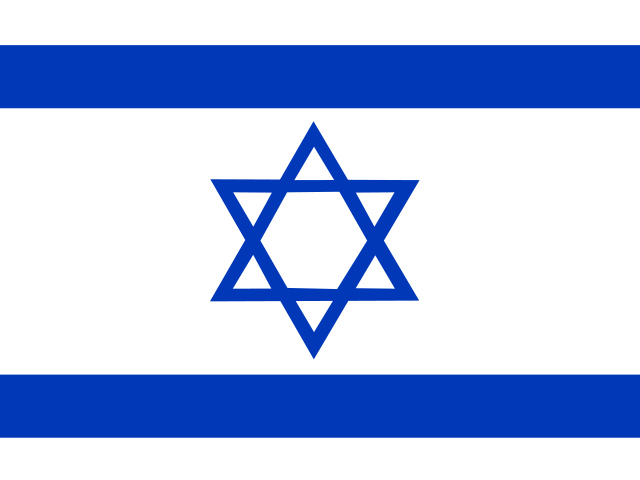
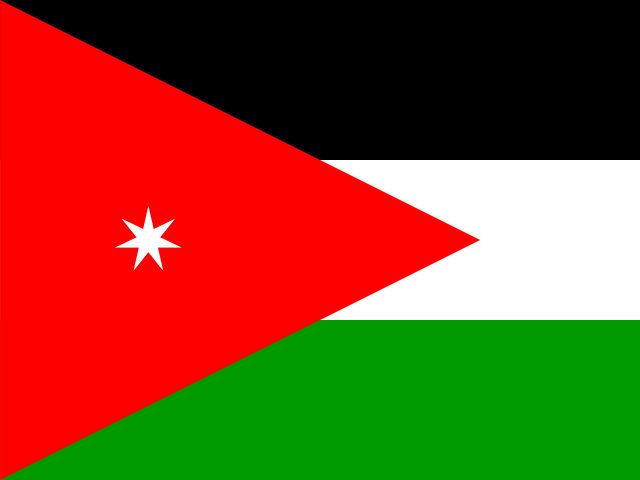
Quick check: how well do you know Palestine?
3 questions, no sign-up. Tap an answer.
1. Which flag belongs to Palestine?
That's the flag of Palestine.
2. What is the capital of Palestine?
The capital of Palestine is Ramallah.
3. Which of these countries borders Palestine?
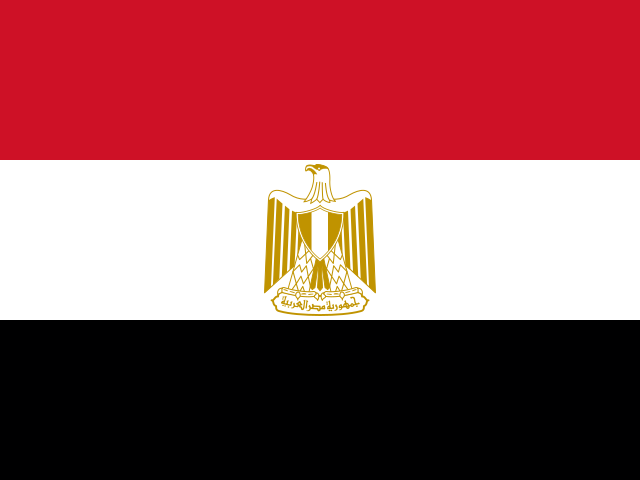
Egypt, Israel and Jordan border Palestine.
Keep going on the Asia quiz – Palestine is one of 48 countries there.
More ways to practise: find Palestine on the blank map with no borders (hard mode), or play today's Globe and the other daily puzzles.
Frequently asked questions about Palestine
What language is spoken in Palestine?
Arabic is the official language and is spoken by nearly all Palestinians, in local dialects of Levantine Arabic. Hebrew is widely understood, especially by people who work in Israel, and English is commonly taught in schools and used in business.
What currency does Palestine use?
Palestine has no currency of its own. Under agreements from the 1990s, the Israeli new shekel (ILS) is used for most everyday transactions. The Jordanian dinar is also used in the West Bank, especially for savings and property, and the US dollar is widely accepted.
What time zone is Palestine in?
Palestine is on UTC+2 in winter and switches to UTC+3 in summer with daylight saving time. The Palestinian Authority sets its own dates for changing the clocks, which do not always match Israel's.
Which side of the road do they drive on in Palestine?
Traffic drives on the right in the West Bank and Gaza. Movement on roads in the West Bank is shaped by checkpoints and restrictions, and Palestinian vehicles use different number plates from Israeli ones.
What is the highest point in Palestine?
The highest ground lies on the central ridge of hills that runs through the West Bank from north to south, reaching just over 1,000 metres near Hebron and Ramallah. Gaza, by contrast, is low and flat along the coast.
What are the West Bank and Gaza?
They are the two separate territories that make up Palestine, divided by Israeli territory. The West Bank lies west of the Jordan River and is much larger. The Gaza Strip is a narrow coastal strip on the Mediterranean, only about 40 kilometres long and one of the most densely populated places on Earth.
Quizzes with Palestine
Often confused with
Guides that help with this
- Oceans, seas, rivers and mountainsThe physical map: seas around each continent, the big rivers and ranges.
- Flags that look alike (and how to tell them apart)Chad or Romania? Australia or New Zealand? The flag pairs that cost quiz points.
- The 25 hardest countries to find on a mapPacific islands, Caribbean islands and landlocked Africa – where they are.