Ireland
Capital: Dublin. Ireland is one of the 46 countries in the Europe quiz.
Quick answers: What is the capital of Ireland? · Which countries border Ireland?
Facts about Ireland
- CapitalDublin
- Population5.5 million
- Area70,273 km²
- RegionEurope
- LanguagesIrish, English
- CurrencyEuro (EUR)
Ireland is the 25th most populous of the 46 countries in Europe and the 22nd largest by area. Worldwide it ranks 121st by population and 118th by area.
Where is Ireland?
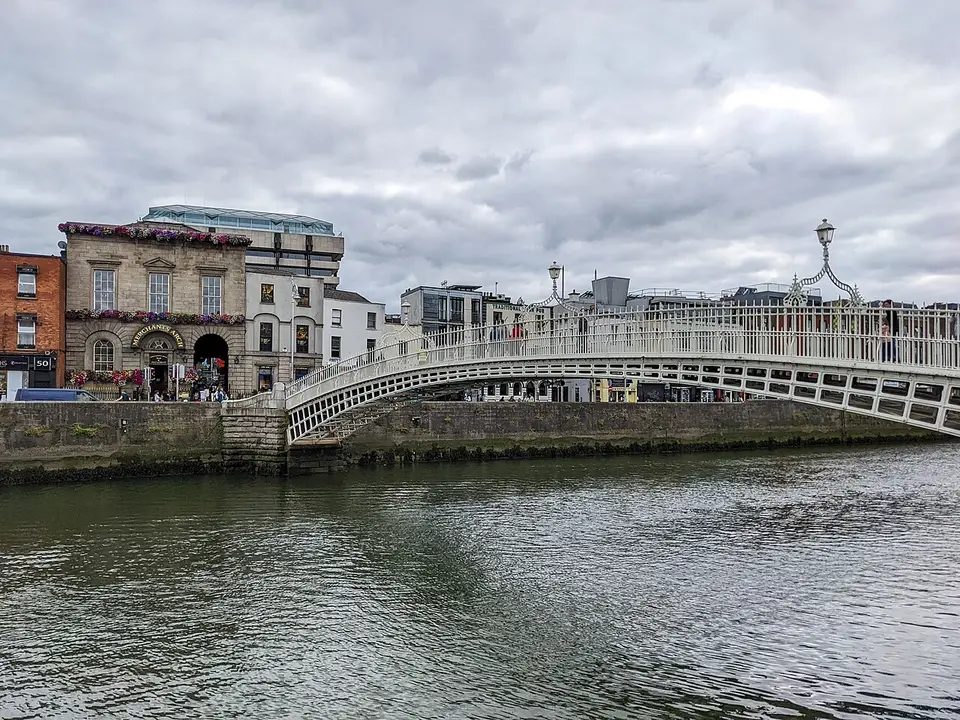
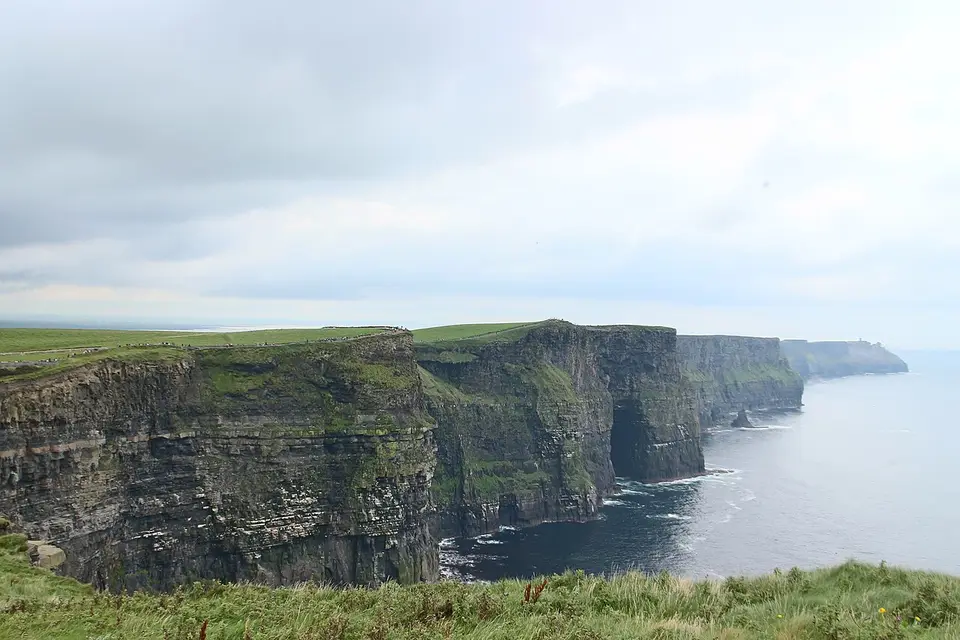
Ireland is an island in the North Atlantic, west of Great Britain across the Irish Sea. The Republic of Ireland covers about five-sixths of the island; the north-eastern corner is Northern Ireland, part of the United Kingdom, which gives Ireland its only land border. Dublin, the capital, is on the east coast facing Wales.
On a world map, find Great Britain and look to its left. The smaller, rounder island beside it is Ireland.
How to find Ireland on the map
- Start from Great Britain. Ireland is the island immediately west of it.
- Look for the two-part island. On a political map, the top-right corner is a different colour – that's Northern Ireland. The rest is the Republic.
- Don't confuse it with Iceland. Iceland is much further north and is on its own in the Atlantic; Ireland is tucked in beside Britain.
Flag
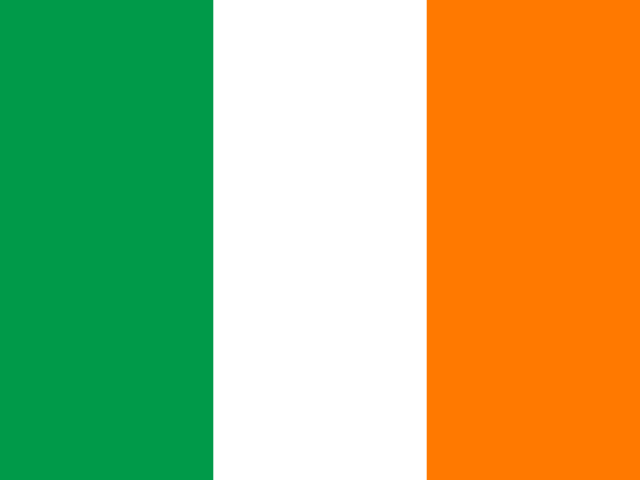
The Irish flag is three vertical bands – green, white and orange, with green at the hoist. Green represents the Catholic, nationalist tradition, orange the Protestant tradition, and the white band between them stands for peace.
The flag of Ivory Coast uses the same three colours reversed, orange at the hoist. Italy's flag is green-white-red, which looks similar at a distance; check whether the last band is orange or red.
A short history of Ireland
Farmers in Ireland built Newgrange, a vast passage tomb in the Boyne Valley, more than 5,000 years ago – older than Stonehenge and the pyramids of Giza. Celtic language and culture took hold during the Iron Age, and the Romans never invaded. Christianity arrived in the 400s, traditionally through St Patrick, and Irish monasteries became centres of learning, producing masterpieces such as the Book of Kells around 800.
Vikings raided from the late 700s but also founded Ireland's first towns, including Dublin, Waterford and Limerick. In 1169 Anglo-Norman knights landed, and the English Crown claimed lordship over Ireland. Real English control spread only under the Tudors in the 1500s. In the Plantation of Ulster, from 1609, land was taken from Irish Catholics and given to Protestant settlers from Scotland and England. That settlement is the root of the Protestant majority in the north-east and, eventually, of the border that runs across the island today.
Oliver Cromwell's campaign of 1649 and William III's victory at the Boyne in 1690 confirmed Protestant power. In 1801 Ireland was joined to Great Britain in a single United Kingdom. The Great Famine of 1845–49, caused by potato blight, killed about a million people and drove another million to emigrate; the island's population has never returned to its pre-famine level.
The Easter Rising of 1916 failed, but the War of Independence that followed led to the Anglo-Irish Treaty of 1921. Twenty-six counties became the Irish Free State in 1922, while Northern Ireland stayed in the United Kingdom, and a short civil war followed. Ireland became a republic in 1949 and joined the European community in 1973. In the North, three decades of conflict known as the Troubles largely ended with the Good Friday Agreement of 1998.
Today Ireland is one of Europe's wealthiest countries, home to the European headquarters of many technology and pharmaceutical companies.
Culture and daily life in Ireland
For a small country, Ireland has an outsized literary record. Jonathan Swift, Oscar Wilde and Bram Stoker were Dubliners, James Joyce set Ulysses in a single Dublin day, and four Irish writers – W.B. Yeats, George Bernard Shaw, Samuel Beckett and Seamus Heaney – have won the Nobel Prize in Literature.
Traditional music thrives in informal sessions, with fiddles, tin whistles, the bodhrán drum and the uilleann pipes. Riverdance, first performed in 1994, took Irish dancing to the world, while U2 became one of the biggest rock bands of all time.
The most popular sports are uniquely Irish. Gaelic football and hurling, a fast stick-and-ball game, are run by the amateur Gaelic Athletic Association, and the All-Ireland finals fill Croke Park in Dublin. Rugby is played by a single team for the whole island. Ireland is traditionally Catholic, but society has changed fast – in 2015 it became the first country to approve same-sex marriage by popular vote. Storytelling, wit and a love of talk – the Irish call it craic – remain central to the national character.
Five facts worth knowing
- The Republic of Ireland has 26 counties and the island has 32, grouped into four historic provinces: Leinster, Munster, Connacht and Ulster. Six of Ulster's nine counties make up Northern Ireland.
- Ireland has two official languages, Irish and English. Irish is spoken daily in areas called the Gaeltacht, mostly along the western coast.
- The highest mountain is Carrauntoohil at 1,038 metres, in County Kerry in the south-west. The interior is mostly low and boggy; the mountains sit around the edges.
- Ireland is in the European Union and uses the euro, but is not in the Schengen area. It shares a Common Travel Area with the United Kingdom instead.
- The Shannon is the longest river in either Ireland or Britain, flowing south through the middle of the island to the Atlantic at Limerick.
Culture and traditions in Ireland
- Saying hello
A friendly "Hello, how are you?"; in Irish, "Dia duit".
- Food and drink
Irish stew of lamb and potatoes; soda bread; the full Irish breakfast; Guinness stout.
- Festivals and traditions
St Patrick's Day on 17 March with parades; Halloween on 31 October.
- Everyday life
Pubs are social hubs, and buying drinks in "rounds" is customary. Friendly chat and humour are part of everyday life.
- Did you know?
Halloween grew from the ancient Celtic festival of Samhain, and the first jack-o'-lanterns in Ireland were carved from turnips.
Common mistakes
- Tapping Northern Ireland instead of the Republic, or expecting the whole island to light up.
- Picking Ivory Coast's flag in the Flags quiz, or Italy's.
- Mixing up Ireland and Iceland in the Capitals quiz – Dublin and Reykjavík.
Practise with Ireland
- Europe quiz – the island west of Great Britain, with the north-eastern corner missing.
- Europe flags – green-white-orange; learn it alongside Africa flags to see why Ivory Coast trips people up.
- Europe capitals quiz – Dublin.
- Mystery Country – a rounded outline with a heavily indented west coast and a smoother east coast.
- Mistake Bank – if Ireland and Ivory Coast keep catching you out, practise them here.
Nearby countries
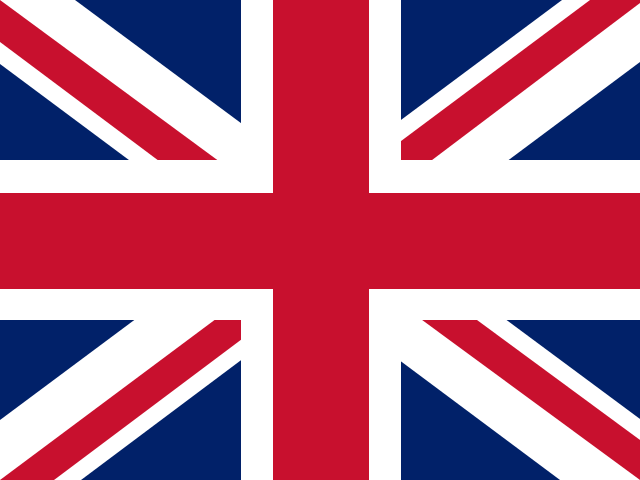 United KingdomLondon
Quick check: how well do you know Ireland?
3 questions, no sign-up. Tap an answer.
1. Which flag belongs to Ireland?
That's the flag of Ireland.
2. What is the capital of Ireland?
The capital of Ireland is Dublin.
3. Which of these countries borders Ireland?
United Kingdom borders Ireland.
Keep going on the Europe quiz – Ireland is one of 46 countries there.
More ways to practise: find Ireland on the blank map with no borders (hard mode), or play today's Globe and the other daily puzzles.
Frequently asked questions about Ireland
What language is spoken in Ireland?
The constitution names Irish (Gaeilge) as the first official language and English as the second. In practice English is the everyday language for almost everyone, while Irish is taught in all schools and spoken daily in Gaeltacht areas, mostly along the west coast.
What currency does Ireland use?
Ireland uses the euro (EUR), which it adopted in 1999, with notes and coins arriving in 2002. Before that it used the Irish pound, or punt. Irish euro coins carry a Celtic harp on their national side.
What time zone is Ireland in?
Ireland is on UTC+0 in winter and UTC+1 in summer, the same as the United Kingdom. Unusually, Irish law treats the summer time, Irish Standard Time, as the official standard and the winter time as the seasonal change.
Which side of the road do they drive on in Ireland?
Ireland drives on the left, like the United Kingdom, and cars are right-hand drive. Speed limits are shown in kilometres per hour, unlike in Northern Ireland, where they are in miles per hour – so drivers crossing the border see the signs change.
What is the highest point in Ireland?
The highest point is Carrauntoohil, about 1,038 metres, in the MacGillycuddy's Reeks range of County Kerry. The usual route to the summit climbs a steep gully known as the Devil's Ladder.
Is Ireland part of the UK?
No. Ireland, also called the Republic of Ireland, is an independent country and has been fully separate from the United Kingdom since the 1920s. Northern Ireland, in the north-east of the island, is part of the UK.
Quizzes with Ireland
Often confused with
Guides that help with this
- All 46 European capitals, with a memory trick for eachCapitals grouped by region, with hooks for the ones people forget.
- Flags that look alike (and how to tell them apart)Chad or Romania? Australia or New Zealand? The flag pairs that cost quiz points.
- The 25 hardest countries to find on a mapPacific islands, Caribbean islands and landlocked Africa – where they are.