Kazakhstan
Capital: Astana. Kazakhstan is one of the 48 countries in the Asia quiz.
Quick answers: What is the capital of Kazakhstan? · Which countries border Kazakhstan?
Facts about Kazakhstan
- CapitalAstana
- Population20.8 million
- Area2,724,900 km²
- RegionsAsia, Central & South Asia
- LanguagesKazakh, Russian
- CurrencyKazakhstani tenge (KZT)
Kazakhstan is the 25th most populous of the 48 countries in Asia and the 3rd largest by area. Worldwide it ranks 65th by population and 9th by area.
Where is Kazakhstan?
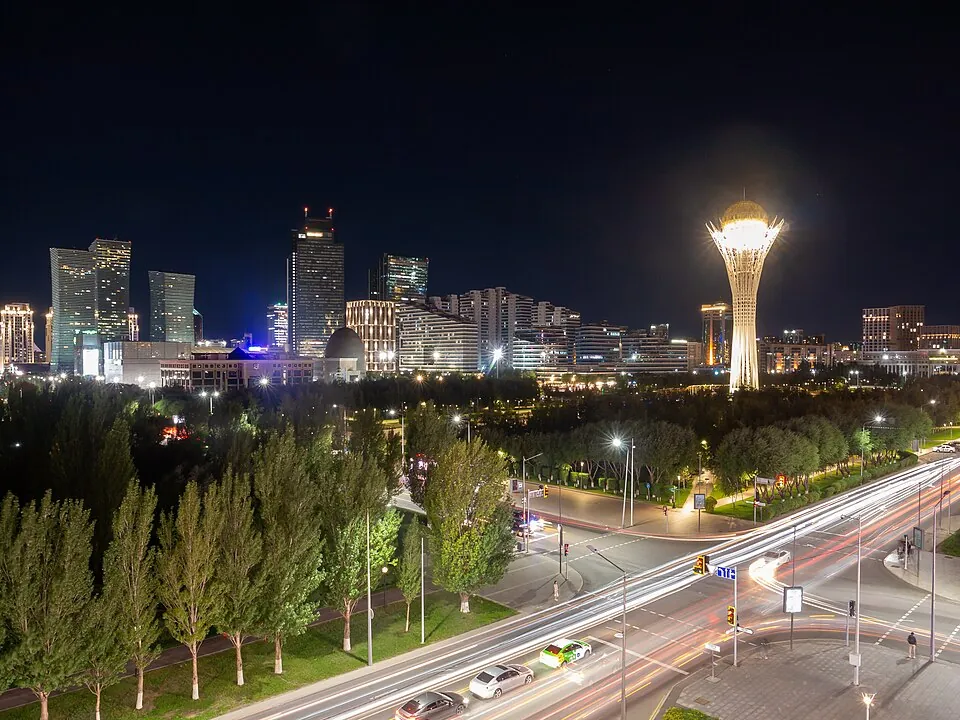
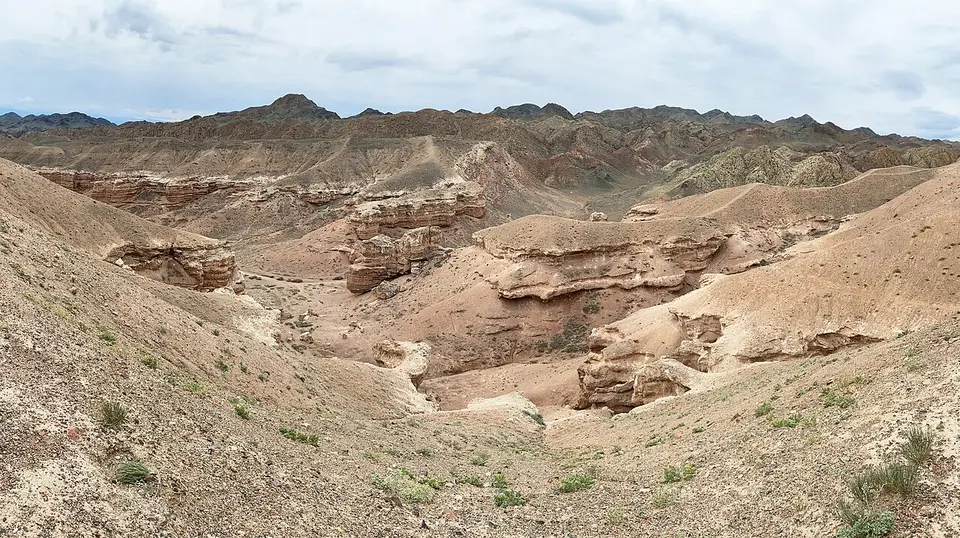
Kazakhstan is in Central Asia, directly south of Russia and north-west of China. It is the largest landlocked country in the world and the ninth-largest country overall, stretching from the Caspian Sea in the west to the Altai Mountains in the east. Its neighbours are Russia along the entire northern border, China to the east, and Kyrgyzstan, Uzbekistan and Turkmenistan to the south. Astana, the capital, is in the north-central steppe; Almaty, the largest city, is in the far south-east near the Kyrgyz border.
On a world map, find the gap between Russia and the smaller Central Asian countries. The huge block filling it is Kazakhstan.
How to find Kazakhstan on the map
- Start from Russia. Kazakhstan is the big country hanging directly below the middle of Russia, between the Caspian Sea and Mongolia.
- It's the largest of the "-stans". Uzbekistan, Turkmenistan, Kyrgyzstan and Tajikistan are all tucked underneath it.
- Don't confuse it with Mongolia. Mongolia is the other large landlocked country below Russia, but it's further east. The two almost touch but don't share a border.
- Don't confuse it with Uzbekistan. Uzbekistan is to the south, wrapped around the Aral Sea, and much smaller.
Flag
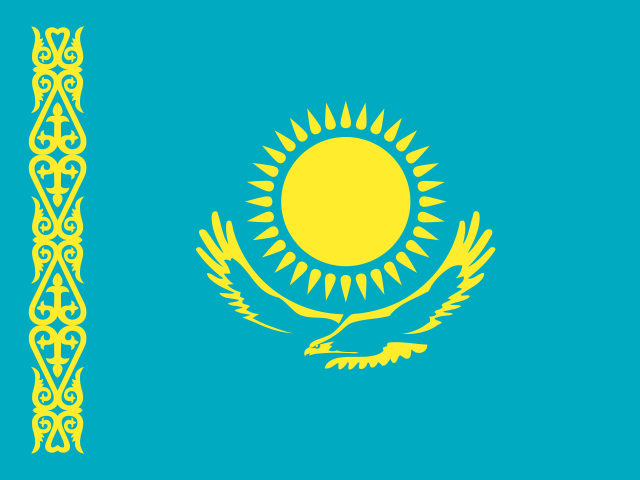
The Kazakh flag is a light blue field with a golden sun in the centre, with 32 rays, above a golden steppe eagle in flight. Along the hoist runs a vertical strip of golden national ornament. The blue stands for the sky and the Turkic peoples, the sun for life and energy, and the eagle for freedom. It was adopted in 1992 after independence from the Soviet Union.
No other national flag combines a sun and an eagle on light blue. Argentina has a sun on light blue and white stripes, but no bird. If you see an eagle under the sun, it's Kazakhstan.
A short history of Kazakhstan
The Kazakh steppe is one of the places where people first learned to work with horses. Remains from the Botai culture in the north, more than 5,000 years old, show some of the earliest evidence of horse use anywhere. Later, Iranian-speaking Saka nomads ruled the grasslands; a warrior buried near Almaty in gold-covered armour, the Golden Man, has become a national symbol.
Turkic peoples spread across the region from the 500s AD, and Silk Road cities such as Otrar and Turkestan grew rich on trade. Genghis Khan's armies destroyed Otrar after a siege that began in 1219, and the steppe became part of the Mongol world. The Kazakh Khanate was founded in the mid-1400s, and the Kazakhs organised themselves into three tribal unions, or zhuz, roughly covering the west, centre and south-east of today's map.
Attacks by the Dzungars from the east in the 1700s pushed Kazakh leaders to seek Russian protection, and over the next century the Russian Empire took control of the whole steppe. Russian and Ukrainian farmers settled on the best pasture land, which is one reason the north still has many Russian speakers.
Soviet rule brought tragedy. Forced collectivisation in the early 1930s took away the nomads' herds, and the famine that followed killed well over a million Kazakhs. Whole peoples, including Volga Germans, Chechens and Koreans, were deported to Kazakhstan, and the steppe held some of the largest labour camps. In the 1950s the Virgin Lands campaign ploughed up vast areas for wheat, while the Soviet Union tested hundreds of nuclear weapons at Semipalatinsk until 1989.
In December 1991 Kazakhstan was the last Soviet republic to declare independence. It gave up the nuclear weapons left on its soil and closed the test site. Since then oil from the Caspian region and mining have made it the largest economy in Central Asia, and it balances its ties with Russia, China and the West.
Culture and daily life in Kazakhstan
Kazakh, a Turkic language, is the state language, while Russian is still widely used, especially in cities and the north. The government has begun moving Kazakh from the Cyrillic alphabet to a Latin one, a change that reflects a desire to step out of Moscow's shadow. Most Kazakhs are Muslim and many Russians are Orthodox Christian, but daily life is largely secular.
The nomadic past is everywhere. The felt yurt is still raised for celebrations, horse games such as kokpar draw crowds, and in the mountains a few families keep up eagle hunting, training golden eagles to catch foxes. The two-stringed dombra is the national instrument, and singers called akyns compete in aitys, duels of improvised verse.
The 19th-century poet and thinker Abai Kunanbaiuly is the country's literary giant, and his Book of Words, a series of reflections on Kazakh society, is still widely read. In sport Kazakhstan is known for boxing, wrestling and cycling, and the middleweight Gennady Golovkin became one of the best-known boxers of his generation.
Five facts worth knowing
- The Baikonur Cosmodrome, in southern Kazakhstan, is the world's oldest spaceport. Yuri Gagarin launched from here in 1961, and Russia still leases it.
- The capital moved from Almaty to Astana in 1997. The city was renamed Nur-Sultan in 2019 and changed back to Astana in 2022.
- The Aral Sea, on the border with Uzbekistan, has shrunk to a fraction of its 1960 size after its rivers were diverted for irrigation.
- Kazakhstan is the world's largest producer of uranium.
- The country spans two continents. A small part west of the Ural River is usually counted as Europe.
Culture and traditions in Kazakhstan
- Saying hello
"Salemetsiz be" (hello) with a handshake, usually between men; elders are greeted first.
- Food and drink
Beshbarmak, boiled meat with flat noodles; kumys, fermented mare's milk.
- Festivals and traditions
Nauryz, the spring new year, on 21–23 March.
- Everyday life
Guests are welcomed with tea, often poured only half-full so it can be refilled often as a sign of welcome.
- Did you know?
The wild apple forests of the Tian Shan mountains near Almaty are considered the birthplace of the domestic apple.
Common mistakes
- Tapping Mongolia – both are large, landlocked and sit below Russia.
- Tapping Uzbekistan or Turkmenistan – the southern border runs through desert and is hard to judge.
- Forgetting that the western edge reaches the Caspian Sea.
- Assuming Almaty is still the capital.
Practise with Kazakhstan
- Asia quiz – the large block directly below Russia, west of Mongolia.
- Asia flags – the sun and eagle on light blue.
- Asia capitals quiz – Astana.
- Whole World quiz – the ninth-largest country, so one of the easier ones to find at world zoom.
- Mystery Country – a wide, irregular shape with the Caspian coast on the left.
Nearby countries
 ChinaBeijing
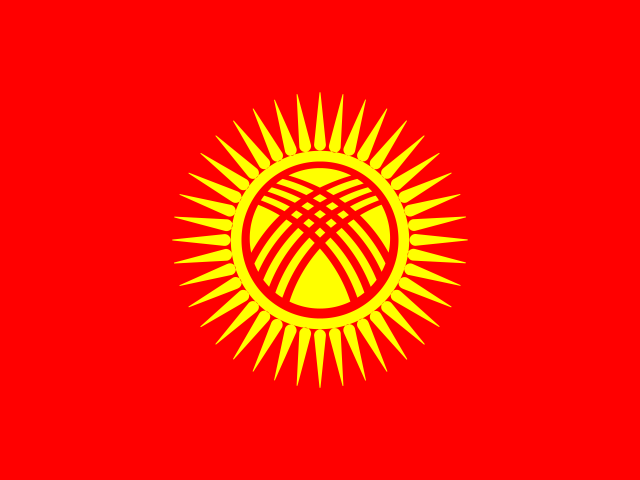 KyrgyzstanBishkek
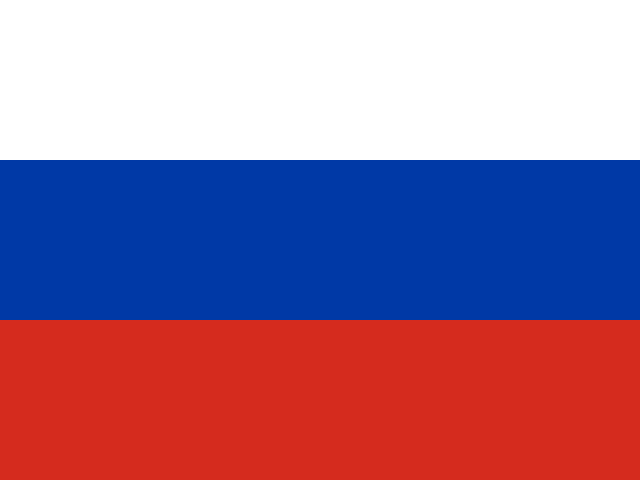 RussiaMoscow
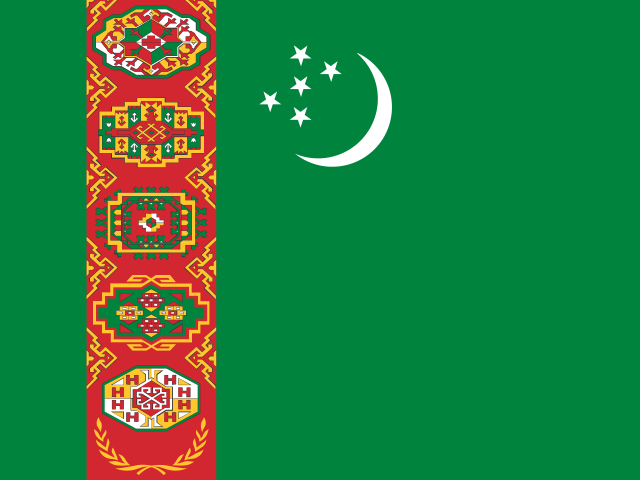 TurkmenistanAshgabat
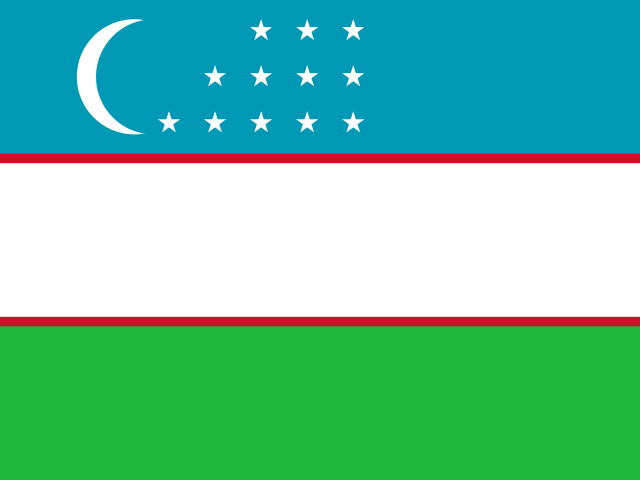 UzbekistanTashkent
Quick check: how well do you know Kazakhstan?
3 questions, no sign-up. Tap an answer.
1. Which flag belongs to Kazakhstan?
That's the flag of Kazakhstan.
2. What is the capital of Kazakhstan?
The capital of Kazakhstan is Astana.
3. Which of these countries borders Kazakhstan?
China, Kyrgyzstan, Russia, Turkmenistan and Uzbekistan border Kazakhstan.
Keep going on the Asia quiz – Kazakhstan is one of 48 countries there.
More ways to practise: find Kazakhstan on the blank map with no borders (hard mode), or play today's Globe and the other daily puzzles.
Frequently asked questions about Kazakhstan
What language is spoken in Kazakhstan?
Kazakh is the state language, and Russian has official status and is used widely in business, government and the cities. Most Kazakhstanis speak both. The government is moving Kazakh from the Cyrillic alphabet to a Latin-based script in stages.
What currency does Kazakhstan use?
Kazakhstan uses the tenge (KZT), introduced in November 1993 to replace the Soviet-era ruble. The tenge floats, and its value has fallen sharply at times when oil prices dropped. Its name comes from an old Turkic word for a set of scales.
What time zone is Kazakhstan in?
Since March 2024 the whole of Kazakhstan has used a single time zone, UTC+5. Before that, the east, including Astana and Almaty, was on UTC+6. The country does not use daylight saving time.
Which side of the road do they drive on in Kazakhstan?
Kazakhstan drives on the right, like Russia, China and the rest of Central Asia. Distances are huge: driving from Almaty in the south-east to Atyrau in the west covers well over 2,000 kilometres.
What is the highest point in Kazakhstan?
The highest point is Khan Tengri, about 7,010 metres, a marble pyramid in the Tian Shan mountains on the border with Kyrgyzstan and China. Its summit glows pink at sunset, which gives the peak its Kazakh name, Kan Tau, "blood mountain".
What is the Baikonur Cosmodrome?
Baikonur, in southern Kazakhstan, is the world's first and largest space launch site. Sputnik in 1957 and Yuri Gagarin in 1961 were launched from there. Russia leases it from Kazakhstan, and crewed flights to the International Space Station have lifted off from it.
Quizzes with Kazakhstan
Often confused with
Guides that help with this
- Oceans, seas, rivers and mountainsThe physical map: seas around each continent, the big rivers and ranges.
- Flags that look alike (and how to tell them apart)Chad or Romania? Australia or New Zealand? The flag pairs that cost quiz points.
- The 25 hardest countries to find on a mapPacific islands, Caribbean islands and landlocked Africa – where they are.