Kyrgyzstan
Capital: Bishkek. Kyrgyzstan is one of the 48 countries in the Asia quiz.
Quick answers: What is the capital of Kyrgyzstan? · Which countries border Kyrgyzstan?
Facts about Kyrgyzstan
- CapitalBishkek
- Population7.3 million
- Area199,951 km²
- RegionsAsia, Central & South Asia
- LanguagesKyrgyz, Russian
- CurrencyKyrgyz som (KGS)
Kyrgyzstan is the 34th most populous of the 48 countries in Asia and the 23rd largest by area. Worldwide it ranks 106th by population and 85th by area.
Where is Kyrgyzstan?
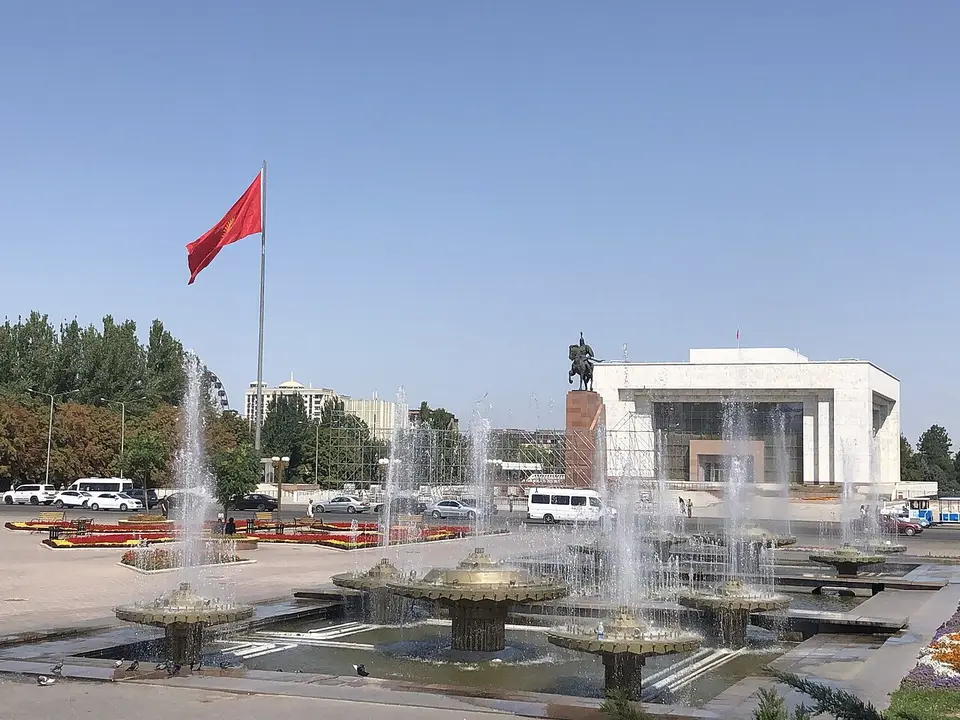
Kyrgyzstan is a landlocked, mountainous country in Central Asia. Kazakhstan lies to the north, Uzbekistan to the west, Tajikistan to the south and China to the east. The Tian Shan mountains cover most of the territory, and about 90 per cent of the country is above 1,500 metres. The capital, Bishkek, is in the north near the Kazakh border. The second city, Osh, is in the south in the Fergana Valley.
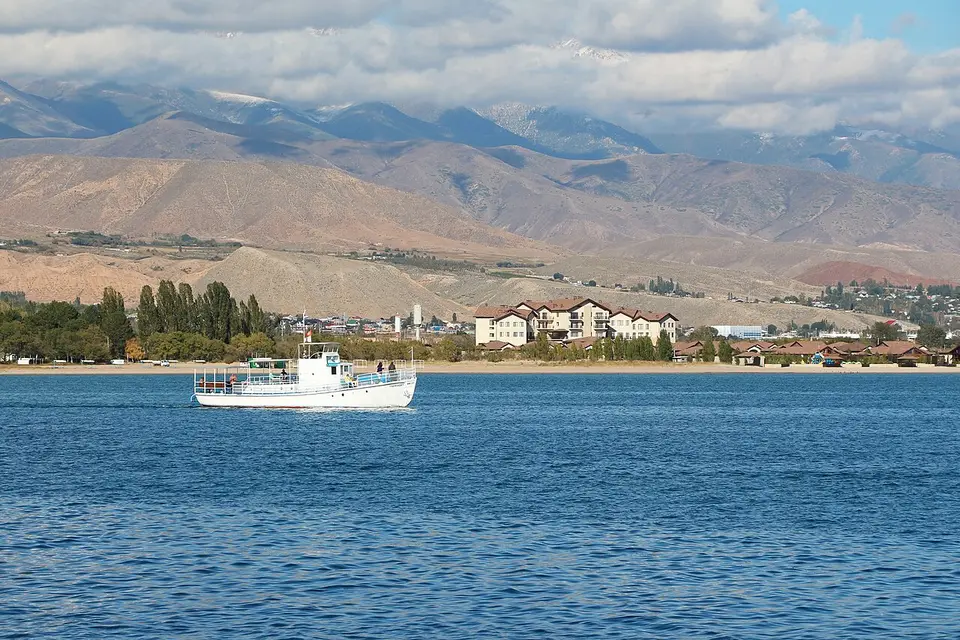
Issyk-Kul, a huge alpine lake in the north-east, is the country's most famous natural feature.
How to find Kyrgyzstan on the map
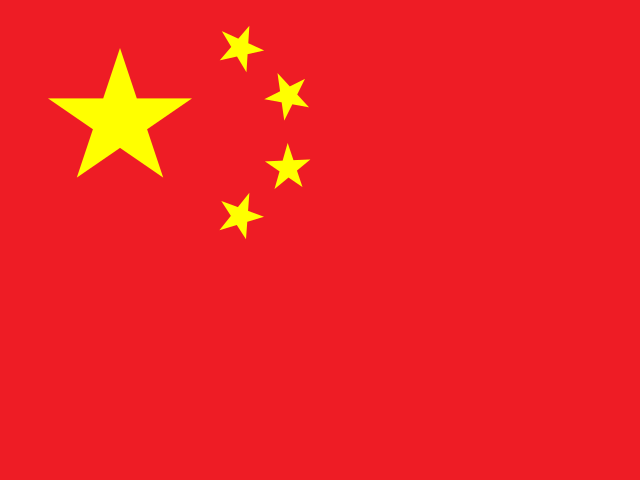
- Start from China. Kyrgyzstan sits on China's far western border, just north of Tajikistan.
- Look below Kazakhstan. Kazakhstan is the giant country between Russia and the rest of Central Asia. Kyrgyzstan is the smaller country on its southern border, east of Uzbekistan.
- Find the lake. Issyk-Kul is a large blue oval in the north-east of the country, visible on most maps.
- Separate it from Tajikistan. Tajikistan is directly south and also mountainous. Kyrgyzstan is the one touching Kazakhstan.
Flag
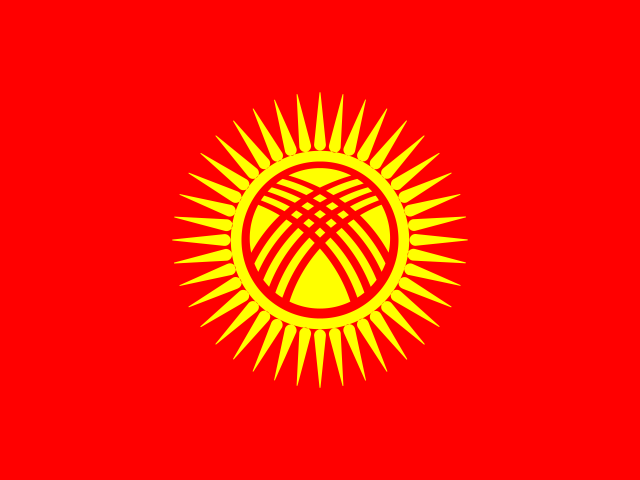
Kyrgyzstan's flag is red with a yellow sun in the centre. The sun has 40 rays, representing the 40 tribes united by the legendary hero Manas. Inside the sun is the tunduk – the circular crown of a yurt, with crossed lines – the symbol of home and of the nomadic heritage of the Kyrgyz.
No other flag shows a yurt crown, so in the Flags quiz a red field with a yellow sun and a cross-hatched circle in the middle is Kyrgyzstan.
A short history of Kyrgyzstan
The mountains and valleys of Kyrgyzstan have been crossed by travellers and herders for thousands of years. Branches of the Silk Road ran through the Chuy Valley and the Fergana Valley, and towns such as Balasagun, whose Burana Tower still stands near Tokmok, flourished as trading posts. Sulaiman-Too, a rocky mountain rising out of the city of Osh, has been a place of pilgrimage for centuries.
The ancestors of the Kyrgyz are thought to have lived far to the north, near the upper Yenisei River in Siberia, where they ruled a powerful khaganate in the 800s. Over the following centuries, through upheavals including the Mongol conquests, Kyrgyz groups moved south into the Tian Shan. There they lived as nomadic herders, organised into clans and moving between summer and winter pastures.
In the 1800s the region fell under the Khanate of Kokand, based in the Fergana Valley, before the Russian Empire absorbed it in the 1860s and 1870s. Russian settlers took over good farming land. In 1916, when the tsar tried to draft Central Asians for labour behind the front lines, a revolt broke out and was put down brutally, and many Kyrgyz fled across the mountains to China.
Under Soviet rule, the Kyrgyz were given their own territory, which became a full Soviet republic in 1936. The borders were drawn through the mixed Fergana Valley, creating the enclaves that cause disputes today. Bishkek was then called Frunze, after a Red Army commander born there. Nomads were forced onto collective farms, but schools, roads and a written Kyrgyz language also arrived.
Since independence in 1991, Kyrgyzstan has had the most competitive politics in Central Asia, but also the most turbulent. Popular uprisings toppled presidents in 2005, 2010 and 2020, and ethnic clashes in Osh in 2010 left hundreds dead. Today its economy relies on gold mining, especially the Kumtor mine, and on money sent home by workers in Russia.
Culture and daily life in Kyrgyzstan
Kyrgyz is a Turkic language, close to Kazakh, and is the state language; Russian is also official and common in Bishkek. Most people are Sunni Muslim, though older beliefs about sacred springs, trees and mountains survive alongside Islam. The south has a large Uzbek community with its own settled, bazaar-centred traditions.
Nomadic life still sets the rhythm in summer, when families take herds up to the jailoo, high mountain pastures. Felt is a national craft: women make shyrdak, bright appliqué felt carpets, and the white felt kalpak hat is worn proudly by men. The three-stringed komuz is the favourite instrument, and singers who can recite parts of Manas, called manaschi, are honoured performers.
The country's best-known writer is Chinghiz Aitmatov, whose novels such as Jamilia and The Day Lasts More Than a Hundred Years were translated into dozens of languages. Horse games are a passion, above all kok-boru, in which riders fight over a goat carcass and carry it to a goal.
Five facts worth knowing
- Issyk-Kul is one of the largest alpine lakes in the world and, despite the altitude and bitter winters, it never freezes because of its slight salinity.
- Jengish Chokusu (Peak Pobeda), at 7,439 metres, is the highest point and the northernmost 7,000-metre peak on Earth.
- The Epic of Manas, a poem of half a million lines, is the national epic and one of the longest in the world.
- Kyrgyzstan became independent in 1991 with the collapse of the Soviet Union.
- The Fergana Valley in the south is a tangle of enclaves – pockets of Uzbekistan and Tajikistan lie inside Kyrgyz territory, and the borders have been disputed for decades.
Culture and traditions in Kyrgyzstan
- Saying hello
"Salamatsyzby" (hello), often with a handshake and hand placed on the chest.
- Food and drink
Beshbarmak, boiled meat with noodles; kymyz, fermented mare's milk; plov, rice pilaf.
- Festivals and traditions
Nooruz, the spring new year, on 21 March; the country has hosted the World Nomad Games several times.
- Everyday life
Hospitality is generous, and bread is treated with respect, never thrown away. Yurts are still used in summer pastures.
- Did you know?
The Epic of Manas is one of the longest epic poems in the world, many times longer than the Iliad and Odyssey combined.
Common mistakes
- Tapping Tajikistan, the mountainous neighbour to the south.
- Tapping Uzbekistan, which wraps around the Fergana Valley to the west.
- Confusing Kyrgyzstan with Kazakhstan because of the similar names – Kazakhstan is many times larger.
Practise with Kyrgyzstan
- Asia quiz – find the western tip of China and look for the lake just across the border.
- Asia flags – the yurt crown on red is a quick win.
- Whole World quiz – harder at full zoom; aim for the small country between Kazakhstan and China.
- Asia capitals quiz – Bishkek.
- Mistake Bank – drills the five "-stans" until you can tell them apart.
Nearby countries
 ChinaBeijing
 KazakhstanAstana
 TajikistanDushanbe
 UzbekistanTashkent
Quick check: how well do you know Kyrgyzstan?
3 questions, no sign-up. Tap an answer.
1. Which flag belongs to Kyrgyzstan?
That's the flag of Kyrgyzstan.
2. What is the capital of Kyrgyzstan?
The capital of Kyrgyzstan is Bishkek.
3. Which of these countries borders Kyrgyzstan?
China, Kazakhstan, Tajikistan and Uzbekistan border Kyrgyzstan.
Keep going on the Asia quiz – Kyrgyzstan is one of 48 countries there.
More ways to practise: find Kyrgyzstan on the blank map with no borders (hard mode), or play today's Globe and the other daily puzzles.
Frequently asked questions about Kyrgyzstan
What language is spoken in Kyrgyzstan?
Kyrgyz is the state language, and Russian has official status and is widely used, especially in Bishkek and in business. Uzbek is spoken by a large minority in the south, around Osh and Jalal-Abad. Kyrgyz is a Turkic language written in Cyrillic.
What currency does Kyrgyzstan use?
Kyrgyzstan uses the som (KGS), introduced in May 1993. It was the first Central Asian country to leave the Russian ruble zone. The name som means "pure" in Kyrgyz, as in pure gold, and the currency's value floats.
What time zone is Kyrgyzstan in?
Kyrgyzstan is on UTC+6 all year. It stopped using daylight saving time in 2005, so its clocks no longer change between summer and winter and stay one hour ahead of neighbouring Uzbekistan.
Which side of the road do they drive on in Kyrgyzstan?
Kyrgyzstan drives on the right. Mountain roads link the north and south: the main Bishkek–Osh highway crosses high passes over 3,000 metres and runs through the Töö-Ashuu tunnel.
What is the highest point in Kyrgyzstan?
The highest point is Jengish Chokusu, also called Peak Pobeda, about 7,439 metres, in the Tian Shan on the border with China. It is one of the hardest 7,000-metre peaks to climb because of its harsh weather.
What is Kyrgyzstan famous for?
Kyrgyzstan is famous for its mountains, alpine lakes such as Issyk-Kul and Song-Kul, and its nomadic traditions: yurts, horseback games such as kok-boru and fermented mare's milk. The Epic of Manas, one of the longest poems in the world, is a national treasure.
Quizzes with Kyrgyzstan
Guides that help with this
- Oceans, seas, rivers and mountainsThe physical map: seas around each continent, the big rivers and ranges.
- Flags that look alike (and how to tell them apart)Chad or Romania? Australia or New Zealand? The flag pairs that cost quiz points.
- The 25 hardest countries to find on a mapPacific islands, Caribbean islands and landlocked Africa – where they are.