Tajikistan
Capital: Dushanbe. Tajikistan is one of the 48 countries in the Asia quiz.
Quick answers: What is the capital of Tajikistan? · Which countries border Tajikistan?
Facts about Tajikistan
- CapitalDushanbe
- Population10.8 million
- Area143,100 km²
- RegionsAsia, Central & South Asia
- LanguagesTajik, Russian
- CurrencyTajikistani somoni (TJS)
Tajikistan is the 29th most populous of the 48 countries in Asia and the 28th largest by area. Worldwide it ranks 91st by population and 94th by area.
Where is Tajikistan?
Tajikistan is a landlocked country in Central Asia, the smallest of the five "stans". It borders Uzbekistan to the west and north, Kyrgyzstan to the north, China to the east and Afghanistan to the south. Only a narrow strip of Afghan territory, the Wakhan Corridor, separates Tajikistan from Pakistan.
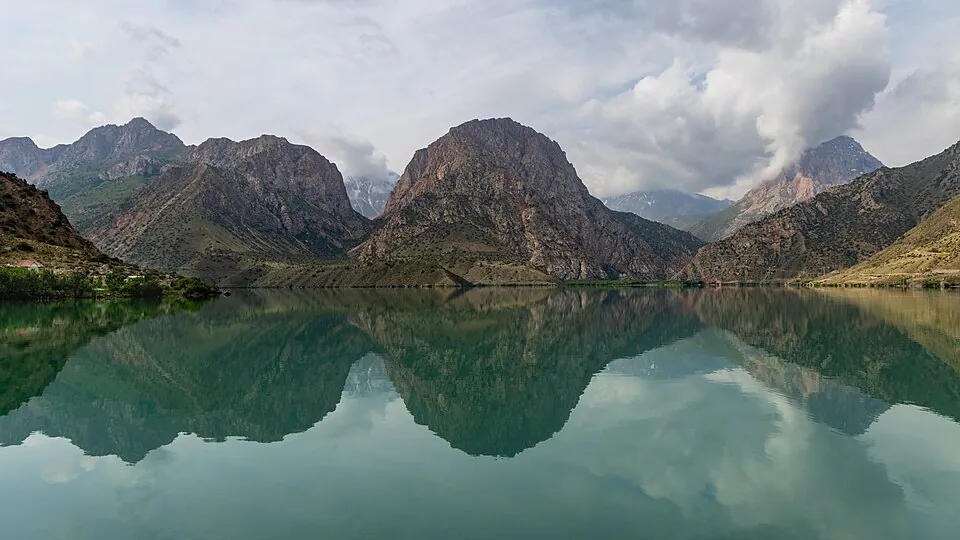
The capital, Dushanbe, is in the west. More than 90 per cent of the country is mountainous: the Pamir range in the east contains some of the highest peaks in the former Soviet Union, and the Pamir plateau is often called "the roof of the world".
How to find Tajikistan on the map
- Start from Afghanistan. Tajikistan is the country directly north of Afghanistan's north-eastern section, across the Panj River.
- Look for the mountain corner. Where China, Afghanistan, Kyrgyzstan and Uzbekistan all come close together, the knot of territory in the middle is Tajikistan.
- It is the small stan tucked beneath Kyrgyzstan. Kazakhstan is huge, Uzbekistan and Turkmenistan are medium-sized and flatter; Tajikistan and Kyrgyzstan are the two mountainous ones, and Tajikistan is the southern one.
- Don't confuse it with Kyrgyzstan. Both are mountainous and similar in size; Kyrgyzstan is to the north and touches Kazakhstan, Tajikistan touches Afghanistan.
Flag
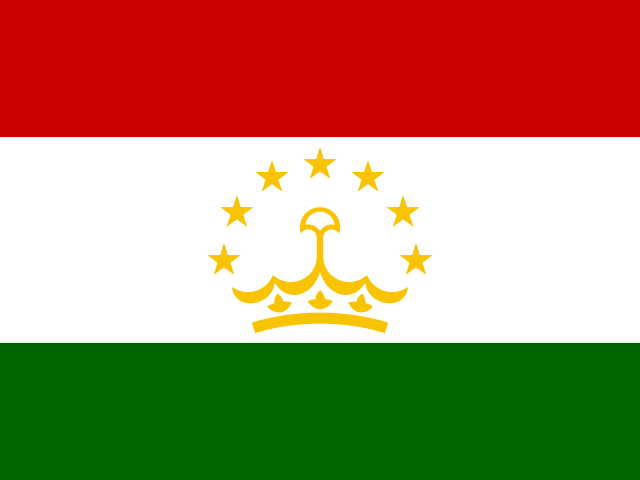
Tajikistan's flag has three horizontal bands – red, white and green – with the white middle band wider than the other two. In the centre is a gold crown topped by an arc of seven gold stars. Red stands for unity and the state, white for cotton and the snow of the mountains, green for the valleys and agriculture; the crown refers to the Tajik people and the seven stars to a traditional symbol of perfection.
The colour order resembles Iran's flag (green, white, red with an emblem) and Hungary's (red, white, green, no emblem). The gold crown and seven stars in the middle identify Tajikistan.
A short history of Tajikistan
In ancient times the lands of Tajikistan formed part of Sogdiana and Bactria, Iranian-speaking regions on the Silk Road. They were ruled by the Persian Achaemenid Empire and then conquered by Alexander the Great, who married the local noblewoman Roxana. The ruins of Panjakent, near the Uzbek border, preserve a Sogdian merchant town with remarkable wall paintings.
Arab armies brought Islam in the 700s. In the 9th and 10th centuries the Samanid dynasty, based in Bukhara, presided over a golden age of Persian language and learning. Tajiks see this as the foundation of their nation: the national currency, the somoni, is named after its best-known ruler, Ismoil Somoni. Over the following centuries Turkic dynasties, the Mongols and the Timurids ruled the region, and by the 1800s much of it belonged to the Emirate of Bukhara.
Russia conquered Central Asia in the late 19th century. In the Pamirs, Russian and British rivalry – the "Great Game" – ended with Afghanistan's thin Wakhan Corridor being kept as a buffer between the two empires. Under Soviet rule, the Tajik republic was first part of Uzbekistan and became a full Soviet republic in 1929. Crucially, the ancient Persian-speaking cities of Samarkand and Bukhara were left in Uzbekistan, a decision many Tajiks still regret. The Soviets built dams, roads and cotton farms and took away the Arabic script.
Tajikistan declared independence in September 1991. Within months it fell into a civil war between regional and political groups, including Islamist and democratic opposition, which killed tens of thousands before a peace agreement in 1997. Since then one leader has dominated politics.
Today Tajikistan is one of the poorest former Soviet republics. Many families depend on money sent home by workers in Russia, while hydropower from its fast mountain rivers and aluminium are key industries.
Culture and daily life in Tajikistan
Tajik is written in the Cyrillic alphabet, a Soviet legacy, although the same language is written in Arabic script in Iran and Afghanistan. In the Pamirs, people speak distinct Pamiri languages such as Shughni and Wakhi, and in one remote valley a few people still speak Yaghnobi, a descendant of ancient Sogdian. Most Tajiks are Sunni Muslims, but the Pamiri people mainly follow Ismaili Shia Islam and look to the Aga Khan as their spiritual leader.
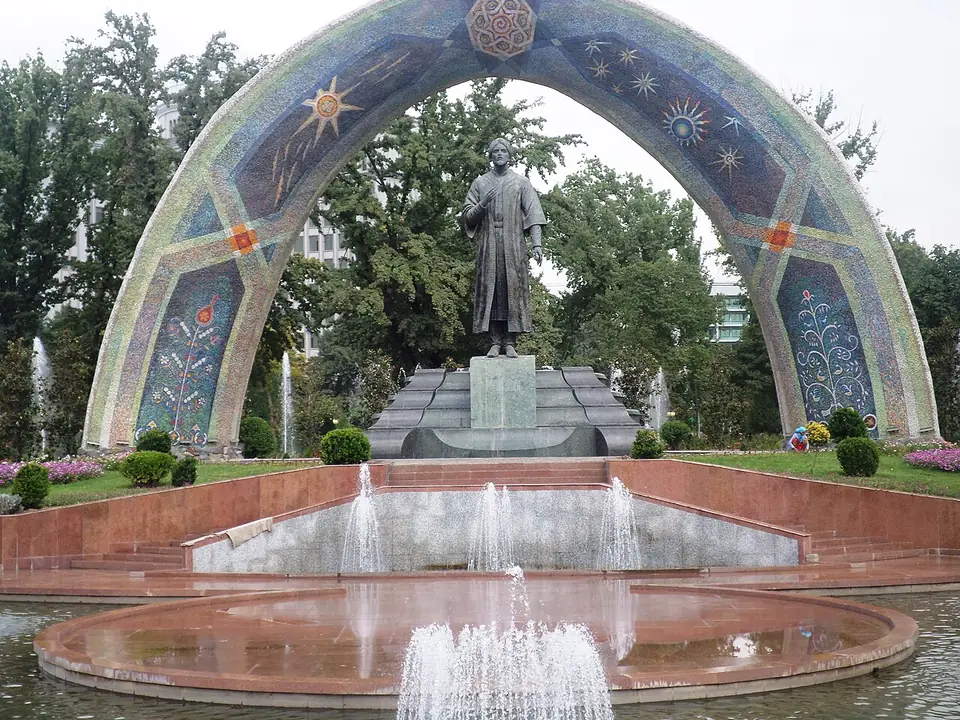
Tajiks share a great literary heritage with Iran and Afghanistan. The poet Rudaki, born near Panjakent in the 9th century, is called the father of Persian poetry, and Sadriddin Ayni shaped modern Tajik writing. In music, Shashmaqam, a refined classical tradition shared with Uzbekistan, is recognised by UNESCO, while falak songs carry the melancholy of the mountains.
Craft traditions include suzani and chakan embroidery, colourful ikat silk and embroidered skullcaps called toqi. The most dramatic sport is buzkashi, in which riders on horseback fight to carry a goat carcass to a goal.
Five facts worth knowing
- Ismoil Somoni Peak, at 7,495 metres, is the highest mountain in Tajikistan and was the highest in the Soviet Union, when it was called Communism Peak.
- Tajik is a variety of Persian, making Tajikistan the only Central Asian country where the national language is not Turkic.
- The Pamir Highway, running from Dushanbe through the mountains into Kyrgyzstan, is one of the highest international roads in the world, crossing passes above 4,000 metres.
- The Nurek Dam on the Vakhsh River was for decades the tallest dam in the world, at around 300 metres.
- Dushanbe means "Monday" in Tajik – the city grew from a village that held its market on Mondays.
Culture and traditions in Tajikistan
- Saying hello
A handshake with the right hand on the heart and "Assalomu alaykum".
- Food and drink
Qurutob, flatbread soaked in a salty yoghurt sauce, often called the national dish; plov (osh), rice with meat and carrots.
- Festivals and traditions
Navruz, the Persian New Year, around 21 March, with music, games and sumalak, a sweet wheat-sprout pudding.
- Everyday life
Guests are always offered tea and bread. Bread (non) is treated with respect and is never placed upside down.
- Did you know?
More than 90% of Tajikistan is mountainous, and its Pamir Mountains are known as the "Roof of the World".
Common mistakes
- Tapping Kyrgyzstan, the other mountainous stan directly to the north.
- Tapping Uzbekistan, which wraps around Tajikistan's west and north.
- Picking Iran's or Hungary's flag in the Flags quiz – look for the crown and stars.
Practise with Tajikistan
- Asia quiz – find Afghanistan, then tap the mountainous country above its north-eastern corner.
- Asia flags – red-white-green with a gold crown and seven stars.
- Asia capitals quiz – Dushanbe.
- Mystery Country – an irregular outline with a long eastern block (the Pamirs) and a tangled western border where it meets Uzbekistan and Kyrgyzstan.
- Mistake Bank – the five stans are worth reviewing as a set until each one's position is fixed.
Nearby countries
 AfghanistanKabul
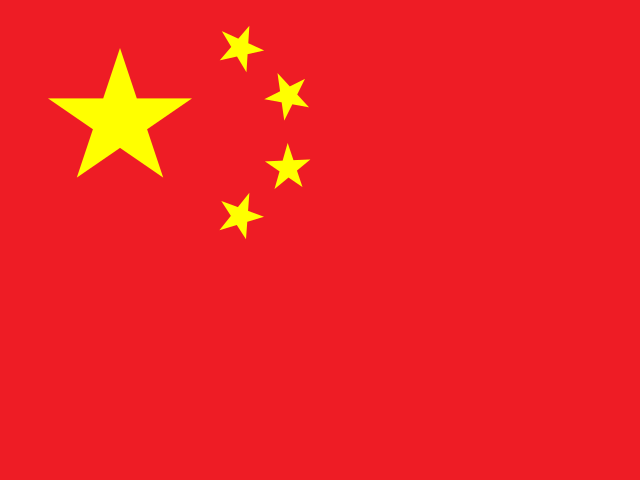 ChinaBeijing
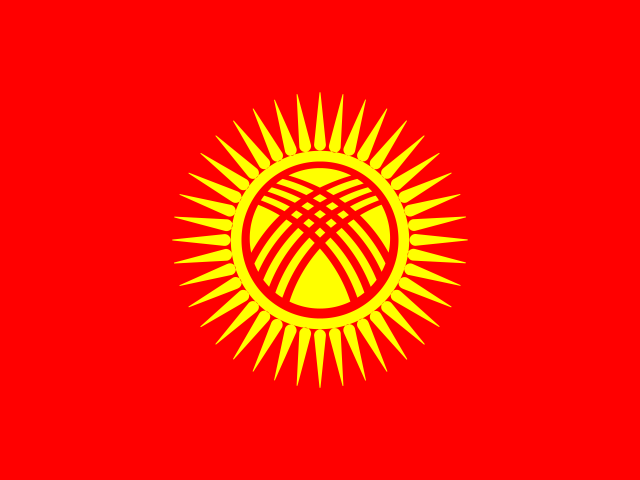 KyrgyzstanBishkek
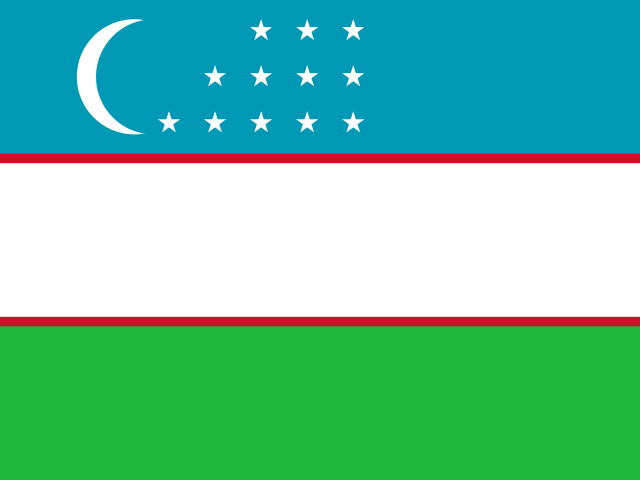 UzbekistanTashkent
Quick check: how well do you know Tajikistan?
3 questions, no sign-up. Tap an answer.
1. Which flag belongs to Tajikistan?
That's the flag of Tajikistan.
2. What is the capital of Tajikistan?
The capital of Tajikistan is Dushanbe.
3. Which of these countries borders Tajikistan?
Afghanistan, China, Kyrgyzstan and Uzbekistan border Tajikistan.
Keep going on the Asia quiz – Tajikistan is one of 48 countries there.
More ways to practise: find Tajikistan on the blank map with no borders (hard mode), or play today's Globe and the other daily puzzles.
Frequently asked questions about Tajikistan
What language is spoken in Tajikistan?
Tajik, a form of Persian written in the Cyrillic alphabet, is the official language. Russian is widely used in business and between ethnic groups, Uzbek is spoken by a large minority, and several Pamiri languages are spoken in the eastern mountains.
What currency does Tajikistan use?
Tajikistan uses the somoni (TJS), introduced in 2000 and named after Ismoil Somoni, the Samanid ruler seen as the father of the Tajik nation. It is divided into 100 diram and is not pegged.
What time zone is Tajikistan in?
Tajikistan is on UTC+5 all year, the same as Uzbekistan and Turkmenistan. It does not use daylight saving time. Although it stretches east across the Pamirs to the Chinese border, the whole country keeps one time, three hours behind China.
Which side of the road do they drive on in Tajikistan?
Tajikistan drives on the right, as across the former Soviet Union. Mountain roads like the Pamir Highway can close in winter because of snow and avalanches.
What is the highest point in Tajikistan?
Ismoil Somoni Peak, about 7,495 metres, in the Pamirs is the highest point. Under Soviet rule it was named first Stalin Peak and then Communism Peak, before taking its current name in 1998.
Why is Tajikistan called Tajikistan?
The name means "land of the Tajiks". The ending -stan comes from Persian and means "place of", as in the names of its neighbours. Tajik was a word used for Persian-speaking peoples of Central Asia.
Quizzes with Tajikistan
Often confused with
Guides that help with this
- Oceans, seas, rivers and mountainsThe physical map: seas around each continent, the big rivers and ranges.
- Flags that look alike (and how to tell them apart)Chad or Romania? Australia or New Zealand? The flag pairs that cost quiz points.
- The 25 hardest countries to find on a mapPacific islands, Caribbean islands and landlocked Africa – where they are.