Paraguay
Capital: Asunción. Paraguay is one of the 12 countries in the South America quiz.
Quick answers: What is the capital of Paraguay? · Which countries border Paraguay?
Facts about Paraguay
- CapitalAsunción
- Population7 million
- Area406,752 km²
- RegionSouth America
- LanguagesSpanish, Guarani
- CurrencyParaguayan guaraní (PYG)
Paraguay is the 9th most populous of the 12 countries in South America and the 8th largest by area. Worldwide it ranks 107th by population and 59th by area.
Where is Paraguay?
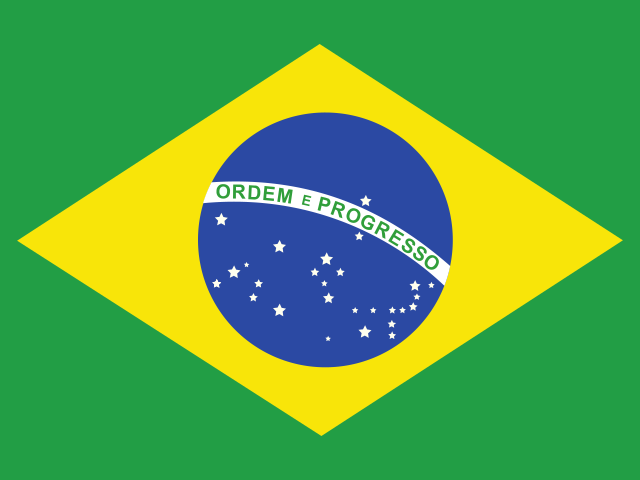
Paraguay is a landlocked country in the centre of South America. It is surrounded by just three neighbours: Brazil to the east and north-east, Argentina to the south and south-west, and Bolivia to the north-west. The Paraguay River runs through the middle of the country from north to south, dividing it into the dry, sparsely populated Chaco in the west and the greener eastern region where most people live. Asunción, the capital, is on the eastern bank of the river where it meets the Argentine border.
On a world map, find the point where Brazil, Argentina and Bolivia come close together. The country filling the gap between them is Paraguay.
How to find Paraguay on the map
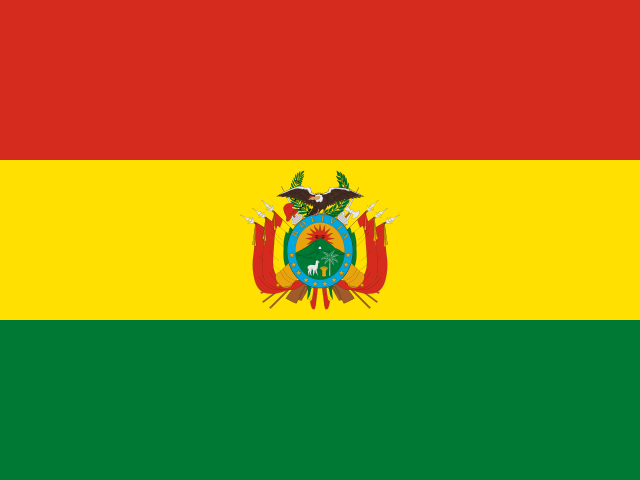
- Start from Bolivia. Paraguay is the country directly south-east of Bolivia; together they are the only two landlocked countries in South America.
- Find Argentina's northern bulge. Paraguay sits on top of it, wedged in by rivers.
- Look for the river borders. The Paraná and Paraguay rivers form most of the southern and western edges.
- Don't confuse it with Uruguay. Uruguay is smaller and sits on the Atlantic coast between Brazil and Argentina; Paraguay is inland and further north.
Flag
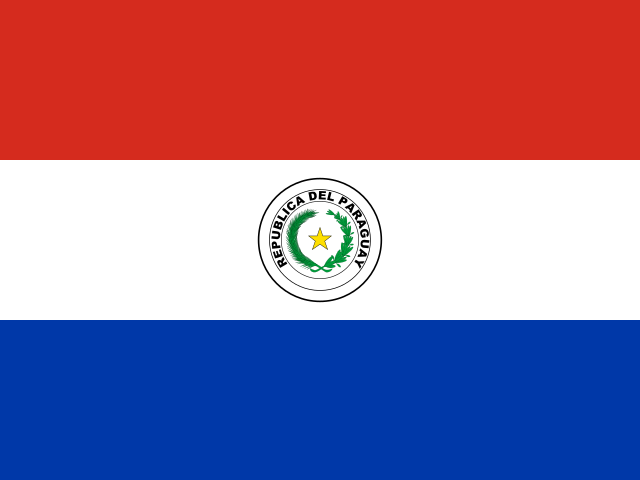
Paraguay's flag has three horizontal bands – red, white and blue – with an emblem in the centre of the white band. Unusually, the two sides of the flag are different: the front shows the national coat of arms (a yellow star surrounded by a wreath), while the reverse shows the Treasury seal with a lion and the words Paz y Justicia.
The Netherlands has the same red-white-blue horizontal stripes with no emblem. If the stripes are red, white and blue with a circular emblem in the middle, it's Paraguay.
A short history of Paraguay
Before the Spanish arrived, the fertile east of today's Paraguay was home to Guaraní farming villages, while nomadic groups lived in the dry Chaco to the west. Spanish explorers came up the rivers looking for a route to the silver of Peru, and in 1537 they founded Asunción. For a time it was the most important Spanish town in the south of the continent, and expeditions from it went on to refound Buenos Aires.
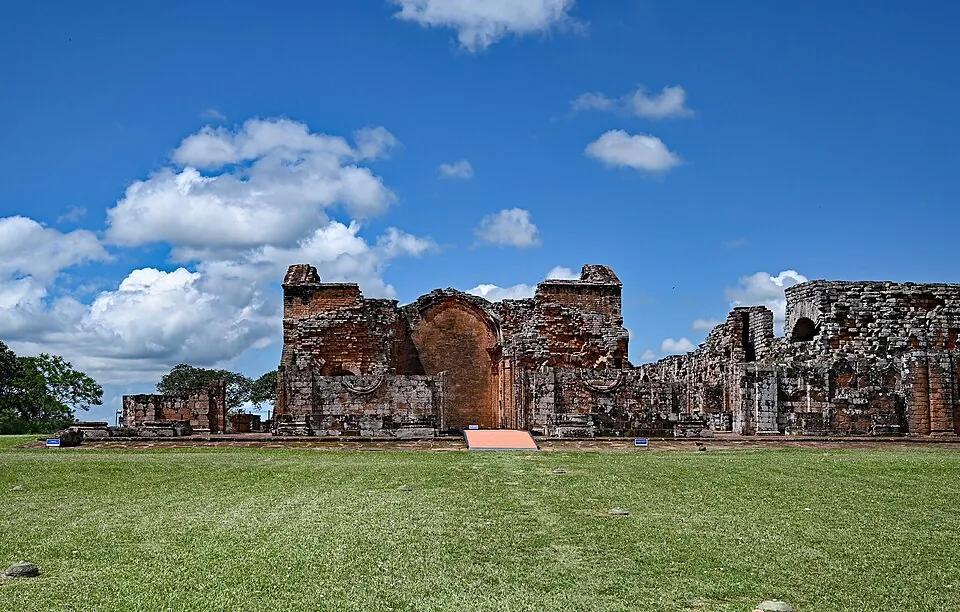
Few Spanish women came, and many settlers married Guaraní women. This mixing helps explain why Guaraní survived as an everyday language. In the 1600s and 1700s, Jesuit priests set up missions called reductions, where tens of thousands of Guaraní lived, farmed and worked under the priests' rule, protected from slave raiders. The Jesuits were expelled in 1767, and the missions fell into ruin; the remains at Trinidad and Jesús are now UNESCO World Heritage sites.
Paraguay declared independence in 1811. Its first leader, José Gaspar Rodríguez de Francia, ruled as dictator until 1840 and sealed the country off from its neighbours. His successors, Carlos Antonio López and his son Francisco Solano López, built railways, factories and a large army. Francisco Solano López then led the country into the War of the Triple Alliance, which ended in catastrophe and the loss of territory to Brazil and Argentina.
In the 1930s Paraguay fought Bolivia in the Chaco War over the western plains, which were thought to hold oil. Paraguay won, gaining most of the disputed land – the main reason the Chaco is Paraguayan today. General Alfredo Stroessner then ruled from 1954 to 1989, one of the longest dictatorships in Latin American history, before a coup opened the way to democracy.
Today Paraguay is a major exporter of soya and beef, and it sells much of its hydroelectric power to its neighbours.
Culture and daily life in Paraguay
Most Paraguayans switch easily between Spanish and Guaraní, sometimes in the same sentence, a mix known as jopará. Guaraní is the language of jokes, affection and home life, and many Paraguayan place names and words for plants and animals come from it. Most people are Roman Catholic.
The harp is the national instrument, and Paraguayan harp music and the slow, romantic guarania style are deeply loved. Lace-making is a famous craft: ñandutí, meaning "spider's web" in Guaraní, is fine, colourful lace made in the town of Itauguá. The writer Augusto Roa Bastos, author of I, the Supreme, a novel about Dr Francia, won the Cervantes Prize, the highest honour in Spanish-language literature.
Football is the main sport, and the national team has played at many World Cups. The Chaco is also home to Mennonite communities, who arrived from the 1920s and still speak a form of German. Sharing food is central to family life, and the asado, a big barbecue of beef, is the usual way to celebrate weekends and special days.
Five facts worth knowing
- Paraguay's flag is the only national flag with different designs on its two sides.
- Itaipú Dam, on the Paraná River shared with Brazil, is one of the largest hydroelectric plants in the world, and Paraguay exports most of its share of the electricity.
- Guaraní is an official language alongside Spanish, and it is spoken by the great majority of the population, which is unusual for an indigenous language in the Americas.
- The Triple Alliance War (1864–70) against Brazil, Argentina and Uruguay killed a large share of Paraguay's population and is one of the deadliest conflicts in South American history.
- The Gran Chaco covers the western 60 per cent of the country but holds only a tiny fraction of the population.
Culture and traditions in Paraguay
- Saying hello
A handshake or a cheek kiss with "Buen día"; many people also speak Guaraní.
- Food and drink
Sopa paraguaya, a solid cornbread, and chipa, a cheese bread; tereré, cold yerba mate, is drunk all day.
- Festivals and traditions
The festival of San Juan (24 June) features fire games; the Caacupé pilgrimage is on 8 December.
- Everyday life
Sharing tereré in a group is a social ritual. Siesta is common in hot afternoons.
- Did you know?
Paraguay is one of the few countries where an indigenous language, Guaraní, is spoken by most of the population.
Common mistakes
- Tapping Uruguay – the classic "-guay" mix-up. Uruguay has a coast; Paraguay does not.
- Tapping Bolivia, the other landlocked country next door.
- Picking the Dutch flag in the flags quiz.
Practise with Paraguay
- South America quiz – the landlocked country between Bolivia, Brazil and Argentina.
- North America flags – red, white and blue with a central emblem, not to be confused with the Netherlands.
- South America capitals quiz – Asunción.
- Brazilian States and Argentine Provinces – see which states and provinces share a border with Paraguay.
- Mystery Country – a rounded shape with a flat north-eastern side and river-traced southern edge.
Nearby countries
Quick check: how well do you know Paraguay?
3 questions, no sign-up. Tap an answer.
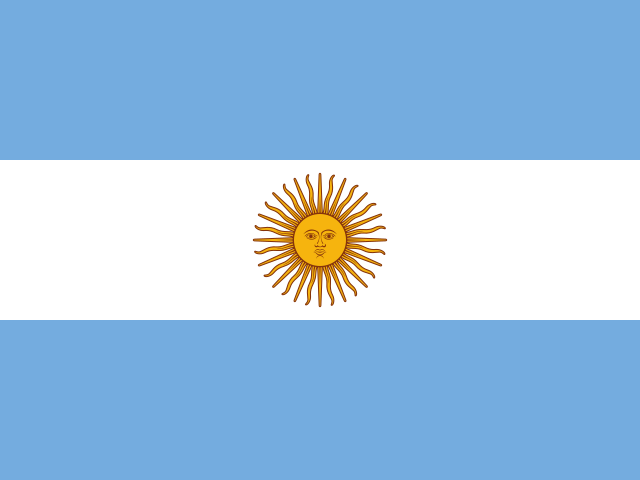
1. Which flag belongs to Paraguay?
That's the flag of Paraguay.
2. What is the capital of Paraguay?
The capital of Paraguay is Asunción.
3. Which of these countries borders Paraguay?
Argentina, Bolivia and Brazil border Paraguay.
Keep going on the South America quiz – Paraguay is one of 12 countries there.
More ways to practise: find Paraguay on the blank map with no borders (hard mode), or play today's Globe and the other daily puzzles.
Frequently asked questions about Paraguay
What language is spoken in Paraguay?
Spanish and Guaraní are both official. Many Paraguayans switch between them, and Guaraní is often the language of home and the countryside. Portuguese is common near the Brazilian border, and Mennonite communities in the Chaco speak Plautdietsch, a Low German dialect.
What currency does Paraguay use?
Paraguay uses the guaraní (PYG), named after the Indigenous Guaraní people. Introduced in 1943, it has no subunit in use, and prices often run into the thousands or tens of thousands. It is one of the least valuable currency units in South America.
What time zone is Paraguay in?
Since October 2024 Paraguay has kept UTC−3 all year round. Before that, it switched between UTC−4 in winter and UTC−3 in summer, but the government made summer time permanent to save energy and reduce clock changes.
Which side of the road do they drive on in Paraguay?
Paraguay drives on the right. The Trans-Chaco Highway crosses the dry western Chaco towards Bolivia, while the main eastern route links Asunción with Ciudad del Este and the Friendship Bridge to Brazil.
What is the highest point in Paraguay?
Cerro Tres Kandú, in the Ybytyruzú hills of Guairá department, is Paraguay's highest point at about 840 metres. Paraguay has no real mountains, and most of the country lies below 500 metres.
What is the Itaipu Dam?
The Itaipu Dam, on the Paraná River, is a hydroelectric plant shared by Paraguay and Brazil and one of the largest in the world by energy produced. It supplies most of Paraguay's electricity, and Paraguay sells much of its share of the power to Brazil.
Quizzes with Paraguay
Often confused with
Guides that help with this
- Oceans, seas, rivers and mountainsThe physical map: seas around each continent, the big rivers and ranges.
- Flags that look alike (and how to tell them apart)Chad or Romania? Australia or New Zealand? The flag pairs that cost quiz points.
- The 25 hardest countries to find on a mapPacific islands, Caribbean islands and landlocked Africa – where they are.