Suriname
Capital: Paramaribo. Suriname is one of the 12 countries in the South America quiz.
Quick answers: What is the capital of Suriname? · Which countries border Suriname?
Facts about Suriname
- CapitalParamaribo
- Population639,850
- Area163,820 km²
- RegionSouth America
- LanguageDutch
- CurrencySurinamese dollar (SRD)
Suriname is the 12th most populous of the 12 countries in South America and the 12th largest by area. Worldwide it ranks 166th by population and 90th by area.
Where is Suriname?
Suriname is on the north-east coast of South America, facing the Atlantic Ocean. It is the smallest country on the continent by area and population. Guyana lies to the west, French Guiana (a region of France) to the east and Brazil to the south. Together Guyana, Suriname and French Guiana form "the Guianas", the three small territories squeezed between Venezuela and Brazil.
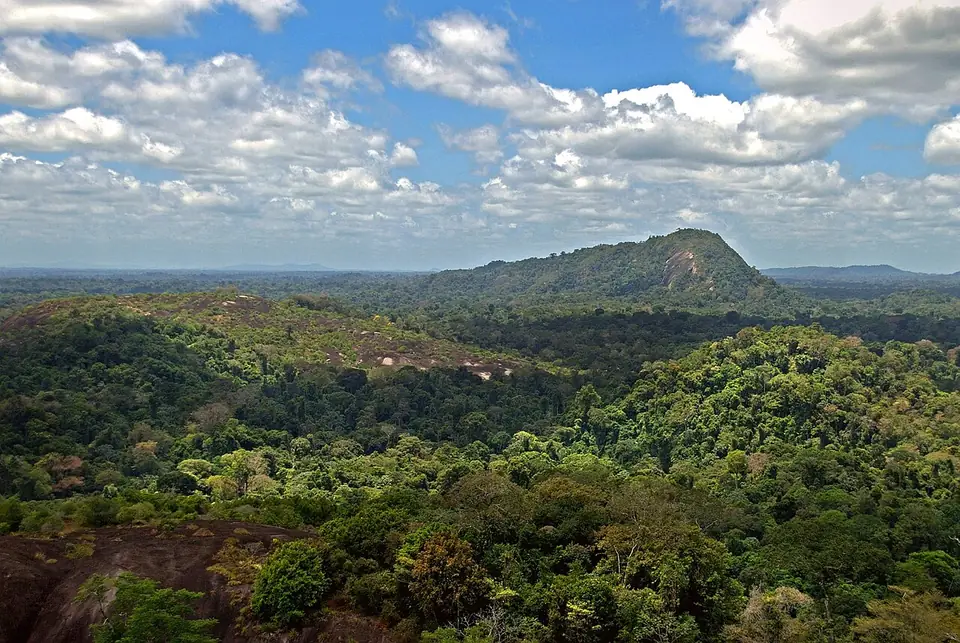
The capital, Paramaribo, is near the coast on the Suriname River. Most people live along the coastal strip; the interior is dense rainforest, and Suriname is often described as one of the most forested countries in the world.
How to find Suriname on the map
- Start from the top of South America. Find Venezuela on the northern coast, then move east. Guyana comes first, then Suriname, then French Guiana.
- It is the middle of the three Guianas. Suriname is the one in the centre, with a country on each side before Brazil takes over.
- Look for the roughly square shape. Suriname is compact and squarish compared to its neighbours.
- Don't confuse it with Guyana, which is larger and sits to the west, or with French Guiana, which is not a country.
Flag
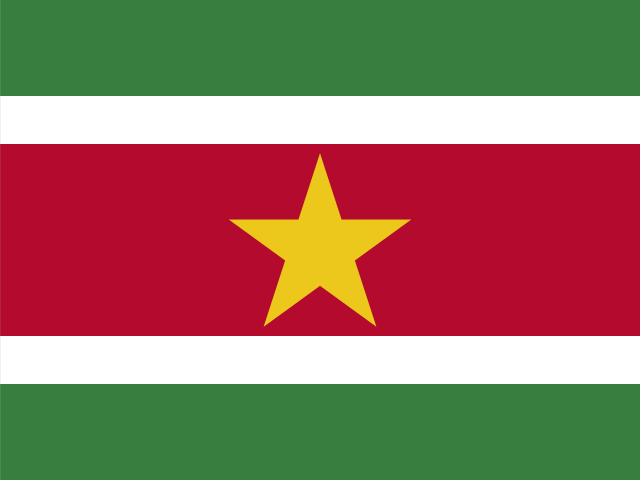
Suriname's flag has five horizontal bands: green, white, red (the widest, in the middle), white and green, with a large yellow five-pointed star in the centre. Green stands for the fertile land, white for justice and freedom, red for progress and the star for unity among the country's ethnic groups.
The green-white-red-white-green layout is not used anywhere else, and the yellow star in the middle makes it easy to confirm. Don't mix it up with Guyana's flag next door, which is a green field with red and yellow triangles.
A short history of Suriname
Before Europeans arrived, the coast and rivers of Suriname were home to Indigenous peoples such as the Lokono (Arawak) and Kalina (Carib), with the Trio and Wayana living deep in the interior. Spanish explorers passed by in the 1500s, but the first lasting colony was English, set up in the 1650s with sugar plantations along the rivers.
A Dutch fleet from Zeeland captured the colony in 1667, and it remained Dutch for more than three centuries. Plantation owners imported large numbers of enslaved Africans, and conditions were notoriously harsh. Many escaped into the rainforest and formed free Maroon communities, such as the Saramaka and Ndyuka. They fought so successfully that the Dutch signed peace treaties with them in the 1760s, a rare event in the Americas. Suriname also had one of the oldest Jewish communities in the Western Hemisphere, at Jodensavanne on the Suriname River.
Slavery was abolished in 1863, though freed people were forced to keep working on plantations for another ten years. To replace their labour, the Dutch brought indentured workers from British India from 1873 and from Java from 1890. Their descendants are why Hindu temples and Javanese villages are part of Suriname today. In the 20th century bauxite mining, started by the American company Alcoa, became the backbone of the economy.
Suriname gained self-rule in 1954 and full independence in 1975, when many people emigrated to the Netherlands. In 1980 a group of soldiers seized power. The killing of 15 government critics in December 1982 and a civil war in the interior from 1986 to 1992 marked the following years before democracy was restored. Borders with Guyana and French Guiana are still disputed in places, especially in the south, where rival rivers were claimed as the boundary.
Gold, oil and bauxite have been the main earners, and large offshore oil finds have raised hopes for the future.
Culture and daily life in Suriname
Dutch is the language of schools and government, but the language of the street is Sranan Tongo, an English-based creole that dates from the early English colony and was shaped by enslaved Africans. Sarnami Hindustani, Surinamese Javanese, Maroon languages and Chinese are also spoken. Religions sit side by side: in central Paramaribo, a mosque and a synagogue stand next to each other on the same street, and Hindu, Christian and Muslim holidays are all public holidays.
Music mixes these roots. Kaseko, an upbeat Creole dance music, and kawina, built on drums and call-and-response singing, are local styles, while Indian and Javanese communities keep their own traditions alive. The writer and activist Anton de Kom, whose 1934 book We Slaves of Suriname attacked colonial rule, is now widely honoured as a national hero.
Football links Suriname to the Netherlands. Many Dutch stars, including Ruud Gullit, Frank Rijkaard, Clarence Seedorf and Edgar Davids, have Surinamese roots. A very local pastime is songbird competitions: on Sunday mornings, men gather in Paramaribo with caged finches to see whose bird sings the most.
Five facts worth knowing
- Suriname was a Dutch colony until 1975, and Dutch is still the official language – the only Dutch-speaking country in the Americas.
- The Netherlands swapped New Amsterdam (now New York) for Suriname under the Treaty of Breda in 1667, a deal that looked sensible at the time because of Suriname's sugar plantations.
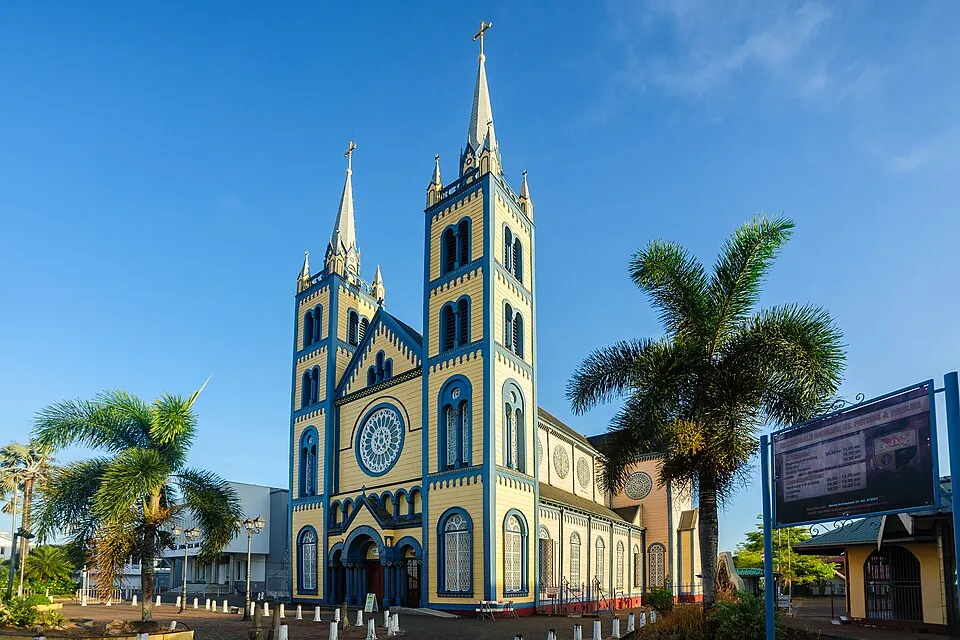
- Paramaribo's historic wooden inner city is a UNESCO World Heritage Site, with Dutch colonial buildings along the river.
- The Central Suriname Nature Reserve covers around 1.6 million hectares of untouched rainforest and is also UNESCO-listed.
- Suriname is one of the most ethnically diverse countries in the region, with large Indian, Javanese, Creole, Maroon, Chinese and Indigenous communities.
Culture and traditions in Suriname
- Saying hello
"Fa waka?" (how's it going?) in Sranan Tongo, or "Goedendag" in Dutch, the official language.
- Food and drink
Pom, an oven dish of chicken and tayer root; roti with curry, brought by Indian and Javanese communities.
- Festivals and traditions
Keti Koti on 1 July celebrates the abolition of slavery; New Year's Eve (Owru Yari) features huge firecracker strings.
- Everyday life
Suriname is very diverse, with people of African, Indian, Javanese, Chinese and Indigenous heritage living side by side.
- Did you know?
About 93% of Suriname is covered by forest, making it one of the most forested countries in the world.
Common mistakes
- Tapping Guyana – the larger western neighbour.
- Tapping French Guiana, which belongs to France and is not in the country list.
- Forgetting Suriname is in South America at all; its Dutch heritage leads some to look for it in the Caribbean.
Practise with Suriname
- South America quiz – the small square country in the middle of the three Guianas.
- North America flags – learn the two Guianas flags: Suriname's star on red, Guyana's arrowhead.
- South America capitals quiz – Paramaribo.
- Brazilian States – Suriname borders the states of Pará and Amapá; knowing them pins the southern border.
- Mystery Country – a compact outline with a flat northern coast and borders that follow rivers on both sides.
Nearby countries
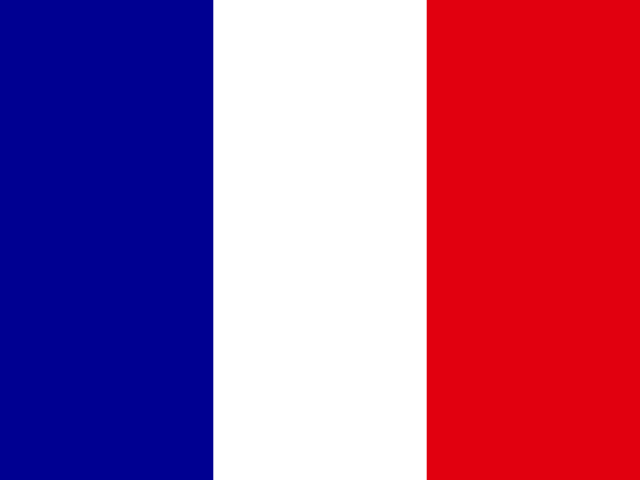
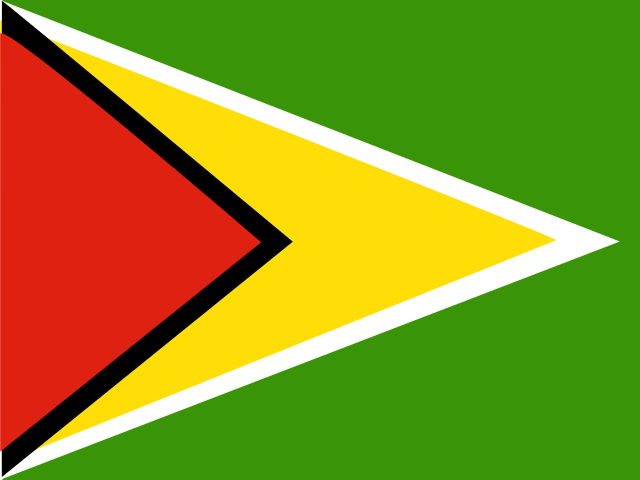
Quick check: how well do you know Suriname?
3 questions, no sign-up. Tap an answer.
1. Which flag belongs to Suriname?
That's the flag of Suriname.
2. What is the capital of Suriname?
The capital of Suriname is Paramaribo.
3. Which of these countries borders Suriname?
Brazil, France and Guyana border Suriname.
Keep going on the South America quiz – Suriname is one of 12 countries there.
More ways to practise: find Suriname on the blank map with no borders (hard mode), or play today's Globe and the other daily puzzles.
Frequently asked questions about Suriname
What language is spoken in Suriname?
Dutch is the only official language and is used in schools and government. In daily life most people also speak Sranan Tongo, an English-based creole, while Sarnami Hindustani, Javanese and Maroon languages are common in their communities.
What currency does Suriname use?
Suriname uses the Surinamese dollar (SRD), which replaced the Surinamese guilder in 2004 at a rate of 1,000 guilders to one dollar. It floats freely and is not pegged to the US dollar.
What time zone is Suriname in?
Suriname is on UTC−3 all year, the same as neighbouring French Guiana and much of eastern Brazil. It does not use daylight saving time. That puts it three hours behind GMT, level with Buenos Aires and São Paulo.
Which side of the road do they drive on in Suriname?
Suriname drives on the left, unusually for the Americas. Neighbouring Guyana does the same, so the two are the only countries in mainland South America with left-hand traffic.
What is the highest point in Suriname?
The highest point is Julianatop, at about 1,280 metres, in the Wilhelmina Mountains deep in the rainforest of the interior. It is named after the Dutch Queen Juliana and is rarely visited.
Is Suriname part of the Caribbean?
Geographically Suriname is in South America, on the Atlantic coast north of Brazil. Culturally and politically it is close to the Caribbean, and it is a full member of CARICOM, the Caribbean Community, which is why it often appears in Caribbean groupings.
Quizzes with Suriname
Often confused with
Guides that help with this
- Oceans, seas, rivers and mountainsThe physical map: seas around each continent, the big rivers and ranges.
- Flags that look alike (and how to tell them apart)Chad or Romania? Australia or New Zealand? The flag pairs that cost quiz points.
- The 25 hardest countries to find on a mapPacific islands, Caribbean islands and landlocked Africa – where they are.