Uganda
Capital: Kampala. Uganda is one of the 54 countries in the Africa quiz.
Quick answers: What is the capital of Uganda? · Which countries border Uganda?
Facts about Uganda
- CapitalKampala
- Population51.4 million
- Area241,550 km²
- RegionsAfrica, East Africa
- LanguagesEnglish, Swahili
- CurrencyUgandan shilling (UGX)
Uganda is the 9th most populous of the 54 countries in Africa and the 32nd largest by area. Worldwide it ranks 31st by population and 79th by area.
Where is Uganda?
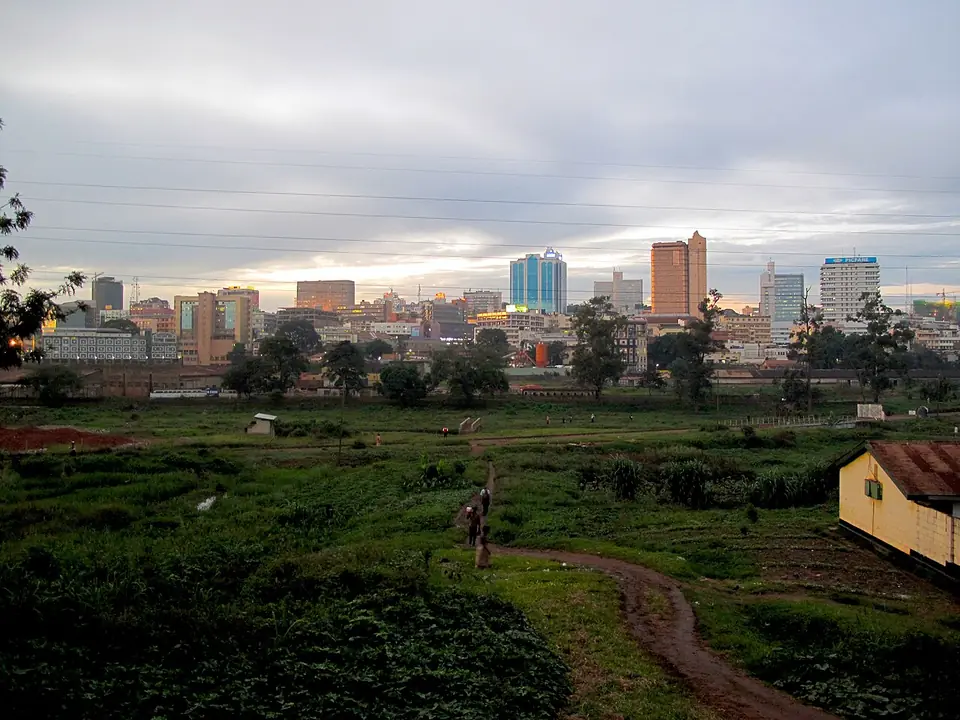
Uganda is a landlocked country in East Africa, sitting on the equator at the northern shore of Lake Victoria. Kenya lies to the east, South Sudan to the north, DR Congo to the west, and Rwanda and Tanzania to the south. Much of the country is a high plateau, with the Rwenzori Mountains on the Congolese border in the west. The capital, Kampala, is near the northern shore of Lake Victoria, a short drive from Entebbe, where the international airport is.
On a world map, find Lake Victoria – the huge lake in the middle of East Africa. Uganda is the country that holds the lake's northern shore.
How to find Uganda on the map
- Start from Lake Victoria. The lake is split between three countries: Tanzania in the south, Kenya in the east and Uganda in the north-west.
- Look west of Kenya. Uganda is the country immediately inland from Kenya, with no coastline of its own.
- Find the Nile's source. The White Nile leaves Lake Victoria at Jinja, in Uganda, and flows north through the country towards South Sudan.
- Don't confuse it with Rwanda or Burundi. Those two are much smaller and sit south-west of Uganda, between it and Tanzania.
Flag
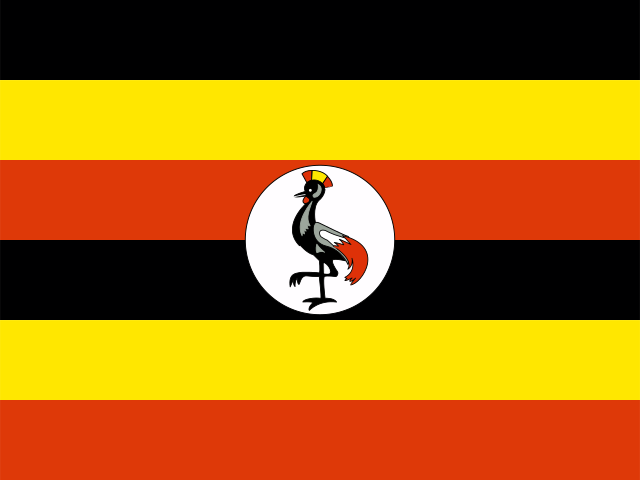
Uganda's flag has six horizontal stripes – black, yellow, red, black, yellow, red – with a white disc in the centre showing a grey crowned crane, the national bird, facing the hoist. Black stands for the African people, yellow for sunshine and red for brotherhood. It was adopted at independence in 1962.
In the Flags quiz, the repeating black-yellow-red pattern is unusual; Germany uses the same three colours but only once, and without the bird. The crane in the centre is the clincher.
A short history of Uganda
The fertile lands around Lake Victoria supported powerful kingdoms long before Europeans arrived. Bunyoro-Kitara dominated the west for centuries, while Buganda, on the northern lake shore, grew into the strongest state by the 1800s under its king, the Kabaka. Smaller kingdoms such as Toro, Ankole and Busoga, along with many communities without kings in the north and east, made up a varied political map.
Arab and Swahili traders reached Buganda in the 1840s, and the British explorer John Hanning Speke arrived in 1862 searching for the source of the Nile. Protestant and Catholic missionaries followed, and rivalry between Christian, Muslim and traditional factions led to violence at court. Between 1885 and 1887 Kabaka Mwanga had dozens of young converts executed; they are remembered as the Uganda Martyrs. Britain declared a protectorate in 1894, and a railway from Mombasa on the Kenyan coast soon linked the region to the Indian Ocean. The country's name comes from the Swahili word for Buganda.
Uganda became independent in 1962. Tensions between the central government and Buganda soon boiled over: in 1966 the Kabaka was driven into exile, and the old kingdoms were abolished the following year. In 1971 the army commander Idi Amin seized power. His rule was brutal, and in 1972 he expelled Uganda's Asian community, many of whose families had come from India during colonial times. Amin was overthrown in 1979 after a war with Tanzania, but civil war followed, and the present government took power in 1986. In the north, the rebel Lord's Resistance Army caused great suffering for two decades.
The traditional kingdoms were restored as cultural institutions in 1993. Uganda's economy relies on farming, especially coffee, and oil found near Lake Albert is being developed. The country is also known for hosting one of the largest refugee populations in Africa.
Culture and daily life in Uganda
More than 40 languages are spoken. Bantu languages dominate the south and west, while Nilotic languages such as Acholi and Lango are spoken in the north – a divide that has often shaped politics. Most Ugandans are Christian, split mainly between Anglicans and Catholics, and around one in seven is Muslim. Every June, huge crowds walk to the shrine at Namugongo, where many of the martyrs died.
The Kasubi Tombs in Kampala, the burial place of Buganda's kings, are a World Heritage Site. Women's formal dress is the gomesi, a long gown with puffed shoulders, while men wear the white kanzu robe. One of East Africa's best-known poems, Song of Lawino by Okot p'Bitek, was written in Acholi before being translated into English.
Music ranges from kadongo kamu, guitar storytelling songs in Luganda, to modern Afrobeat, and the Nyege Nyege festival near Jinja attracts musicians from across Africa. Runners are national heroes: John Akii-Bua won Olympic gold in 1972, Stephen Kiprotich took the marathon in 2012, and Joshua Cheptegei has set world records on the track.
Five facts worth knowing
- The source of the Nile is in Uganda. The White Nile begins at Jinja on Lake Victoria and runs more than 6,000 km to the Mediterranean.
- Winston Churchill called Uganda "the Pearl of Africa" in his 1908 book My African Journey.
- About half of the world's remaining mountain gorillas live in Uganda's Bwindi Impenetrable Forest and the Virunga range on its south-western border.
- The Rwenzori Mountains have glaciers on the equator; their highest peak, Margherita Peak, reaches 5,109 metres.
- English and Swahili are the official languages, with Luganda the most widely spoken local language around Kampala.
Culture and traditions in Uganda
- Saying hello
Long, warm greetings asking about family and health; in some communities people kneel to greet elders.
- Food and drink
Matoke, steamed and mashed green bananas; the "Rolex", a chapati rolled with an omelette, a popular street snack.
- Festivals and traditions
Independence Day on 9 October is celebrated with parades and events across the country.
- Everyday life
It's polite to greet people properly before getting to business. Meals are often shared, and guests are well looked after.
- Did you know?
Barkcloth making from the mutuba tree, a Buganda tradition, is on UNESCO's Intangible Cultural Heritage list.
Common mistakes
- Tapping Kenya – both border Lake Victoria and sit at the same latitude.
- Tapping Tanzania, which holds most of the lake.
- Confusing the flag with Germany's in the Flags quiz because of the shared colours.
Practise with Uganda
- Africa quiz – the country on the northern shore of Lake Victoria.
- East Africa quiz – a zoomed map where Uganda, Kenya and Tanzania are easy to compare.
- Africa flags – black-yellow-red stripes with the crane.
- Africa capitals quiz – Kampala, not Entebbe.
- Mystery Country – a rounded outline with Lake Victoria cutting into its south-east corner.
Nearby countries
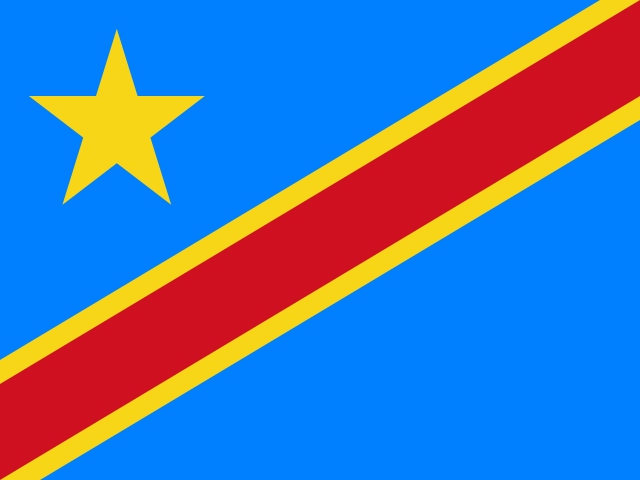 DR CongoKinshasa
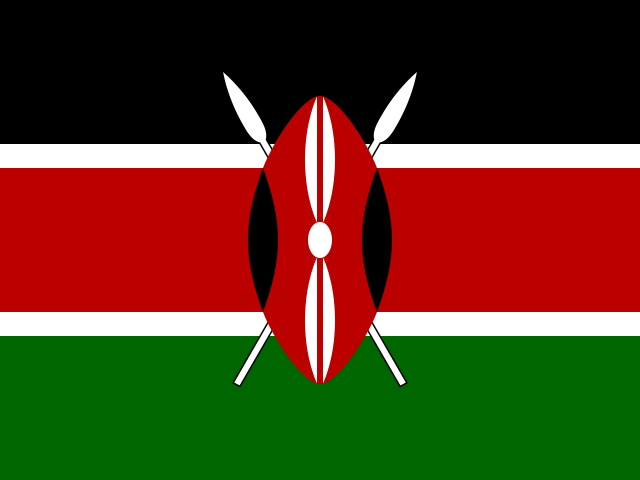 KenyaNairobi
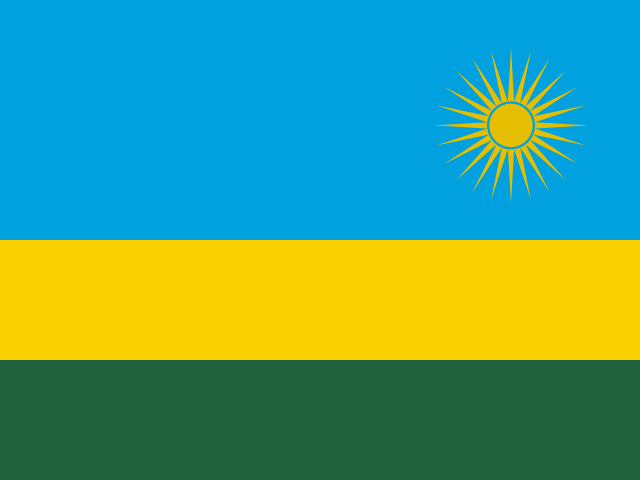 RwandaKigali
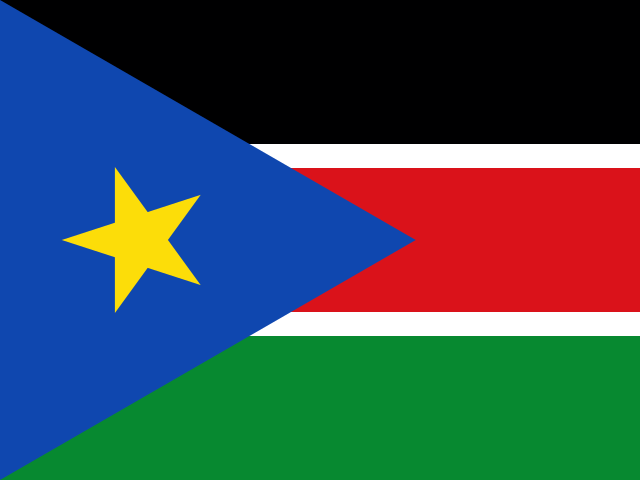 South SudanJuba
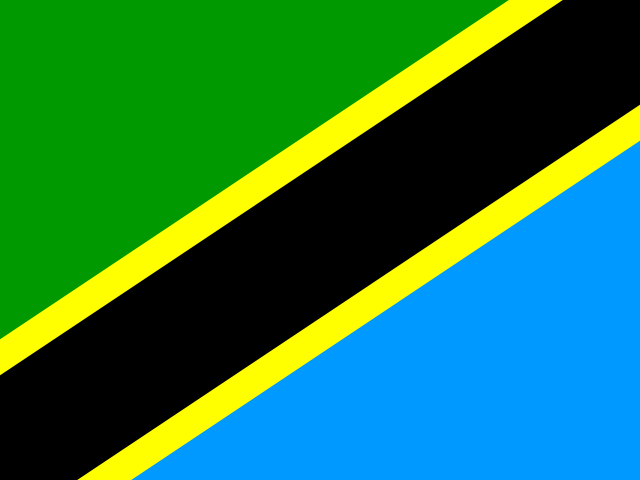 TanzaniaDodoma
Quick check: how well do you know Uganda?
3 questions, no sign-up. Tap an answer.
1. Which flag belongs to Uganda?
That's the flag of Uganda.
2. What is the capital of Uganda?
The capital of Uganda is Kampala.
3. Which of these countries borders Uganda?
DR Congo, Kenya, Rwanda, South Sudan and Tanzania border Uganda.
Keep going on the Africa quiz – Uganda is one of 54 countries there.
More ways to practise: find Uganda on the blank map with no borders (hard mode), or play today's Globe and the other daily puzzles.
Frequently asked questions about Uganda
What language is spoken in Uganda?
English and Swahili are the official languages. English is used in schools, government and the media, while Luganda is the most widely spoken local language, especially around Kampala. Dozens of Bantu, Nilotic and Central Sudanic languages are also spoken.
What currency does Uganda use?
Uganda uses the Ugandan shilling (UGX), introduced in 1966 when the East African shilling was split. Prices run into thousands of shillings, so the 1,000-shilling note is an everyday note, and the currency is not pegged to another.
What time zone is Uganda in?
Uganda is on East Africa Time, UTC+3, all year, the same as Kenya and Tanzania. It does not use daylight saving time. Because the equator crosses the country, the sun rises and sets at about seven o'clock, morning and evening, all year round.
Which side of the road do they drive on in Uganda?
Uganda drives on the left, a legacy of British rule shared with Kenya and Tanzania. Motorcycle taxis called boda-bodas are one of the most common ways to get around Kampala.
What is the highest point in Uganda?
The highest point is Margherita Peak on Mount Stanley, at about 5,110 metres, in the Rwenzori Mountains on the border with DR Congo. It is the third-highest summit in Africa.
Why is Uganda called the Pearl of Africa?
The phrase was made famous by Winston Churchill in 1908, describing the country's green landscapes, lakes and wildlife. Uganda is home to about half of the world's mountain gorillas and to the source of the White Nile at Jinja.
Quizzes with Uganda
Guides that help with this
- Learn all 54 African countries in a weekLearn the coastline in order, region by region.
- Flags that look alike (and how to tell them apart)Chad or Romania? Australia or New Zealand? The flag pairs that cost quiz points.
- The 25 hardest countries to find on a mapPacific islands, Caribbean islands and landlocked Africa – where they are.