Tanzania
Capital: Dodoma. Tanzania is one of the 54 countries in the Africa quiz.
Quick answers: What is the capital of Tanzania? · Which countries border Tanzania?
Facts about Tanzania
- CapitalDodoma
- Population70.5 million
- Area945,087 km²
- RegionsAfrica, East Africa
- LanguagesSwahili, English
- CurrencyTanzanian shilling (TZS)
Tanzania is the 5th most populous of the 54 countries in Africa and the 13th largest by area. Worldwide it ranks 21st by population and 30th by area.
Where is Tanzania?
Tanzania is on the east coast of Africa, facing the Indian Ocean, just south of the equator. Kenya and Uganda lie to the north, Rwanda, Burundi and DR Congo to the west, and Zambia, Malawi and Mozambique to the south. Three of Africa's great lakes touch its borders: Lake Victoria in the north-west, Lake Tanganyika along the western edge and Lake Malawi (called Lake Nyasa in Tanzania) in the south-west. The islands of Zanzibar and Pemba sit just offshore and are part of the country.
The official capital is Dodoma, in the centre of the country, but the largest city and main port is Dar es Salaam on the coast.
How to find Tanzania on the map
- Start from Lake Victoria. The lake is shared by three countries; Tanzania holds the southern half.
- Look for the three lakes. Tanzania is the country wedged between Lake Victoria, Lake Tanganyika and Lake Malawi, with the Indian Ocean on its fourth side.
- It's south of Kenya. The Kenya–Tanzania border runs in a straight diagonal line from Lake Victoria to the coast, with a kink around Kilimanjaro.
- Don't confuse it with Mozambique. Mozambique is the long coastal country further south; Tanzania is the blockier one directly below Kenya.
Flag
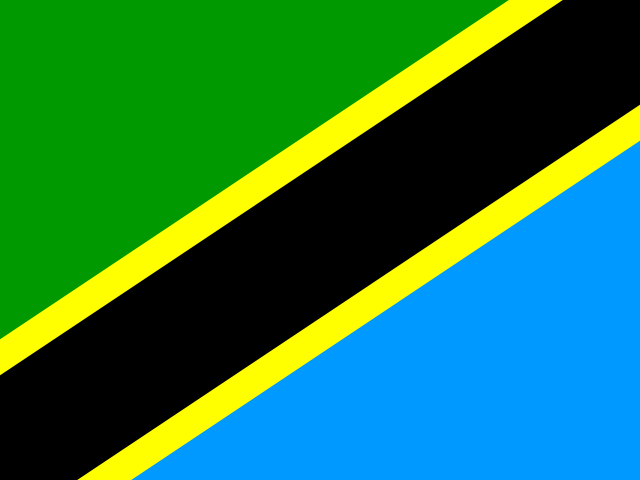
Tanzania's flag has a black diagonal band, edged in thin yellow, running from the lower hoist corner to the upper fly corner. The triangle above it is green, the one below is blue. It combines the colours of the old Tanganyika flag (green and black) with the blue of Zanzibar when the two united in 1964.
In the Flags quiz, the diagonal split is the giveaway – very few African flags use one. Namibia also has a diagonal band, but Namibia's runs the other way (upper hoist to lower fly), is red edged in white, and has a sun in the corner.
A short history of Tanzania
Tanzania holds some of the oldest evidence of human ancestors. At Olduvai Gorge, Louis and Mary Leakey found fossils and stone tools nearly two million years old, and at Laetoli Mary Leakey's team uncovered footprints left by upright-walking hominins around 3.6 million years ago.
Over the last few thousand years, Bantu-speaking farmers spread across the region, later joined by cattle-herding peoples such as the Maasai. Along the coast, trading towns grew rich from commerce across the Indian Ocean with Arabia, Persia and India. Kilwa Kisiwani, now a UNESCO site, controlled much of the gold trade in the Middle Ages. The Portuguese arrived in the 1500s, but Omani Arabs drove them out, and in 1840 the Sultan of Oman moved his court to Zanzibar. The island grew rich on cloves and on a large slave trade with the mainland.
In the 1880s Germany claimed the mainland as German East Africa. The Maji Maji Rebellion of 1905–07 against forced cotton growing was crushed, with very heavy loss of life. After the First World War, Britain took over the territory, renamed Tanganyika, while Rwanda and Burundi went to Belgium – which is why they are separate countries today. Zanzibar was a British protectorate.
Led by Julius Nyerere, Tanganyika won independence peacefully in 1961. Zanzibar followed in 1963, and a violent revolution there in January 1964 overthrew the sultan, months before the union. Nyerere promoted African socialism, called ujamaa, and moved millions of people into collective villages – an experiment that failed economically but helped build a shared national identity. In 1978–79 Tanzania fought a war with Uganda that ended Idi Amin's rule. The decision to move the capital to Dodoma, in the centre of the country, was taken in 1973. Multiparty politics returned in 1992.
Tanzania is now one of East Africa's more stable countries, with an economy built on farming, mining, especially gold, and tourism.
Culture and daily life in Tanzania
Tanzania has more than 120 ethnic groups, yet none dominates, and Swahili binds them together. Nyerere made it the language of schools and government, which helped avoid the ethnic divisions seen elsewhere. A Bantu language rich in Arabic loanwords, it reflects centuries of coastal trade. Christians and Muslims are found in roughly similar numbers on the mainland, while Zanzibar is almost entirely Muslim.
Music ranges from taarab, the orchestral sung poetry of Zanzibar, to Bongo Flava, the Tanzanian take on hip-hop and R&B, with Diamond Platnumz its biggest star. Zanzibar-born Abdulrazak Gurnah won the Nobel Prize in Literature in 2021, and Freddie Mercury of Queen was also born in Zanzibar's Stone Town.
Art is distinctive too. Tingatinga painting, bright and playful animal scenes, began in Dar es Salaam in the 1960s, and the Makonde people are famous for dark wooden carvings. Women wear kanga cloths printed with Swahili proverbs. Football is the main sport, and the Dar es Salaam derby between Simba and Young Africans divides the city.
Five facts worth knowing
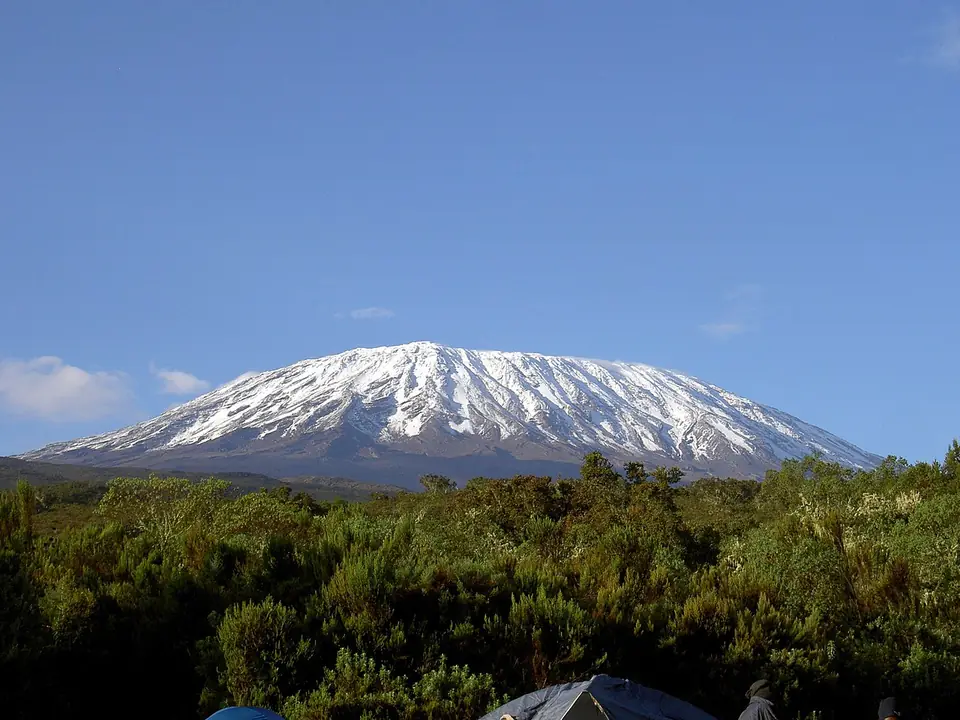
- Kilimanjaro, Africa's highest mountain at 5,895 metres, is in northern Tanzania near the Kenyan border, not in Kenya as many assume.
- The name is a blend. Tanganyika on the mainland and Zanzibar offshore merged in 1964, and "Tan" plus "Zan" gave the new country its name.
- Zanzibar remains semi-autonomous, with its own president and parliament inside the United Republic.
- Lake Tanganyika is the longest freshwater lake in the world and the second deepest after Lake Baikal in Russia.
- The Serengeti migration – more than a million wildebeest moving in a loop between Tanzania and Kenya's Maasai Mara – takes place mostly on the Tanzanian side.
Culture and traditions in Tanzania
- Saying hello
"Jambo" or "Habari?"; younger people greet elders respectfully with "Shikamoo".
- Food and drink
Ugali, a firm maize porridge, eaten with stews; nyama choma, grilled meat; spiced pilau rice from the coast.
- Festivals and traditions
Sauti za Busara music festival in Zanzibar (February) and Mwaka Kogwa, the Shirazi New Year in Makunduchi (July).
- Everyday life
Greetings are long and unhurried, and "pole pole" (slowly) captures the relaxed pace. Food is passed with the right hand.
- Did you know?
Kiswahili is a national language, and UNESCO proclaimed 7 July as World Kiswahili Language Day.
Common mistakes
- Tapping Kenya – the two countries share Lake Victoria, Kilimanjaro's slopes and a similar coastline.
- Tapping Mozambique, which is also on the Indian Ocean coast but longer and further south.
- Choosing the Namibian flag; both have a diagonal band but in opposite directions.
Practise with Tanzania
- Africa quiz – find the three lakes and Tanzania sits between them.
- East Africa quiz – a smaller map where Tanzania is the big country south of Kenya.
- Africa flags – learn the diagonal-band flags: Tanzania versus Namibia.
- Africa capitals quiz – Dodoma, not Dar es Salaam, is the trick to remember.
- Mystery Country – a chunky outline with a bite taken out by Lake Victoria in the north-west.
Nearby countries
 BurundiGitega
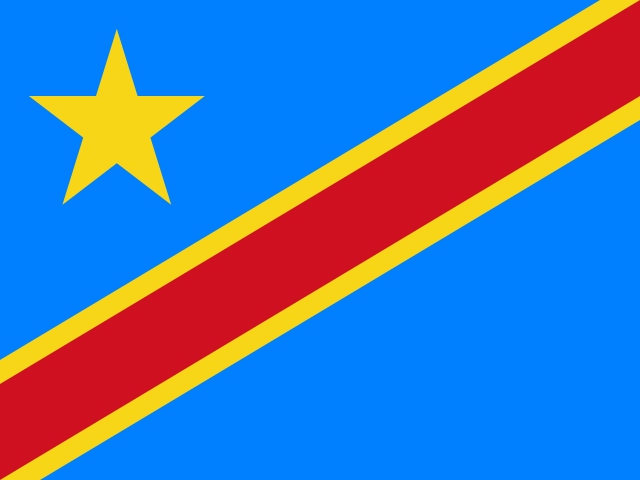 DR CongoKinshasa
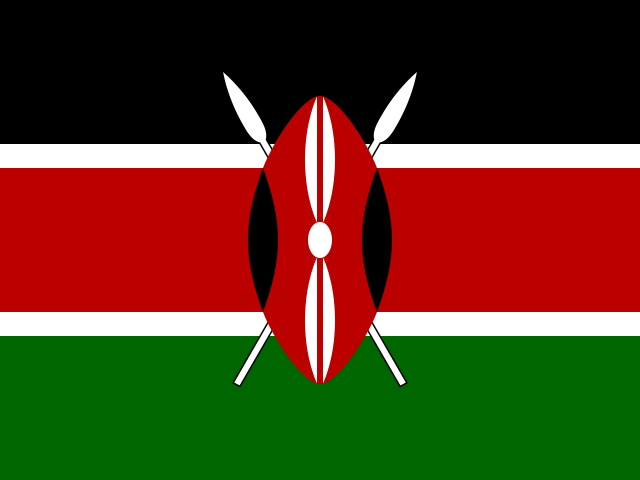 KenyaNairobi
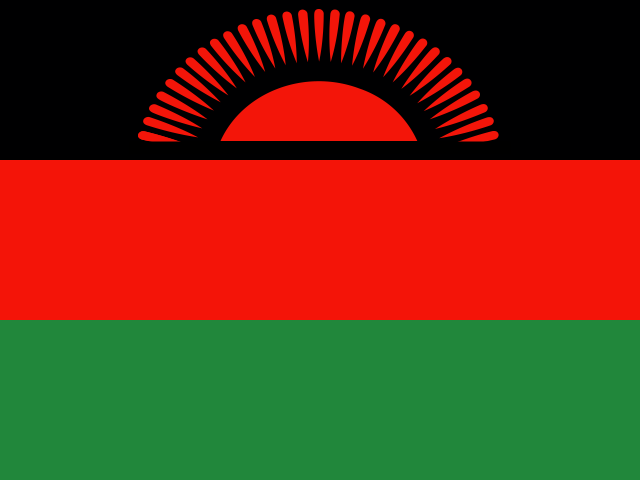 MalawiLilongwe
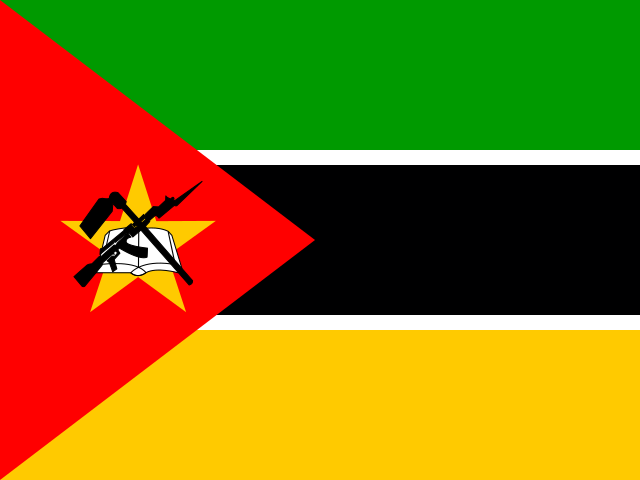 MozambiqueMaputo
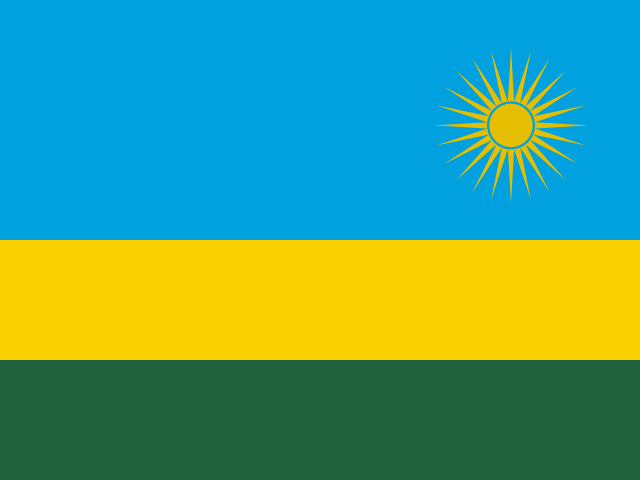 RwandaKigali
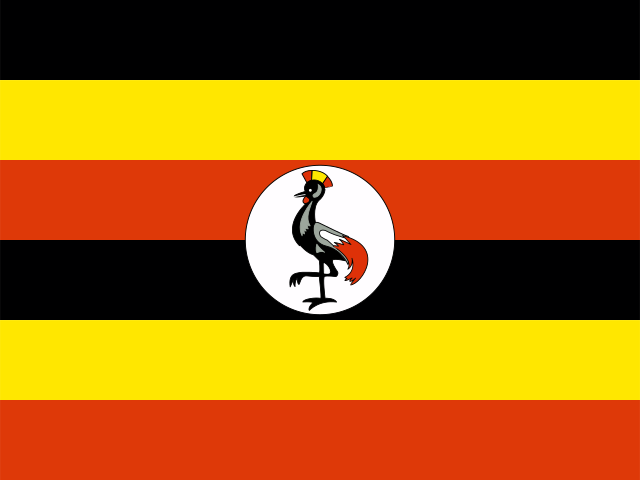 UgandaKampala
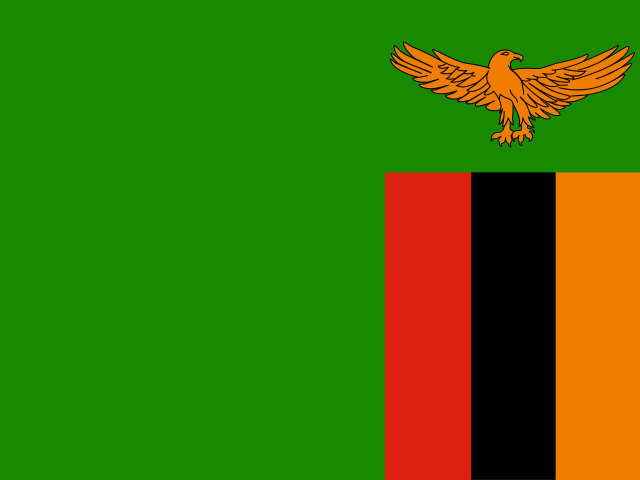 ZambiaLusaka
Quick check: how well do you know Tanzania?
3 questions, no sign-up. Tap an answer.
1. Which flag belongs to Tanzania?
That's the flag of Tanzania.
2. What is the capital of Tanzania?
The capital of Tanzania is Dodoma.
3. Which of these countries borders Tanzania?
Burundi, DR Congo, Kenya, Malawi, Mozambique, Rwanda, Uganda and Zambia border Tanzania.
Keep going on the Africa quiz – Tanzania is one of 54 countries there.
More ways to practise: find Tanzania on the blank map with no borders (hard mode), or play today's Globe and the other daily puzzles.
Frequently asked questions about Tanzania
What language is spoken in Tanzania?
Swahili (Kiswahili) and English are the official languages. Swahili is spoken by almost everyone and is the language of primary schools and politics, while English is used in higher education, business and the courts. More than 120 local languages are also spoken.
What currency does Tanzania use?
Tanzania uses the Tanzanian shilling (TZS), introduced in 1966 when the East African shilling was split into separate Kenyan, Ugandan and Tanzanian currencies. It floats and is not pegged to another currency.
What time zone is Tanzania in?
Tanzania is on East Africa Time, UTC+3, all year, the same as Kenya and Uganda. It does not use daylight saving time. Because Tanzania lies close to the equator, sunrise and sunset happen at nearly the same time all year.
Which side of the road do they drive on in Tanzania?
Tanzania drives on the left, a legacy of British administration. Kenya, Uganda, Zambia, Malawi and Mozambique also drive on the left, while Rwanda, Burundi and DR Congo drive on the right.
What is the highest point in Tanzania?
The highest point is Uhuru Peak on Kilimanjaro, at about 5,895 metres – the highest point in Africa. Kilimanjaro is the tallest free-standing mountain in the world, rising almost 5,000 metres above the plains around it.
Why is Tanzania called Tanzania?
The name was created in 1964 when Tanganyika and Zanzibar united. It blends the first letters of both, Tan and Zan, with the ending -ia, a name chosen in a public competition.
Quizzes with Tanzania
Often confused with
Guides that help with this
- Learn all 54 African countries in a weekLearn the coastline in order, region by region.
- Flags that look alike (and how to tell them apart)Chad or Romania? Australia or New Zealand? The flag pairs that cost quiz points.
- The 25 hardest countries to find on a mapPacific islands, Caribbean islands and landlocked Africa – where they are.