Albania
Capital: Tirana. Albania is one of the 46 countries in the Europe quiz.
Quick answers: What is the capital of Albania? · Which countries border Albania?
Facts about Albania
- CapitalTirana
- Population2.3 million
- Area28,748 km²
- RegionsEurope, The Balkans
- LanguageAlbanian
- CurrencyAlbanian lek (ALL)
Albania is the 31st most populous of the 46 countries in Europe and the 34th largest by area. Worldwide it ranks 145th by population and 141st by area.
Where is Albania?
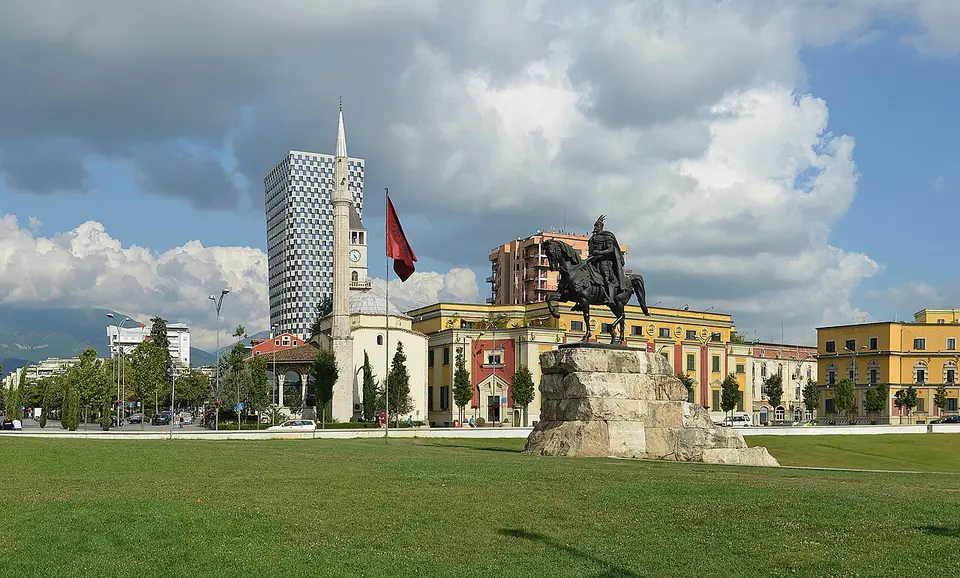
Albania is a small country on the western side of the Balkan peninsula, facing the Adriatic and Ionian Seas, with Italy's heel just across the water. Montenegro lies to the north-west, Kosovo to the north-east, North Macedonia to the east and Greece to the south. The capital, Tirana, is in the centre-west, not far from the coast.
On a world map, find the heel of Italy and look straight across the water. The first country on the Balkan side, just above Greece, is Albania.
How to find Albania on the map
- Start from Greece. Albania is the country directly north of Greece's north-western corner.
- Look across from Italy's heel. The sea between Italy and Albania is only about 70 km wide at its narrowest.
- It's on the coast. Kosovo and North Macedonia, to the east, are landlocked.
- Don't confuse it with Montenegro, which is smaller and sits just above Albania on the same coast.
Flag
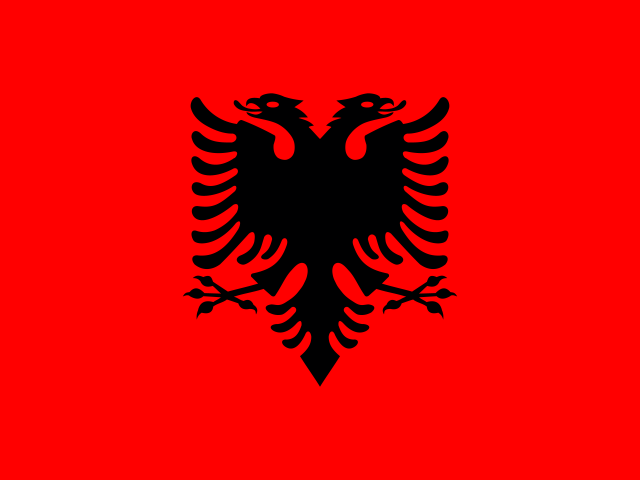
Albania's flag is a red field with a black double-headed eagle in the centre – no other country uses a black eagle on plain red. The eagle comes from the seal of Skanderbeg, the 15th-century hero who resisted the Ottomans, and Albanians call their country Shqipëri, often translated as "land of the eagles".
In the Flags quiz, red with a black two-headed bird is Albania every time. Montenegro also has a double-headed eagle, but its eagle is gold and the flag has a gold border.
A short history of Albania
In ancient times this coast belonged to the Illyrians, a group of tribes many Albanians see as their ancestors. Greek colonists founded trading towns such as Apollonia and Epidamnos, today's Durrës. Under Rome, Durrës became the starting point of the Via Egnatia, a great road that ran east across the Balkans to Byzantium. After Rome split, the region was ruled for centuries by the Byzantine Empire, with Bulgarian, Serbian and Venetian powers fighting over parts of it.
The Ottoman Turks arrived in the 1400s. Skanderbeg united Albanian nobles in the League of Lezhë in 1444 and held them off for about 25 years, but after his death the Ottomans took over. Their rule lasted more than four centuries, and during that time a large part of the population converted to Islam.
As the Ottoman Empire weakened, Albanian leaders declared independence in Vlorë on 28 November 1912. The great powers drew the new borders the following year and left many Albanians outside them, which is why large Albanian communities live in Kosovo, North Macedonia and Montenegro today. The young state was unstable. Ahmet Zogu made himself King Zog in 1928, and Italy invaded in 1939.
Communist partisans took power at the end of the Second World War. Decades of strict one-party rule followed, until protests and economic collapse brought multi-party elections in the early 1990s. The transition was rough. Tens of thousands of Albanians left by boat for Italy, and in 1997 the collapse of huge pyramid savings schemes wiped out people's savings and led to armed unrest.
Since then Albania has rebuilt steadily. Money sent home by Albanians in Italy, Greece and elsewhere has long supported families, and tourism along the southern coast, sometimes called the Albanian Riviera, has grown fast.
Culture and daily life in Albania
Albanian is a language of its own within the Indo-European family, with no close relatives. It has two main dialects, Gheg in the north and Tosk in the south, roughly divided by the Shkumbin river. The standard written form is based mainly on Tosk.
Most Albanians have Muslim roots, with large Orthodox and Catholic minorities, and the communist state banned religion entirely in 1967. Today people of different faiths live side by side with little tension, and Tirana is the world headquarters of the Bektashi Sufi order. An old code of honour called besa, a promise that must be kept, is often given as the reason Albanians sheltered Jewish refugees during the Second World War.
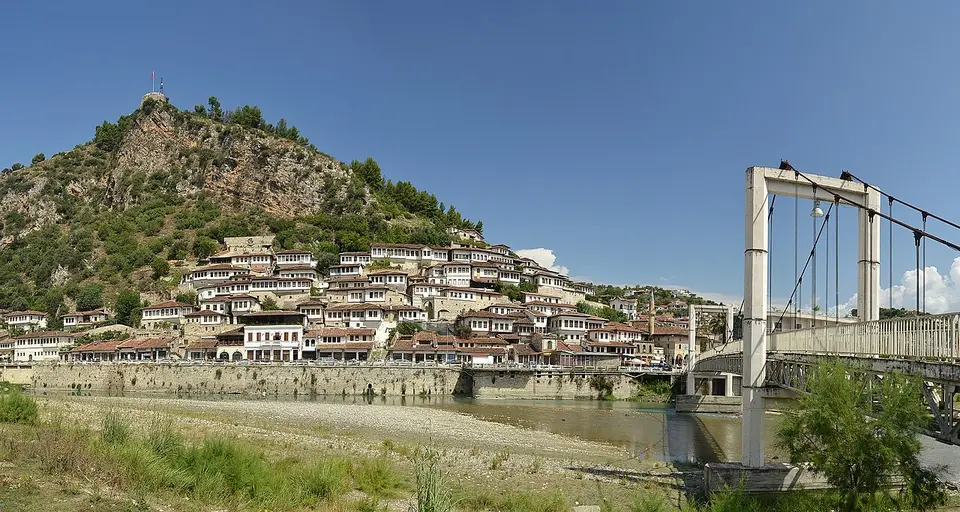
The southern towns of Berat and Gjirokastër, with their stone Ottoman houses, are UNESCO World Heritage Sites. Albanian iso-polyphony, a style of folk singing with several voices over a held drone note, is on UNESCO's heritage list too. Ismail Kadare, the country's best-known novelist, wrote The General of the Dead Army and many books exploring Albania's history. Football is the most popular sport.
Five facts worth knowing
- Albania was one of the most isolated countries in the world for much of the 20th century. Under Enver Hoxha it broke with the Soviet Union and later China and cut itself off almost completely until 1991.
- Around 170,000 concrete bunkers were built across the country in that era, and many still dot the landscape.
- Albania is a candidate to join the European Union and has been in NATO since 2009.
- Lake Ohrid, shared with North Macedonia, is one of the oldest lakes in Europe and a UNESCO World Heritage Site.
- Mother Teresa was ethnically Albanian, born in Skopje, now in North Macedonia.
Culture and traditions in Albania
- Saying hello
A handshake with "Tungjatjeta" or "Pershendetje"; friends often kiss on both cheeks.
- Food and drink
Byrek (flaky savoury pie) and tave kosi (baked lamb with yogurt).
- Festivals and traditions
Dita e Veres (Summer Day) on 14 March, celebrated especially in Elbasan with ballokume cookies.
- Everyday life
The evening xhiro, a leisurely stroll along the main street, is a daily ritual, and cafes are always busy.
- Did you know?
Many Albanians shake their head to mean yes and nod to mean no.
Common mistakes
- Tapping Montenegro or Kosovo, both of which share a border with Albania and look similar at Europe-map zoom.
- Mixing up Albania with Armenia because of the similar name – Armenia is in the Caucasus, far to the east.
- Picking Montenegro's flag in the Flags quiz when the eagle appears.
Practise with Albania
- Europe quiz – find Greece, then move north along the coast.
- Balkans quiz – a zoomed-in map where Albania's coastline stands out.
- Europe flags – one of the easier Balkan flags to recognise.
- Europe capitals quiz – Tirana.
- Mystery Country – a tall, narrow outline with a straight western coast and a bumpy eastern border.
Nearby countries
 GreeceAthens
 KosovoPristina
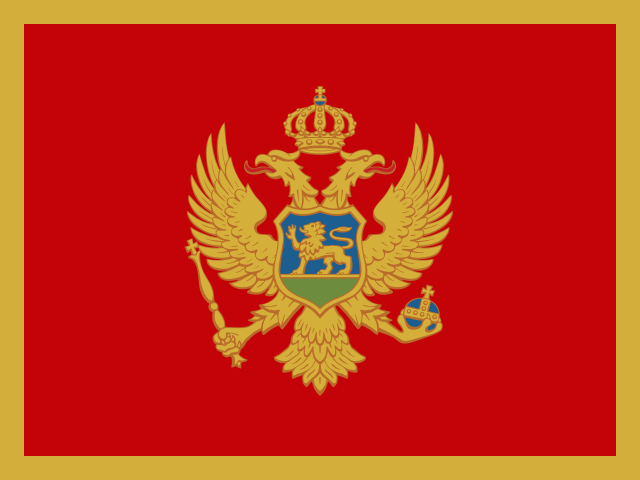 MontenegroPodgorica
 North MacedoniaSkopje
Quick check: how well do you know Albania?
3 questions, no sign-up. Tap an answer.
1. Which flag belongs to Albania?
That's the flag of Albania.
2. What is the capital of Albania?
The capital of Albania is Tirana.
3. Which of these countries borders Albania?
Greece, Kosovo, Montenegro and North Macedonia border Albania.
Keep going on the Europe quiz – Albania is one of 46 countries there.
More ways to practise: find Albania on the blank map with no borders (hard mode), or play today's Globe and the other daily puzzles.
Frequently asked questions about Albania
What language is spoken in Albania?
The official language is Albanian, an Indo-European language that forms its own separate branch with no close relatives. It has two main dialect groups, Gheg in the north and Tosk in the south, and the standard written language is based mainly on Tosk.
What currency does Albania use?
Albania uses the lek (ALL), divided into 100 qindarka, although the smaller unit is no longer used in practice. Prices are sometimes still quoted in "old lek", ten times the official figure, a leftover from a 1965 currency reform.
What time zone is Albania in?
Albania uses Central European Time, UTC+1, and switches to UTC+2 for daylight saving time in summer. It shares the same clock as Italy, Montenegro and North Macedonia.
Which side of the road do they drive on in Albania?
Albanians drive on the right. Private car ownership was almost banned under communism, so the number of cars only grew rapidly after 1991, and the Mercedes-Benz became famously common on Albanian roads.
What is the highest point in Albania?
The highest point is Mount Korab, about 2,764 metres, on the border with North Macedonia in the east of the country. It is also the highest peak in North Macedonia, so the two countries share their top summit.
What do Albanians call their country?
Albanians call their country Shqipëria and themselves Shqiptarë. The name is often linked to shqiponjë, "eagle", which is why Albania is popularly called the land of the eagles and why a black double-headed eagle appears on the flag.
Quizzes with Albania
Often confused with
Guides that help with this
- All 46 European capitals, with a memory trick for eachCapitals grouped by region, with hooks for the ones people forget.
- Flags that look alike (and how to tell them apart)Chad or Romania? Australia or New Zealand? The flag pairs that cost quiz points.
- The 25 hardest countries to find on a mapPacific islands, Caribbean islands and landlocked Africa – where they are.