North Macedonia
Capital: Skopje. North Macedonia is one of the 46 countries in the Europe quiz.
Quick answers: What is the capital of North Macedonia? · Which countries border North Macedonia?
Facts about North Macedonia
- CapitalSkopje
- Population1.8 million
- Area25,713 km²
- RegionsEurope, The Balkans
- LanguageMacedonian
- CurrencyMacedonian denar (MKD)
North Macedonia is the 34th most populous of the 46 countries in Europe and the 35th largest by area. Worldwide it ranks 150th by population and 146th by area.
Where is North Macedonia?
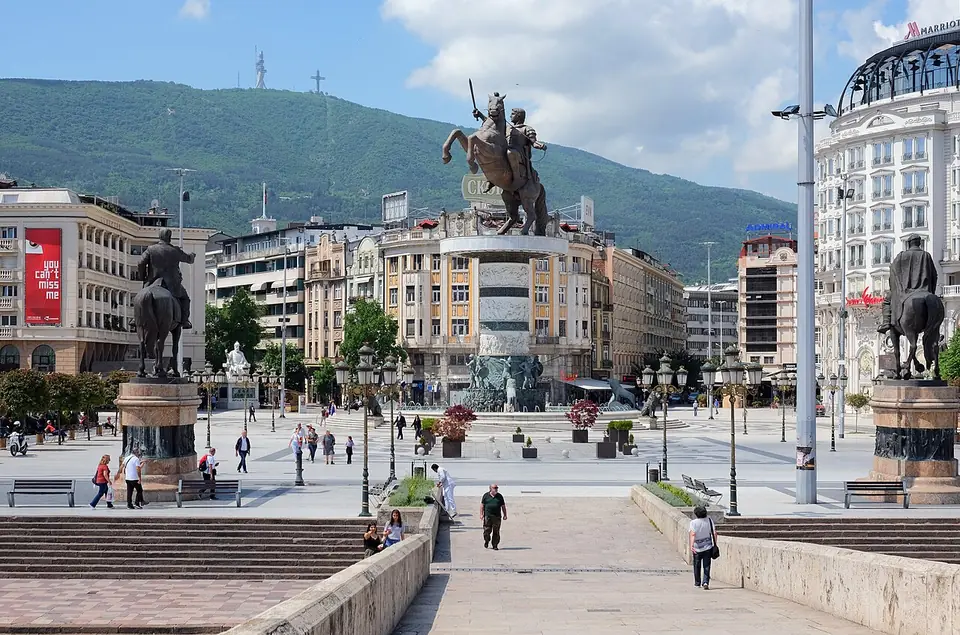
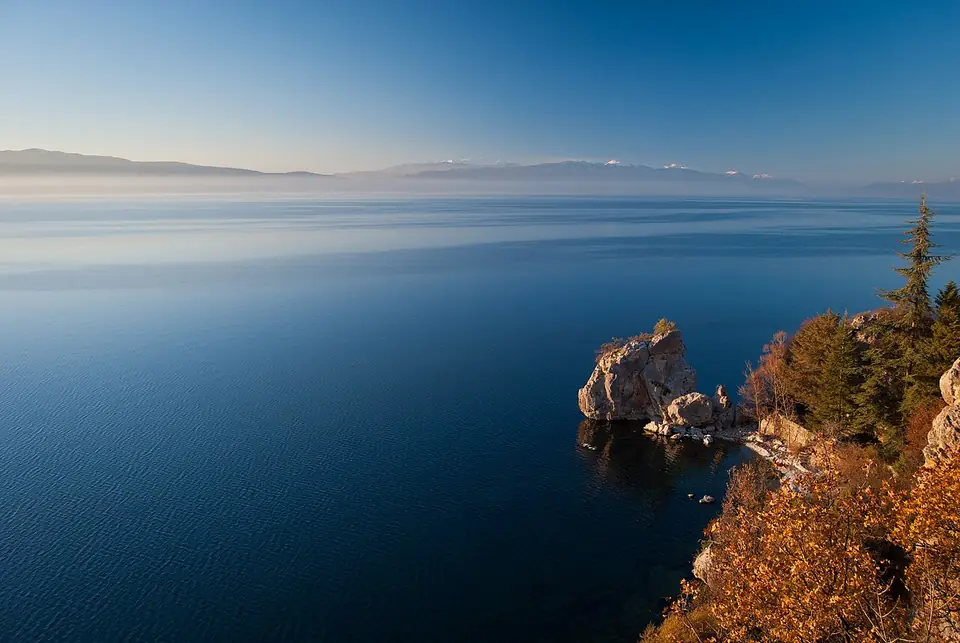
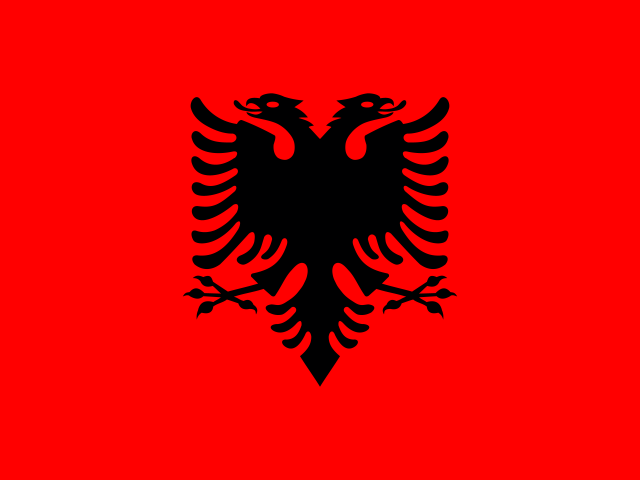
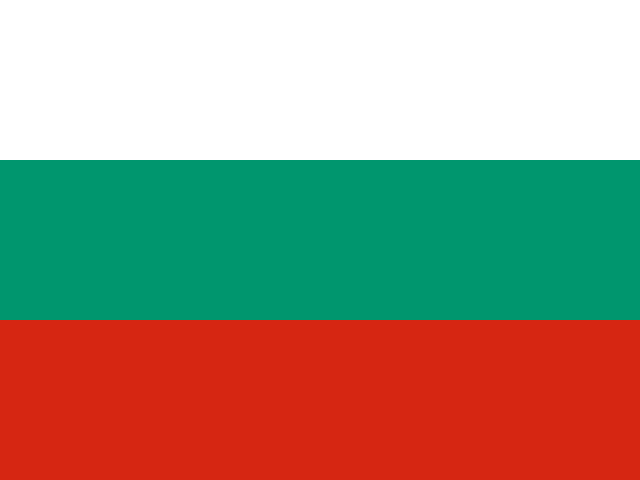
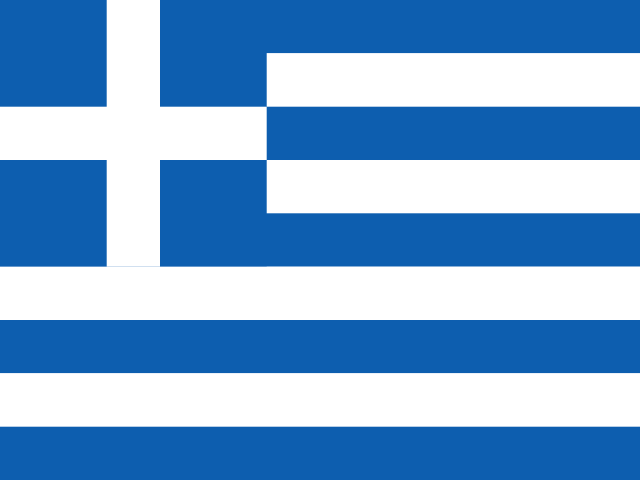
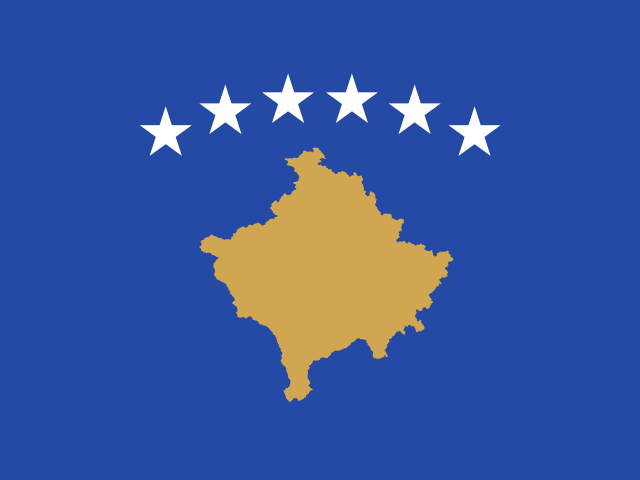
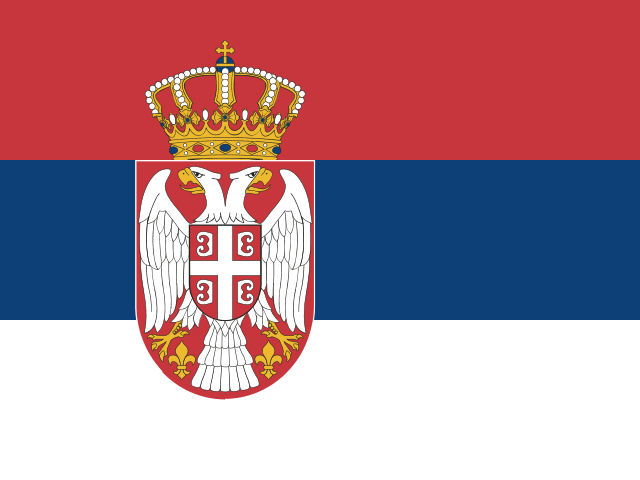
North Macedonia is a small landlocked country in the central Balkans, in south-eastern Europe. It borders Greece to the south, Bulgaria to the east, Serbia and Kosovo to the north, and Albania to the west. Skopje, the capital, is in the north near the border with Kosovo, on the Vardar River. The country is mountainous, with large lakes – Ohrid and Prespa – in the south-west on the Albanian and Greek borders.
On a world map, find Greece and look directly north. The small country sitting on Greece's northern border between Albania and Bulgaria is North Macedonia.
How to find North Macedonia on the map
- Start from Greece. North Macedonia is the country directly above Greece's mainland, in the middle.
- Find Albania and Bulgaria. North Macedonia is the piece wedged between them.
- Look for the lakes. Lake Ohrid in the south-west corner is a visible marker at regional zoom.
- Don't confuse it with Montenegro. Montenegro is further north-west and has a coast; North Macedonia is fully landlocked.
Flag
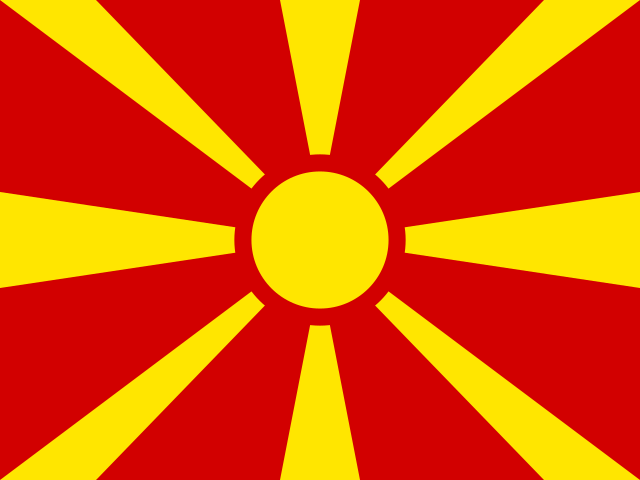
North Macedonia's flag is a red field with a yellow sun in the centre whose eight broad rays stretch to the edges of the flag. It was adopted in 1995, replacing an earlier design with the sixteen-rayed Vergina Sun that Greece objected to.
It is one of the most distinctive flags in Europe. Kyrgyzstan also has a red field with a yellow sun, but its sun is a small disc with a ring of rays in the centre. If the rays reach all the way to the corners and edges, it's North Macedonia.
A short history of North Macedonia
In ancient times, much of today's North Macedonia lay in Paeonia, a land of tribes north of the kingdom of Macedon, while parts of its south were absorbed into Macedon itself. Macedon was the home of Philip II and Alexander the Great. Macedon's heartland was mostly in what is now northern Greece, and this overlap of names lies behind the long dispute between the two countries. Under the Romans, the region was crossed by the Via Egnatia, a great road linking the Adriatic to Byzantium, and towns such as Stobi and Heraclea Lyncestis flourished.
Slavs settled across the Balkans in the 500s and 600s. The area was then fought over by the Byzantine Empire, Bulgaria and Serbia. Ohrid became a major Christian centre in the 800s, when the disciples of Cyril and Methodius, Clement and Naum, taught there and helped spread Slavic literacy. In the late 900s, Tsar Samuel ruled a powerful state from the Ohrid and Prespa area.
From the late 1300s the Ottoman Empire ruled the region for more than five hundred years. In 1903 the Ilinden Uprising broke out against Ottoman rule; it was crushed, but its date, 2 August, is still a national holiday. After the Balkan Wars of 1912–13, Macedonia was divided between Greece, Bulgaria and Serbia. The Serbian part later became part of Yugoslavia.
After the Second World War, Tito's Yugoslavia made it the Socialist Republic of Macedonia, one of six republics, with its own official language. When Yugoslavia broke up, the country declared independence in 1991 and, unusually for the region, did so without a war. Tensions with the large Albanian minority led to a short armed conflict in 2001, ended by the Ohrid Framework Agreement, which gave Albanians more rights and wider official use of their language.
Today North Macedonia is a small, open economy that has spent many years working towards European Union membership.
Culture and daily life in North Macedonia
Macedonian is a South Slavic language written in Cyrillic, close to Bulgarian. Albanian is spoken by about a quarter of the population, mostly in the west and north-west, and is also an official language. The difference often matches religion: most Macedonians are Orthodox Christians, while most Albanians are Muslim. Many towns have both church domes and minarets on the skyline.
The country is rich in Byzantine art. The small church of St Panteleimon at Nerezi, near Skopje, has 12th-century frescoes famous for their emotional faces, and the monastery of St Naum on Lake Ohrid draws visitors from across the region. Ohrid itself was once said to have a church for every day of the year.
Folk music uses tricky rhythms in 7/8 and 9/8 time, and circle dances called oro are part of every wedding. Toše Proeski, a singer from Kruševo, became a national hero before his early death in 2007. In sport, handball is followed with great passion. Wine has a long history in the Tikveš region in the centre of the country, where vineyards line the Vardar valley.
Five facts worth knowing
- The country was called simply "Macedonia" until 2019, when it changed its name to North Macedonia under the Prespa Agreement with Greece, ending a 27-year naming dispute.
- Lake Ohrid is one of Europe's oldest and deepest lakes, over a million years old, and the town of Ohrid is a UNESCO World Heritage site.
- Mother Teresa was born in Skopje in 1910, when the city was part of the Ottoman Empire.
- North Macedonia joined NATO in 2020, shortly after the name change removed Greece's objection.
- Skopje was largely rebuilt after a 1963 earthquake that destroyed much of the city.
Culture and traditions in North Macedonia
- Saying hello
A handshake and "Zdravo" or "Dobar den"; friends exchange three cheek kisses.
- Food and drink
Tavče gravče, baked beans in a clay pot, and ajvar, a roasted red pepper spread made each autumn.
- Festivals and traditions
The Ohrid Summer Festival (July-August) and the Vevčani Carnival in January are well known.
- Everyday life
Coffee with friends is a social ritual, and guests are offered food and drink. Name days are often celebrated.
- Did you know?
Lake Ohrid is one of the oldest lakes in Europe, at over a million years old.
Common mistakes
- Tapping the Greek region of Macedonia, which lies just south of the border and shares the name.
- Tapping Montenegro or Kosovo – small Balkan neighbours that are easy to mix up.
- Tapping Bulgaria, the larger country to the east.
Practise with North Macedonia
- Europe quiz – directly north of Greece, between Albania and Bulgaria.
- Balkans quiz – the regional map makes the Macedonia / Montenegro / Kosovo trio much easier to separate.
- Europe flags – the red flag with the sun whose rays reach the edges.
- Europe capitals quiz – Skopje.
- Mystery Country – a compact, rounded outline with no coast and a notch in the south-west where Lake Ohrid sits.
Nearby countries
Quick check: how well do you know North Macedonia?
3 questions, no sign-up. Tap an answer.
1. Which flag belongs to North Macedonia?
That's the flag of North Macedonia.
2. What is the capital of North Macedonia?
The capital of North Macedonia is Skopje.
3. Which of these countries borders North Macedonia?
Albania, Bulgaria, Greece, Kosovo and Serbia border North Macedonia.
Keep going on the Europe quiz – North Macedonia is one of 46 countries there.
More ways to practise: find North Macedonia on the blank map with no borders (hard mode), or play today's Globe and the other daily puzzles.
Frequently asked questions about North Macedonia
What language is spoken in North Macedonia?
Macedonian, written in the Cyrillic alphabet, is the official language nationwide. Since a 2019 law, Albanian is also official at national level, and it is the main language in the north-west. Turkish, Romani, Serbian and Aromanian are recognised in municipalities where those communities live.
What currency does North Macedonia use?
North Macedonia uses the Macedonian denar (MKD), introduced in 1992 after the break-up of Yugoslavia. The central bank keeps it stable against the euro, which is also often used for large purchases such as property and cars.
What time zone is North Macedonia in?
North Macedonia uses Central European Time, UTC+1, in winter and UTC+2 in summer with daylight saving. That is one hour behind neighbouring Greece and Bulgaria.
Which side of the road do they drive on in North Macedonia?
North Macedonia drives on the right. The main motorway follows the Vardar valley from the Serbian border through Skopje to Greece, part of the old route between Central Europe and Thessaloniki.
What is the highest point in North Macedonia?
Mount Korab, on the border with Albania, is the highest point at about 2,764 metres. It is also Albania's highest mountain, and the summit area lies within Mavrovo National Park on the Macedonian side.
Is North Macedonia in the EU?
No. North Macedonia has been an official EU candidate since 2005 and opened accession talks in 2022 after long delays caused first by the naming dispute with Greece and then by a disagreement with Bulgaria. It has been a NATO member since 2020.
Quizzes with North Macedonia
Often confused with
Guides that help with this
- All 46 European capitals, with a memory trick for eachCapitals grouped by region, with hooks for the ones people forget.
- Flags that look alike (and how to tell them apart)Chad or Romania? Australia or New Zealand? The flag pairs that cost quiz points.
- The 25 hardest countries to find on a mapPacific islands, Caribbean islands and landlocked Africa – where they are.