Montenegro
Capital: Podgorica. Montenegro is one of the 46 countries in the Europe quiz.
Quick answers: What is the capital of Montenegro? · Which countries border Montenegro?
Facts about Montenegro
- CapitalPodgorica
- Population623,129
- Area13,812 km²
- RegionsEurope, The Balkans
- LanguagesMontenegrin, Serbian, Bosnian, Albanian, Croatian
- CurrencyEuro (EUR)
Montenegro is the 39th most populous of the 46 countries in Europe and the 37th largest by area. Worldwide it ranks 167th by population and 157th by area.
Where is Montenegro?
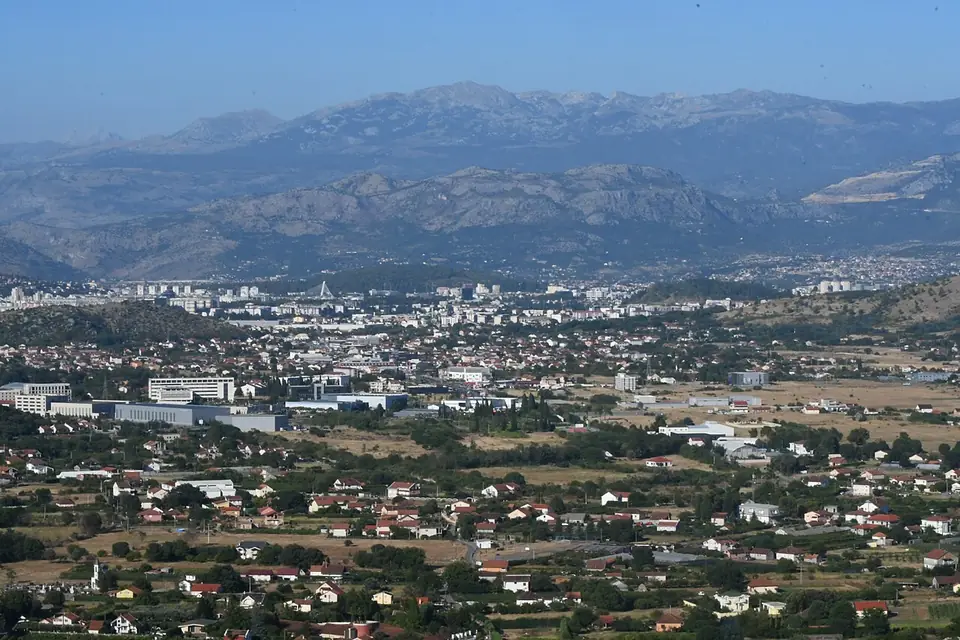
Montenegro is a small mountainous country on the Adriatic coast of the Balkans, in south-eastern Europe. It has a short coastline facing Italy across the sea, and it borders Croatia to the west, Bosnia and Herzegovina to the north-west, Serbia to the north-east, Kosovo to the east and Albania to the south-east. Podgorica, the capital, is in the southern lowlands near Lake Skadar, which Montenegro shares with Albania.
On a world map, follow the Adriatic coast south from Croatia. After Croatia's long thin coastal strip ends, the next short stretch of coast before Albania belongs to Montenegro.
How to find Montenegro on the map
- Start from Croatia. Croatia's coastline is a long curve; Montenegro is the small country tucked just below its southern tip.
- Find Albania. Montenegro sits directly north of Albania on the coast.
- Look for the sea. Of the countries that came out of Yugoslavia, Montenegro is the only one with a coast besides Croatia, Slovenia and Bosnia's tiny 20 km strip.
- Don't confuse it with North Macedonia. Both are small former Yugoslav republics, but North Macedonia is inland, further east, above Greece.
Flag
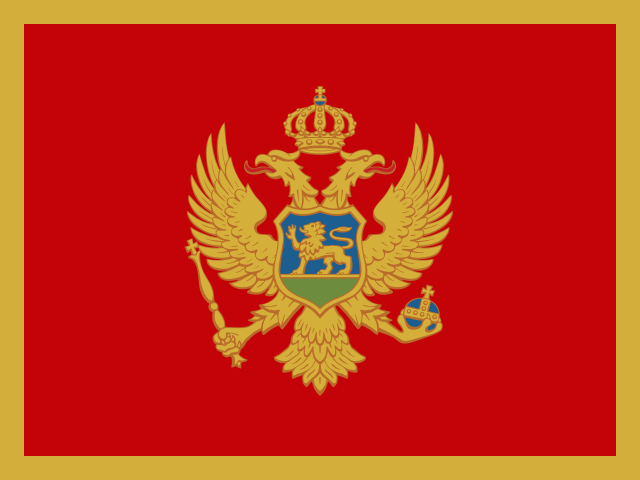
Montenegro's flag is a red field with a gold border and, in the centre, a gold double-headed eagle holding a sceptre and an orb. On the eagle's chest is a shield with a golden lion on a blue and green background.
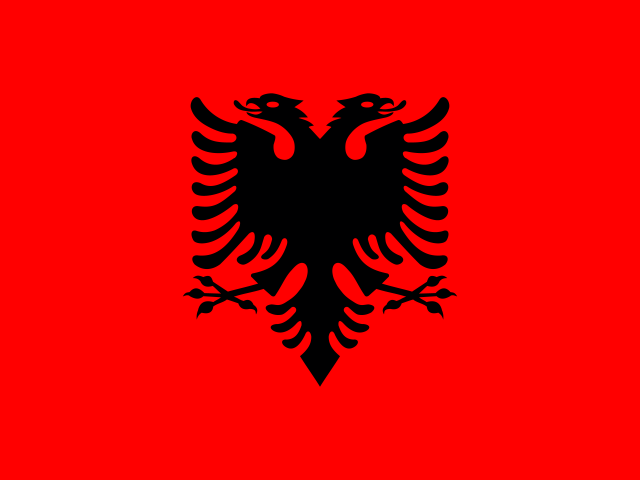
It is one of the easiest Balkan flags to spot: no other European flag combines a plain red field, gold edging and a double-headed eagle. Albania also has a double-headed eagle, but Albania's is black on red with no border, while Serbia's eagle sits on a red-blue-white tricolour.
A short history of Montenegro
In Roman times the coast here belonged to the province of Dalmatia, and the town of Doclea, near today's Podgorica, was an important settlement. Slavs arrived in the 6th and 7th centuries, and by the 11th century a Slavic state called Duklja, later known as Zeta, had grown strong enough to win recognition from the Pope. It was later absorbed into the medieval Serbian kingdom.
When the Ottoman Empire conquered the Balkans in the 1400s, the highlanders around Mount Lovćen held out in their rugged terrain. The Crnojević rulers set up a capital at Cetinje and a printing press there in 1494, one of the first in South-Eastern Europe. From 1696 Montenegro was ruled by prince-bishops of the Petrović-Njegoš family, who combined church and state and led a long struggle against the Ottomans. Meanwhile the coast, including Kotor, belonged to Venice for centuries and later to Austria, which is why the seaside towns look so Venetian.
Montenegro's independence was formally recognised at the Congress of Berlin in 1878, and its territory grew. In 1910 Nikola I declared himself king. During the First World War Austria-Hungary occupied the country, and in 1918 an assembly voted to depose the king and join Serbia, a decision that remained controversial. Montenegro then became part of the Kingdom of Yugoslavia.
After the Second World War, in which Montenegrin partisans played a large role, it became one of six republics in Tito's socialist Yugoslavia, with Titograd, today's Podgorica, as its capital. When Yugoslavia broke apart in the early 1990s, Montenegro stayed with Serbia, later in a looser union. Its own path diverged, and in 2006 a referendum narrowly passed the threshold needed for independence.
Today Montenegro relies heavily on tourism along its coast and in its mountains, and it is among the leading candidates to join the European Union.
Culture and daily life in Montenegro
The language most people speak is called Montenegrin by some and Serbian by others. It is written in both Latin and Cyrillic, and the choice of name often reflects how people see their identity. Most Montenegrins are Orthodox Christians, but there are also significant Muslim and Catholic communities, especially near the borders with Albania and Bosnia. Ostrog Monastery, built into a sheer cliff face, is the country's most visited pilgrimage site.
The most celebrated figure in Montenegrin culture is Petar II Petrović-Njegoš, a 19th-century prince-bishop and poet. His epic The Mountain Wreath is a classic of South Slavic literature, and his mausoleum sits on the summit of Mount Lovćen. Folk epics are traditionally sung to the gusle, a single-stringed instrument played with a bow.
Montenegrins are famously tall, and sport reflects it. Water polo is the country's great success story, and basketball is hugely popular. The old royal capital of Cetinje still houses museums and former embassies from the days of the kingdom. In the north, Durmitor National Park draws hikers and rafters to its peaks and glacial lakes.
Five facts worth knowing
- Montenegro became independent in 2006 after a referendum ended its union with Serbia, making it one of Europe's youngest countries.
- The name means "Black Mountain" – Crna Gora in the local language – after the dark, forested slopes of Mount Lovćen.
- Montenegro uses the euro even though it is not a member of the European Union; it adopted it unilaterally.
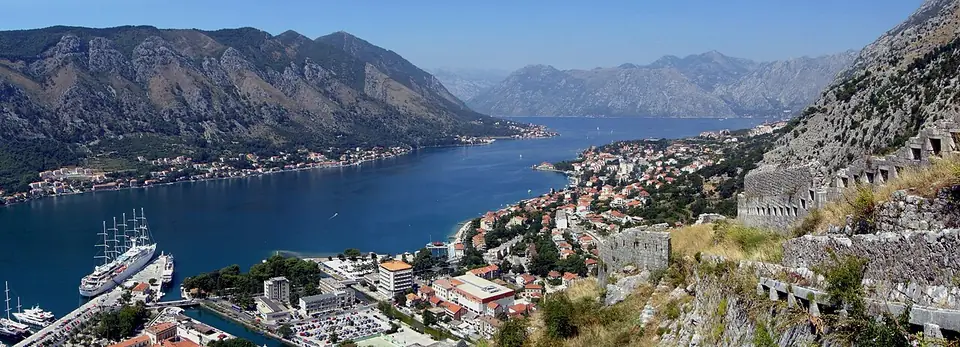
- The Bay of Kotor is a deep, winding inlet on the coast often described as Europe's southernmost fjord-like bay, and the old town of Kotor is a UNESCO World Heritage site.
- Montenegro joined NATO in 2017, becoming the alliance's 29th member.
Culture and traditions in Montenegro
- Saying hello
A handshake and "Dobar dan" (good day) are standard; friends exchange three cheek kisses.
- Food and drink
Njeguški pršut, air-dried ham, with Njeguši cheese, and kačamak, a hearty cornmeal and potato dish.
- Festivals and traditions
The Mimosa Festival in Herceg Novi (February) welcomes spring; the Kotor Summer Carnival happens in July/August.
- Everyday life
Life moves at a relaxed pace, with long coffee breaks in cafés. Hospitality is a matter of pride.
- Did you know?
Montenegro's name means "Black Mountain", and its Tara River Canyon is one of the deepest in Europe.
Common mistakes
- Tapping Albania – it's the neighbour directly to the south and also has a short Adriatic coast.
- Tapping Bosnia and Herzegovina, which is larger and sits above Montenegro.
- Mixing it up with North Macedonia because of the similar-sounding "M" name.
Practise with Montenegro
- Europe quiz – one of the smallest countries on the map; find Croatia's tail first.
- Balkans quiz – the map zooms in on the region, so Montenegro's spot between Croatia and Albania is clear.
- Europe flags – learn the gold-bordered red flag with the double-headed eagle.
- Europe capitals quiz – Podgorica.
- Mystery Country – a compact, jagged outline with a short coastline at the bottom left.
Nearby countries
 AlbaniaTirana
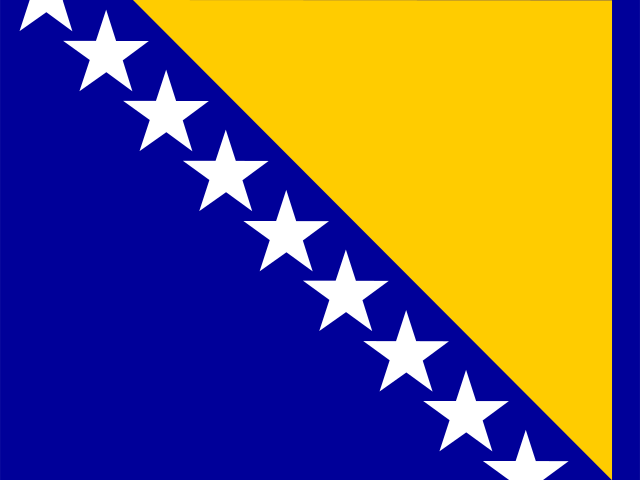 Bosnia and HerzegovinaSarajevo
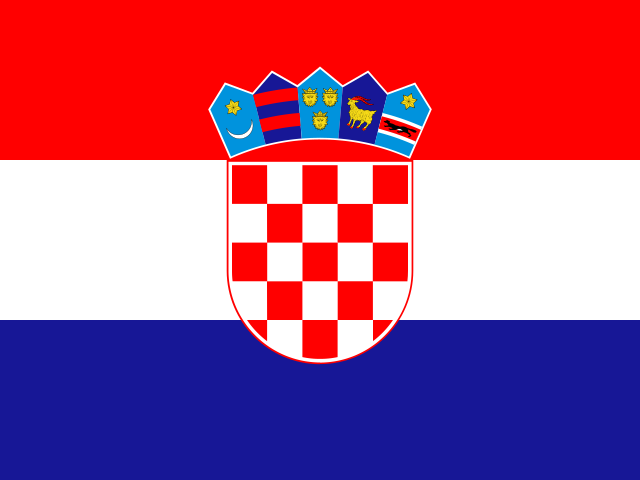 CroatiaZagreb
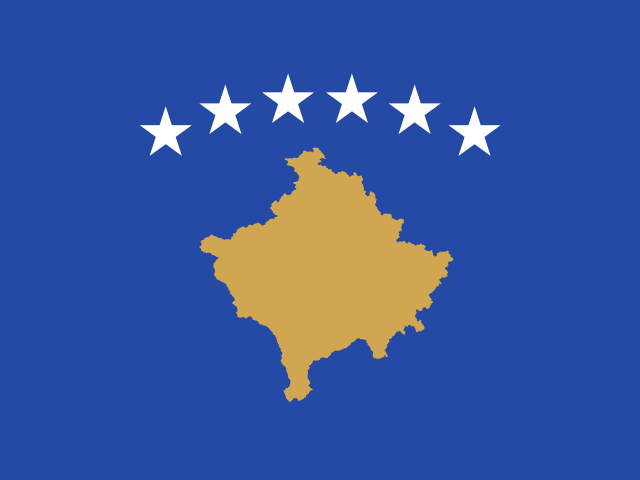 KosovoPristina
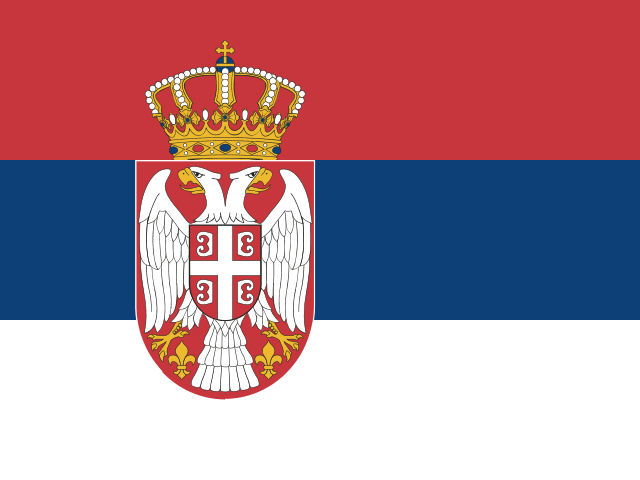 SerbiaBelgrade
Quick check: how well do you know Montenegro?
3 questions, no sign-up. Tap an answer.
1. Which flag belongs to Montenegro?
That's the flag of Montenegro.
2. What is the capital of Montenegro?
The capital of Montenegro is Podgorica.
3. Which of these countries borders Montenegro?
Albania, Bosnia and Herzegovina, Croatia, Kosovo and Serbia border Montenegro.
Keep going on the Europe quiz – Montenegro is one of 46 countries there.
More ways to practise: find Montenegro on the blank map with no borders (hard mode), or play today's Globe and the other daily puzzles.
Frequently asked questions about Montenegro
What language is spoken in Montenegro?
Montenegrin is the official language. Serbian, Bosnian, Albanian and Croatian are also in official use, and Serbian is the language a large share of the population says they speak at home. Montenegrin, Serbian, Bosnian and Croatian are closely related and mutually intelligible, and both Latin and Cyrillic alphabets are used.
What currency does Montenegro use?
Montenegro uses the euro (EUR), even though it is not part of the eurozone and has no central-bank role in issuing it. It switched to the German mark in 1999 to break away from the Yugoslav dinar, then to the euro when the mark was withdrawn in 2002.
What time zone is Montenegro in?
Montenegro uses Central European Time, UTC+1, in winter and UTC+2 in summer with daylight saving. It shares this with all its Balkan neighbours, so there are no time changes when crossing into Serbia, Bosnia and Herzegovina, Croatia or Albania.
Which side of the road do they drive on in Montenegro?
Montenegro drives on the right. Mountain roads are narrow and winding, such as the serpentine road from Kotor up to Lovćen with 25 hairpin bends, while the Adriatic Highway runs along the coast.
What is the highest point in Montenegro?
Zla Kolata, in the Prokletije mountains on the border with Albania, is the highest point at about 2,534 metres. For many years Bobotov Kuk in Durmitor was thought to be the highest, but it is slightly lower at about 2,523 metres.
What is the Tara River Canyon?
The Tara River Canyon, in Durmitor National Park, is the deepest canyon in Europe, reaching about 1,300 metres deep. It is popular for rafting, and the Đurđevića Tara Bridge, completed in 1940, crosses it on five concrete arches.
Quizzes with Montenegro
Often confused with
Guides that help with this
- All 46 European capitals, with a memory trick for eachCapitals grouped by region, with hooks for the ones people forget.
- Flags that look alike (and how to tell them apart)Chad or Romania? Australia or New Zealand? The flag pairs that cost quiz points.
- The 25 hardest countries to find on a mapPacific islands, Caribbean islands and landlocked Africa – where they are.