Azerbaijan
Capital: Baku. Azerbaijan is one of the 48 countries in the Asia quiz.
Quick answers: What is the capital of Azerbaijan? · Which countries border Azerbaijan?
Facts about Azerbaijan
- CapitalBaku
- Population10.2 million
- Area86,600 km²
- RegionAsia
- LanguageAzerbaijani
- CurrencyAzerbaijani manat (AZN)
Azerbaijan is the 30th most populous of the 48 countries in Asia and the 32nd largest by area. Worldwide it ranks 95th by population and 111th by area.
Where is Azerbaijan?
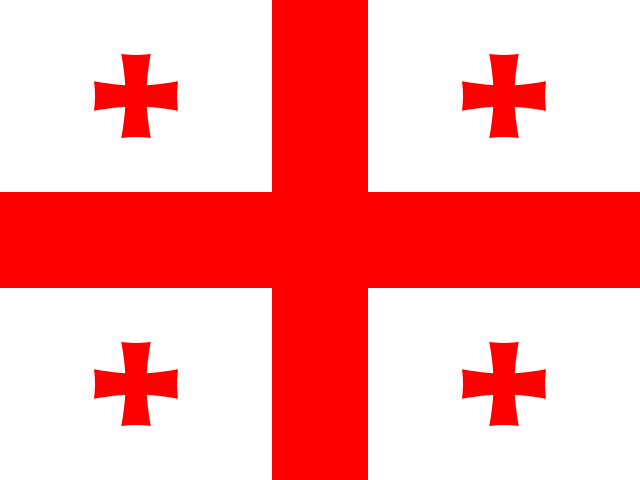
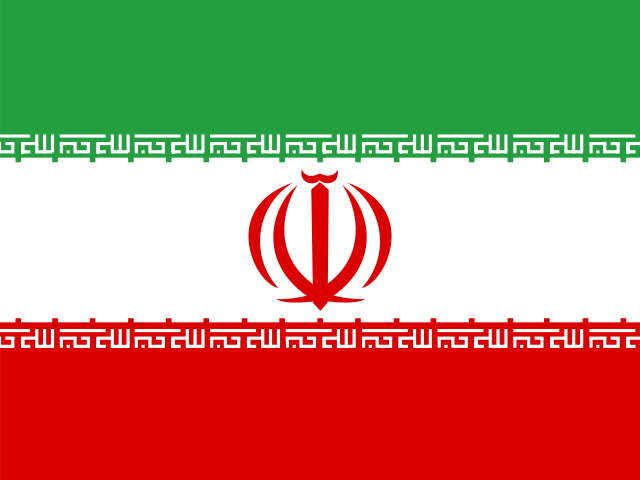
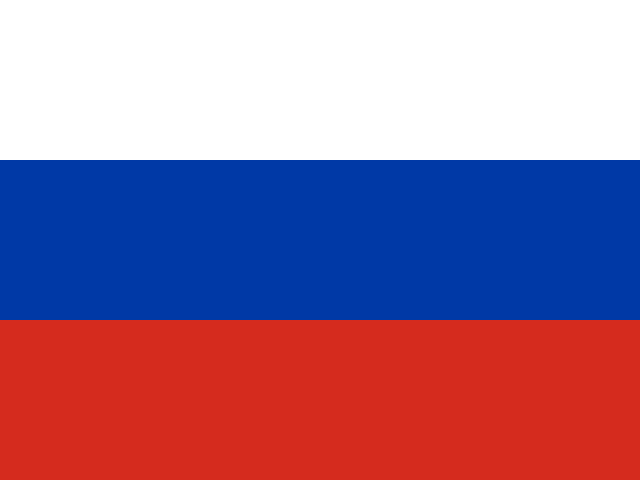
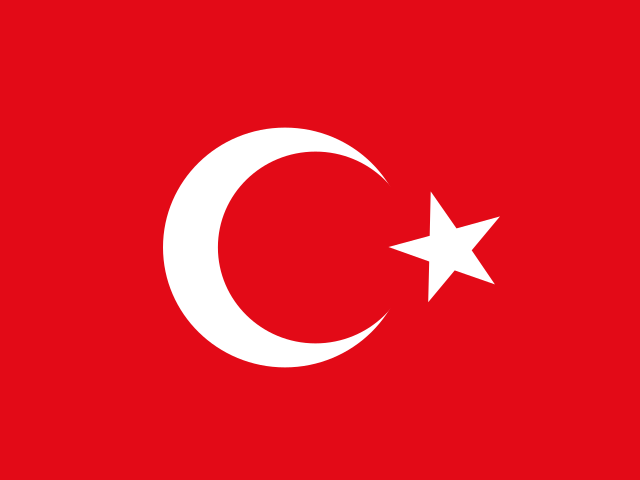
Azerbaijan is in the South Caucasus, on the western shore of the Caspian Sea. Russia lies to the north, Georgia to the north-west, Armenia to the west and Iran to the south. A separate piece of the country, the Nakhchivan exclave, sits on the far side of Armenia, bordering Turkey and Iran. Baku, the capital, is on a peninsula jutting into the Caspian.
On a world map, find the Caspian Sea, the large inland sea east of the Black Sea. Azerbaijan is on its western shore, below Russia and above Iran.
How to find Azerbaijan on the map
- Start from the Caspian Sea. Azerbaijan is the only Caucasus country with a Caspian coastline.
- Look for the exclave. The small detached piece of Azerbaijan to the west of Armenia is Nakhchivan – a useful clue in Mystery Country.
- Find Baku's peninsula. The Absheron peninsula sticks out into the Caspian like a small hook.
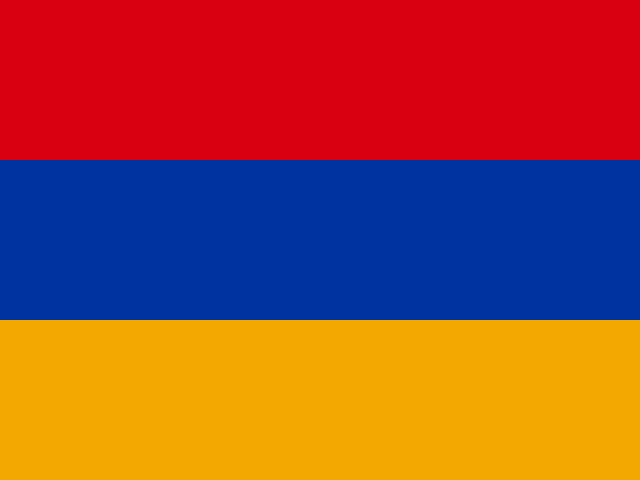
- Don't confuse it with Armenia. Armenia is the landlocked neighbour to the west; Azerbaijan is the one touching the sea.
Flag
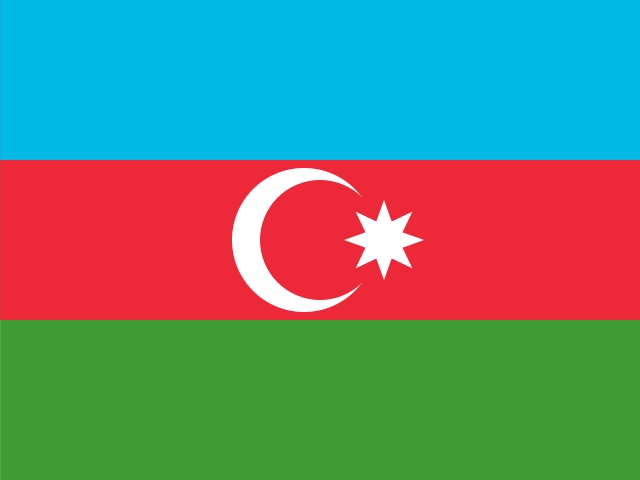
Azerbaijan's flag is a horizontal tricolour of blue, red and green, with a white crescent and eight-pointed star in the centre of the red band. Blue stands for Turkic heritage, red for progress and green for Islam.
In the Flags quiz, a crescent and eight-pointed star on a tricolour is unique. Uzbekistan also has a blue-white-green flag with a crescent, but its stars are small and there are twelve of them.
A short history of Azerbaijan
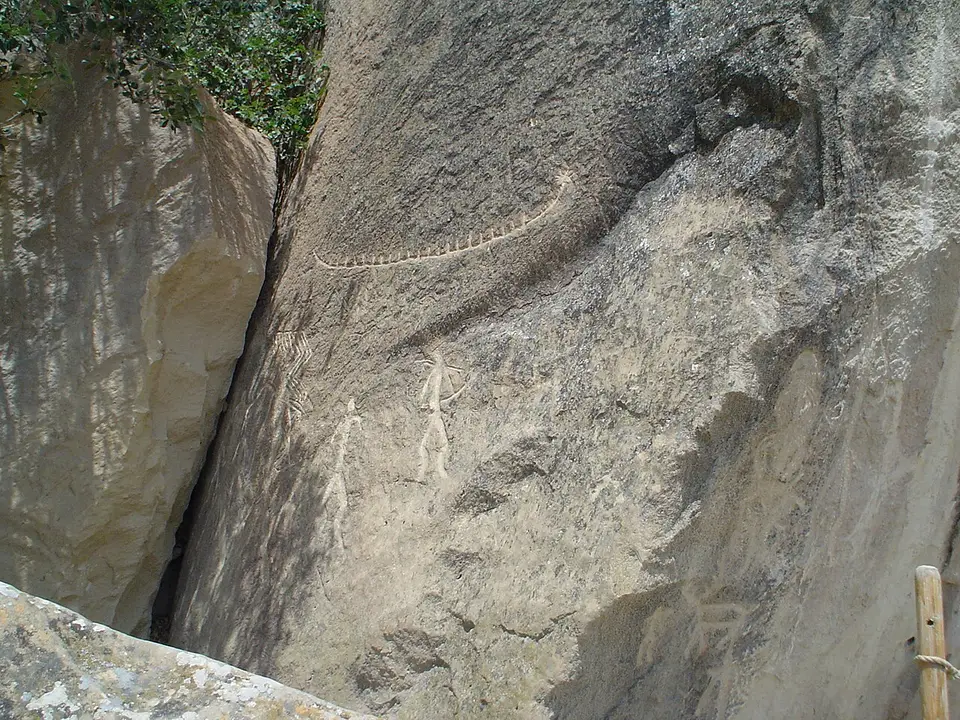
Rock carvings at Gobustan, south of Baku, show that people hunted, danced and sailed reed boats here many thousands of years ago. In ancient times the north of today's country was home to Caucasian Albania, a kingdom unrelated to Albania in the Balkans, while the south was ruled by Persian empires. Fire temples of the Zoroastrian faith fitted naturally in a land where gas burned from the ground.
Arab armies arrived in the 7th century and brought Islam. Later, Turkic peoples moved in from Central Asia, especially under the Seljuks in the 11th century, and their language gradually became the language of the region. For centuries local dynasties such as the Shirvanshahs ruled from Shamakhi and Baku, where their palace still stands in the old walled city. In the 1500s the Safavid dynasty, which came from this region, made Shia Islam the faith of Persia and of most Azerbaijanis.
In the early 1800s Russia defeated Persia in two wars, and the treaties of 1813 and 1828 drew a border along the Aras river. Lands to the north became Russian and those to the south stayed Persian. That is why, by many estimates, more Azerbaijanis live in north-western Iran today than in Azerbaijan itself. In the late 1800s Baku's oil boom drew investors such as the Nobel brothers and made it one of the world's leading oil centres.
In 1918 the Azerbaijan Democratic Republic was declared, one of the first parliamentary republics in the Muslim world, and it gave women the vote. The Red Army ended it in 1920, and Azerbaijan became a Soviet republic. Baku's oil was vital to the Soviet war effort in the Second World War. In January 1990 Soviet troops killed many civilians in Baku, and Azerbaijan declared independence in 1991. War with Armenian forces over Nagorno-Karabakh followed and ended in a ceasefire in 1994 that left the region outside Azerbaijani control. Azerbaijan recaptured much of the area in 2020 and the rest in 2023.
Oil and gas still drive the economy. Pipelines carry Caspian energy west through Georgia to Turkey, avoiding Russia.
Culture and daily life in Azerbaijan
Azerbaijani is a Turkic language, close enough to Turkish that speakers can follow each other. It has been written in Arabic, Latin and Cyrillic letters over the last hundred years, and switched back to the Latin alphabet after independence. Most people are Shia Muslims, but the country is strongly secular, and Russian is still widely understood in Baku.
The best-known musical tradition is mugham, a form of improvised classical music played on the tar and kamancha, recognised by UNESCO. Uzeyir Hajibeyov combined it with Western opera in Leyli and Majnun in 1908, often called the first opera in the Muslim world. Jazz musicians such as Vagif Mustafazadeh later blended mugham with jazz. The medieval poet Nizami Ganjavi, from the city of Ganja, is the national literary figure.
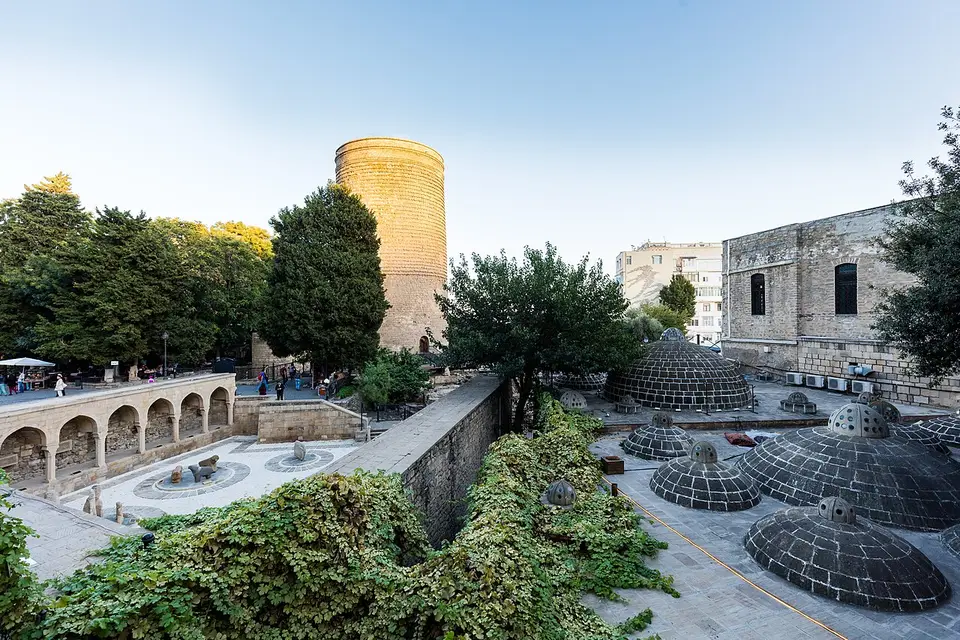
Hand-woven carpets are a proud craft, and Baku even has a museum built in the shape of a rolled carpet. Modern Baku mixes the medieval Maiden Tower with the Flame Towers and Zaha Hadid's flowing Heydar Aliyev Centre. Chess is hugely popular, and Garry Kasparov was born in Baku.
Five facts worth knowing
- Baku is the lowest-lying national capital in the world, sitting around 28 metres below sea level on the Caspian shore.
- Azerbaijan is known as the "Land of Fire" – natural gas seeps from the ground in places and has burned for centuries, as at Yanar Dag near Baku.
- Oil has been extracted around Baku since the 19th century, and some of the world's first offshore oil platforms were built in the Caspian.
- Nakhchivan is cut off from the rest of Azerbaijan by Armenian territory and is reached by air or through Iran.
- Azerbaijan hosts a Formula 1 Grand Prix on a street circuit through Baku's old town and seafront.
Culture and traditions in Azerbaijan
- Saying hello
"Salam" with a handshake.
- Food and drink
Plov (saffron rice with meat and dried fruit) and dolma; black tea served with jam.
- Festivals and traditions
Novruz, the spring New Year, on 20–21 March, with bonfires and decorated wheat sprouts.
- Everyday life
Tea is served in pear-shaped armudu glasses and offered to every guest.
- Did you know?
Called the "Land of Fire", it has Yanar Dag, a hillside where natural gas has burned continuously for decades.
Common mistakes
- Tapping Armenia or Georgia instead of Azerbaijan.
- Tapping the Nakhchivan exclave and assuming it's a separate country.
- Confusing Azerbaijan's tricolour with Uzbekistan's in the Flags quiz.
Practise with Azerbaijan
- Asia quiz – the country on the western shore of the Caspian Sea.
- Middle East quiz – appears on the northern edge above Iran.
- Asia flags – blue, red, green with a crescent and eight-pointed star.
- Asia capitals quiz – Baku.
- Mystery Country – a main outline with a hooked peninsula plus a detached piece to the west.
Nearby countries
Quick check: how well do you know Azerbaijan?
3 questions, no sign-up. Tap an answer.
1. Which flag belongs to Azerbaijan?
That's the flag of Azerbaijan.
2. What is the capital of Azerbaijan?
The capital of Azerbaijan is Baku.
3. Which of these countries borders Azerbaijan?
Armenia, Georgia, Iran, Russia and Turkey border Azerbaijan.
Keep going on the Asia quiz – Azerbaijan is one of 48 countries there.
More ways to practise: find Azerbaijan on the blank map with no borders (hard mode), or play today's Globe and the other daily puzzles.
Frequently asked questions about Azerbaijan
What language is spoken in Azerbaijan?
Azerbaijani is the official language, a Turkic language closely related to Turkish and written in the Latin alphabet since 1991. Russian is still widely understood, especially in Baku, and smaller groups speak Lezgian, Talysh and other languages.
What currency does Azerbaijan use?
Azerbaijan uses the manat (AZN). The current manat was introduced in 2006, when one new manat replaced 5,000 old ones. Its banknotes were designed by Robert Kalina, who also designed the first series of euro banknotes.
What time zone is Azerbaijan in?
Azerbaijan is on UTC+4 all year round. It abolished daylight saving time in 2016. That puts it one hour ahead of Moscow and on the same time as Georgia, Armenia and the United Arab Emirates.
Which side of the road do they drive on in Azerbaijan?
Azerbaijanis drive on the right. Each year the streets around Baku's old city and seafront are closed to traffic to form a Formula One street circuit.
What is the highest point in Azerbaijan?
The highest point is Bazarduzu, about 4,466 metres, in the Greater Caucasus on the border with Russia's Dagestan. The country also contains land below sea level along the Caspian shore.
What is Azerbaijan famous for?
Azerbaijan is famous for oil and gas, its "Land of Fire" nickname and its carpets, which UNESCO lists as intangible heritage. The country is also known for mugham, a classical music tradition, and for strong results in chess and wrestling.
Quizzes with Azerbaijan
Often confused with
Guides that help with this
- Oceans, seas, rivers and mountainsThe physical map: seas around each continent, the big rivers and ranges.
- Flags that look alike (and how to tell them apart)Chad or Romania? Australia or New Zealand? The flag pairs that cost quiz points.
- The 25 hardest countries to find on a mapPacific islands, Caribbean islands and landlocked Africa – where they are.