Iran
Capital: Tehran. Iran is one of the 48 countries in the Asia quiz.
Quick answers: What is the capital of Iran? · Which countries border Iran?
Facts about Iran
- CapitalTehran
- Population92.4 million
- Area1,648,195 km²
- RegionsAsia, Middle East
- LanguagePersian
- CurrencyIranian rial (IRR)
Iran is the 9th most populous of the 48 countries in Asia and the 6th largest by area. Worldwide it ranks 17th by population and 17th by area.
Where is Iran?
Iran is a large country in south-west Asia, between the Caspian Sea in the north and the Persian Gulf and Gulf of Oman in the south. It has many neighbours: Iraq and Turkey to the west, Armenia and Azerbaijan to the north-west, Turkmenistan to the north-east, and Afghanistan and Pakistan to the east. Across the Gulf lie Saudi Arabia, Kuwait, Qatar, Bahrain and the United Arab Emirates. Tehran, the capital, is in the north, at the foot of the Alborz Mountains just south of the Caspian.
On a world map Iran is the big block linking the Middle East to Central and South Asia. It is mostly a high plateau ringed by mountains, with two great deserts in the interior.
How to find Iran on the map
- Start from the Persian Gulf. Iran forms the entire northern and eastern shore of the Gulf, opposite the Arabian Peninsula.
- Find the Caspian Sea. Iran holds the southern end of it; the country sits between the Caspian and the Gulf.
- Look east of Iraq. Iran is the large country on the far side of the Iraqi border, reaching all the way to Pakistan.
- Don't confuse it with Iraq. The names are similar, but Iraq is smaller, flatter and west of Iran, with only a sliver of Gulf coast.
Flag
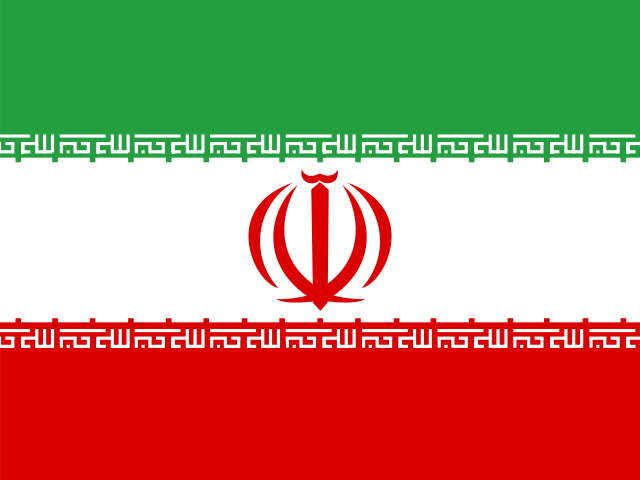
Three horizontal bands of green, white and red, with a red emblem in the centre of the white band. The emblem is a stylised form of the word "Allah" shaped like a tulip. Along the inner edges of the green and red bands, the phrase "Allahu Akbar" is repeated in white Kufic script. The current design dates from the 1979 revolution.
Hungary uses red, white and green in the opposite order with no emblem. Green on top with the central emblem is Iran.
A short history of Iran
The Iranian plateau has hosted states for over five thousand years, starting with Elam in the south-west. In the 500s BC Cyrus the Great created the Achaemenid Empire, the largest the world had yet seen, stretching from Egypt to India. It fell to Alexander the Great in 330 BC, but Iranian dynasties returned: the Parthians fought Rome to a standstill, and the Sasanians, from 224 to 651, ruled a sophisticated empire with Zoroastrianism as its religion.
Arab armies conquered Iran in the 600s and brought Islam. Unlike many conquered lands, Iran kept its own language, and Persian became a great literary language of the Islamic world. Turkish and Mongol rulers came and went, including the devastating Mongol invasion of the 1200s. In 1501 the Safavid dynasty unified the country and made Shia Islam the state religion, which is why Iran is mostly Shia while most of its neighbours are Sunni. Shah Abbas made Isfahan a magnificent capital around 1600.
The Qajar dynasty moved the capital to Tehran in the late 1700s. In wars in the early 1800s it lost its Caucasus territories, including today's Armenia and Azerbaijan, to Russia, roughly fixing Iran's northern border. A Constitutional Revolution in 1905–11 created a parliament. In 1925 Reza Shah founded the Pahlavi dynasty and pushed rapid modernisation. When Prime Minister Mohammad Mosaddegh nationalised the oil industry, he was overthrown in a 1953 coup backed by Britain and the United States.
The 1979 Islamic Revolution ended the monarchy and created the Islamic Republic, led by the cleric Ayatollah Khomeini. Iraq invaded in 1980, and the war lasted eight years and cost hundreds of thousands of lives. Since then, disputes over Iran's nuclear programme have shaped its relations with the West.
Iran today has a large, young and highly educated population and a diverse economy beyond oil, though it remains under heavy international pressure.
Culture and daily life in Iran
Persian poetry is part of everyday speech. Ferdowsi's Shahnameh, the "Book of Kings", completed around 1010, preserved Iran's legends in Persian. Rumi, Saadi, Omar Khayyam and Hafez are loved across the world, and many families keep a copy of Hafez at home, opening it at random for advice. His tomb in Shiraz is a place of pilgrimage.
Most Iranians are Shia Muslims, but the country is also home to Sunni Kurds and Baluch, Armenian Christians, one of the Middle East's oldest Jewish communities and one of the world's last Zoroastrian communities, centred on Yazd. Only about half of Iranians speak Persian as their first language; Azerbaijani, Kurdish, Lur and Arabic are also common.
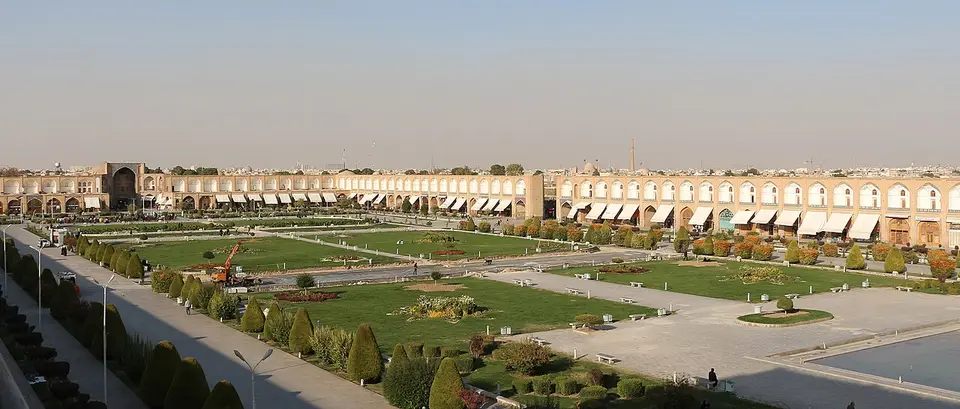
The blue-tiled mosques around Naqsh-e Jahan Square in Isfahan show Persian architecture at its finest, and Persian carpets from Tabriz, Kashan and Kerman are prized worldwide. Iranian cinema has won international acclaim through directors such as Abbas Kiarostami and Asghar Farhadi. Wrestling is the traditional sport, and football draws huge crowds. Teahouses, often decorated with Persian miniatures, remain popular places to drink tea and smoke a water pipe.
Five facts worth knowing
- Iran was known internationally as Persia until 1935, and Persian (Farsi) is still the main language – it is Indo-European, not Arabic.
- The Strait of Hormuz, between Iran and Oman, is one of the world's most important shipping lanes, carrying a large share of global seaborne oil exports.
- Mount Damavand, north-east of Tehran, is the highest peak in the Middle East at around 5,600 metres and is a dormant volcano.
- Iran has some of the oldest cities in the world, including Isfahan and Shiraz, and the ruins of Persepolis, capital of the Achaemenid Empire founded in the sixth century BC.
- Iran holds some of the largest natural gas and oil reserves on Earth, and its economy is heavily shaped by international sanctions.
Culture and traditions in Iran
- Saying hello
"Salam", often with a hand placed on the heart.
- Food and drink
Chelow kebab, grilled meat with saffron rice; ghormeh sabzi, herb stew; black tea.
- Festivals and traditions
Nowruz, the Persian New Year, around 21 March; Yalda Night on the winter solstice.
- Everyday life
Taarof, an elaborate system of politeness, means offers are often refused before being accepted. Shoes come off in homes.
- Did you know?
Nowruz has been celebrated for over 3,000 years, with families setting a haft-sin table of seven symbolic items.
Common mistakes
- Tapping Iraq – the classic swap. Iraq is the smaller country to the west, between Iran and Syria.
- Tapping Afghanistan or Pakistan, which continue the mountain belt eastward.
- Picking Hungary's flag in the Flags quiz.
Practise with Iran
- Asia quiz – the large country between the Caspian Sea and the Persian Gulf.
- Middle East quiz – Iran and Iraq side by side, so you can settle the pair.
- Asia flags – green, white, red with the tulip emblem.
- Asia capitals quiz – Tehran.
- Mystery Country – the broad plateau outline with the long Gulf coast and the Caspian notch at the top.
Nearby countries
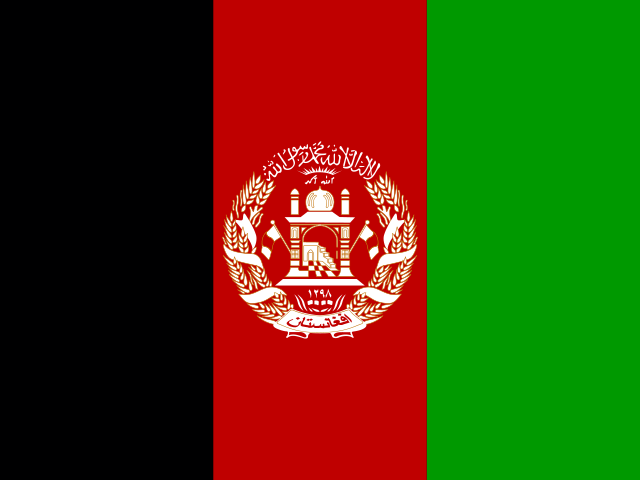 AfghanistanKabul
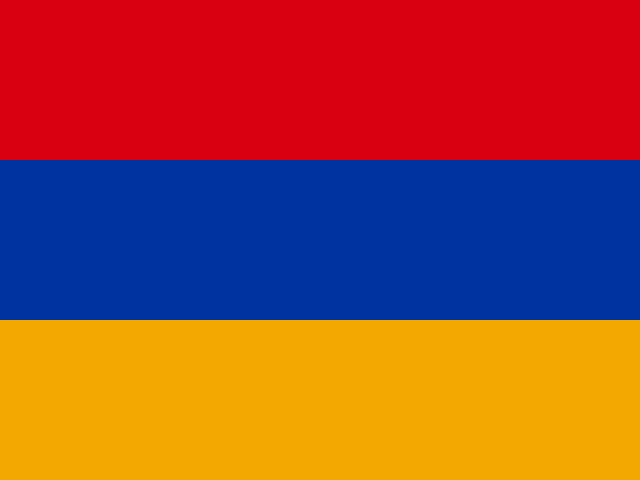 ArmeniaYerevan
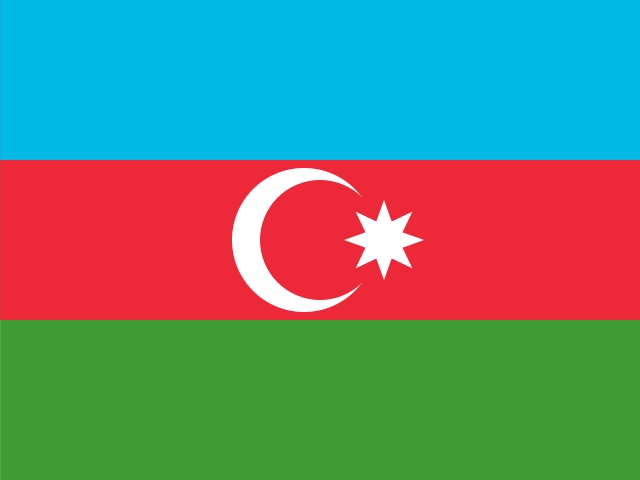 AzerbaijanBaku
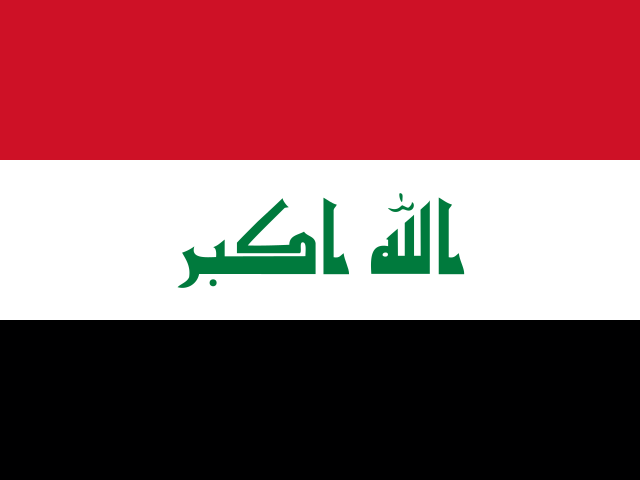 IraqBaghdad
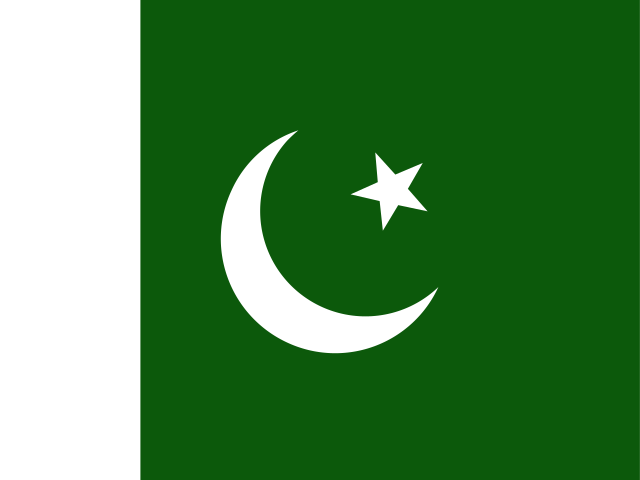 PakistanIslamabad
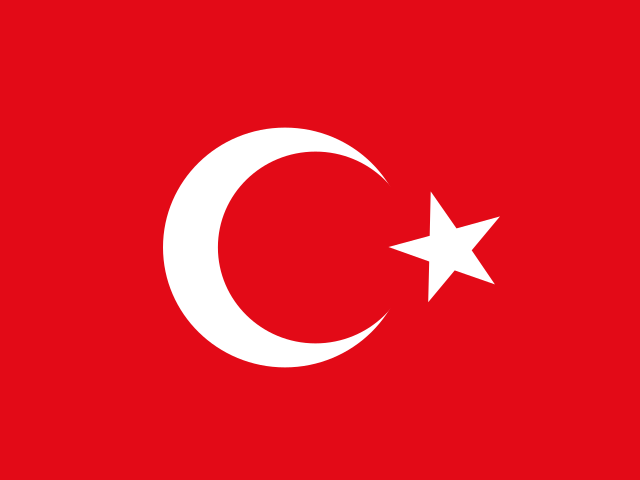 TurkeyAnkara
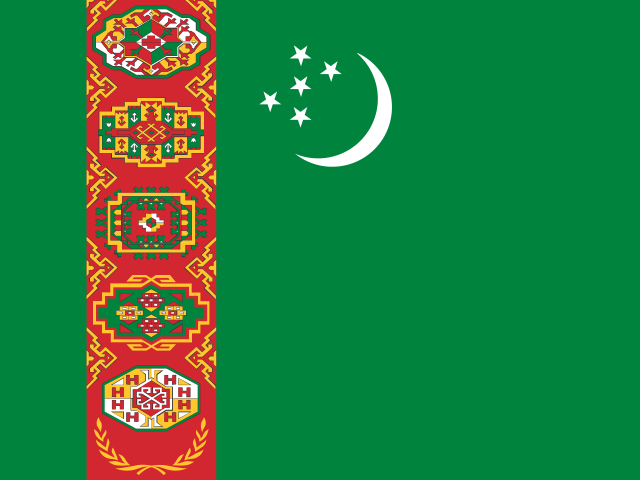 TurkmenistanAshgabat
Quick check: how well do you know Iran?
3 questions, no sign-up. Tap an answer.
1. Which flag belongs to Iran?
That's the flag of Iran.
2. What is the capital of Iran?
The capital of Iran is Tehran.
3. Which of these countries borders Iran?
Afghanistan, Armenia, Azerbaijan, Iraq, Pakistan, Turkey and Turkmenistan border Iran.
Keep going on the Asia quiz – Iran is one of 48 countries there.
More ways to practise: find Iran on the blank map with no borders (hard mode), or play today's Globe and the other daily puzzles.
Frequently asked questions about Iran
What language is spoken in Iran?
Persian, also called Farsi, is the official language and the common language of the whole country. About half of Iranians speak another mother tongue as well, including Azerbaijani Turkish, Kurdish, Luri, Gilaki, Mazandarani, Arabic and Balochi.
What currency does Iran use?
Iran's official currency is the Iranian rial (IRR). In daily life Iranians usually count in tomans, an older unit equal to ten rials, so a price of 100 tomans means 1,000 rials. High inflation has made the rial one of the world's least valuable currency units.
What time zone is Iran in?
Iran is on UTC+3:30, one of the few countries whose time is offset by a half hour. It used to move its clocks forward in summer, but it has not used daylight saving time since 2022.
Which side of the road do they drive on in Iran?
Iran drives on the right, like its neighbours Turkey, Iraq and the countries of Central Asia. Tehran is known for very dense traffic, and motorbikes and shared taxis are common ways of getting around the cities.
What is the highest point in Iran?
The highest point is Mount Damavand, a snow-capped dormant volcano in the Alborz range rising to about 5,610 metres. It is the highest volcano in Asia and a national symbol that appears in Persian poetry and legend.
Is Iran an Arab country?
No. Iran is not an Arab country, and its main language, Persian, is Indo-European rather than Semitic. Iranians include Persians, Azerbaijanis, Kurds, Lurs, Baloch and others, and Arabs form a minority mostly living in the south-western province of Khuzestan.
Quizzes with Iran
Often confused with
Guides that help with this
- Oceans, seas, rivers and mountainsThe physical map: seas around each continent, the big rivers and ranges.
- Flags that look alike (and how to tell them apart)Chad or Romania? Australia or New Zealand? The flag pairs that cost quiz points.
- The 25 hardest countries to find on a mapPacific islands, Caribbean islands and landlocked Africa – where they are.