Venezuela
Capital: Caracas. Venezuela is one of the 12 countries in the South America quiz.
Quick answers: What is the capital of Venezuela? · Which countries border Venezuela?
Facts about Venezuela
- CapitalCaracas
- Population28.5 million
- Area916,445 km²
- RegionSouth America
- LanguageSpanish
- CurrencyVenezuelan bolívar (VES)
Venezuela is the 5th most populous of the 12 countries in South America and the 6th largest by area. Worldwide it ranks 53rd by population and 32nd by area.
Where is Venezuela?
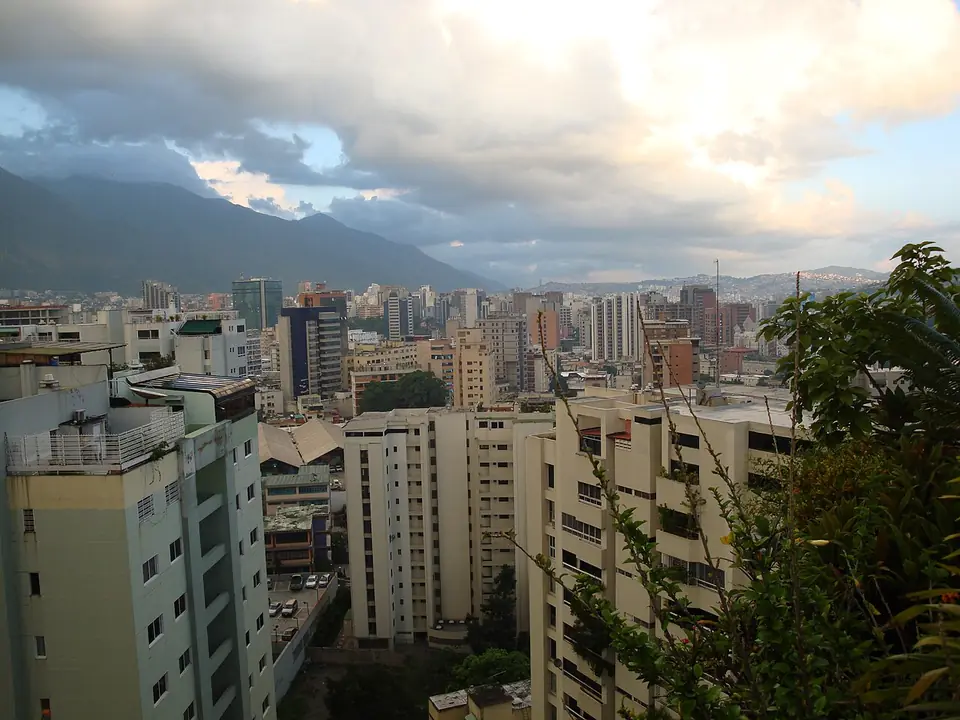
Venezuela sits on the northern coast of South America, facing the Caribbean Sea. Colombia lies to the west, Brazil to the south and Guyana to the east. The Orinoco, one of the continent's great rivers, cuts across the country from west to east before emptying into the Atlantic through a wide delta. Caracas, the capital, is on the Caribbean coast in the north, a short distance inland from the sea behind a coastal mountain range.
On a world map, look at the top edge of South America. The country in the middle of that northern coast, with the Caribbean islands just offshore, is Venezuela.
How to find Venezuela on the map
- Start from Colombia. Venezuela is the country immediately east of it, sharing the northern coast.
- Look for the Caribbean. Venezuela faces north toward Trinidad and the Lesser Antilles; it does not reach the Pacific.
- Don't confuse it with Colombia. Colombia has two coasts and touches Panama. Venezuela has one coast and is further east.
- Don't confuse it with Guyana. Guyana is the much smaller country next door to the east, one of three small states along the Atlantic coast.
Flag
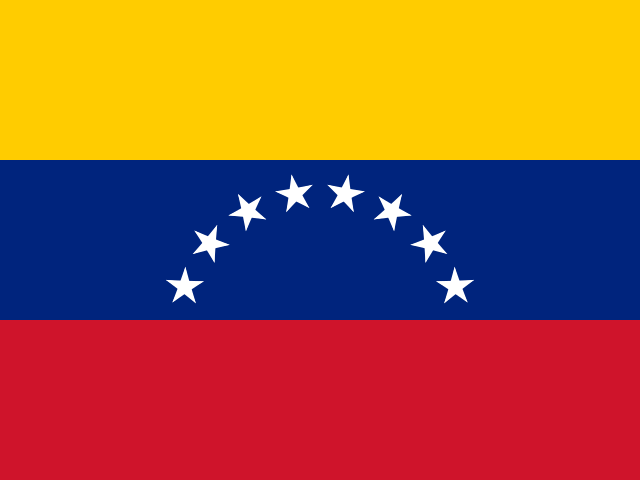
Venezuela's flag is three equal horizontal bands of yellow, blue and red, with an arc of eight white five-pointed stars across the middle of the blue band. The official state flag adds the coat of arms in the top-left corner, but the stars alone are enough to identify it.
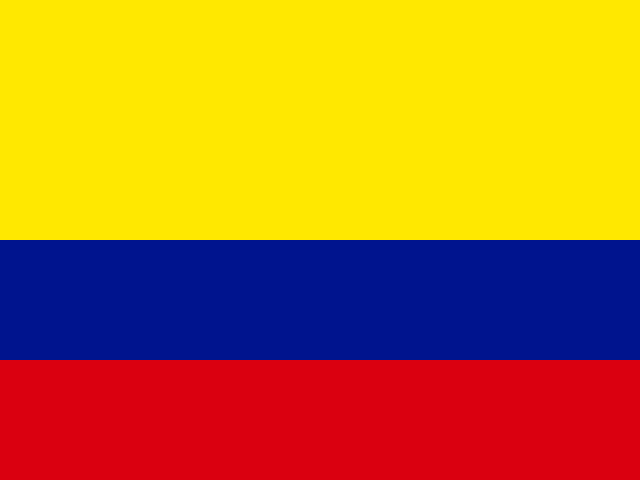
The same colours appear on the flags of Colombia and Ecuador, which share a history with Venezuela in the short-lived republic of Gran Colombia. Colombia's yellow band is twice the height of the others and carries no stars; Ecuador's adds a coat of arms. Equal bands plus an arc of white stars is Venezuela.
A short history of Venezuela
Before Europeans came, the land was shared by many peoples: Carib and Arawak groups along the coast and rivers, and farming communities in the Andes in the west. The Warao still live in the Orinoco delta today. Christopher Columbus reached the Paria Peninsula on his third voyage in 1498, the first time he set foot on the South American mainland.
The Spanish founded settlements on the coast in the 1500s, and Caracas was established in 1567. For a time in the mid-1500s the Spanish king even rented the province to the German Welser banking family. Venezuela was a fairly poor corner of the empire at first, later growing rich on cacao exports worked by enslaved Africans. It was ruled from distant Bogotá and Santo Domingo until it became a separate captaincy-general in 1777.
Venezuela led the independence movement in northern South America. It declared independence on 5 July 1811, the first Spanish colony in South America to do so. Simón Bolívar, born in Caracas, led the wars that freed Venezuela, Colombia, Ecuador, Peru and Bolivia, and created the union of Gran Colombia in 1819. Venezuela broke away from it in 1830, and the rest of the century saw civil wars and military strongmen, or caudillos. Venezuela's long-running claim to the Essequibo region, which Guyana administers and regards as its own territory, also has its roots in the 1800s and remains unresolved.
Everything changed with oil. Major production began after a big strike near Lake Maracaibo in 1922, and Venezuela became one of the world's top exporters. The dictator Juan Vicente Gómez ruled until 1935, and democracy took hold after 1958. Venezuela was a founding member of OPEC in 1960. Oil wealth funded modern cities, but poverty and inequality remained. Hugo Chávez, elected in 1998, launched his "Bolivarian Revolution", using oil money for social programmes. After 2013, falling oil prices, mismanagement and sanctions led to a deep economic and political crisis, and millions of Venezuelans emigrated.
Culture and daily life in Venezuela
Spanish is the official language, but the constitution also recognises dozens of indigenous languages, such as Wayuu, spoken in the north-west near Colombia. Most Venezuelans are Catholic, and the cult of María Lionza, which blends indigenous, African and Catholic beliefs, has many followers. The mix of European, African and indigenous ancestry shapes music, food and festivals.
The national music is joropo, a fast style from the vast plains, the llanos, played on harp, maracas and the cuatro, a small four-stringed guitar found in nearly every home. The country's best-known novel is Rómulo Gallegos's Doña Bárbara, set on those plains. Venezuela's famous youth orchestra programme, El Sistema, founded in 1975, has trained hundreds of thousands of children and produced the conductor Gustavo Dudamel.
Unlike most of South America, Venezuela's favourite sport is baseball, introduced by American oil workers; players like Miguel Cabrera have starred in the US major leagues. Venezuela has also won more Miss Universe titles than almost any other country, and beauty pageants are followed with huge interest.
Five facts worth knowing
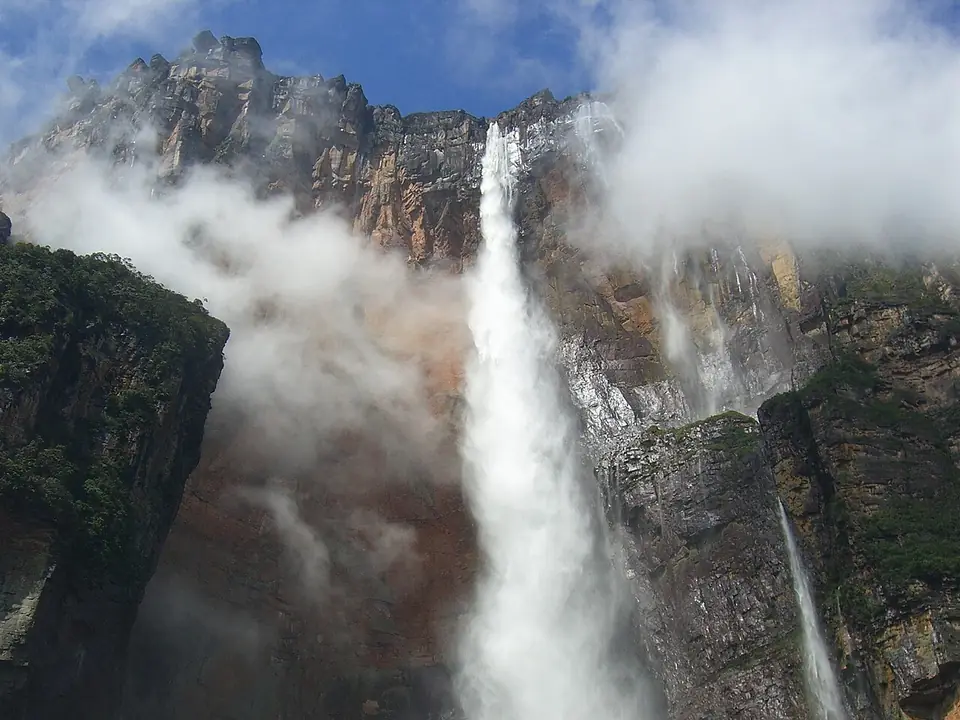
- Angel Falls, in the Guiana Highlands of south-eastern Venezuela, is the highest uninterrupted waterfall in the world, dropping about 979 metres.
- The name Venezuela means "little Venice". Early European explorers saw houses on stilts along Lake Maracaibo and were reminded of the Italian city.
- Venezuela has the largest proven oil reserves of any country, and oil has dominated its economy for a century.
- Lake Maracaibo, in the north-west, is one of the largest lakes in South America and is connected to the Caribbean by a narrow strait.
- Margarita Island, off the north-east coast, is Venezuela's largest island and a popular holiday destination.
Culture and traditions in Venezuela
- Saying hello
A single kiss on the cheek between friends, or a handshake, with "Hola".
- Food and drink
Arepas, corn cakes stuffed with fillings; pabellón criollo, the national dish of shredded beef, black beans, rice and plantain.
- Festivals and traditions
The Dancing Devils of Yare at Corpus Christi and the carnival of El Callao, both UNESCO-listed.
- Everyday life
Small strong coffees are enjoyed throughout the day, and family gatherings are central to social life.
- Did you know?
At Christmas, families make hallacas together, corn dough filled with stew and wrapped in plantain leaves.
Common mistakes
- Tapping Colombia – it's next door, similar in size and uses the same flag colours.
- Picking the Colombian or Ecuadorian flag in the Flags quiz; look for the stars.
- Tapping Guyana or Suriname when the quiz asks for Venezuela, because all of them sit on the same northern coast.
Practise with Venezuela
- South America quiz – the country on the top edge of the continent, east of Colombia and west of Guyana.
- North America flags – the yellow-blue-red with the arc of stars.
- South America capitals quiz – Caracas.
- Caribbean quiz – Venezuela is the mainland just below the islands, so knowing it helps place Trinidad and the Lesser Antilles.
- Mystery Country – the wide northern coastline and the Orinoco delta sticking out toward the Atlantic give it away.
Nearby countries
Quick check: how well do you know Venezuela?
3 questions, no sign-up. Tap an answer.
1. Which flag belongs to Venezuela?
That's the flag of Venezuela.
2. What is the capital of Venezuela?
The capital of Venezuela is Caracas.
3. Which of these countries borders Venezuela?
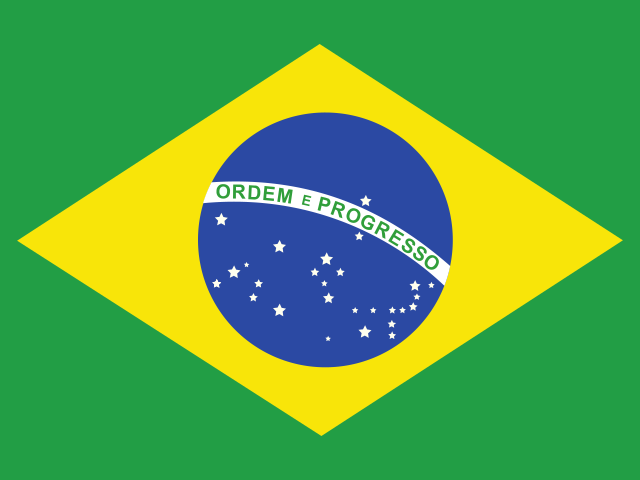
Brazil, Colombia and Guyana border Venezuela.
Keep going on the South America quiz – Venezuela is one of 12 countries there.
More ways to practise: find Venezuela on the blank map with no borders (hard mode), or play today's Globe and the other daily puzzles.
Frequently asked questions about Venezuela
What language is spoken in Venezuela?
Spanish is the official language and is spoken by nearly everyone. The constitution also recognises the country's Indigenous languages, such as Wayuu in the north-west and Warao in the Orinoco Delta, as official for their own peoples.
What currency does Venezuela use?
Venezuela uses the bolívar (VES), named after Simón Bolívar. After years of extreme inflation, zeros were cut from the currency in 2008, 2018 and 2021. US dollars are now widely used for everyday payments alongside it.
What time zone is Venezuela in?
Venezuela is on UTC−4 all year. From 2007 to 2016 it used an unusual half-hour offset, UTC−4:30, before returning to UTC−4. It does not use daylight saving time.
Which side of the road do they drive on in Venezuela?
Venezuela drives on the right, as do its neighbours Colombia and Brazil. Neighbouring Guyana and nearby Trinidad and Tobago, both former British colonies, drive on the left.
What is the highest point in Venezuela?
The highest point is Pico Bolívar, at about 4,980 metres, in the Sierra Nevada de Mérida, part of the Andes. Venezuela's last glacier, on nearby Pico Humboldt, was declared gone in 2024, leaving the country with none.
Is Venezuela a Caribbean country?
Venezuela is a South American country with a long Caribbean coastline of about 2,800 kilometres. It also owns many Caribbean islands, including Isla Margarita and the coral atolls of Los Roques, and lies just south of Aruba, Curaçao and Bonaire.
Quizzes with Venezuela
Often confused with
Guides that help with this
- Oceans, seas, rivers and mountainsThe physical map: seas around each continent, the big rivers and ranges.
- Flags that look alike (and how to tell them apart)Chad or Romania? Australia or New Zealand? The flag pairs that cost quiz points.
- The 25 hardest countries to find on a mapPacific islands, Caribbean islands and landlocked Africa – where they are.