Czechia
Capital: Prague. Czechia is one of the 46 countries in the Europe quiz.
Quick answers: What is the capital of Czechia? · Which countries border Czechia?
Facts about Czechia
- CapitalPrague
- Population10.9 million
- Area78,865 km²
- RegionsEurope, Central & Eastern Europe
- LanguageCzech
- CurrencyCzech koruna (CZK)
Czechia is the 12th most populous of the 46 countries in Europe and the 20th largest by area. Worldwide it ranks 89th by population and 114th by area.
Where is Czechia?
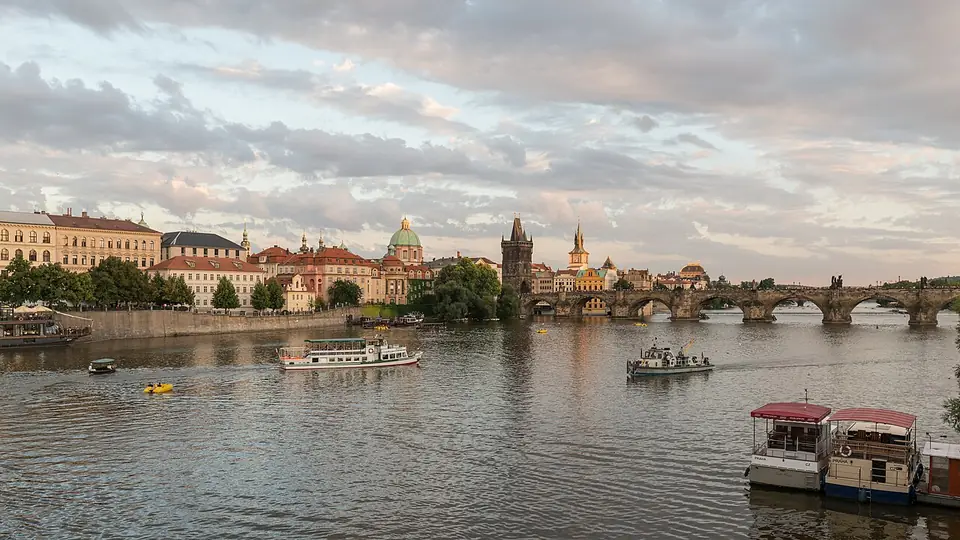
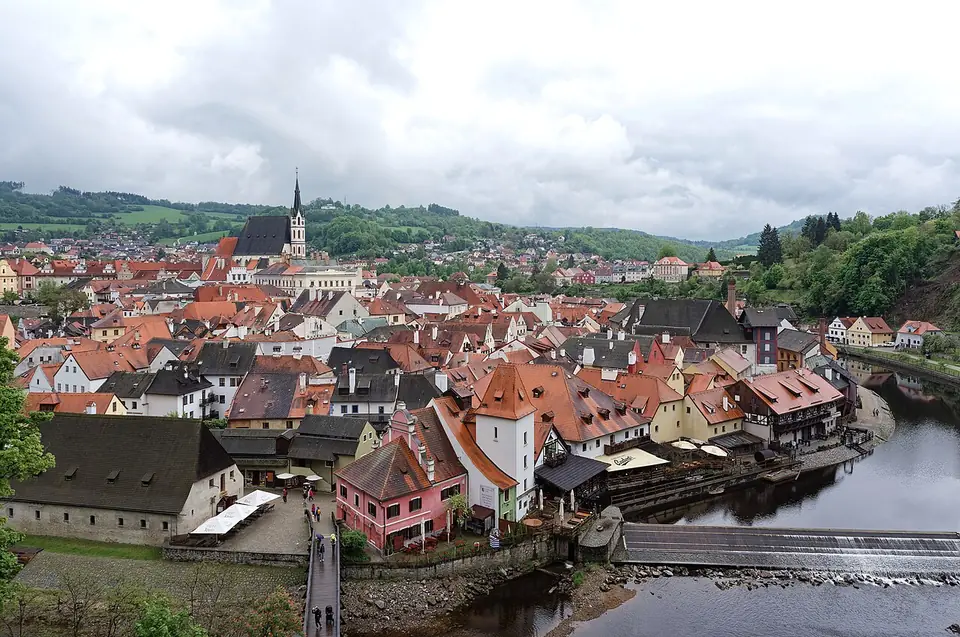
Czechia, also called the Czech Republic, is a landlocked country in the heart of Central Europe. Germany lies to the west and north-west, Poland to the north-east, Slovakia to the east and Austria to the south. The country is made of two historic regions: Bohemia in the west, a bowl of land ringed by low mountain ranges, and Moravia in the east. Prague, the capital, is in the middle of Bohemia on the River Vltava.
On a world map it is a small, roughly oval shape wedged between Germany and Poland, directly above Austria. It is one of the countries that keeps Germany from touching Slovakia.
How to find Czechia on the map
- Start from Germany. Czechia is the country that pushes into Germany's eastern side, between Saxony and Bavaria.
- Look above Austria. Austria is long and thin; Czechia sits on top of it like a lid.
- Find Slovakia. Czechia and Slovakia were one country until 1993 and still fit together like puzzle pieces, with Czechia the western, rounder half.
- It is landlocked. If the country you are looking at has a coastline, it is not Czechia.
Flag
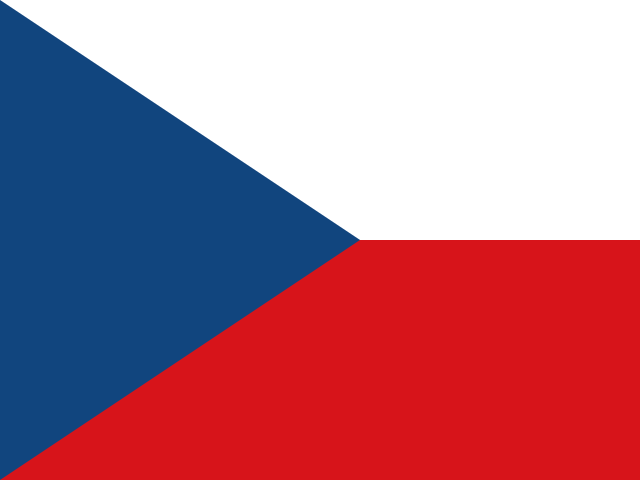
Two horizontal bands, white on top and red below, with a blue triangle pointing in from the hoist. White and red are the historic colours of Bohemia; the blue triangle was added in 1920 to make the flag distinct from Poland's, which is plain white over red. When Czechoslovakia split, Czechia kept the flag.
The Philippines uses a similar layout – a blue band over a red band with a white triangle at the hoist – but the triangle contains a sun and stars, and the band colours differ. In the Flags quiz, white-over-red with an empty blue triangle is Czechia.
A short history of Czechia
Celtic tribes lived here in Roman times, and one of them, the Boii, gave Bohemia its name. Slavic peoples arrived in the 500s and 600s. In the 800s Great Moravia became the first major Slavic state in the region, and the missionaries Cyril and Methodius introduced a Christian liturgy in a Slavic language, written in the new Glagolitic script. The Přemyslid dynasty then built a Bohemian state around Prague, and the 10th-century Duke Wenceslas became its patron saint.
Bohemia reached its height under Charles IV, who became Holy Roman Emperor in the 1300s. He made Prague an imperial capital, founding Charles University in 1348, the first in central Europe, and starting the Charles Bridge and St Vitus Cathedral. In the early 1400s the preacher Jan Hus called for church reform and was burned as a heretic, sparking the Hussite Wars.
The Habsburgs inherited the Bohemian crown in 1526. In 1618 Protestant nobles threw royal officials out of a window in Prague Castle, an event that helped trigger the Thirty Years' War. Their defeat at the Battle of White Mountain in 1620 led to centuries of Habsburg rule, re-Catholicisation and German as the language of power. A Czech national revival grew in the 1800s, and the region became the industrial heart of Austria-Hungary.
Czechoslovakia was created in 1918, a democracy led by Tomáš Masaryk. In 1938 the Munich Agreement handed its German-speaking border areas, the Sudetenland, to Hitler, and in 1939 Germany occupied the rest. After 1945 most ethnic Germans were expelled, and in 1948 the Communists seized power. Reforms in the Prague Spring of 1968 were crushed by a Soviet-led invasion. The peaceful Velvet Revolution of 1989 ended communist rule, and the dissident playwright Václav Havel became president.
Czechia's borders still largely follow the old frontiers of Bohemia and Moravia, which is why its outline looks so rounded. Today it is a prosperous industrial economy, known especially for car manufacturing.
Culture and daily life in Czechia
Czech is a West Slavic language, close enough to Slovak that the two are mutually understood. Its word "robot" was coined for Karel Čapek's 1920 play R.U.R. Czechia is one of the least religious countries in Europe, partly a legacy of the Hussite past and of communism, though its churches and Baroque monasteries are full of art.
Classical music runs deep. Antonín Dvořák, Bedřich Smetana, whose "Vltava" follows the river through Bohemia, and Leoš Janáček are national treasures. Writers include Franz Kafka, a German-speaking Prague Jew, Jaroslav Hašek, author of The Good Soldier Švejk, and Milan Kundera. The Art Nouveau artist Alfons Mucha made his name in Paris.
Ice hockey is the sport that unites the country, and the 1998 Olympic gold at Nagano is legendary. Czechs also love hiking, with a dense network of marked trails, and many families escape to a weekend cottage, or chata, in the countryside. Puppet theatre and glassmaking are long-standing traditions, and Bohemian crystal from towns such as Karlovy Vary is sold around the world.
Five facts worth knowing
- Czechia and Slovakia separated peacefully on 1 January 1993, in what is often called the Velvet Divorce. Before that they were Czechoslovakia.
- Prague Castle is one of the largest castle complexes in the world and has been the seat of Czech rulers for over a thousand years.
- Czechia drinks more beer per person than any other country, and Pilsner lager takes its name from the city of Plzeň, where it was first brewed in 1842.
- The Elbe, which flows through Germany to Hamburg, starts in the Czech mountains. Prague's own river, the Vltava, is its largest tributary.
- Czechia joined the EU in 2004 but still uses its own currency, the koruna, rather than the euro.
Culture and traditions in Czechia
- Saying hello
"Dobry den" with a firm handshake.
- Food and drink
Svickova (beef in creamy sauce with dumplings) and Pilsner-style beer.
- Festivals and traditions
Easter traditions with decorated eggs and willow whips (pomlazka); carp is the classic Christmas dinner.
- Everyday life
Shoes come off at home, and beer halls are relaxed social places.
- Did you know?
Czechs drink more beer per person than any other country in the world.
Common mistakes
- Tapping Slovakia – the two halves of the old Czechoslovakia are the most common swap. Slovakia is the eastern piece and touches Ukraine and Hungary.
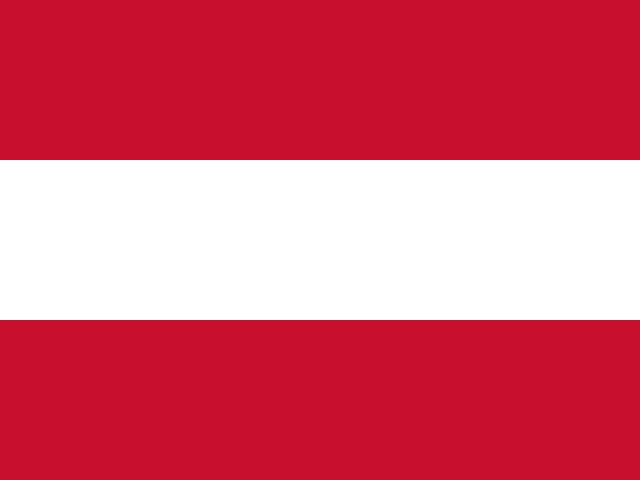
- Tapping Austria, which sits directly below and has a similar east–west shape.
- Picking Poland's flag in the Flags quiz and missing the blue triangle.
- Looking for a coastline. Czechia has none.
Practise with Czechia
- Europe quiz – the oval between Germany and Poland, on top of Austria.
- Europe flags – white over red with the blue wedge.
- Europe capitals quiz – Prague.
- Mystery Country – the rounded western lobe of Bohemia with Moravia tapering towards Slovakia.
- Mistake Bank – ideal for separating Czechia, Slovakia and Austria once and for all.
Nearby countries
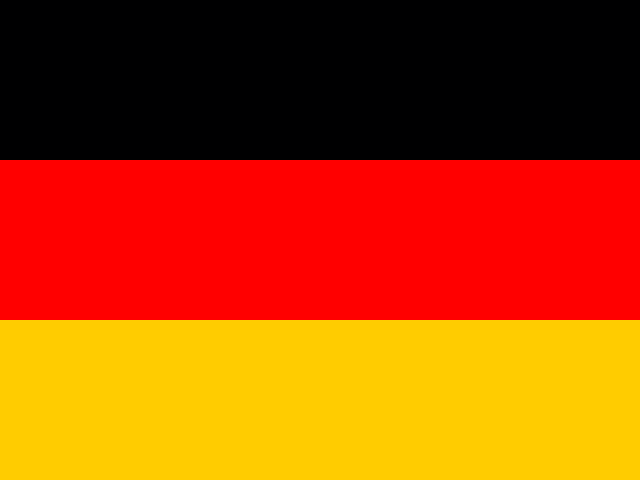
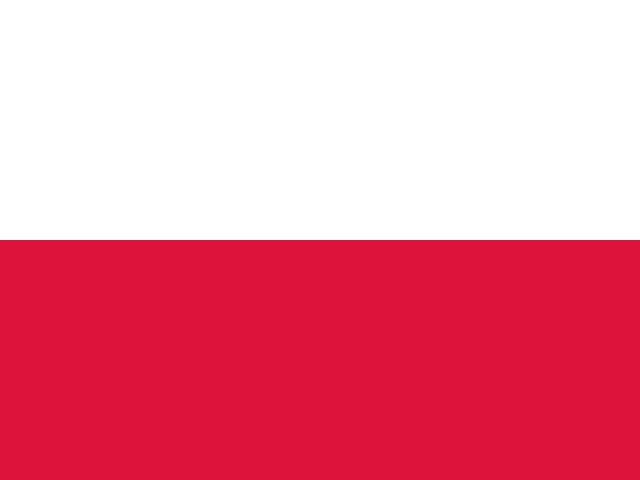
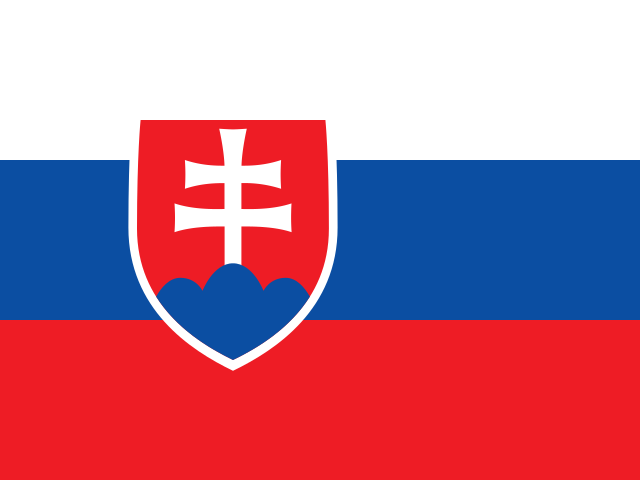
Quick check: how well do you know Czechia?
3 questions, no sign-up. Tap an answer.
1. Which flag belongs to Czechia?
That's the flag of Czechia.
2. What is the capital of Czechia?
The capital of Czechia is Prague.
3. Which of these countries borders Czechia?
Austria, Germany, Poland and Slovakia border Czechia.
Keep going on the Europe quiz – Czechia is one of 46 countries there.
More ways to practise: find Czechia on the blank map with no borders (hard mode), or play today's Globe and the other daily puzzles.
Frequently asked questions about Czechia
What language is spoken in Czechia?
Czech is the official language and is spoken by almost everyone. It uses the Latin alphabet with accents such as ř, a sound rare in other languages. Slovak is widely understood, and minority languages including Slovak, Polish, German and Romani are recognised.
What currency does Czechia use?
Czechia uses the Czech koruna, or crown (CZK), written Kč. Although the country joined the EU in 2004 and is committed to adopting the euro one day, it has set no date, and the koruna floats freely.
What time zone is Czechia in?
Czechia uses Central European Time, UTC+1, and changes to UTC+2 for summer time from late March to late October. The country has used daylight saving time every year since 1979, and it shares its clock with Germany, Austria, Poland and Slovakia.
Which side of the road do they drive on in Czechia?
Czechs drive on the right. Bohemia and Moravia switched from the left in 1939, during the German occupation. Headlights must be on at all times, day and night, all year round.
What is the highest point in Czechia?
Sněžka, in the Krkonoše (Giant Mountains) on the border with Poland, is the highest point at about 1,600 metres. A cable car climbs to the summit from Pec pod Sněžkou, and a small chapel and weather station stand on top.
Why is Czechia called Czechia?
Czechia is the official short name for the Czech Republic, registered with the UN in 2016. The name comes from the Czechs, a Slavic people, and in Czech the country is Česko. The full name, Czech Republic, is still used formally.
Quizzes with Czechia
Often confused with
Guides that help with this
- All 46 European capitals, with a memory trick for eachCapitals grouped by region, with hooks for the ones people forget.
- Flags that look alike (and how to tell them apart)Chad or Romania? Australia or New Zealand? The flag pairs that cost quiz points.
- The 25 hardest countries to find on a mapPacific islands, Caribbean islands and landlocked Africa – where they are.