Slovakia
Capital: Bratislava. Slovakia is one of the 46 countries in the Europe quiz.
Quick answers: What is the capital of Slovakia? · Which countries border Slovakia?
Facts about Slovakia
- CapitalBratislava
- Population5.4 million
- Area49,037 km²
- RegionsEurope, Central & Eastern Europe
- LanguageSlovak
- CurrencyEuro (EUR)
Slovakia is the 26th most populous of the 46 countries in Europe and the 27th largest by area. Worldwide it ranks 122nd by population and 127th by area.
Where is Slovakia?
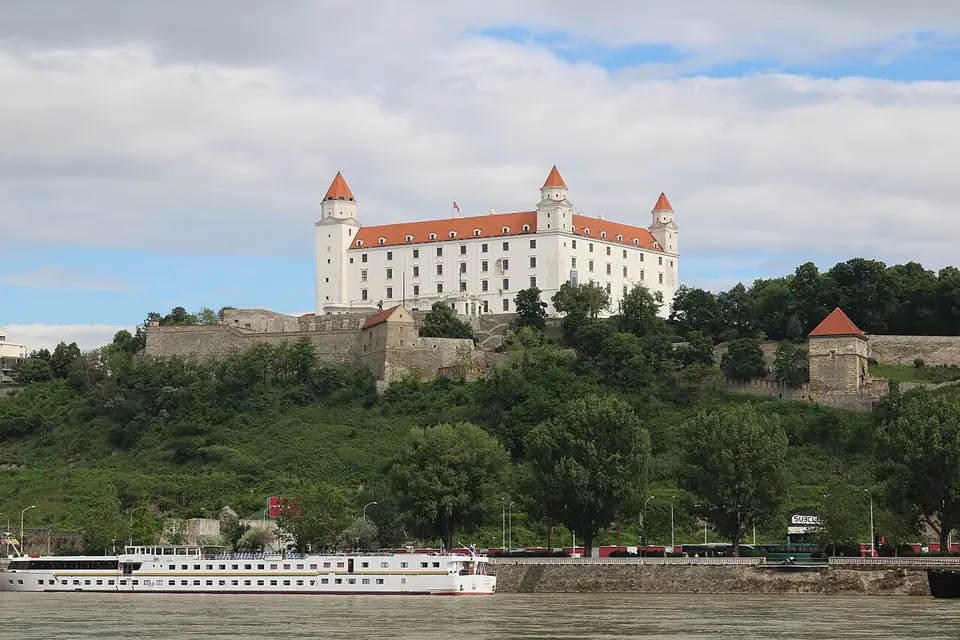
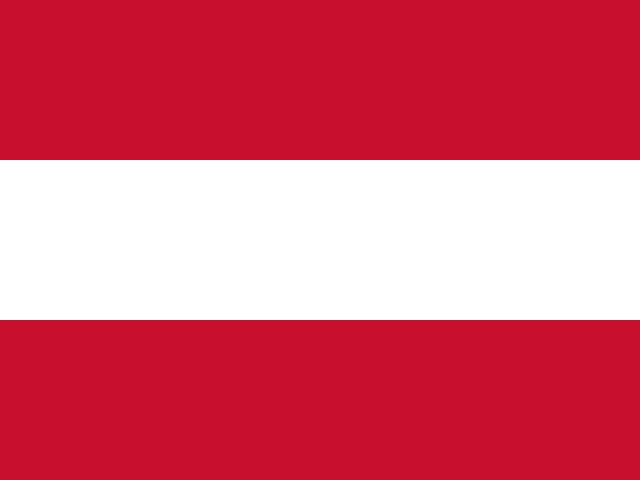
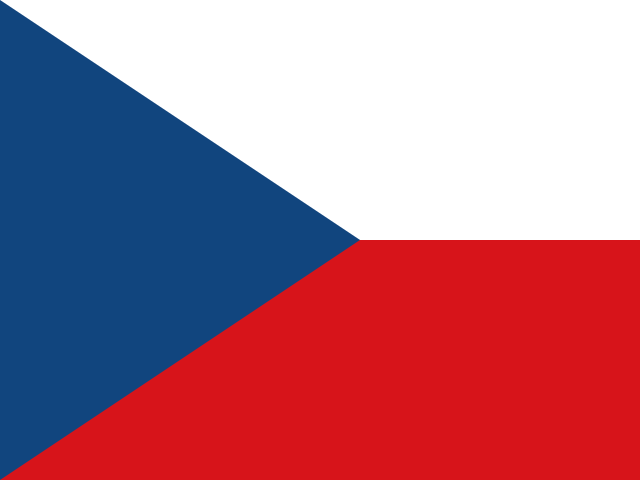
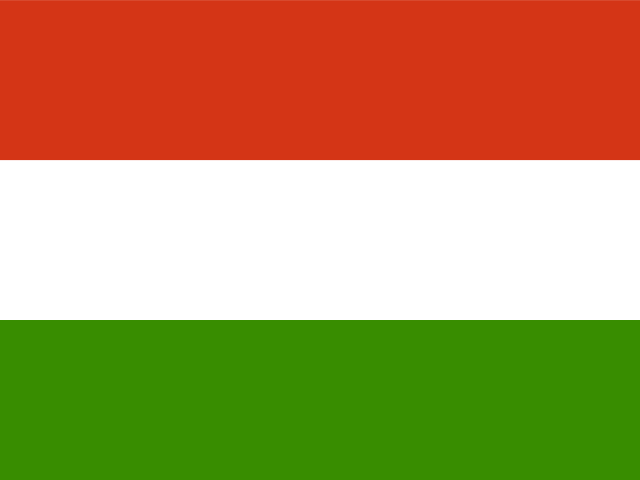
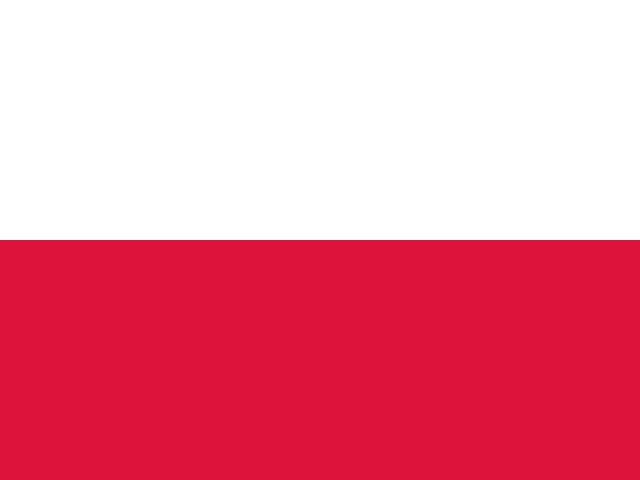
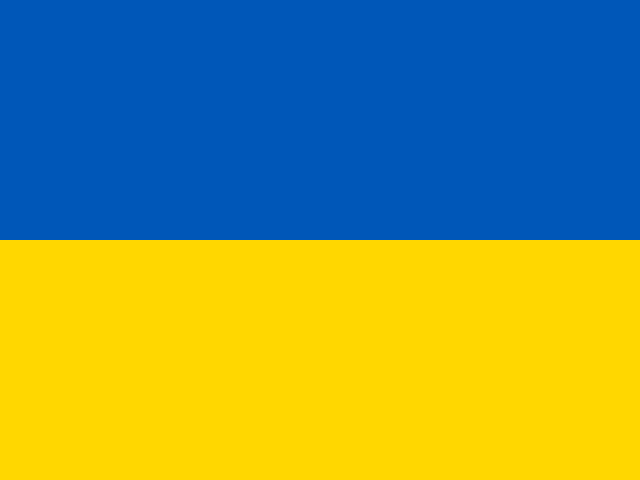
Slovakia is a landlocked country in Central Europe. It borders Poland to the north, Ukraine to the east, Hungary to the south, Austria to the south-west and Czechia to the north-west. The capital, Bratislava, sits in the far south-west corner on the Danube, so close to the Austrian and Hungarian borders that it is the only national capital bordering two other countries.
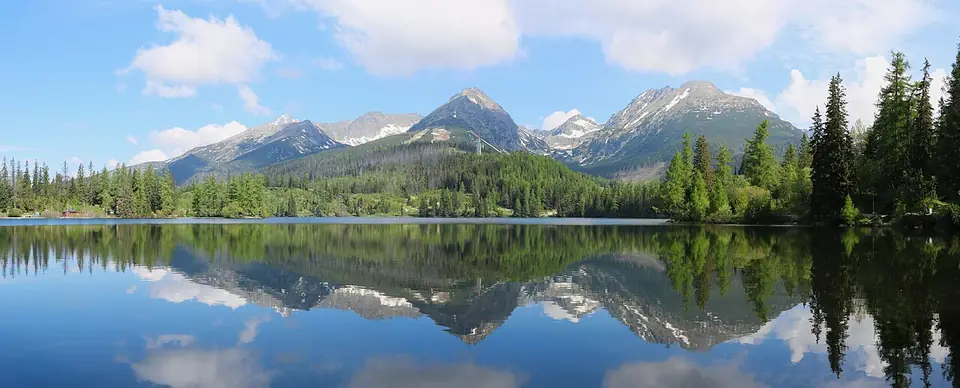
The country is dominated by the Carpathian mountains in the north and centre, with lowlands along the Danube in the south.
How to find Slovakia on the map
- Start from Czechia. Slovakia is the eastern half of the former Czechoslovakia – the country attached to Czechia's right-hand side.
- Look for the long, thin shape between Poland and Hungary. Slovakia runs east–west, wedged between those two larger neighbours.
- Find Vienna. Bratislava is only about 60 kilometres east of Vienna; the two capitals are among the closest in the world.
- Don't confuse it with Slovenia. Both begin with "Slov" and both use red, white and blue flags, but Slovenia is further south-west, between Austria and Croatia, with a short Adriatic coast. Slovakia is north of Hungary and landlocked.
Flag
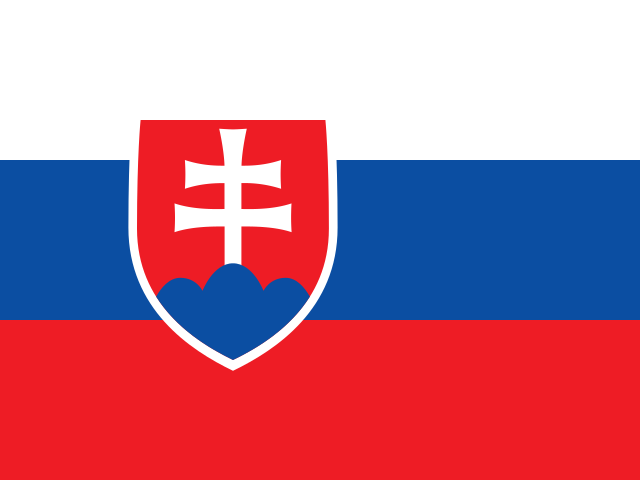
Slovakia's flag is a horizontal tricolour of white, blue and red – the pan-Slavic colours – with the national coat of arms placed towards the hoist. The arms show a white double cross on a red shield, standing on three blue hills.
The same white-blue-red order is used by Russia (plain) and Slovenia (with a different shield showing a mountain and stars). Serbia and Croatia use red-white-blue. The double cross on three hills is the detail that marks Slovakia.
A short history of Slovakia
Slavic tribes settled the lands between the Danube and the Carpathians in the 500s. In the 800s the region was part of Great Moravia, a powerful Slavic state. In 863 the Byzantine missionaries Cyril and Methodius arrived to preach in a Slavic language, creating the first Slavic alphabet. Slovaks still see this period as the root of their national identity.
Great Moravia collapsed in the early 900s under pressure from the Magyars, who had arrived on the Hungarian plain. For the next thousand years, the territory of Slovakia belonged to the Kingdom of Hungary, often called Upper Hungary. Towns such as Banská Štiavnica and Kremnica grew rich from silver and gold mining, and Kremnica's mint has been producing coins since the 1300s. When the Ottomans conquered central Hungary in the 1500s, Bratislava – then known as Pressburg or Pozsony – became the Hungarian capital, and kings were crowned in St Martin's Cathedral there for more than two centuries.
In the 1800s a Slovak national movement took shape. Ľudovít Štúr and his circle codified the modern Slovak literary language in the 1840s, while the Hungarian government later pushed hard to make everyone speak Hungarian. Many Slovaks emigrated to the United States in this period. When Austria-Hungary collapsed in 1918, Slovaks and Czechs joined to form Czechoslovakia, with Milan Rastislav Štefánik, a Slovak astronomer and general, among its founders. The new borders drawn after the war left a large Hungarian minority in southern Slovakia, which is why Hungarian is still heard there today.
In 1939, as Hitler dismantled Czechoslovakia, a Slovak state was created under Jozef Tiso as a German ally. The Slovak National Uprising of 1944 rose against that regime and is now a national holiday. After the war Czechoslovakia was rebuilt and fell under communist rule in 1948. In 1968 the Slovak politician Alexander Dubček led the Prague Spring reforms, crushed by a Warsaw Pact invasion. The Velvet Revolution of 1989 ended communism, and independence followed.
Today Slovakia is a NATO and EU member whose economy relies heavily on car manufacturing, producing more cars per person than any other country in the world.
Culture and daily life in Slovakia
Slovak is a West Slavic language very close to Czech; speakers of the two understand each other easily, partly thanks to decades of shared television. Most Slovaks are Roman Catholic, with Lutheran and Greek Catholic minorities. In the east, a group of small wooden churches, including those at Bodružal and Hervartov, is listed by UNESCO.
Folk traditions are alive in villages and on stage. Čičmany, a village in the north, is famous for its dark wooden houses painted with white geometric patterns, and the folk ensemble SĽUK has toured the world. Juraj Jánošík, an 18th-century highwayman said to rob the rich to help the poor, is the hero of countless songs and films.
Ice hockey is the national obsession – Slovakia won the world championship in 2002 – and Peter Sagan, a three-time road cycling world champion, became one of the country's best-known sportsmen. The Tatra mountains draw hikers and skiers, and spa towns such as Piešťany have attracted visitors for centuries to their thermal waters.
Five facts worth knowing
- Czechoslovakia split peacefully on 1 January 1993 in what is often called the Velvet Divorce, creating Slovakia and Czechia.
- The High Tatras, on the Polish border, are the highest range in the Carpathians, with Gerlachovský štít reaching 2,655 metres.
- Slovakia joined the EU in 2004 and adopted the euro in 2009, earlier than many of its neighbours.
- Bratislava borders both Austria and Hungary – no other capital city touches two foreign countries.
- Spiš Castle in eastern Slovakia is one of the largest castle complexes in Central Europe and a UNESCO World Heritage Site.
Culture and traditions in Slovakia
- Saying hello
A firm handshake and "Dobrý deň" (good day); friends simply say "Ahoj".
- Food and drink
Bryndzové halušky, small potato dumplings with sheep's cheese and bacon; kapustnica, a sauerkraut soup served at Christmas.
- Festivals and traditions
The Východná folklore festival, held each July, is the country's biggest celebration of folk music and dance.
- Everyday life
Guests take their shoes off at home and are often offered slippers. Name days are celebrated almost like birthdays.
- Did you know?
The fujara, a shepherd's flute up to about two metres long, is recognised by UNESCO as Intangible Cultural Heritage.
Common mistakes
- Tapping Slovenia – the classic mix-up. Remember: Slovakia is next to Poland, Slovenia is next to Italy.
- Tapping Czechia, the western half of the old Czechoslovakia.
- Picking Slovenia's or Russia's flag in the Flags quiz; look for the double cross and three hills.
Practise with Slovakia
- Europe quiz – find Poland and Hungary, then tap the thin country squeezed between them.
- Europe flags – work through the white-blue-red group: Slovakia, Slovenia, Russia.
- Europe capitals quiz – Bratislava, not Ljubljana.
- Polish Voivodeships and Austrian States – learning the neighbours' regions along the southern Polish border and eastern Austria pins Slovakia in place.
- Mystery Country – a long east–west outline, wider in the west, narrowing towards Ukraine.
Nearby countries
Quick check: how well do you know Slovakia?
3 questions, no sign-up. Tap an answer.
1. Which flag belongs to Slovakia?
That's the flag of Slovakia.
2. What is the capital of Slovakia?
The capital of Slovakia is Bratislava.
3. Which of these countries borders Slovakia?
Austria, Czechia, Hungary, Poland and Ukraine border Slovakia.
Keep going on the Europe quiz – Slovakia is one of 46 countries there.
More ways to practise: find Slovakia on the blank map with no borders (hard mode), or play today's Globe and the other daily puzzles.
Frequently asked questions about Slovakia
What language is spoken in Slovakia?
Slovak is the official language. It is a West Slavic language so close to Czech that speakers of the two understand each other easily. Hungarian is widely spoken in the south, where there is a large Hungarian minority, and Romani and Rusyn are also heard.
What currency does Slovakia use?
Slovakia uses the euro, code EUR, which replaced the Slovak koruna in 2009. It was the second former communist country to adopt the euro, after Slovenia, and is the only country of the four Visegrád nations to use it.
What time zone is Slovakia in?
Slovakia uses Central European Time, UTC+1, the same as Austria, Czechia and Hungary. It switches to Central European Summer Time, UTC+2, from the last Sunday of March to the last Sunday of October.
Which side of the road do they drive on in Slovakia?
Slovakia drives on the right, like all its neighbours. Dipped headlights must be on at all times, and using motorways requires an electronic vignette linked to the car's number plate.
What is the highest point in Slovakia?
Gerlachovský štít, in the High Tatras, is the highest point in Slovakia at about 2,655 metres. It is the highest mountain in the whole Carpathian range, and most climbers must hire a licensed mountain guide.
What is Slovakia famous for?
Slovakia is dotted with castles and castle ruins, the largest being Spiš Castle, a UNESCO site and one of the biggest castle complexes in Central Europe. It is also one of the world's biggest car producers per head of population, with several major car factories.
Quizzes with Slovakia
Often confused with
Guides that help with this
- All 46 European capitals, with a memory trick for eachCapitals grouped by region, with hooks for the ones people forget.
- Flags that look alike (and how to tell them apart)Chad or Romania? Australia or New Zealand? The flag pairs that cost quiz points.
- The 25 hardest countries to find on a mapPacific islands, Caribbean islands and landlocked Africa – where they are.