Poland
Capital: Warsaw. Poland is one of the 46 countries in the Europe quiz.
Quick answers: What is the capital of Poland? · Which countries border Poland?
Facts about Poland
- CapitalWarsaw
- Population36.4 million
- Area312,679 km²
- RegionsEurope, Central & Eastern Europe
- LanguagePolish
- CurrencyPolish złoty (PLN)
Poland is the 8th most populous of the 46 countries in Europe and the 9th largest by area. Worldwide it ranks 44th by population and 70th by area.
Where is Poland?
Poland is a large country in Central Europe, on the southern shore of the Baltic Sea. Germany lies to the west, Czechia and Slovakia to the south along the mountains, and Ukraine and Belarus to the east. In the north-east it also borders Lithuania and the Russian exclave of Kaliningrad. Warsaw, the capital, is on the Vistula river, in the east-centre of the country.
On a world map, find Germany and look to its right. The big, roughly square country with the Baltic along its top edge is Poland.
How to find Poland on the map
- Start from Germany. Poland is Germany's eastern neighbour.
- Look for the Baltic coast. Poland's northern edge is a long, almost straight coastline from the German border to Kaliningrad.
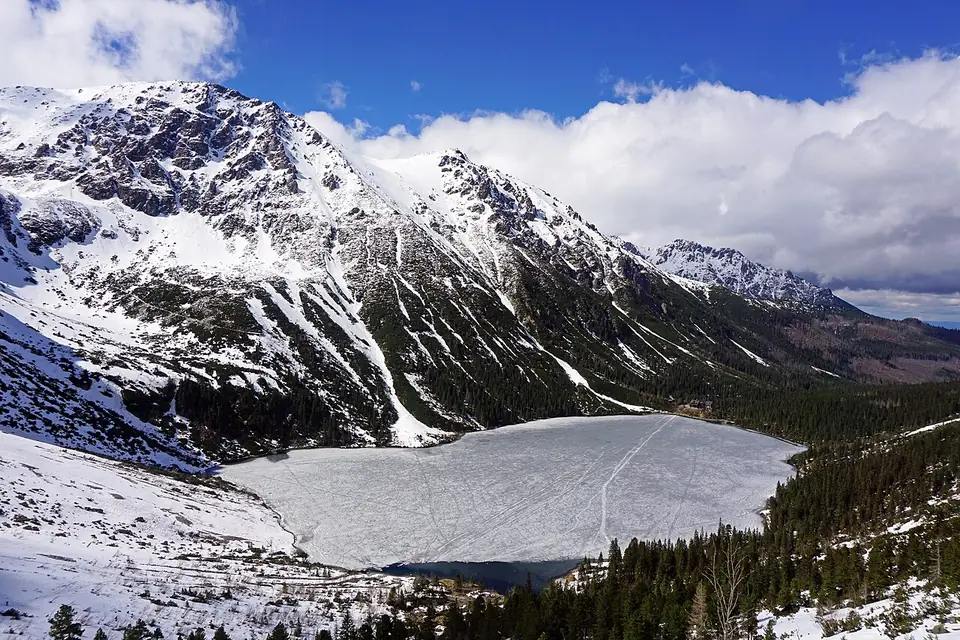
- Find the mountains in the south. The Carpathians, including the Tatras, make a natural wall between Poland and Slovakia.
- Don't confuse it with Ukraine. Ukraine is further east and much bigger, with a Black Sea coast rather than a Baltic one.
Flag
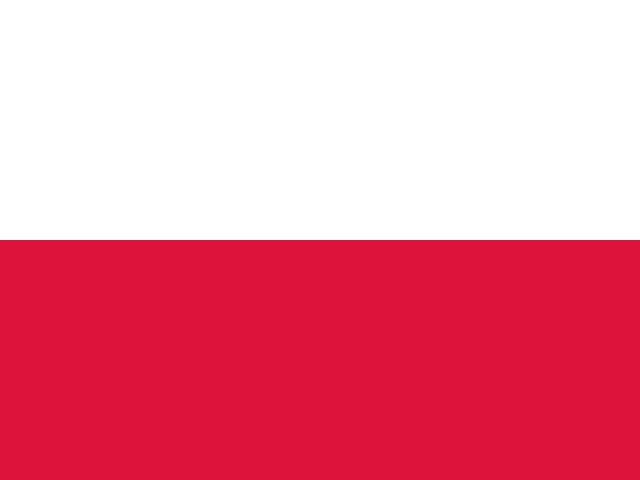
The Polish flag is two horizontal bands, white on top and red below. The colours come from the national coat of arms, a white eagle on a red shield.
Two flags are its near twins: Indonesia and Monaco, both red on top and white below. If white is on top, it's Poland. In the Flags quiz, check the top stripe first.
A short history of Poland
Poland's story as a state begins in 966, when Duke Mieszko I of the Piast dynasty was baptised, bringing his lands into Latin Christendom. His son Bolesław the Brave became the first crowned king. The early kingdom was centred on Gniezno and Poznań, in the west, before power shifted to Kraków. Mongol raids in the 1200s hit hard, but under Casimir the Great in the 1300s Poland grew strong and founded one of Europe's oldest universities in Kraków.
In 1386 the Polish queen Jadwiga married the Grand Duke of Lithuania, linking the two countries. Together they defeated the Teutonic Knights at Grunwald in 1410, one of the largest battles of medieval Europe. In 1569 they formed the Polish–Lithuanian Commonwealth, at times the largest state in Europe. It was unusual for its time: nobles elected the king, and many faiths were tolerated. The capital moved to Warsaw, which sat closer to the centre of this huge country.
The Commonwealth's weak central government left it open to its powerful neighbours. In three partitions between 1772 and 1795, Russia, Prussia and Austria divided it up, and Poland vanished from the map for 123 years. Poles rose up repeatedly, and many emigrated, but the language and culture survived.
Poland was reborn in 1918 at the end of the First World War, and fought off the Red Army in 1920. In September 1939 Germany invaded from the west and the Soviet Union from the east, starting the Second World War. About six million Polish citizens died, half of them Jews murdered in the Holocaust, much of it in Nazi camps on Polish soil such as Auschwitz. After the war, Poland's borders were moved westwards: it lost eastern lands to the Soviet Union and gained German land up to the Oder and Neisse rivers, which explains its modern shape. Millions of people were moved.
Communist rule followed. In 1980 the shipyard strikes in Gdańsk created Solidarity, the first free trade union in the Soviet bloc. In 1989 Poland held partly free elections, setting off the fall of communism across Eastern Europe. It joined NATO in 1999 and has since become one of Europe's fastest-growing economies.
Culture and daily life in Poland
Polish is a West Slavic language written in the Latin alphabet, a sign of the country's Catholic, Western orientation, unlike its Orthodox, Cyrillic-writing neighbours to the east. The Catholic Church has long been central to national identity, and Karol Wojtyła of Kraków became Pope John Paul II in 1978.
Poland has produced great figures in science and the arts. Nicolaus Copernicus argued that the Earth goes around the Sun, Marie Skłodowska-Curie won two Nobel Prizes, and Frédéric Chopin's piano music drew on Polish folk dances such as the mazurka and polonaise. Writers include Adam Mickiewicz, the national poet, and Nobel laureates Henryk Sienkiewicz and Wisława Szymborska. Andrzej Sapkowski's The Witcher novels became a global hit.
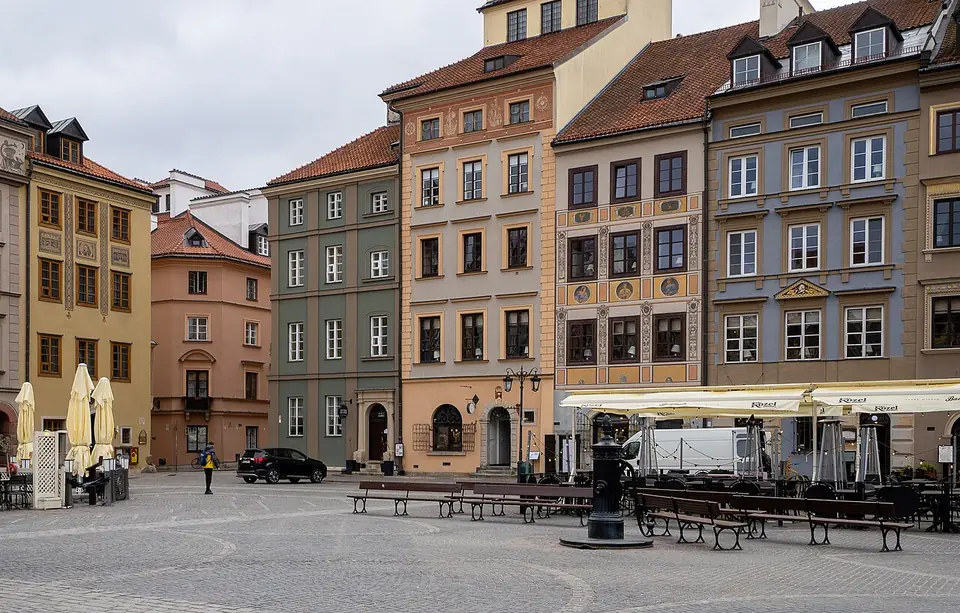
Football and volleyball draw the biggest crowds, and Robert Lewandowski is one of the best strikers of his generation. Folk traditions remain alive in the mountains around Zakopane, where the Górale highlanders have their own dialect, music and wooden architecture. Kraków's Main Square and Wawel Castle, and the restored Old Town of Warsaw, are among the most visited places in Central Europe.
Five facts worth knowing
- Poland borders seven countries: Germany, Czechia, Slovakia, Ukraine, Belarus, Lithuania and Russia. The Russian border is with Kaliningrad, the piece of Russia cut off from the rest by Lithuania.
- It is divided into 16 voivodeships, the Polish word for provinces, from Pomerania on the coast to Lesser Poland around Kraków.
- Kraków was the capital before Warsaw, until the late 1500s. Its old town survived the Second World War largely intact, unlike Warsaw, which was rebuilt almost from scratch.
- The highest point is Rysy at 2,499 metres, in the Tatras on the Slovak border. The rest of the country is mostly flat lowland, which is where the name – from a word for field – comes from.
- Poland joined the European Union in 2004 but still uses its own currency, the złoty.
Culture and traditions in Poland
- Saying hello
A firm handshake with "Dzień dobry"; friends may exchange cheek kisses.
- Food and drink
Pierogi, filled dumplings, and żurek, a sour rye soup often served in a bread bowl.
- Festivals and traditions
Wigilia, the Christmas Eve dinner, is the biggest family meal; Easter traditions include decorating eggs.
- Everyday life
People bring flowers or a small gift when visiting someone's home. Name days are often celebrated like birthdays.
- Did you know?
Poland's Wieliczka Salt Mine, mined for centuries, has a chapel carved entirely from salt.
Common mistakes
- Tapping Ukraine or Belarus, the countries directly east of Poland.
- Tapping Germany, which is a similar size and shape at world-map zoom.
- Picking Indonesia or Monaco in the Flags quiz.
- Forgetting the Russian exclave of Kaliningrad in the north-east.
Practise with Poland
- Europe quiz – the large country east of Germany with the Baltic coast.
- Polish Voivodeships – all 16.
- Europe flags – white over red; practise it alongside Indonesia and Monaco in Whole World flags.
- Europe capitals quiz – Warsaw, on the Vistula.
- Mystery Country – a fairly square outline with a straight Baltic top edge and the Carpathian bumps along the bottom.
Nearby countries
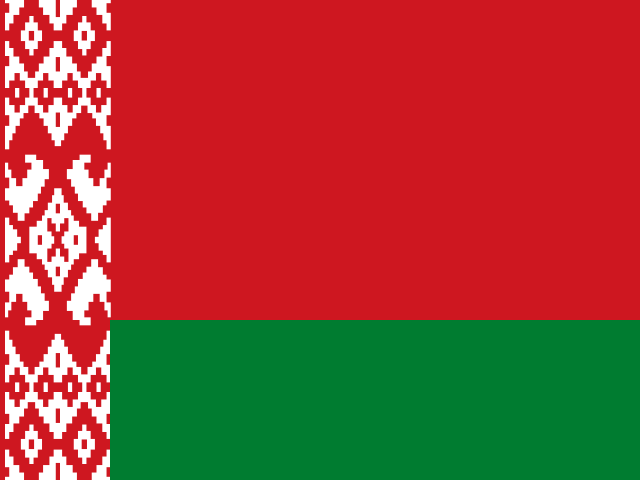 BelarusMinsk
 CzechiaPrague
 GermanyBerlin
 LithuaniaVilnius
 RussiaMoscow
 SlovakiaBratislava
 UkraineKyiv
Quick check: how well do you know Poland?
3 questions, no sign-up. Tap an answer.
1. Which flag belongs to Poland?
That's the flag of Poland.
2. What is the capital of Poland?
The capital of Poland is Warsaw.
3. Which of these countries borders Poland?
Belarus, Czechia, Germany, Lithuania, Russia, Slovakia and Ukraine border Poland.
Keep going on the Europe quiz – Poland is one of 46 countries there.
More ways to practise: find Poland on the blank map with no borders (hard mode), or play today's Globe and the other daily puzzles.
Frequently asked questions about Poland
What language is spoken in Poland?
Polish is the official language and the mother tongue of almost everyone. Kashubian, spoken near Gdańsk, has official status as a regional language, and small German, Belarusian and Ukrainian communities keep their own languages. English is widely learnt by younger Poles.
What currency does Poland use?
Poland uses the złoty, code PLN, divided into 100 groszy. The name means "golden". Although Poland is an EU member, it has not adopted the euro, and the złoty floats freely against other currencies.
What time zone is Poland in?
Poland uses Central European Time, UTC+1, like Germany and most of its neighbours. In summer it switches to Central European Summer Time, UTC+2, between the last Sunday of March and the last Sunday of October.
Which side of the road do they drive on in Poland?
Traffic in Poland drives on the right, as in the rest of continental Europe. Cars are left-hand drive, and dipped headlights must be switched on at all times of day, all year round.
What is the highest point in Poland?
The highest point is the north-western summit of Rysy, about 2,499 metres, in the High Tatras. The mountain's main peak is slightly higher but lies just across the border in Slovakia, so the two countries share it.
Is Poland in the EU?
Yes. Poland joined the European Union on 1 May 2004 and the Schengen passport-free area at the end of 2007. It has also been a member of NATO since 1999. It is the largest of the countries that joined the EU in 2004.
Quizzes with Poland
Guides that help with this
- All 46 European capitals, with a memory trick for eachCapitals grouped by region, with hooks for the ones people forget.
- Flags that look alike (and how to tell them apart)Chad or Romania? Australia or New Zealand? The flag pairs that cost quiz points.
- The 25 hardest countries to find on a mapPacific islands, Caribbean islands and landlocked Africa – where they are.