Belarus
Capital: Minsk. Belarus is one of the 46 countries in the Europe quiz.
Quick answers: What is the capital of Belarus? · Which countries border Belarus?
Facts about Belarus
- CapitalMinsk
- Population9.1 million
- Area207,600 km²
- RegionsEurope, Central & Eastern Europe
- LanguagesBelarusian, Russian
- CurrencyBelarusian ruble (BYN)
Belarus is the 19th most populous of the 46 countries in Europe and the 13th largest by area. Worldwide it ranks 100th by population and 84th by area.
Where is Belarus?
Belarus is a landlocked country in Eastern Europe, sitting between Russia to the east and Poland to the west. Lithuania and Latvia lie to the north-west and north, and Ukraine to the south. The capital, Minsk, is near the centre of the country. Belarus is flat and heavily forested, with large areas of marshland in the south along the Pripyat River.
On a world map, find Poland and look directly east. The country between Poland and the bulk of Russia, above Ukraine and below the Baltic states, is Belarus.
How to find Belarus on the map
- Start from Poland. Belarus is the country immediately east of Poland's eastern border.
- It's landlocked. Lithuania and Latvia, to the north, reach the Baltic Sea; Belarus does not.
- Look above Ukraine. Belarus sits on top of Ukraine's northern border, with the Chernobyl exclusion zone just across the line.
- Don't confuse it with Ukraine. Ukraine is much bigger and touches the Black Sea; Belarus is the smaller, inland country above it.
Flag
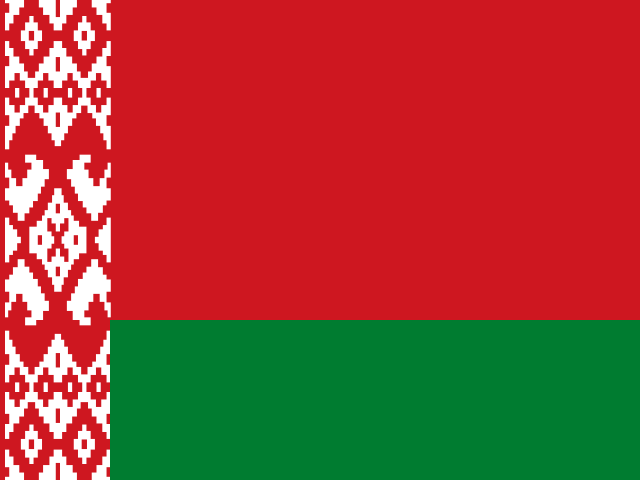
The flag is two horizontal bands, red on top and green below, with the red band twice as tall as the green. At the hoist is a vertical white strip with a red embroidery pattern. The design dates from 1995 and is based on the Soviet-era flag with the hammer and sickle removed.
In the Flags quiz, the decorative strip at the hoist is the key feature. The red-and-white flag used by the opposition is not the official one.
A short history of Belarus
Slavic tribes settled the forests and marshes of this region in the second half of the first millennium. By the 10th century the Principality of Polotsk had grown up on the Western Dvina river, linked to Kievan Rus. In the 1200s and 1300s these lands were drawn into the Grand Duchy of Lithuania, a large state in which the old Belarusian language was used for laws and government documents.
In 1569 Lithuania joined with Poland to form the Polish-Lithuanian Commonwealth. The Belarusian nobility gradually took on Polish language and Catholic faith, while peasants mostly stayed Orthodox. In 1517 Francysk Skaryna, a scholar from Polotsk, began printing books of the Bible in an early Belarusian form of Church Slavonic, among the first printed books in an East Slavic language. When the Commonwealth was carved up at the end of the 1700s, the whole region passed to the Russian Empire.
Napoleon's army retreated across the Berezina river in 1812 with terrible losses. In the 1800s Belarus was part of the Pale of Settlement, where Jews in the Russian Empire were required to live, and towns such as Minsk and Pinsk had large Jewish populations. A Belarusian People's Republic was declared in 1918 but never took real control. In 1921 the land was divided between Poland and Soviet Russia, and the Soviet part became the Belarusian Soviet Socialist Republic. The Soviet Union took the western part in 1939.
The Second World War was catastrophic. Nazi German occupation, the Holocaust and fighting between occupiers and partisans killed around a quarter of the population, and hundreds of villages were burned with their people inside, as at Khatyn. Minsk was rebuilt afterwards in grand Soviet style. Belarus became independent in 1991 but has kept close ties with Russia. Disputed elections in 2020 led to the largest protests in its history, which were forcefully put down.
Today Belarus depends heavily on Russia for energy and trade, while Western sanctions limit its links to the European Union.
Culture and daily life in Belarus
The name Belarus means "White Rus", though nobody is sure where the "white" comes from. Belarusian is a close cousin of Ukrainian and Russian and is written in Cyrillic. Most people are Orthodox Christians, with a Catholic minority in the west, a reminder of the old ties with Poland and Lithuania.
The national poet is Yanka Kupala, who wrote in Belarusian in the early 1900s, alongside Yakub Kolas. Writer Vasil Bykau described the Second World War from the soldier's point of view, and Svetlana Alexievich won the Nobel Prize in Literature in 2015 for her collections of real people's voices. Painter Marc Chagall was born in Vitebsk, and its colourful houses and floating figures appear in many of his works.
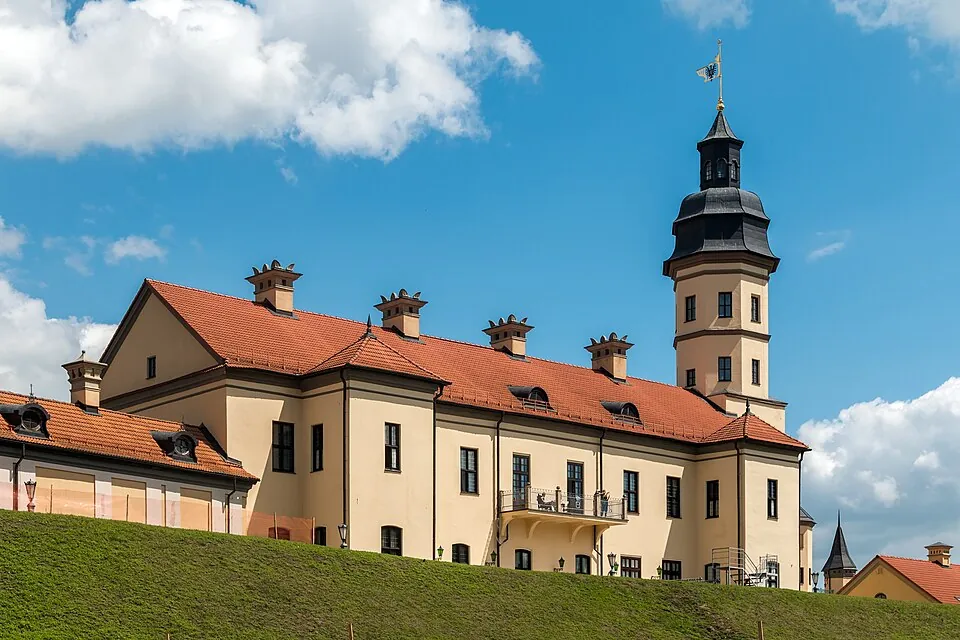
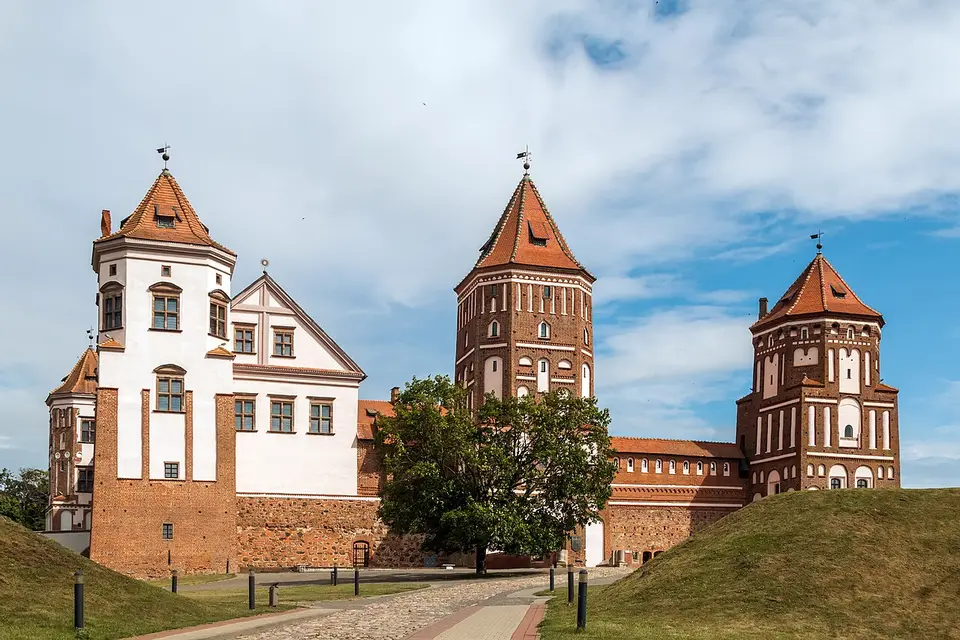
The castles at Mir and Nesvizh are UNESCO World Heritage Sites. Traditional crafts include straw weaving and linen embroidered with red geometric patterns. Ice hockey is popular, and Belarus has produced strong biathletes and gymnasts. Belarusians often describe themselves as calm, patient and hard-working, and many families spend summer weekends at a dacha, a country cottage with a vegetable garden.
Five facts worth knowing
- Belarus is the only country in Europe that still carries out the death penalty.
- Alexander Lukashenko has been president since 1994, making him one of the longest-serving leaders in Europe.
- About 40 per cent of the country is forest, including part of Białowieża, one of the last fragments of Europe's primeval forest, shared with Poland.
- Belarus was badly affected by the 1986 Chernobyl disaster – the plant is in Ukraine, but much of the fallout landed on Belarusian territory.
- Both Belarusian and Russian are official languages, though Russian is the one most people use day to day.
Culture and traditions in Belarus
- Saying hello
A handshake and "Dobry dzien" or "Zdravstvuyte".
- Food and drink
Draniki (potato pancakes) served with sour cream, and machanka, a pork stew.
- Festivals and traditions
Kupalle, the midsummer festival on the night of 6–7 July, with bonfires and flower wreaths.
- Everyday life
Guests remove shoes at home and bring a small gift, such as flowers.
- Did you know?
Flowers are given in odd numbers, because even numbers are reserved for funerals.
Common mistakes
- Tapping Ukraine – the larger country to the south.
- Tapping Lithuania or Latvia, which sit above Belarus on the Baltic.
- Assuming Belarus is part of Russia because of the close relationship – it is a separate country.
Practise with Belarus
- Europe quiz – the landlocked country between Poland and Russia.
- Europe flags – red over green with a patterned white strip at the hoist.
- Europe capitals quiz – Minsk.
- Mystery Country – a rounded, blobby outline with a slightly pointed western end.
- Mistake Bank – if you keep mixing up Belarus and Ukraine, this is where to practise.
Nearby countries
Quick check: how well do you know Belarus?
3 questions, no sign-up. Tap an answer.
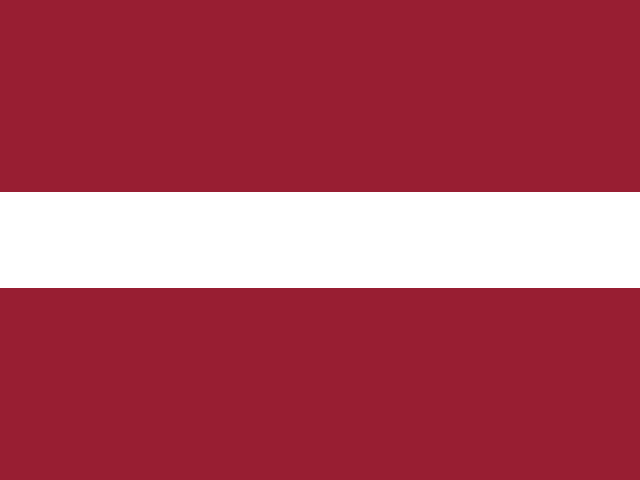
1. Which flag belongs to Belarus?
That's the flag of Belarus.
2. What is the capital of Belarus?
The capital of Belarus is Minsk.
3. Which of these countries borders Belarus?
Latvia, Lithuania, Poland, Russia and Ukraine border Belarus.
Keep going on the Europe quiz – Belarus is one of 46 countries there.
More ways to practise: find Belarus on the blank map with no borders (hard mode), or play today's Globe and the other daily puzzles.
Frequently asked questions about Belarus
What language is spoken in Belarus?
Belarusian and Russian are both official languages. Russian dominates daily life, government and the media, especially in cities, while Belarusian is more common in the countryside. Many people also speak trasianka, an informal mixture of the two.
What currency does Belarus use?
Belarus uses the Belarusian rouble (BYN). The current version was introduced in 2016, when four zeros were removed from the old rouble, and it was the first time the country issued circulating coins.
What time zone is Belarus in?
Belarus is on UTC+3 all year round, the same as Moscow. It stopped changing the clocks in 2011, when it chose to stay on summer time permanently.
Which side of the road do they drive on in Belarus?
Belarusians drive on the right. The main highway across the country, the M1, links the Polish border at Brest with Minsk and the Russian border and forms part of the route between Berlin and Moscow.
What is the highest point in Belarus?
The highest point is Dzyarzhynskaya Hara, only about 345 metres, west of Minsk. Belarus is one of the flattest countries in Europe, with large areas of marsh, such as the Pripyat Marshes in the south.
Why is Belarus called Belarus?
The name means "White Rus". Rus was the name of the medieval East Slavic state centred on Kyiv, and why this part of it was called white is still debated. In the past English often used the name Byelorussia or White Russia.
Quizzes with Belarus
Often confused with
Guides that help with this
- All 46 European capitals, with a memory trick for eachCapitals grouped by region, with hooks for the ones people forget.
- Flags that look alike (and how to tell them apart)Chad or Romania? Australia or New Zealand? The flag pairs that cost quiz points.
- The 25 hardest countries to find on a mapPacific islands, Caribbean islands and landlocked Africa – where they are.