Zimbabwe
Capital: Harare. Zimbabwe is one of the 54 countries in the Africa quiz.
Quick answers: What is the capital of Zimbabwe? · Which countries border Zimbabwe?
Facts about Zimbabwe
- CapitalHarare
- Population17 million
- Area390,757 km²
- RegionsAfrica, Southern Africa
- LanguagesEnglish, Shona, Northern Ndebele
- CurrenciesZimbabwe gold (ZWG), US dollar (USD)
Zimbabwe is the 26th most populous of the 54 countries in Africa and the 26th largest by area. Worldwide it ranks 74th by population and 60th by area.
Where is Zimbabwe?
Zimbabwe is a landlocked country in Southern Africa, between the Zambezi River in the north and the Limpopo River in the south. Zambia lies to the north, Mozambique to the east, South Africa to the south and Botswana to the west. At its far western tip it comes within a few hundred metres of Namibia's Caprivi Strip. The capital, Harare, is in the north-east; the second city, Bulawayo, is in the south-west.
On a world map, find South Africa at the bottom of the continent. Zimbabwe is the roundish country immediately above it, one step inland from the Mozambique coast.
How to find Zimbabwe on the map
- Start from South Africa. Zimbabwe is directly north of its north-eastern border, across the Limpopo.
- Look for the two rivers. The Zambezi on top and the Limpopo underneath frame the country.
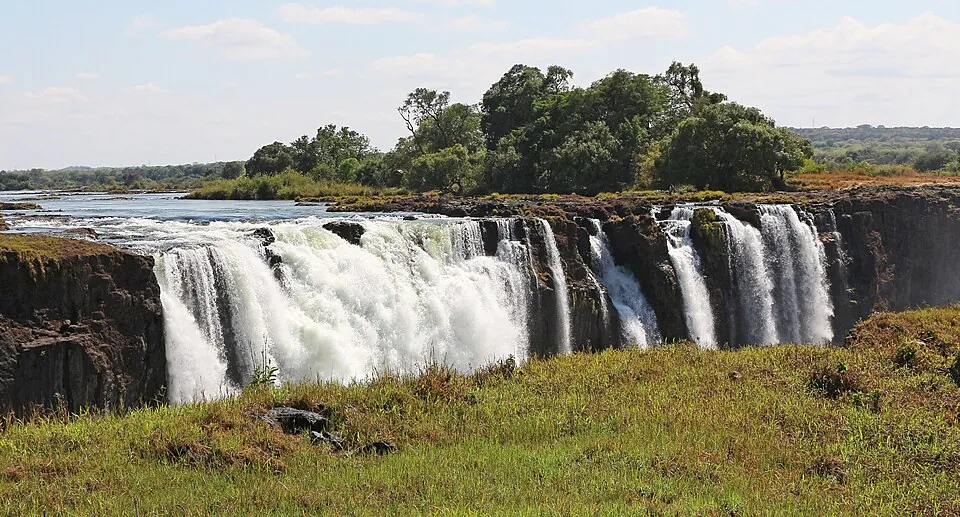
- Find Victoria Falls. The falls are on Zimbabwe's north-western border with Zambia, where four countries almost meet.
- Don't confuse it with Zambia. Zambia is the bigger butterfly-shaped country to the north; Zimbabwe is rounder and smaller.
Flag
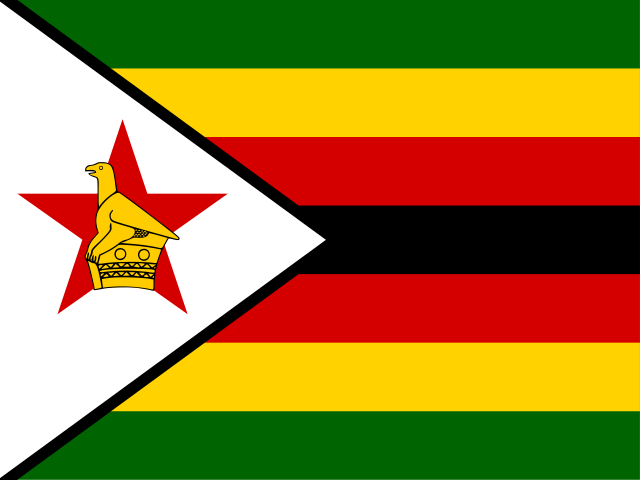
Zimbabwe's flag has seven horizontal stripes – green, yellow, red, black, red, yellow, green – with a white triangle at the hoist, edged in black. Inside the triangle is a red five-pointed star with the yellow Zimbabwe Bird on top of it. The bird is a soapstone carving found at the ruins of Great Zimbabwe; green is for agriculture, yellow for minerals, red for the independence struggle and black for the people.
In the Flags quiz, the symmetrical seven-stripe pattern plus the triangle makes it easy to recognise. No other flag puts a bird on a star.
A short history of Zimbabwe
Thousands of rock paintings left by San hunter-gatherers still decorate caves in the Matobo Hills and elsewhere. Bantu-speaking farmers arrived around 2,000 years ago, and by the 1000s a powerful state had formed at Mapungubwe on the Limpopo. Its successor built Great Zimbabwe, which grew rich by trading gold and ivory with Swahili merchants on the Indian Ocean coast; Chinese porcelain and Persian glass have been found in its ruins. After it declined in the 1400s, the Mutapa kingdom in the north and the Torwa state, later replaced by the Rozvi, in the south-west took its place.
In the 1830s Ndebele people under Mzilikazi, fleeing wars further south, moved north and settled around what is now Bulawayo, building a strong kingdom. His son Lobengula signed a mining concession in 1888 that Cecil Rhodes's British South Africa Company used to justify sending settlers in 1890. The company then conquered the Ndebele in 1893. In 1896–97 the Ndebele and Shona rose against the settlers in the First Chimurenga, an uprising led partly by spirit mediums such as Mbuya Nehanda. It was crushed, and the territory became the colony of Southern Rhodesia, where a white minority held most of the best land.
In 1965, rather than accept majority rule, the white government under Ian Smith declared independence from Britain on its own. No country formally recognised it, and the UN imposed sanctions. A long guerrilla war, the Second Chimurenga, was fought by two movements, ZANU and ZAPU. The Lancaster House talks in London in 1979 led to elections, and Robert Mugabe became leader at independence.
In the 1980s a government campaign known as Gukurahundi killed thousands of civilians in Matabeleland. From 2000, the seizure of white-owned farms disrupted agriculture and helped trigger economic collapse. Mugabe was removed in 2017 after a military intervention. Today Zimbabwe relies on mining – especially gold, platinum and lithium – plus tobacco farming and tourism.
Culture and daily life in Zimbabwe
Shona speakers form the large majority, living mainly in the north and east, while Ndebele, a language related to Zulu, dominates the south-west around Bulawayo – a legacy of the 1830s migration. English is the language of business and government. Most Zimbabweans are Christian, and many belong to African Apostolic churches whose members worship outdoors in white robes, while respect for ancestors remains important.
Shona stone sculpture became internationally famous in the 1960s, with artists carving serpentine and springstone into flowing human and animal forms. Literature in English is strong: Tsitsi Dangarembga's Nervous Conditions and Dambudzo Marechera's The House of Hunger are classics. In music, Thomas Mapfumo created chimurenga music, adapting mbira patterns to electric guitars during the liberation war, and Oliver Mtukudzi became one of Africa's best-loved singers.
Football is the most popular sport, while Zimbabwe is also a Test cricket nation, with stars such as Andy Flower. Swimmer Kirsty Coventry won Olympic gold in 2004 and 2008. Clan totems, usually an animal, still shape family identity among many Shona.
Five facts worth knowing
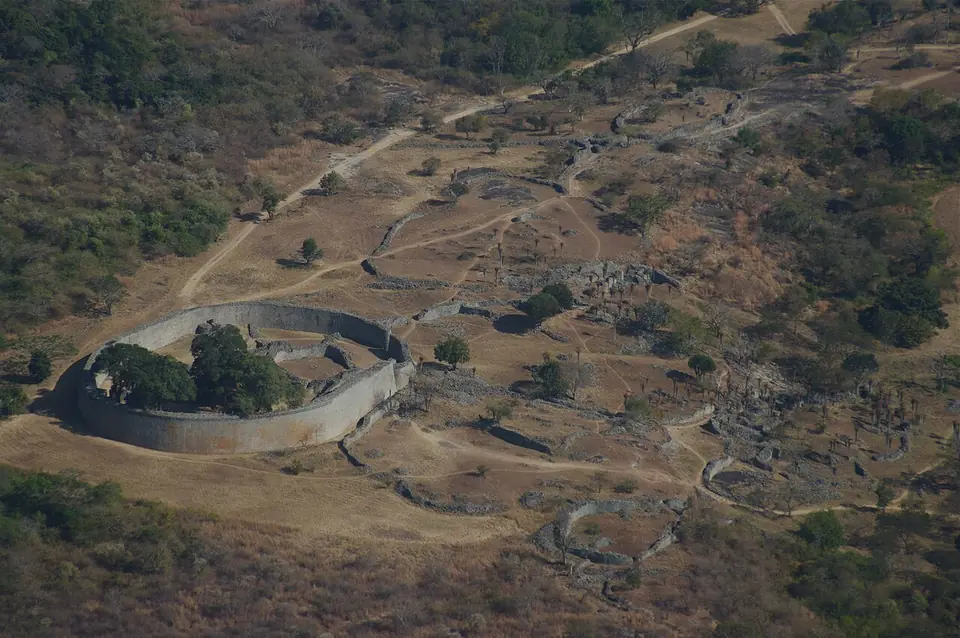
- The country is named after Great Zimbabwe, a stone city built between the eleventh and fifteenth centuries whose ruins near Masvingo are the largest ancient structures in sub-Saharan Africa.
- Victoria Falls is shared with Zambia, and the Zimbabwean side offers the widest view of the roughly 1.7 km-wide curtain of water.
- Zimbabwe was Southern Rhodesia, then Rhodesia, before internationally recognised independence in 1980; Harare was called Salisbury until 1982.
- In 2008 hyperinflation reached such levels that a 100-trillion-dollar banknote was printed; the Zimbabwe dollar was abandoned the following year.
- Zimbabwe has 16 official languages, among the most of any country, including Shona, Ndebele and English.
Culture and traditions in Zimbabwe
- Saying hello
A handshake, often with soft clapping; "Mhoro" in Shona or "Sawubona" in Ndebele.
- Food and drink
Sadza, a stiff maize porridge, served with relish such as greens, beans or meat stew.
- Festivals and traditions
Independence Day on 18 April; mbira music, played at ceremonies and gatherings, is a living tradition.
- Everyday life
Polite greetings and respect for elders are important, and people often clap their hands softly when receiving something.
- Did you know?
The country is named after Great Zimbabwe, a medieval stone city whose name means "houses of stone".
Common mistakes
- Tapping Zambia – the Z-names and shared river trip many people up.
- Tapping Botswana or Mozambique, the neighbours to the west and east.
- Mixing up the flag with Zambia's, which is green with the emblem in the corner rather than stripes.
Practise with Zimbabwe
- Africa quiz – the round country between the Zambezi and the Limpopo.
- Southern Africa quiz – a zoomed map that makes the Zambia–Zimbabwe pair easy to separate.
- Africa flags – seven stripes, white triangle, bird on a star.
- Africa capitals quiz – Harare.
- Mystery Country – a compact, almost circular outline with a pointed tip in the west near Victoria Falls.
Nearby countries
 BotswanaGaborone
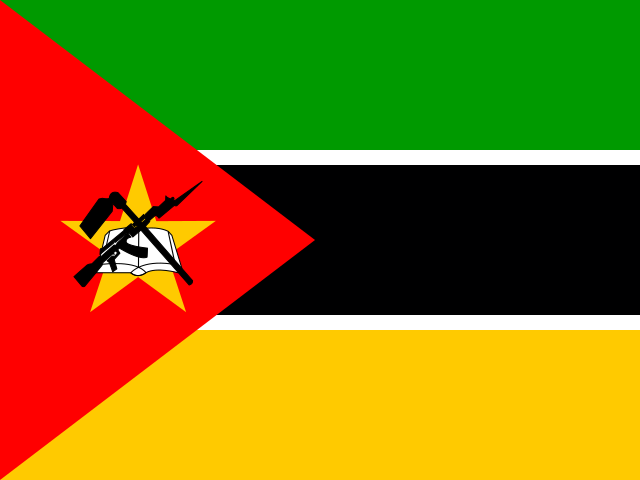 MozambiqueMaputo
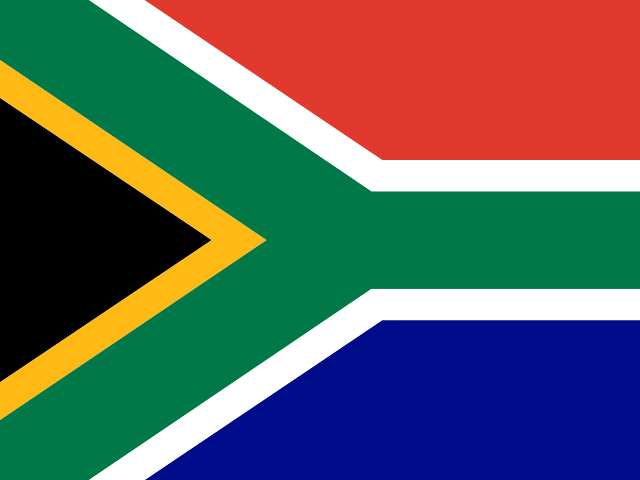 South AfricaPretoria
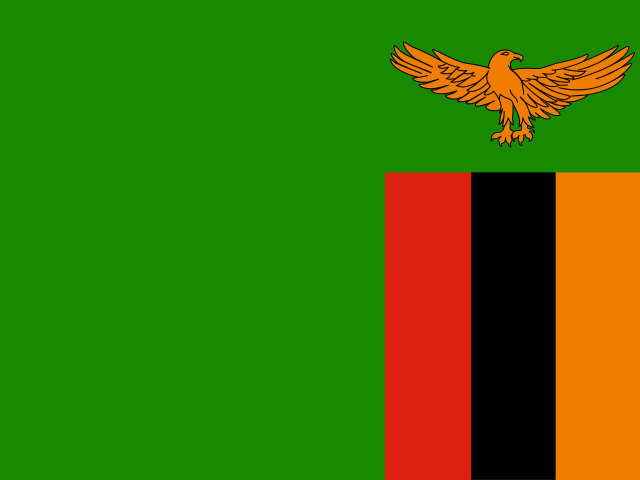 ZambiaLusaka
Quick check: how well do you know Zimbabwe?
3 questions, no sign-up. Tap an answer.
1. Which flag belongs to Zimbabwe?
That's the flag of Zimbabwe.
2. What is the capital of Zimbabwe?
The capital of Zimbabwe is Harare.
3. Which of these countries borders Zimbabwe?
Botswana, Mozambique, South Africa and Zambia border Zimbabwe.
Keep going on the Africa quiz – Zimbabwe is one of 54 countries there.
More ways to practise: find Zimbabwe on the blank map with no borders (hard mode), or play today's Globe and the other daily puzzles.
Frequently asked questions about Zimbabwe
What language is spoken in Zimbabwe?
Zimbabwe recognises 16 official languages. Shona is the most widely spoken, Ndebele is the main language of the south-west, and English is used in government, business and schools. Others include Tonga, Venda, Kalanga and sign language.
What currency does Zimbabwe use?
Zimbabwe uses the Zimbabwe Gold (ZWG), launched in 2024 and backed partly by gold reserves. The US dollar is widely used alongside it, and other currencies such as the South African rand are also legal tender.
What time zone is Zimbabwe in?
Zimbabwe is on Central Africa Time, UTC+2, all year, the same as Zambia and South Africa. It does not use daylight saving time. That puts it two hours ahead of London in winter and one in summer.
Which side of the road do they drive on in Zimbabwe?
Zimbabwe drives on the left, like all its neighbours. The road and rail bridge over the Zambezi at Victoria Falls, completed in 1905, links it with Zambia.
What is the highest point in Zimbabwe?
The highest point is Mount Nyangani, at about 2,590 metres, in the Eastern Highlands near the border with Mozambique. It is often wrapped in mist, and local legends say people can vanish on its slopes.
What is Zimbabwe famous for?
Zimbabwe is famous for Victoria Falls, shared with Zambia, the stone ruins of Great Zimbabwe and Lake Kariba, one of the world's largest artificial lakes. Hwange National Park has one of Africa's largest elephant populations.
Quizzes with Zimbabwe
Often confused with
Guides that help with this
- Learn all 54 African countries in a weekLearn the coastline in order, region by region.
- Flags that look alike (and how to tell them apart)Chad or Romania? Australia or New Zealand? The flag pairs that cost quiz points.
- The 25 hardest countries to find on a mapPacific islands, Caribbean islands and landlocked Africa – where they are.