Pakistan
Capital: Islamabad. Pakistan is one of the 48 countries in the Asia quiz.
Quick answers: What is the capital of Pakistan? · Which countries border Pakistan?
Facts about Pakistan
- CapitalIslamabad
- Population255.2 million
- Area881,912 km²
- RegionsAsia, Central & South Asia
- LanguagesEnglish, Urdu
- CurrencyPakistani rupee (PKR)
Pakistan is the 4th most populous of the 48 countries in Asia and the 8th largest by area. Worldwide it ranks 5th by population and 33rd by area.
Where is Pakistan?
Pakistan is in South Asia, on the north-western side of the Indian subcontinent. It borders India to the east, Afghanistan to the north-west, Iran to the south-west and China in the far north-east. Its only coastline is the Arabian Sea, in the south. The Indus River runs the whole length of the country, from the mountains in the north down to the sea near Karachi.
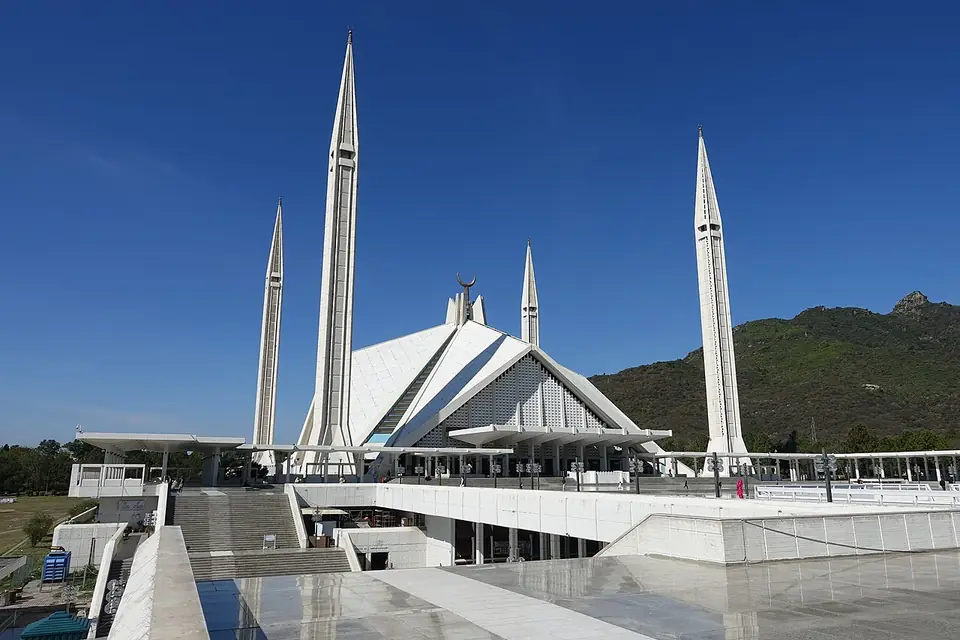
Islamabad, the capital, is in the north, near the foothills of the Himalayas. Karachi, the largest city and main port, is at the opposite end on the coast.
How to find Pakistan on the map
- Start from India. Pakistan is the country on India's north-west border, between India and Iran.
- Follow the Arabian Sea coast. From Iran, moving east, the coast runs along Pakistan before reaching India.
- Don't confuse it with Afghanistan. Afghanistan is landlocked and sits to the north-west, between Pakistan and Iran.
- Don't confuse it with Bangladesh. Bangladesh is on the other side of India, in the east, and far smaller.
Flag
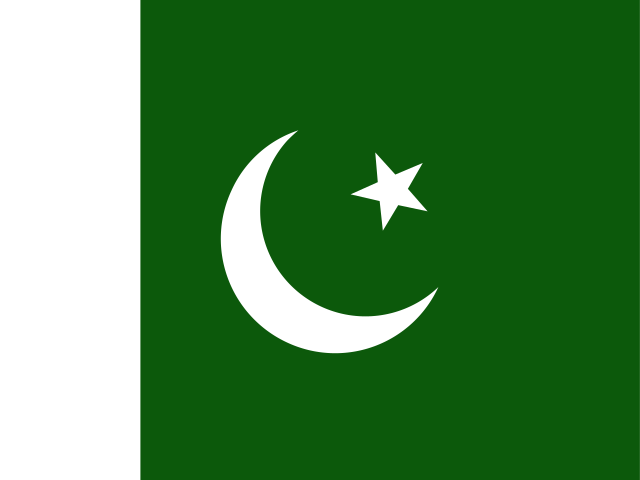
The Pakistani flag is a dark green field with a white vertical stripe at the hoist and a white crescent moon and five-pointed star in the green part. The green represents the Muslim majority, the white stripe religious minorities, and the crescent and star progress and light. It was adopted at independence in August 1947.
Several flags carry a crescent and star – Turkey, Algeria, Tunisia, Azerbaijan – but Pakistan's is the only one that is green with a plain white stripe at the pole. Algeria's is split green and white with a red crescent; Mauritania's is green with a gold crescent and red bands.
A short history of Pakistan
After the Indus Valley cities faded, the lands of today's Pakistan became a crossroads of empires. Persians, Alexander the Great and the Mauryas all ruled here. Under the Kushans, the region of Gandhara, around Peshawar and Taxila, became a great centre of Buddhist learning and art, where some of the earliest statues of the Buddha in human form were made.
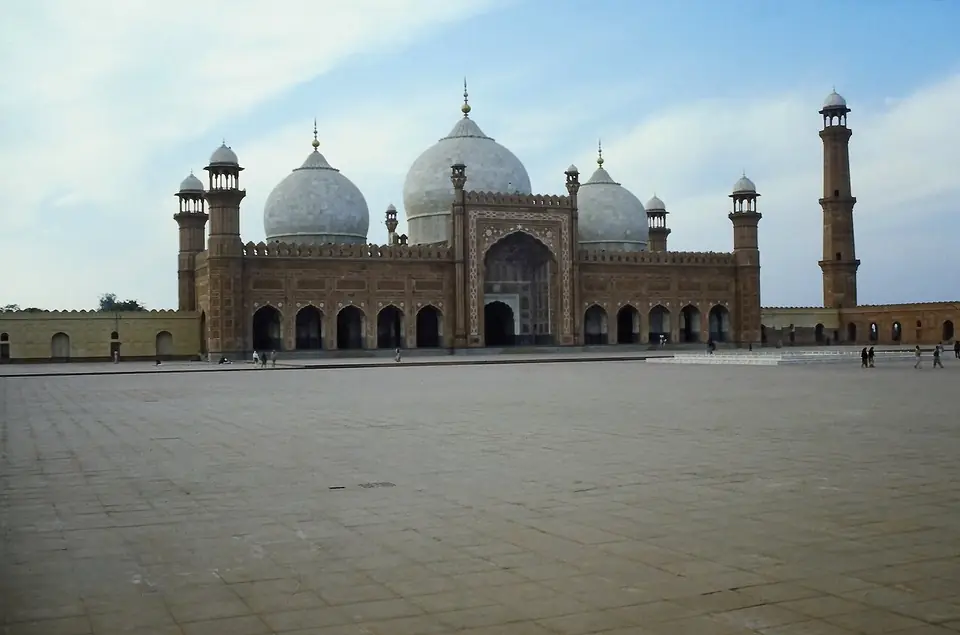
Arab forces reached Sindh in 711, bringing Islam to the region. Over the following centuries, rulers from Central Asia and Afghanistan entered the subcontinent through the passes of the north-west, including the Khyber Pass. The Mughal Empire, founded in 1526, left lasting monuments, especially in Lahore, with its Badshahi Mosque, fort and Shalimar Gardens. As Mughal power declined, the Sikh Empire of Ranjit Singh ruled Punjab from Lahore in the early 1800s.
By 1849 the British had taken control of the region as part of British India. In the 20th century, the Muslim League, led by Muhammad Ali Jinnah, argued that Muslims needed a homeland of their own. When Britain left in 1947, India was partitioned. Pakistan was created from the Muslim-majority areas in the west and east, with India in between. Partition caused one of the largest migrations in history and terrible violence, and the dispute over Kashmir began at once. Pakistan and India have fought several wars over it, and each controls part of the region.
Pakistan's early years were unsteady, and the army has ruled the country for long periods. In 1971, after a war, East Pakistan broke away to become Bangladesh. Pakistan tested nuclear weapons in 1998, a few weeks after India. Benazir Bhutto became the first woman elected to lead a Muslim-majority country in 1988.
Today Pakistan has a large, young population, a big farming sector watered by the Indus, and a textile industry that earns a large share of its export income. Its relations with India, Afghanistan and China shape much of its foreign policy.
Culture and daily life in Pakistan
Urdu is the national language and links a country of many tongues, including Punjabi, the most widely spoken, Pashto, Sindhi and Balochi. Urdu itself grew from contact between local languages and Persian, Arabic and Turkic, a reminder of the many rulers who passed through. Almost all Pakistanis are Muslim.
Poetry has deep roots. Allama Iqbal, whose verse inspired the idea of Pakistan, is the national poet, and Faiz Ahmed Faiz is loved for his romantic and political poems. Sufi shrines such as those of Data Ganj Bakhsh in Lahore draw huge crowds, and qawwali, devotional Sufi singing, was carried around the world by Nusrat Fateh Ali Khan.
Cricket is close to an obsession: Pakistan won the 1992 World Cup under Imran Khan. The country was also once dominant in field hockey and squash. Brightly painted trucks, covered in flowers, poems and portraits, are a famous folk art on the country's roads. Wrestling, kabaddi and polo also have deep local roots. In Lahore, the colourful spring kite festival of Basant was once one of the biggest events of the year.
Five facts worth knowing
- Pakistan is the fifth most populous country in the world, with more than 250 million people.
- K2, the second-highest mountain on Earth at 8,611 metres, is in Pakistan, in the Karakoram range near the Chinese border.
- The Indus Valley Civilisation, one of the world's oldest, was centred here. The ruins of Mohenjo-daro are over 4,000 years old.
- Islamabad is a planned city, built in the 1960s to replace Karachi as the capital.
- Pakistan and Bangladesh were one country until 1971. Bangladesh was East Pakistan, separated from the western half by the whole width of India.
Culture and traditions in Pakistan
- Saying hello
"Assalam-o-alaikum" with a handshake between men, often with the right hand on the heart.
- Food and drink
Biryani, spiced rice with meat, and nihari, a slow-cooked beef stew; chai is drunk throughout the day.
- Festivals and traditions
The Shandur Polo Festival (July) is played on one of the world's highest polo grounds; Independence Day is 14 August.
- Everyday life
Guests are treated with great hospitality and often offered food and tea. Use the right hand for eating and giving.
- Did you know?
Pakistan is home to K2, the world's second-highest mountain at 8,611 m.
Common mistakes
- Tapping Afghanistan – the two countries share a long, irregular border and look similar in size at world zoom.
- Tapping Iran – Iran is the larger country further west, on the Persian Gulf.
- Picking a different crescent-and-star flag in the Flags quiz; Pakistan's is the green one with the white stripe at the hoist.
- Assuming Karachi is the capital.
Practise with Pakistan
- Asia quiz – between Iran and India, with the Arabian Sea on the south.
- Central & South Asia quiz – a close view of the subcontinent, so Pakistan, India and Bangladesh are easy to separate.
- Asia flags – green with a white hoist stripe and crescent.
- Asia capitals quiz – Islamabad.
- Mystery Country – a broad southern base narrowing towards the mountains in the north, with a long western border.
Nearby countries
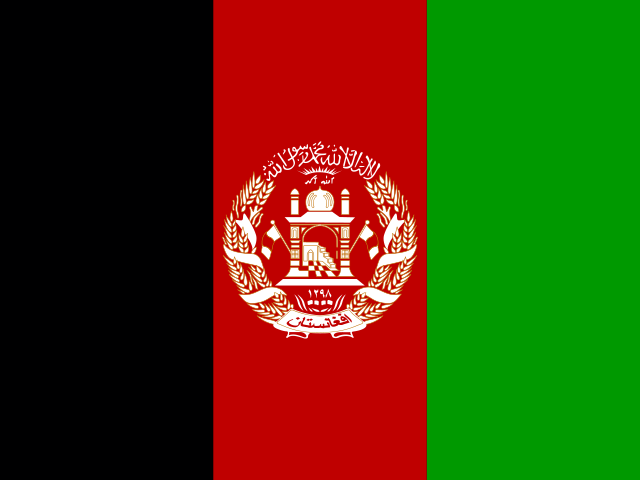 AfghanistanKabul
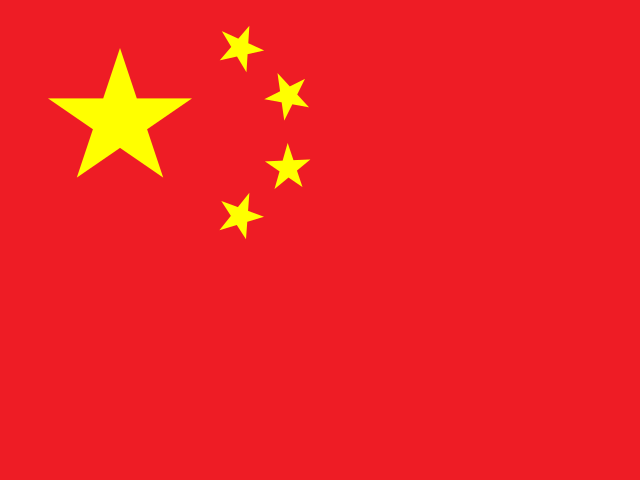 ChinaBeijing
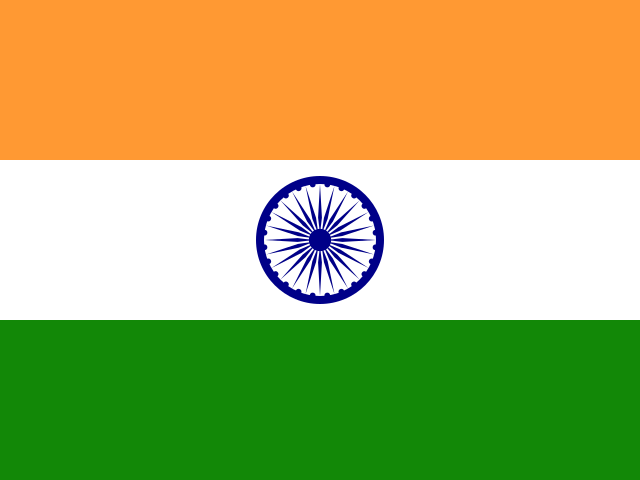 IndiaNew Delhi
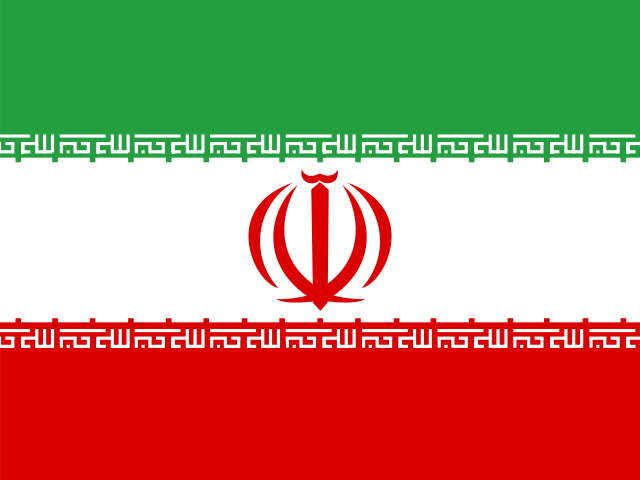 IranTehran
Quick check: how well do you know Pakistan?
3 questions, no sign-up. Tap an answer.
1. Which flag belongs to Pakistan?
That's the flag of Pakistan.
2. What is the capital of Pakistan?
The capital of Pakistan is Islamabad.
3. Which of these countries borders Pakistan?
Afghanistan, China, India and Iran border Pakistan.
Keep going on the Asia quiz – Pakistan is one of 48 countries there.
More ways to practise: find Pakistan on the blank map with no borders (hard mode), or play today's Globe and the other daily puzzles.
Frequently asked questions about Pakistan
What language is spoken in Pakistan?
Urdu is the national language and English is an official language, used in government, law and higher education. Punjabi is the most common first language, followed by Pashto, Sindhi, Saraiki and Balochi, and most people speak a regional language at home and Urdu as a shared language.
What currency does Pakistan use?
Pakistan uses the Pakistani rupee (PKR), issued by the State Bank of Pakistan. Its banknotes show Muhammad Ali Jinnah, the country's founder, and the rupee was officially divided into 100 paisa, though paisa coins are no longer in use.
What time zone is Pakistan in?
Pakistan is on Pakistan Standard Time, UTC+5, all year round. It tried daylight saving time in 2002 and in 2008–2009 but abandoned it, and it is half an hour behind India.
Which side of the road do they drive on in Pakistan?
Pakistan drives on the left, as in India. The Karakoram Highway, one of the highest paved roads in the world, links the north of the country with China over the Khunjerab Pass.
What is the highest point in Pakistan?
K2, on the border with China in the Karakoram range of Gilgit-Baltistan, is Pakistan's highest point at about 8,611 metres. Nicknamed the "Savage Mountain", it is considered much harder and more dangerous to climb than Everest.
What does the name Pakistan mean?
The name was coined in 1933 by Choudhry Rahmat Ali from letters of regions in the north-west: Punjab, Afghania, Kashmir and Sindh, with "stan" from Baluchistan. It also works as a Persian and Urdu phrase meaning "land of the pure".
Quizzes with Pakistan
Often confused with
Guides that help with this
- Oceans, seas, rivers and mountainsThe physical map: seas around each continent, the big rivers and ranges.
- Flags that look alike (and how to tell them apart)Chad or Romania? Australia or New Zealand? The flag pairs that cost quiz points.
- The 25 hardest countries to find on a mapPacific islands, Caribbean islands and landlocked Africa – where they are.