Iraq
Capital: Baghdad. Iraq is one of the 48 countries in the Asia quiz.
Quick answers: What is the capital of Iraq? · Which countries border Iraq?
Facts about Iraq
- CapitalBaghdad
- Population47 million
- Area438,317 km²
- RegionsAsia, Middle East
- LanguagesArabic, Kurdish
- CurrencyIraqi dinar (IQD)
Iraq is the 14th most populous of the 48 countries in Asia and the 16th largest by area. Worldwide it ranks 34th by population and 58th by area.
Where is Iraq?
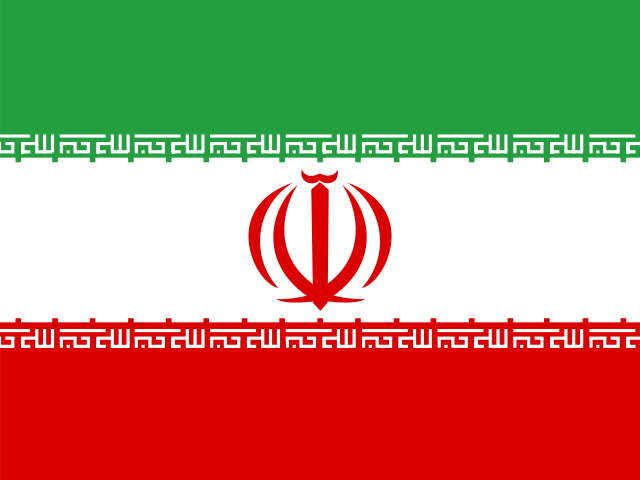
Iraq is in the Middle East, in the land historically known as Mesopotamia between the Tigris and Euphrates rivers. Iran lies to the east along the longest border, Turkey to the north, Syria and Jordan to the west, and Saudi Arabia and Kuwait to the south. Iraq has only a tiny coastline – a few dozen kilometres at the head of the Persian Gulf near Basra. The capital, Baghdad, sits on the Tigris in the centre of the country.
The north is mountainous and includes the autonomous Kurdistan Region, with its capital at Erbil. The south-west is desert, and the south-east is marshland where the two rivers meet.
How to find Iraq on the map
- Start from Iran. Iraq is the country immediately west of Iran, sharing a long border that runs from Turkey down to the Gulf.
- Look for the Gulf's head. The Persian Gulf narrows to a point in the north-west; Iraq is the country at that point, just above Kuwait.
- It's east of Syria and Jordan. If the country you've tapped touches the Mediterranean, you've gone too far west.
- Two rivers run through it. On a physical map, the Tigris and Euphrates both cross Iraq from north-west to south-east.
Flag
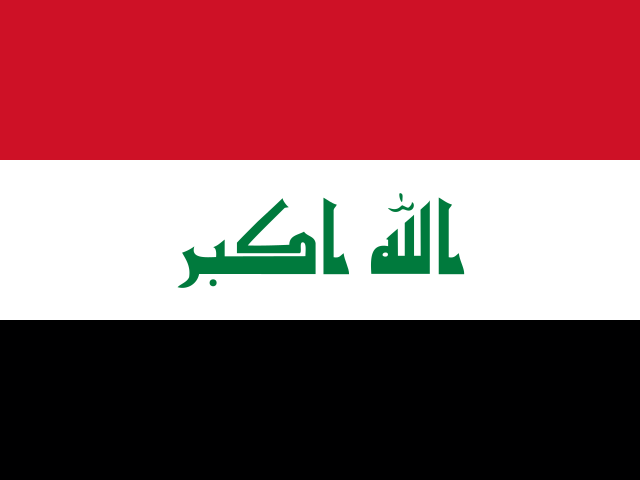
Iraq's flag is three horizontal bands – red, white and black – with the words Allahu Akbar ("God is greatest") written in green Kufic script across the white band. The current version was adopted in 2008; an earlier design had three green stars beside the text.
Red-white-black is a common Arab combination. Egypt has a golden eagle in the centre, Syria has two green stars, and Yemen has a plain white band. Green Arabic script with no stars means Iraq.
A short history of Iraq
Between the Tigris and Euphrates, empire followed empire. Around 2300 BC Sargon of Akkad united the Sumerian cities into what is often called the first empire. Babylon rose under Hammurabi, whose law code from around 1750 BC is one of the oldest known. Then came Assyria, ruled from cities near modern Mosul such as Nineveh, and a second Babylonian empire under Nebuchadnezzar II, before Cyrus of Persia took Babylon in 539 BC. Greeks, Parthians and Sasanian Persians followed, with the Sasanian capital at Ctesiphon, just south of today's Baghdad.
Arab armies conquered the region in the 630s, bringing Islam and Arabic. Under the Abbasid caliphs, Baghdad's House of Wisdom gathered scholars who translated and extended Greek, Persian and Indian learning. In 1258 the Mongols sacked Baghdad and its golden age ended.
From the 1500s Iraq was a frontier between the Ottoman Empire and Persia, eventually ruled by the Ottomans as three provinces: Mosul, Baghdad and Basra. After the First World War, Britain combined them into one country under a League of Nations mandate. That decision explains why modern Iraq brings together Kurds in the north, Sunni Arabs in the centre and Shia Arabs in the south. A kingdom under Faisal I was set up in 1921, and Iraq became independent in 1932.
The monarchy was overthrown in 1958. The Ba'ath Party took power in 1968, and Saddam Hussein became president in 1979. His rule brought the long war with Iran (1980–88), a chemical attack on the Kurdish town of Halabja in 1988, and the invasion of Kuwait in 1990, reversed by a US-led coalition in 1991. A US-led invasion in 2003 removed Saddam but was followed by years of insurgency and sectarian fighting. In 2014 the Islamic State group seized Mosul and much of the north-west before being driven out by 2017.
Today Iraq is a federal parliamentary republic, rebuilding its cities and relying heavily on oil exports.
Culture and daily life in Iraq
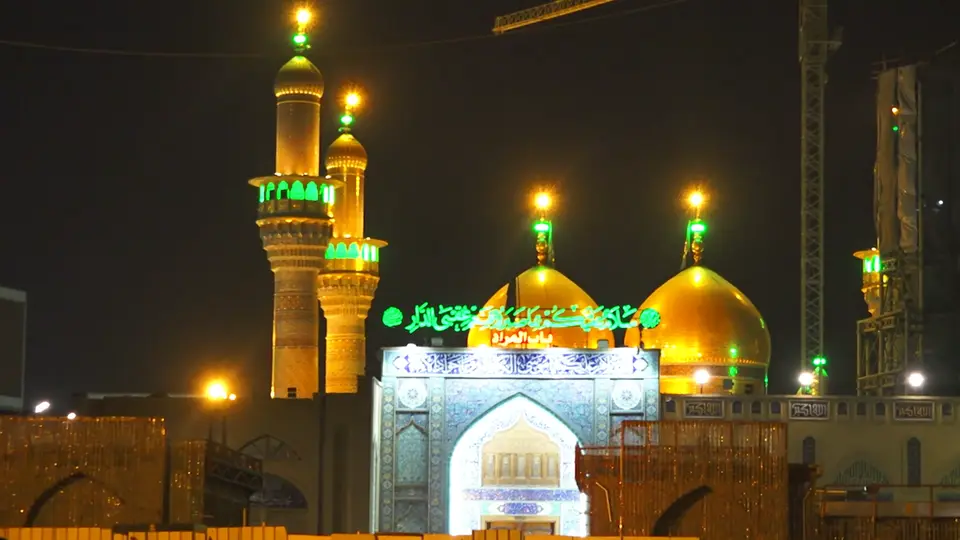
Arabic and Kurdish are both official, and Turkmen and Syriac are also spoken. Most Iraqis are Muslim, with a Shia majority, and the shrine cities of Najaf and Karbala draw millions of pilgrims every year. The country is also home to ancient minorities, including Assyrian and Chaldean Christians, Yazidis and Mandaeans, though many have left during the years of war.
Iraq has a deep literary tradition. The classical poet al-Mutanabbi was born in Kufa, and Badr Shakir al-Sayyab pioneered modern free verse in Arabic. Baghdad's Mutanabbi Street, lined with booksellers, embodies the saying that "Cairo writes, Beirut publishes and Baghdad reads". The Iraqi maqam, a classical vocal tradition, is recognised by UNESCO, and singer Kadim Al Sahir is a star across the Arab world.
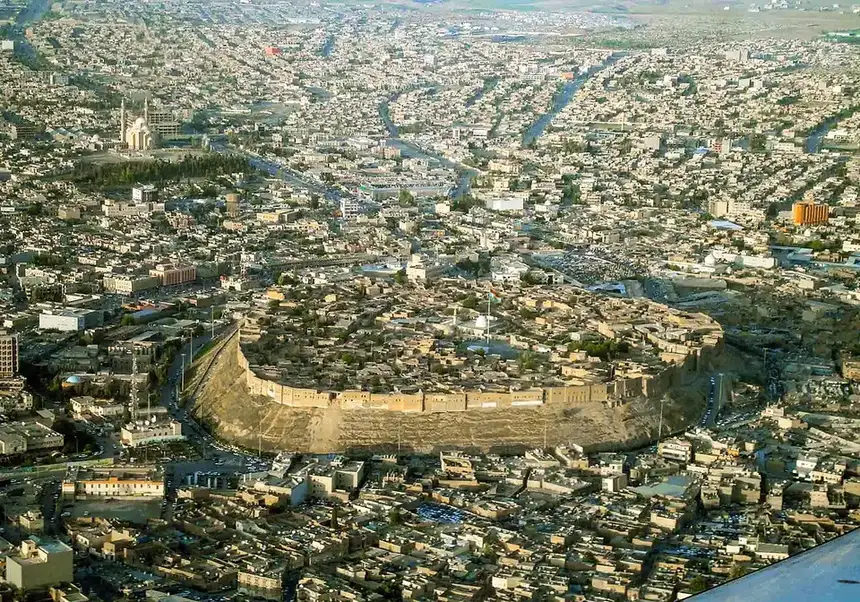
Ancient monuments include the Ziggurat of Ur, the spiral minaret of Samarra and the citadel of Erbil. The architect Zaha Hadid was born in Baghdad, and the football team's victory in the 2007 Asian Cup united the country in celebration.
Five facts worth knowing
- Mesopotamia, in present-day Iraq, is often called the cradle of civilisation – home to Sumer, Babylon and the earliest known writing.
- Baghdad was founded in 762 and was one of the largest cities in the world during the Islamic Golden Age.
- The Kurdistan Region in the north is autonomous, with its own parliament and security forces.
- Iraq holds some of the largest proven oil reserves in the world, concentrated around Basra in the south and Kirkuk in the north.
- The Mesopotamian Marshes, where the Tigris and Euphrates join, are a UNESCO World Heritage site and were partly drained and later re-flooded.
Culture and traditions in Iraq
- Saying hello
"As-salamu alaykum" with a handshake, often with the right hand on the heart.
- Food and drink
Masgouf, grilled river carp; dolma, stuffed vegetables; strong sweet tea in small glasses.
- Festivals and traditions
Eid celebrations with family feasts; Nowruz in March, especially in the Kurdistan region.
- Everyday life
Hospitality is a point of honour, and guests are offered tea or coffee. Friday is the main weekly day off.
- Did you know?
Writing was invented in ancient Sumer, in what is now southern Iraq, around 3200 BC.
Common mistakes
- Tapping Iran, the much larger neighbour to the east.
- Tapping Syria, which shares the Euphrates and a long desert border.
- Choosing the Egyptian, Syrian or Yemeni red-white-black flag in the Flags quiz.
Practise with Iraq
- Middle East quiz – the zoomed-in map shows Iraq between Iran and Syria clearly.
- Asia quiz – find Iran, then look west.
- Asia flags – drill the red-white-black family: Iraq, Egypt, Syria, Yemen.
- Asia capitals quiz – Baghdad.
- Mystery Country – a wedge shape widening toward the north with a tiny notch of coast at the bottom.
Nearby countries
Quick check: how well do you know Iraq?
3 questions, no sign-up. Tap an answer.
1. Which flag belongs to Iraq?
That's the flag of Iraq.
2. What is the capital of Iraq?
The capital of Iraq is Baghdad.
3. Which of these countries borders Iraq?
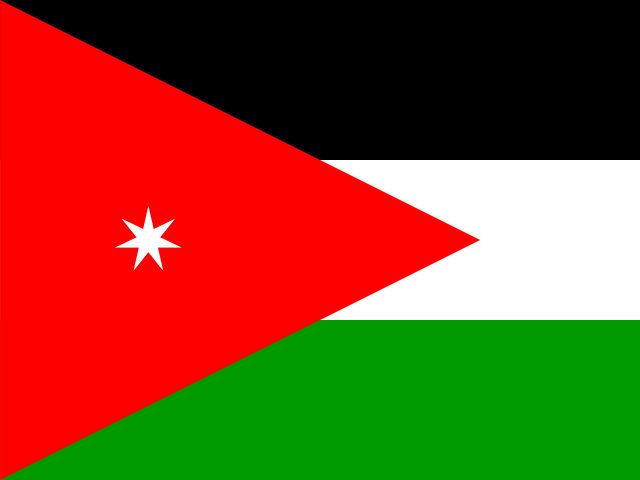
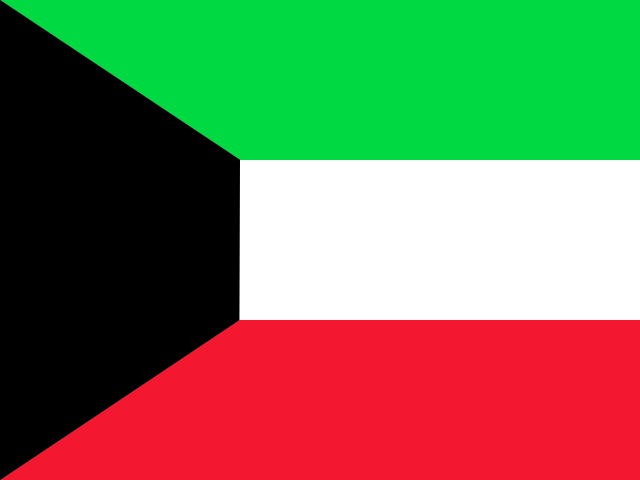
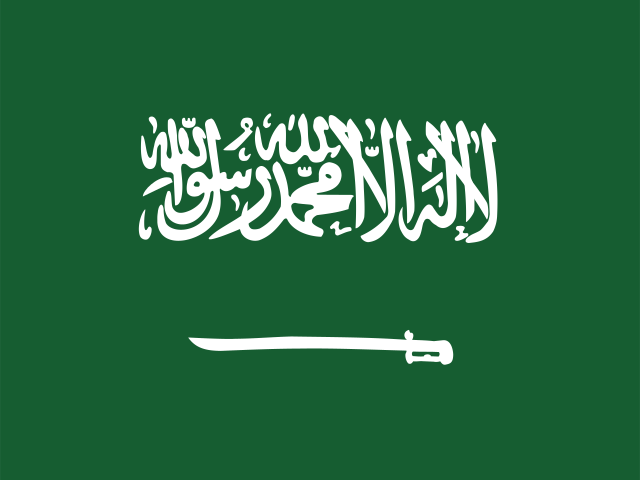
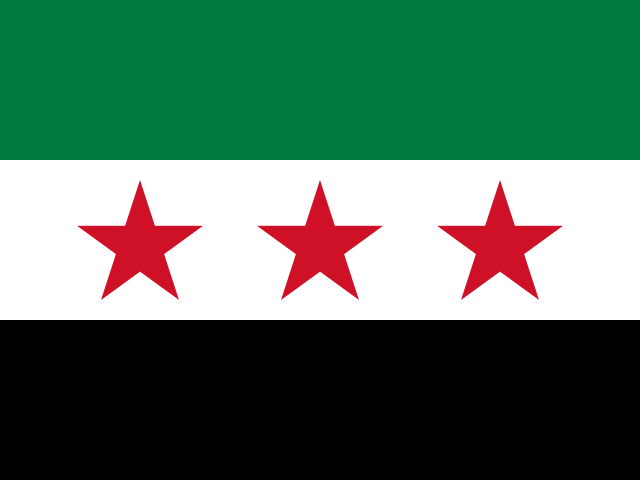
Iran, Jordan, Kuwait, Saudi Arabia, Syria and Turkey border Iraq.
Keep going on the Asia quiz – Iraq is one of 48 countries there.
More ways to practise: find Iraq on the blank map with no borders (hard mode), or play today's Globe and the other daily puzzles.
Frequently asked questions about Iraq
What language is spoken in Iraq?
Arabic and Kurdish are both official languages of Iraq. Arabic, in its Iraqi dialect, is spoken by most of the population, while Kurdish dominates in the Kurdistan Region in the north. Turkmen and Syriac also have official status in areas where they are spoken.
What currency does Iraq use?
Iraq uses the Iraqi dinar (IQD), issued by the Central Bank of Iraq. New banknotes were introduced in 2003–04 to replace both the notes bearing the former ruler's portrait and the older Swiss-printed dinars that had remained in use in the Kurdish north.
What time zone is Iraq in?
Iraq is on UTC+3, Arabia Standard Time, throughout the year. It stopped using daylight saving time in 2008, so its clocks now stay the same as those of Kuwait and Saudi Arabia in every season.
Which side of the road do they drive on in Iraq?
Iraq drives on the right, as do all its neighbours. Long highways cross the desert, including the main route from Baghdad west to the Jordanian border and south to Basra and the Gulf.
What is the highest point in Iraq?
The highest point is Cheekha Dar, about 3,611 metres, in the Zagros Mountains on the border with Iran in the Kurdistan Region. Its name means "black tent" in Kurdish, and snow covers the summit for much of the year.
What are the main rivers in Iraq?
Iraq's two great rivers are the Tigris and the Euphrates, which both rise in Turkey and flow south-east through the country. They join near Al-Qurna to form the Shatt al-Arab, which runs past Basra into the Persian Gulf.
Quizzes with Iraq
Often confused with
Guides that help with this
- Oceans, seas, rivers and mountainsThe physical map: seas around each continent, the big rivers and ranges.
- Flags that look alike (and how to tell them apart)Chad or Romania? Australia or New Zealand? The flag pairs that cost quiz points.
- The 25 hardest countries to find on a mapPacific islands, Caribbean islands and landlocked Africa – where they are.