Saudi Arabia
Capital: Riyadh. Saudi Arabia is one of the 48 countries in the Asia quiz.
Quick answers: What is the capital of Saudi Arabia? · Which countries border Saudi Arabia?
Facts about Saudi Arabia
- CapitalRiyadh
- Population37 million
- Area2,149,690 km²
- RegionsAsia, Middle East
- LanguageArabic
- CurrencySaudi riyal (SAR)
Saudi Arabia is the 18th most populous of the 48 countries in Asia and the 4th largest by area. Worldwide it ranks 43rd by population and 12th by area.
Where is Saudi Arabia?
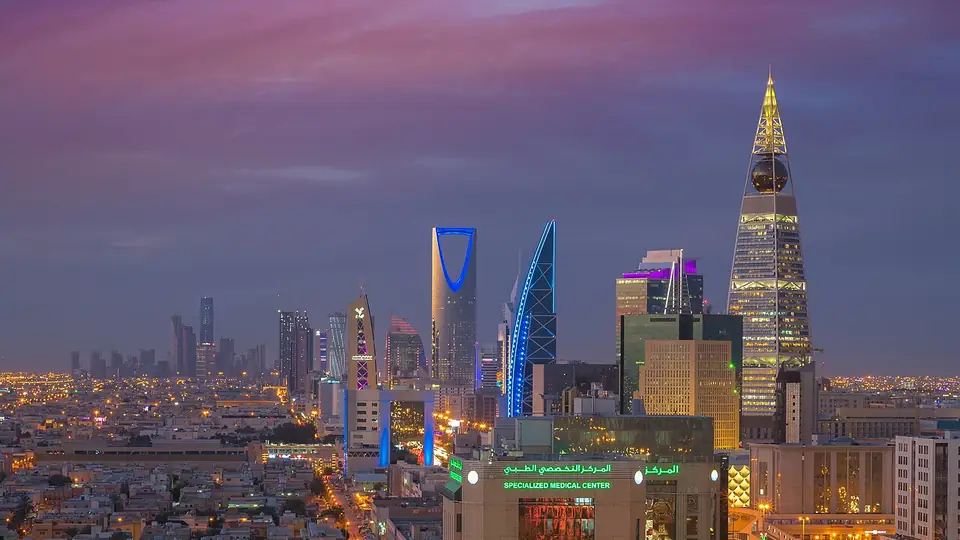
Saudi Arabia takes up most of the Arabian Peninsula, the great block of land between Africa and Asia. The Red Sea forms its entire western coast, facing Egypt, Sudan and Eritrea, and the Persian Gulf a shorter eastern coast. Jordan and Iraq lie to the north, Kuwait to the north-east, and the smaller Gulf states – Qatar, the United Arab Emirates and Bahrain, an island joined by a causeway – along the eastern edge. Oman is to the south-east and Yemen to the south. Riyadh, the capital, is in the dry centre of the country; Mecca and Medina, Islam's holiest cities, are in the west near the Red Sea.
On a world map the Arabian Peninsula looks like a boot or a thick wedge hanging below the Middle East; Saudi Arabia is the big central piece.
How to find Saudi Arabia on the map
- Start from the Red Sea. The long narrow sea between Africa and Arabia has Saudi Arabia along its whole eastern shore.
- Look for the peninsula. Saudi Arabia is the largest country on the Arabian Peninsula by a wide margin.
- Use the Gulf as the eastern edge. The small states of Kuwait, Bahrain, Qatar and the UAE sit between Saudi Arabia and the water.
- Don't confuse it with Iran. Iran is across the Persian Gulf to the north-east and is darker and more mountainous on a relief map.
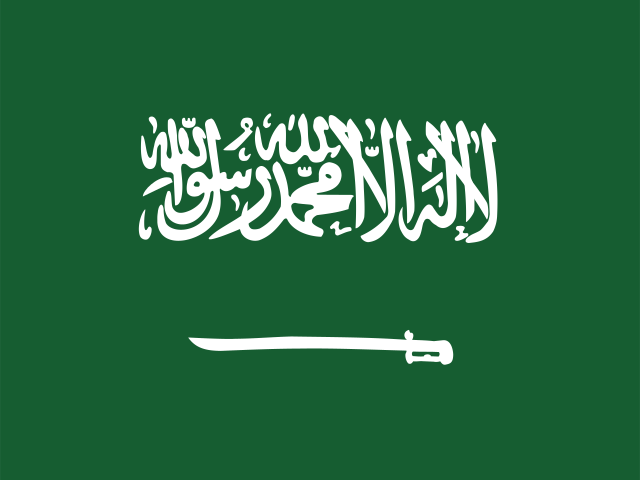
Flag
A green field with the Shahada – the Islamic declaration of faith – written in white Arabic calligraphy above a white horizontal sword. The green is associated with Islam. Because of the inscription, the flag is never flown at half-mast.
No other national flag looks quite like it. Libya's flag is plain green with no writing. Green with white Arabic script and a sword is Saudi Arabia.
A short history of Saudi Arabia
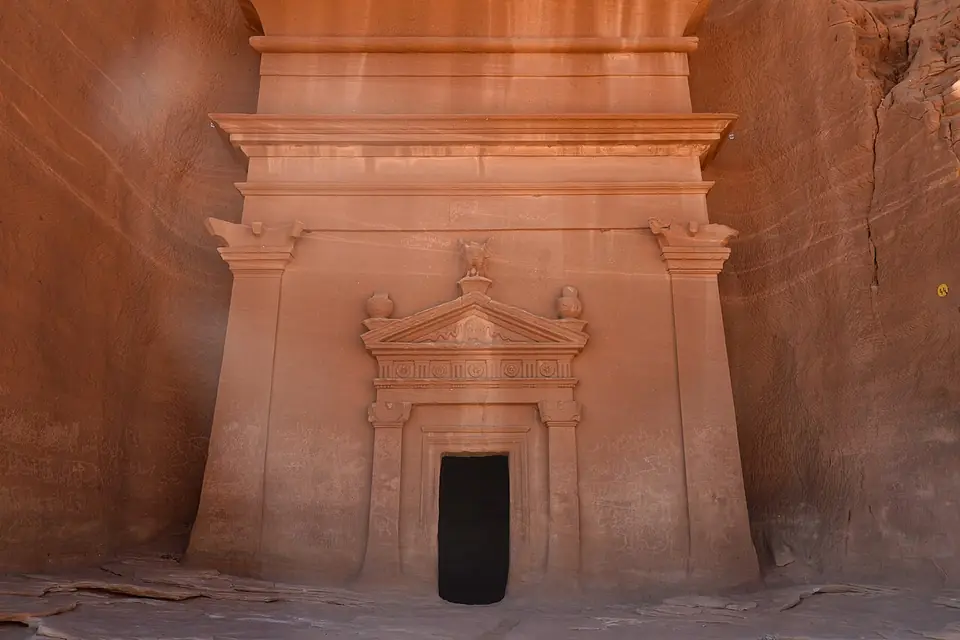
Long before Islam, the Arabian Peninsula was crossed by caravan routes carrying incense and spices between Yemen, the Mediterranean and Mesopotamia. In the north-west, the Nabataeans – the same people who built Petra in Jordan – carved monumental tombs at Hegra (Al-Ula), now a UNESCO World Heritage Site. Oases such as Tayma and Dumat al-Jandal grew rich from this trade.
In the early 600s the Prophet Muhammad began preaching in Mecca and later moved to Medina in 622, the year from which the Islamic calendar is counted. Within about a century Arab armies had carried the new faith from Spain to Central Asia. Yet the political centre of the Islamic world soon moved away to Damascus, Baghdad and later Cairo and Istanbul. The holy cities of the Hejaz, on the Red Sea side, were usually governed by local sharifs under the protection of distant empires, the Ottomans from the 1500s onwards.
The roots of the modern state lie in the Najd, the dry interior. In 1744 a local ruler, Muhammad bin Saud of Diriyah, formed an alliance with the religious reformer Muhammad ibn Abd al-Wahhab. This first Saudi state expanded quickly until an Egyptian army acting for the Ottomans destroyed Diriyah in 1818. A second Saudi state rose and fell in the 1800s. In 1902 the young Abdulaziz ibn Saud recaptured Riyadh and began a long campaign of conquest, taking the Hejaz in the 1920s before proclaiming the unified kingdom.
Oil changed everything. Production by an American-led company grew rapidly after the Second World War, and the company was gradually taken over by the state in the 1970s and 1980s. Oil money built roads, cities, universities and a generous welfare system. In 1979 the seizure of the Grand Mosque in Mecca by militants shook the country, and in 1990–91 Saudi Arabia hosted the international coalition that pushed Iraq out of Kuwait.
Today the kingdom is an absolute monarchy and a leading oil exporter, trying to diversify its economy through tourism, entertainment and huge new building projects.
Culture and daily life in Saudi Arabia
Arabic is the language of daily life, and the country's dialects differ noticeably between the Hejaz, the Najd and the east. Islam shapes the calendar, the law and the rhythm of the day, with shops traditionally pausing for prayer times. Most citizens are Sunni Muslims, while a significant Shia minority lives mainly in the Eastern Province.
Poetry has deep roots here. Nabati poetry, written in spoken Arabic rather than the classical language, remains hugely popular and even fills television talent shows. Traditional crafts include Sadu weaving, the geometric tent-cloth made by Bedouin women, and the ardah, a sword dance performed with drums and chanted verse at national celebrations. Falconry and camel racing are old desert pastimes that still attract large crowds and prize money.
Architecture shows the regional differences clearly. Old Jeddah has tall coral-stone houses with carved wooden balconies, while the Najd built in mud brick, as seen in the restored At-Turaif district of Diriyah. Football is the most popular sport, and the national team famously beat Argentina at the 2022 World Cup. Recent social changes, such as women being allowed to drive from 2018 and the opening of cinemas, have altered daily life in a short time.
Five facts worth knowing
- Saudi Arabia is the largest country in the Middle East and the biggest in the world without a single permanent river.
- The Rub' al Khali, or Empty Quarter, in the south is the largest continuous sand desert on Earth, stretching into Oman, the UAE and Yemen.
- Mecca receives millions of Muslim pilgrims every year for the Hajj, which every able Muslim is expected to perform at least once.
- Oil was discovered in 1938, and the country holds some of the world's largest proven oil reserves. Saudi Aramco is among the most valuable companies on the planet.
- The Kingdom was founded in 1932 by Ibn Saud, who united the Hejaz, Najd and other regions under one crown.
Culture and traditions in Saudi Arabia
- Saying hello
"As-salamu alaykum" with a handshake, often with the right hand on the heart.
- Food and drink
Kabsa, spiced rice with meat, and Arabic coffee with dates.
- Festivals and traditions
National Day on 23 September; Eid celebrations are the biggest events.
- Everyday life
Modest dress is expected. Hospitality is central, and guests are often served coffee and dates.
- Did you know?
Saudi Arabia is one of the largest countries in the world without a natural, permanent river.
Common mistakes
- Tapping Yemen or Oman at the bottom of the peninsula – Saudi Arabia is the big northern block, not the southern rim.
- Tapping Iraq, which is to the north and reaches the Gulf only at a tiny corner.
- Forgetting that Qatar and the UAE are separate countries, not part of Saudi Arabia.
Practise with Saudi Arabia
- Asia quiz – the biggest country on the Arabian Peninsula.
- Middle East quiz – the region zoomed in, with all the small Gulf states around Saudi Arabia's edges.
- Asia flags – green with white calligraphy and a sword.
- Asia capitals quiz – Riyadh.
- Mystery Country – the wedge between the Red Sea and the Gulf, with the small bite taken out for Qatar.
Nearby countries
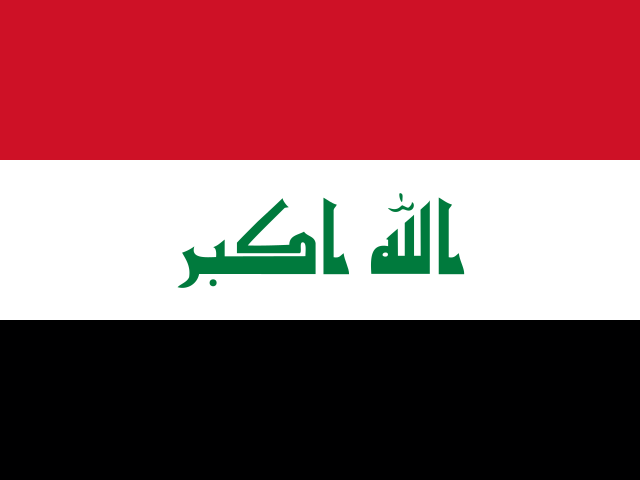 IraqBaghdad
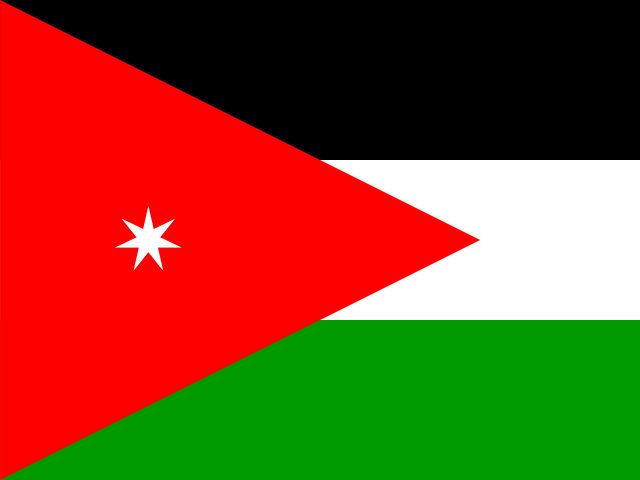 JordanAmman
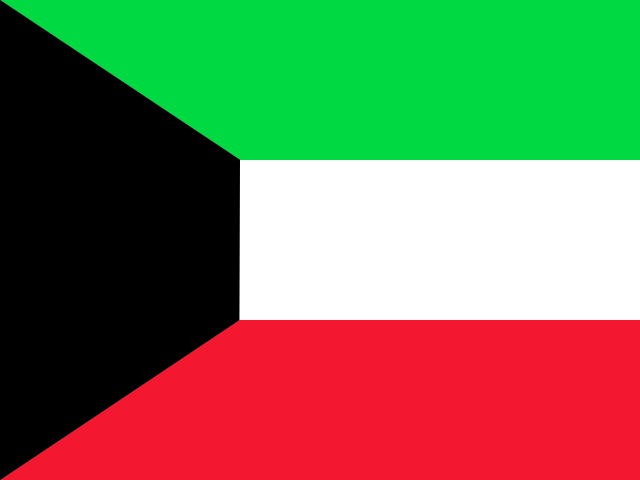 KuwaitKuwait City
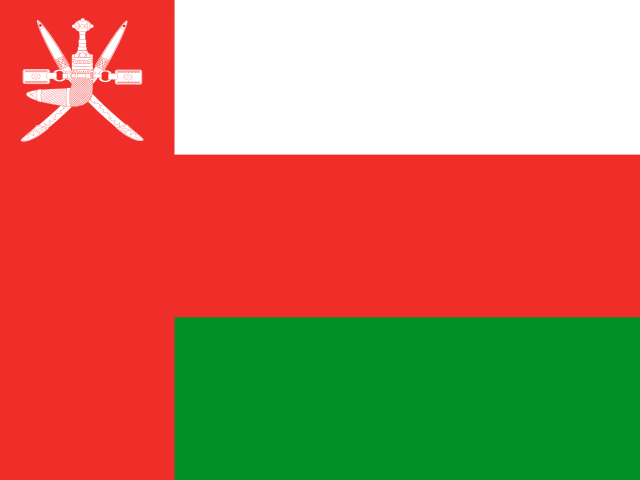 OmanMuscat
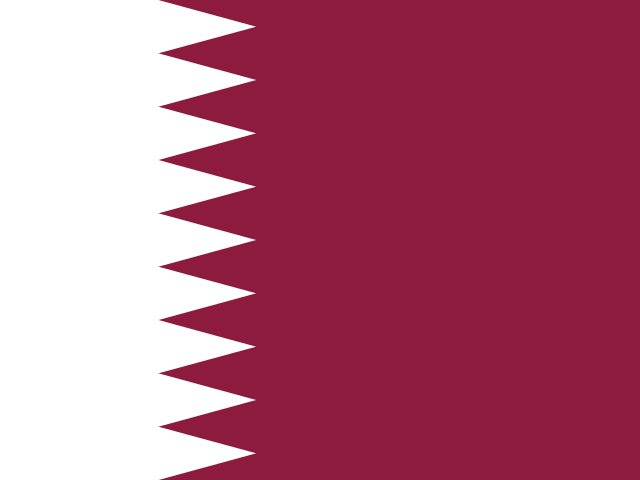 QatarDoha
 United Arab EmiratesAbu Dhabi
 YemenSana'a
Quick check: how well do you know Saudi Arabia?
3 questions, no sign-up. Tap an answer.
1. Which flag belongs to Saudi Arabia?
That's the flag of Saudi Arabia.
2. What is the capital of Saudi Arabia?
The capital of Saudi Arabia is Riyadh.
3. Which of these countries borders Saudi Arabia?
Iraq, Jordan, Kuwait, Oman, Qatar, the United Arab Emirates and Yemen border Saudi Arabia.
Keep going on the Asia quiz – Saudi Arabia is one of 48 countries there.
More ways to practise: find Saudi Arabia on the blank map with no borders (hard mode), or play today's Globe and the other daily puzzles.
Frequently asked questions about Saudi Arabia
What language is spoken in Saudi Arabia?
Arabic is the official language, with regional dialects such as Najdi in the centre and Hejazi in the west. English is widely used in business and higher education, and the large foreign workforce speaks many languages, including Urdu, Hindi, Bengali and Tagalog.
What currency does Saudi Arabia use?
Saudi Arabia uses the Saudi riyal, code SAR, divided into 100 halalas. The riyal has been pegged to the US dollar at 3.75 riyals per dollar since 1986, which ties its value to the currency in which oil is sold.
What time zone is Saudi Arabia in?
The whole country uses Arabia Standard Time, UTC+3, the same as Qatar, Kuwait and Iraq. Saudi Arabia does not observe daylight saving time, so in summer it is only an hour ahead of most of central Europe.
Which side of the road do they drive on in Saudi Arabia?
Saudi Arabia drives on the right. Long, straight desert highways connect the main cities, and a high-speed railway now links Mecca, Jeddah and Medina along the Red Sea side of the country.
What is the highest point in Saudi Arabia?
The highest point is Jabal Sawda, in the Asir mountains near the city of Abha in the south-west, at around 3,000 metres. The Asir highlands are cooler and wetter than the rest of the country, with juniper forests and terraced fields.
What are the holy cities of Saudi Arabia?
Mecca, the birthplace of the Prophet Muhammad and site of the Kaaba, and Medina, where he is buried, are the two holiest cities in Islam. Only Muslims are permitted to enter Mecca, and the Saudi king's official title is Custodian of the Two Holy Mosques.
Quizzes with Saudi Arabia
Often confused with
Guides that help with this
- Oceans, seas, rivers and mountainsThe physical map: seas around each continent, the big rivers and ranges.
- Flags that look alike (and how to tell them apart)Chad or Romania? Australia or New Zealand? The flag pairs that cost quiz points.
- The 25 hardest countries to find on a mapPacific islands, Caribbean islands and landlocked Africa – where they are.