Serbia
Capital: Belgrade. Serbia is one of the 46 countries in the Europe quiz.
Quick answers: What is the capital of Serbia? · Which countries border Serbia?
Facts about Serbia
- CapitalBelgrade
- Population6.5 million
- Area77,474 km²
- RegionsEurope, The Balkans
- LanguageSerbian
- CurrencySerbian dinar (RSD)
Serbia is the 20th most populous of the 46 countries in Europe and the 21st largest by area. Worldwide it ranks 109th by population and 115th by area.
Where is Serbia?
Serbia is a landlocked country in the centre of the Balkan peninsula in south-eastern Europe. It borders eight neighbours: Hungary to the north, Romania and Bulgaria to the east, North Macedonia to the south, and Croatia, Bosnia and Herzegovina and Montenegro to the west. Kosovo, which declared independence from Serbia in 2008, lies to the south-west; Serbia does not recognise that independence, and maps vary in how they draw the line.
The capital, Belgrade, is in the north of the country at the point where the River Sava flows into the Danube.
How to find Serbia on the map
- Start from Hungary. Serbia is the country directly south of Hungary, across the Danube.
- Look for the centre of the Balkans. Of the former Yugoslav republics, Serbia is the one that touches the most neighbours and sits furthest from the sea.
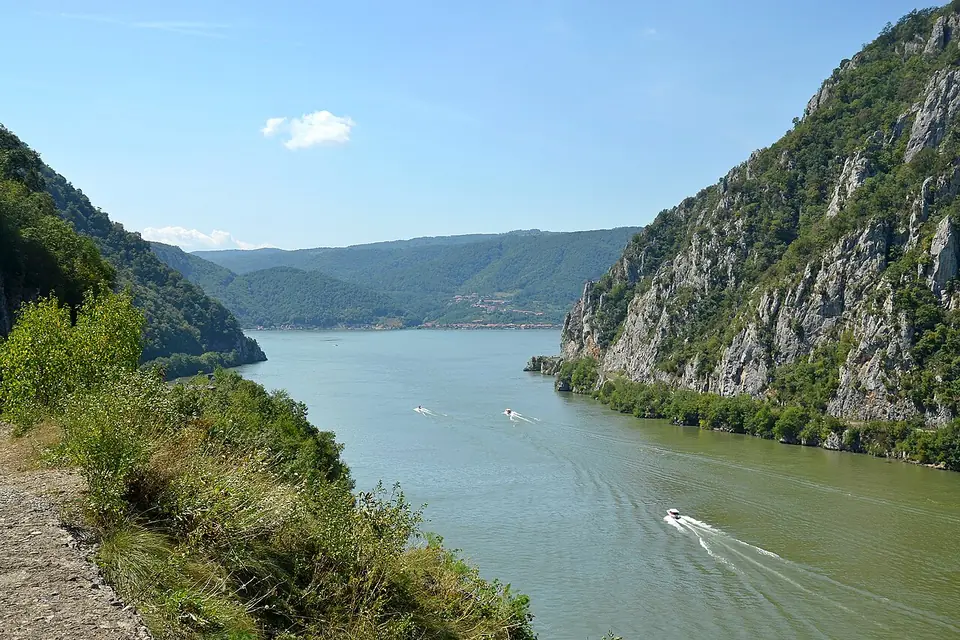
- Find the Danube. The river enters Serbia from Hungary, passes Belgrade, and leaves through the Iron Gates gorge into Romania.
- Don't confuse it with Croatia, which has the long coastline, or with Bulgaria, which lies further east and reaches the Black Sea. Serbia touches no sea at all.
Flag
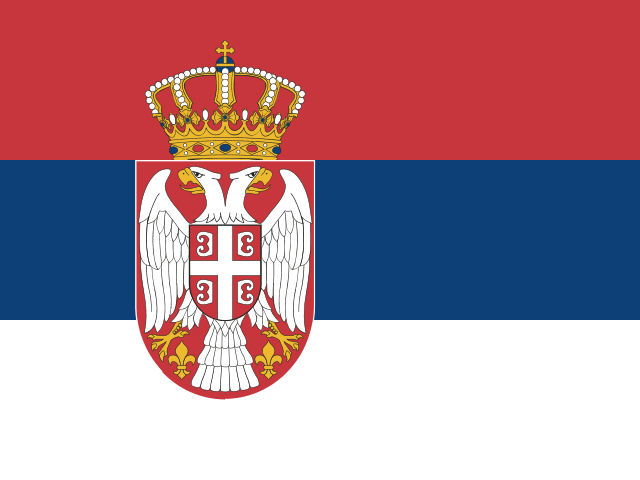
Serbia's flag is a horizontal tricolour of red, white and blue – the pan-Slavic colours – with the national coat of arms placed towards the hoist. The arms show a white double-headed eagle on a red shield with a crown above.
Several neighbours use the same three colours. Russia is white, blue, red; Slovakia is white, blue, red with a shield; Slovenia is white, blue, red with a different shield. Croatia is red, white, blue like Serbia but with a chequered shield in the centre. The order red-white-blue plus the double-headed eagle near the hoist is what marks Serbia.
A short history of Serbia
The land that is now Serbia was settled long before the Slavs. Lepenski Vir, a Stone Age site on the Danube, has striking fish-like sculptures thousands of years old. Later the region belonged to the Roman Empire, and a remarkable number of Roman emperors were born there, including Constantine the Great at Naissus, today's city of Niš.
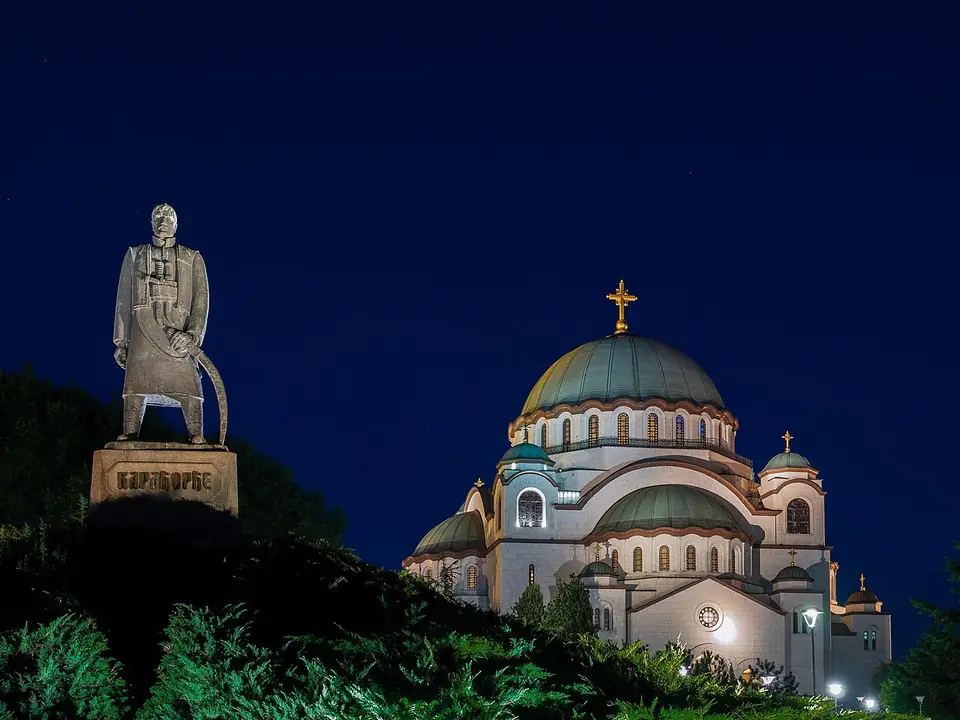
Slavic tribes arrived in the 500s and 600s. Over the following centuries a Serbian state took shape under the Nemanjić dynasty, founded in the late 1100s. Saint Sava, a prince of that family, won an independent Serbian Orthodox Church in 1219. Under Tsar Stefan Dušan in the 1300s, medieval Serbia reached its greatest size, stretching deep into what is now Greece and Albania. Many of its finest monasteries were built in Kosovo, which is why that region holds such importance in Serbian memory.
Ottoman expansion ended this golden age. The Battle of Kosovo in 1389 became the central legend of Serbian history, and by 1459 the last Serbian lands had fallen. For more than three centuries Serbia was part of the Ottoman Empire, while many Serbs moved north into Habsburg lands – the reason Serbs still live in Vojvodina, Croatia and Bosnia. Uprisings beginning in 1804 under Karađorđe, and in 1815 under Miloš Obrenović, won self-rule, and full independence was recognised at the Congress of Berlin in 1878.
In 1914 a Bosnian Serb, Gavrilo Princip, assassinated Archduke Franz Ferdinand in Sarajevo, and Austria-Hungary's attack on Serbia began the First World War. Serbia lost a huge share of its population, but emerged in 1918 at the heart of a new Kingdom of Serbs, Croats and Slovenes, later called Yugoslavia. After the Second World War, Josip Broz Tito ruled a communist Yugoslavia that stayed independent of the Soviet bloc. The federation's violent break-up in the 1990s brought war, sanctions and, in 1999, NATO bombing over Kosovo, followed by the fall of Slobodan Milošević in 2000.
Today Serbia is an EU candidate country with a growing manufacturing and technology sector, balancing ties between the West, Russia and China.
Culture and daily life in Serbia
Serbian is unusual in Europe because it is written in two alphabets. Cyrillic is official, yet Latin letters are used everywhere, and most people read both without thinking. The script reform of Vuk Karadžić in the 1800s, based on the rule "write as you speak", gave Serbian one of the most phonetic spellings in the world. Most Serbs are Serbian Orthodox, and Christmas is celebrated on 7 January.
Medieval monasteries such as Studenica and Sopoćani hold some of the finest frescoes of the Byzantine world. In literature, Ivo Andrić won the Nobel Prize in 1961 for The Bridge on the Drina. The inventor Nikola Tesla, born to Serb parents in present-day Croatia, is a national hero, and Belgrade's airport and a museum bear his name. Film director Emir Kusturica is known for wild, brass-filled films.
Brass bands themselves are a passion: the Guča Trumpet Festival draws huge crowds each summer. Basketball, water polo and volleyball are national strengths, and Serbia has won Olympic gold in water polo several times. In cafés and kafanas, long evenings of music and conversation are a way of life.
Five facts worth knowing
- Belgrade is one of Europe's oldest continuously inhabited cities, and its fortress overlooks the meeting point of the Sava and the Danube.
- Serbia was the core of Yugoslavia, which broke up in the 1990s; Serbia became an independent state in its current form in 2006 when Montenegro left the union.
- The Iron Gates gorge on the Danube, on the border with Romania, is one of the most dramatic river gorges in Europe.
- Serbia has eight land borders, one of the highest counts in Europe.
- Novak Djokovic, one of the most successful tennis players ever, is from Belgrade.
Culture and traditions in Serbia
- Saying hello
A handshake with "Zdravo"; friends exchange three cheek kisses.
- Food and drink
Ćevapi, grilled minced meat, and pljeskavica, a spiced patty; rakija is the national brandy.
- Festivals and traditions
Slava, each family's patron saint day, is a big family celebration; the Exit Festival in Novi Sad is in July.
- Everyday life
Hospitality is warm, and guests are often offered rakija. Coffee with friends lasts for hours.
- Did you know?
Serbia's family slava tradition is listed by UNESCO as Intangible Cultural Heritage.
Common mistakes
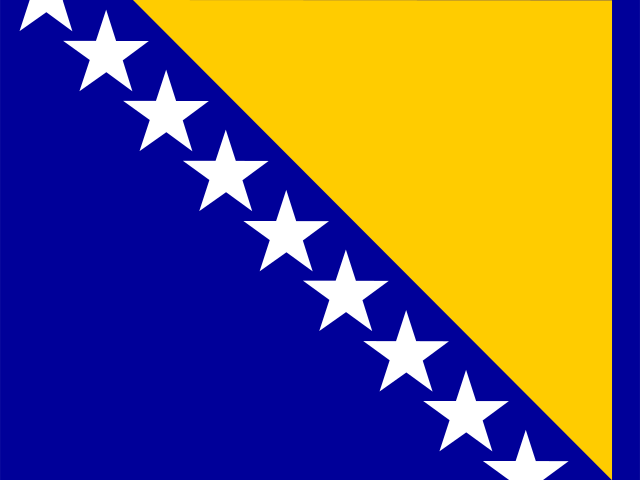
- Tapping Bosnia and Herzegovina or Croatia – all three are neighbours, but Serbia is the one furthest east.
- Confusing Serbia with Slovakia or Slovenia in the Flags quiz: all three use red, white and blue with a shield.
- Forgetting that Serbia is landlocked when scanning for it along the Adriatic coast.
Practise with Serbia
- Balkans quiz – the map zooms in on the peninsula, so Serbia's position at the hub is easier to see.
- Europe quiz – find Hungary first, then drop straight south.
- Europe flags – sort out the red-white-blue tricolours with shields: Serbia, Croatia, Slovakia, Slovenia.
- Europe capitals quiz – Belgrade.
- Mystery Country – an inland outline with a wide northern half (Vojvodina) narrowing towards the south.
Nearby countries
 Bosnia and HerzegovinaSarajevo
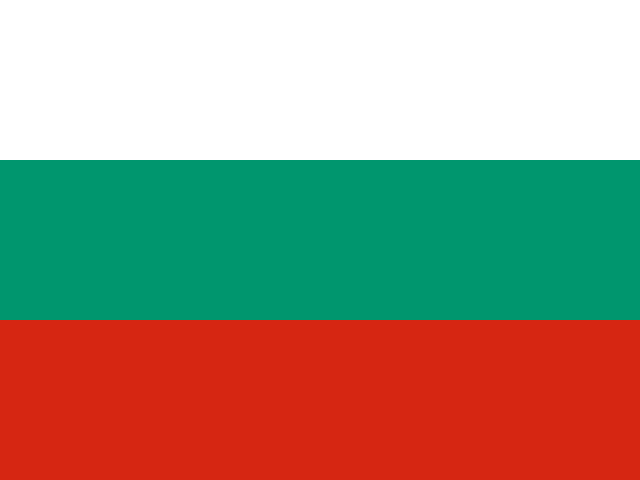 BulgariaSofia
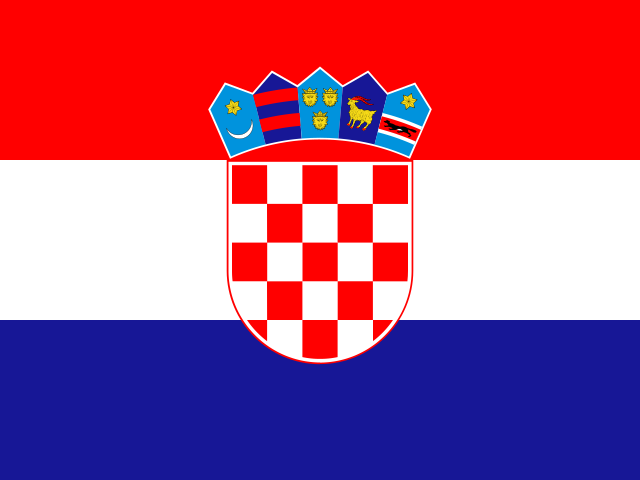 CroatiaZagreb
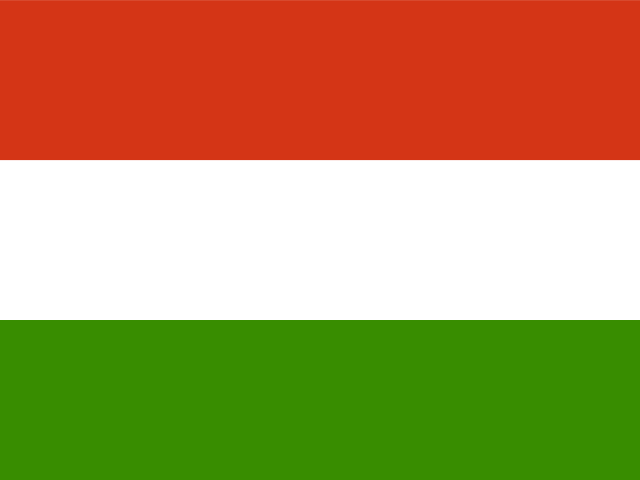 HungaryBudapest
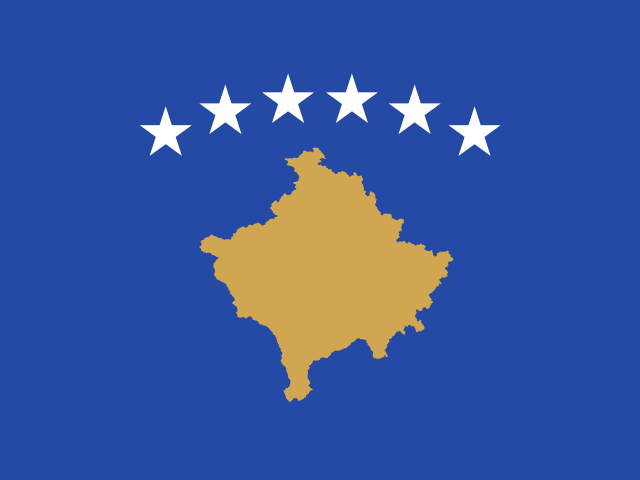 KosovoPristina
 MontenegroPodgorica
 North MacedoniaSkopje
 RomaniaBucharest
Quick check: how well do you know Serbia?
3 questions, no sign-up. Tap an answer.
1. Which flag belongs to Serbia?
That's the flag of Serbia.
2. What is the capital of Serbia?
The capital of Serbia is Belgrade.
3. Which of these countries borders Serbia?
Bosnia and Herzegovina, Bulgaria, Croatia, Hungary, Kosovo, Montenegro, North Macedonia and Romania border Serbia.
Keep going on the Europe quiz – Serbia is one of 46 countries there.
More ways to practise: find Serbia on the blank map with no borders (hard mode), or play today's Globe and the other daily puzzles.
Frequently asked questions about Serbia
What language is spoken in Serbia?
Serbian is the official language and is written in both the Cyrillic and Latin alphabets. In the northern province of Vojvodina, Hungarian, Slovak, Romanian and several other minority languages also have official status in local government.
What currency does Serbia use?
Serbia uses the Serbian dinar, code RSD, divided into 100 para. The name comes from the Roman denarius. The dinar is managed by the National Bank of Serbia and not pegged, although prices for property and cars are often quoted in euros.
What time zone is Serbia in?
Serbia uses Central European Time, UTC+1, and moves to Central European Summer Time, UTC+2, in summer, changing clocks on the same dates as the European Union.
Which side of the road do they drive on in Serbia?
Serbia drives on the right. Its main motorway runs north to south from the Hungarian border through Novi Sad, Belgrade and Niš towards North Macedonia, a key route between central Europe and Greece.
What is the highest point in Serbia?
Excluding Kosovo, the highest point is Midžor, about 2,169 metres, in the Balkan Mountains on the Bulgarian border. Serbia's constitution counts Kosovo as part of Serbia, and by that reckoning the highest peak would be Đeravica, about 2,656 metres.
Is Serbia in the EU?
No. Serbia applied to join the European Union in 2009, became an official candidate in 2012 and opened membership negotiations in 2014. Its relations with Kosovo are one of the main issues in the talks. Serbia is also not a member of NATO.
Quizzes with Serbia
Often confused with
Guides that help with this
- All 46 European capitals, with a memory trick for eachCapitals grouped by region, with hooks for the ones people forget.
- Flags that look alike (and how to tell them apart)Chad or Romania? Australia or New Zealand? The flag pairs that cost quiz points.
- The 25 hardest countries to find on a mapPacific islands, Caribbean islands and landlocked Africa – where they are.