Romania
Capital: Bucharest. Romania is one of the 46 countries in the Europe quiz.
Quick answers: What is the capital of Romania? · Which countries border Romania?
Facts about Romania
- CapitalBucharest
- Population19 million
- Area238,391 km²
- RegionsEurope, The Balkans, Central & Eastern Europe
- LanguageRomanian
- CurrencyRomanian leu (RON)
Romania is the 9th most populous of the 46 countries in Europe and the 12th largest by area. Worldwide it ranks 68th by population and 81st by area.
Where is Romania?
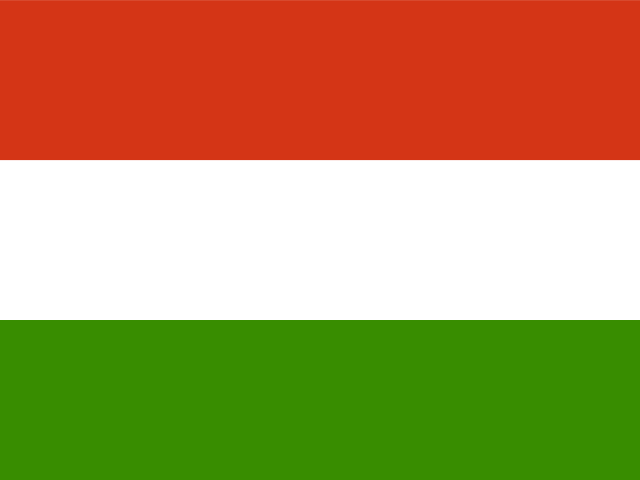
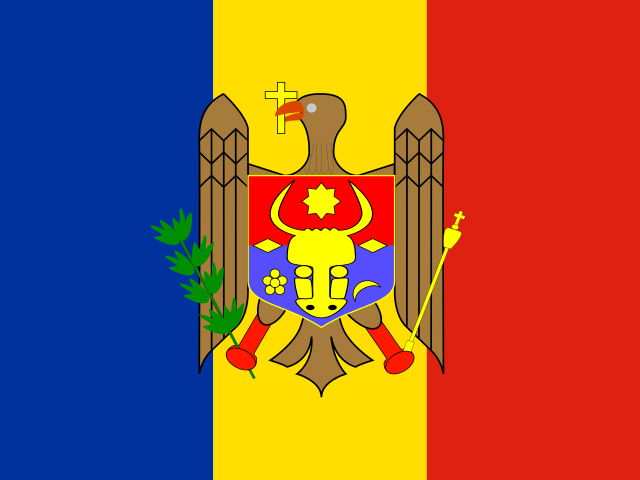
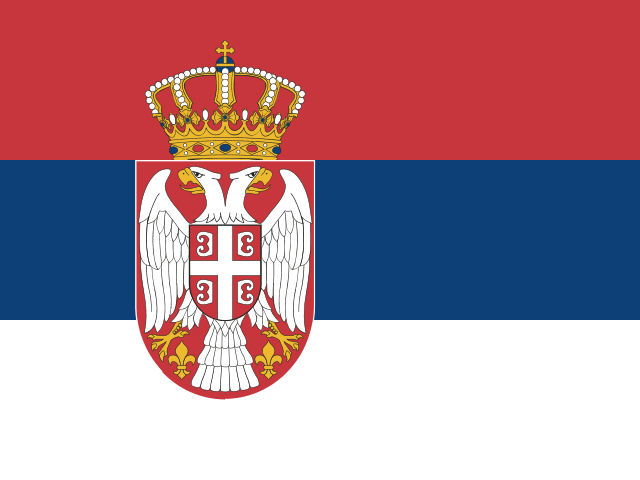
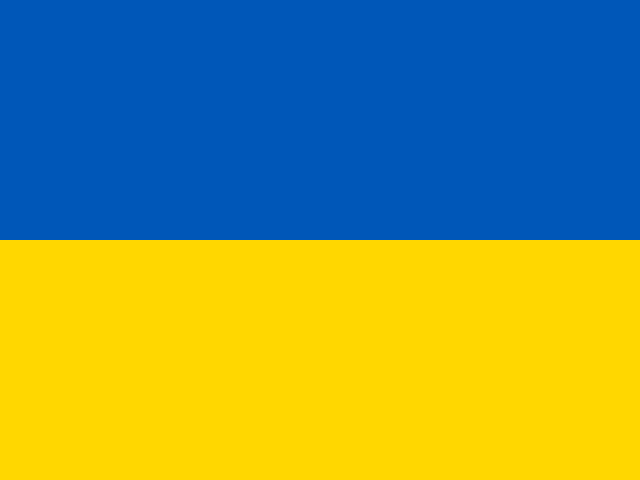
Romania is in south-eastern Europe, on the western shore of the Black Sea. Ukraine lies to the north and east, Moldova to the north-east, Hungary to the west, Serbia to the south-west and Bulgaria to the south, where the River Danube forms most of the border. The Carpathian Mountains sweep through the country in a great arc, curling from the Ukrainian border down through the centre and then west, enclosing the high plateau of Transylvania. Bucharest, the capital, is in the flat south, not far from the Bulgarian border.
At world-map zoom Romania is a chunky, roughly round shape with a short Black Sea coast in the south-east corner.
How to find Romania on the map
- Start from the Black Sea. Romania is the country on its western shore, above Bulgaria and below Ukraine.
- Follow the Danube. The river runs along the Bulgarian border and then turns north to reach the sea through the Danube Delta in Romania's far east.
- Look east of Hungary. Romania is the large country between Hungary and the Black Sea.
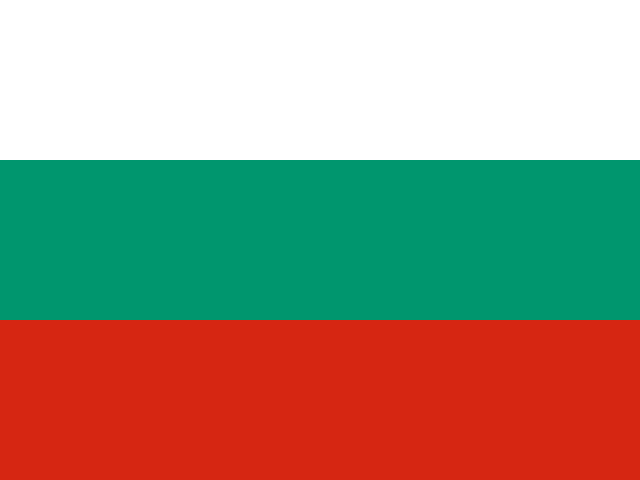
- Don't confuse it with Bulgaria. Bulgaria is smaller, lower on the map and more rectangular; Romania is the bigger, rounder one above it.
Flag
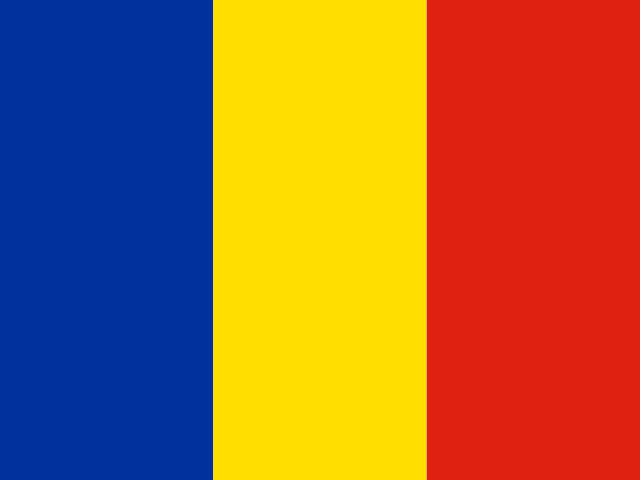
Three vertical bands: blue at the hoist, then yellow, then red. The colours come from the historic principalities of Wallachia and Moldavia and were adopted together during the revolutions of 1848.
The problem flag is Chad's, which uses the same three colours in the same order and is almost identical apart from a slightly darker blue. Moldova and Andorra use the same bands but with a coat of arms in the centre. A plain blue-yellow-red tricolour is Romania unless Chad is also in the set – then it is one of the hardest pairs on the site.
A short history of Romania
In ancient times, the land of today's Romania was home to the Dacians, a people known for their gold and silver mines and their mountain fortresses in the Orăștie Mountains. In 106 AD, after two hard wars, the Roman emperor Trajan conquered Dacia; Trajan's Column in Rome shows scenes from the campaign. Roman rule lasted only about 170 years, but the Latin spoken by settlers and locals became the root of Romanian, which is why the language survives as a Romance island surrounded by Slavic and Hungarian.
For centuries afterwards, waves of peoples crossed the region. In the Middle Ages, three lands took shape. Transylvania, inside the Carpathians, came under the Hungarian crown. South and east of the mountains, the principalities of Wallachia and Moldavia emerged in the 1300s. Their princes, such as Stephen the Great of Moldavia and Vlad III of Wallachia, known as Vlad the Impaler, resisted the Ottoman Turks, but both principalities eventually had to pay tribute to the Ottoman sultan.
In 1859 Wallachia and Moldavia chose the same prince, Alexandru Ioan Cuza, uniting them as Romania, with Bucharest as the capital. Independence from the Ottomans was won in 1877–78, and Romania became a kingdom in 1881. After the First World War, Transylvania, Bessarabia and Bukovina joined it in 1918, creating "Greater Romania". In the Second World War, Romania fought on the German side, then switched to the Allies in 1944, and lost Bessarabia, most of which is today's Moldova, to the Soviet Union.
A communist regime took over after the war. Nicolae Ceaușescu ruled from 1965, at first independent of Moscow, later with growing repression, food shortages and a powerful secret police. In December 1989, a revolution that began in Timișoara spread to Bucharest, and Ceaușescu was overthrown and executed – the only violent fall of a communist government in Eastern Europe that year.
Romania joined NATO in 2004. Its economy has grown quickly since, with strong car making, IT and farming sectors.
Culture and daily life in Romania
Most Romanians belong to the Romanian Orthodox Church, though Transylvania also has Catholic, Protestant and Greek Catholic communities, a sign of its Hungarian and Habsburg past. Saxon villages there still have fortified churches built by German settlers, and the painted monasteries of Bukovina, such as Voroneț, are covered outside with brilliant frescoes.
The image of Dracula, from Bram Stoker's novel, is linked to Bran Castle, but Romanians see Vlad III more as a stern ruler than a vampire. Real cultural giants include the poet Mihai Eminescu, the sculptor Constantin Brâncuși, a pioneer of modern art, and the composer George Enescu.
In sport, Nadia Comăneci scored the first perfect 10 in Olympic gymnastics in 1976, and Gheorghe Hagi is the country's greatest footballer. In the Maramureș region, carved wooden gates and wooden churches with tall spires keep old village traditions alive. The Merry Cemetery of Săpânța is famous for its brightly painted wooden crosses, each with a funny poem about the person buried there. Folk music, such as the doina, a slow and sad song, and the pan flute playing of Gheorghe Zamfir are well known abroad.
Five facts worth knowing
- The Danube Delta is the second largest river delta in Europe and a UNESCO World Heritage site, with vast reed beds and hundreds of bird species.
- Romanian is a Romance language, descended from Latin like Italian, Spanish and French – unusual in a region of Slavic and Hungarian speakers.
- Transylvania, inside the Carpathian arc, was part of Hungary until 1920 and still has a large Hungarian-speaking minority.
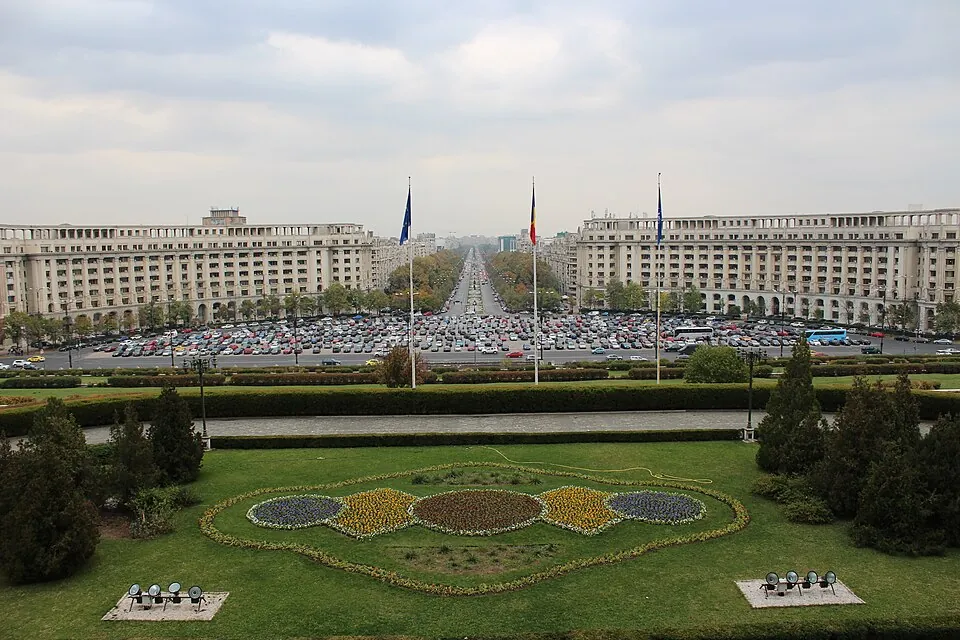
- The Palace of the Parliament in Bucharest is one of the largest administrative buildings in the world, built under the dictator Nicolae Ceaușescu in the 1980s.
- Romania joined the EU in 2007, together with Bulgaria. It uses the leu, not the euro.
Culture and traditions in Romania
- Saying hello
A handshake with "Bună ziua"; friends exchange cheek kisses.
- Food and drink
Sarmale, cabbage rolls with meat and rice, and mămăligă, cornmeal porridge; țuică is a plum brandy.
- Festivals and traditions
Mărțișor on 1 March celebrates spring; Christmas carolling traditions are strong.
- Everyday life
Hospitality is generous, and guests are often offered food and drink. Name days are important.
- Did you know?
Romania's Palace of the Parliament in Bucharest is one of the heaviest buildings in the world.
Common mistakes
- Tapping Bulgaria – the Danube is the dividing line; Romania is north of it.
- Tapping Moldova, the small country tucked into Romania's north-eastern side that was historically part of the same region.
- Picking Chad's flag in the Flags quiz. If you can see both, Chad's blue is deeper.
Practise with Romania
- Europe quiz – the round country on the west coast of the Black Sea.
- Balkans quiz – Romania's southern and western neighbours, Bulgaria and Serbia, are in this set.
- Europe flags – blue, yellow, red vertical.
- Africa flags – meet Chad, and learn why the pair is notorious.
- Europe capitals quiz – Bucharest.
- Mystery Country – the rounded outline with the Danube Delta poking into the Black Sea.
Nearby countries
Quick check: how well do you know Romania?
3 questions, no sign-up. Tap an answer.
1. Which flag belongs to Romania?
That's the flag of Romania.
2. What is the capital of Romania?
The capital of Romania is Bucharest.
3. Which of these countries borders Romania?
Bulgaria, Hungary, Moldova, Serbia and Ukraine border Romania.
Keep going on the Europe quiz – Romania is one of 46 countries there.
More ways to practise: find Romania on the blank map with no borders (hard mode), or play today's Globe and the other daily puzzles.
Frequently asked questions about Romania
What language is spoken in Romania?
Romanian, the official language, is a Romance language descended from Latin, closely related to Italian, French and Spanish. Hungarian is widely spoken by the large minority in Transylvania, and Romani, German and Ukrainian are also heard in some communities.
What currency does Romania use?
Romania uses the Romanian leu, code RON, divided into 100 bani. The name means "lion". Romania is an EU member but has not yet adopted the euro, and the leu floats against other currencies.
What time zone is Romania in?
Romania uses Eastern European Time, UTC+2, an hour ahead of most of central Europe. In summer it moves to UTC+3, changing on the last Sunday of March and October like the rest of the EU.
Which side of the road do they drive on in Romania?
Romanians drive on the right, as in the rest of continental Europe. Cars are left-hand drive, and a road-toll vignette called the rovinietă is needed to use national roads and motorways.
What is the highest point in Romania?
Moldoveanu Peak, in the Făgăraș Mountains of the Southern Carpathians, is Romania's highest point at about 2,544 metres. The Făgăraș range is crossed by the Transfăgărășan, a famous high mountain road.
Is Dracula from Romania?
Count Dracula is fictional, created by the Irish writer Bram Stoker in 1897, but he borrowed the name of Vlad III Dracula, a real 15th-century prince of Wallachia. Bran Castle in Transylvania is marketed as Dracula's castle, though Vlad has little proven link to it.
Quizzes with Romania
Often confused with
Guides that help with this
- All 46 European capitals, with a memory trick for eachCapitals grouped by region, with hooks for the ones people forget.
- Flags that look alike (and how to tell them apart)Chad or Romania? Australia or New Zealand? The flag pairs that cost quiz points.
- The 25 hardest countries to find on a mapPacific islands, Caribbean islands and landlocked Africa – where they are.