Hungary
Capital: Budapest. Hungary is one of the 46 countries in the Europe quiz.
Quick answers: What is the capital of Hungary? · Which countries border Hungary?
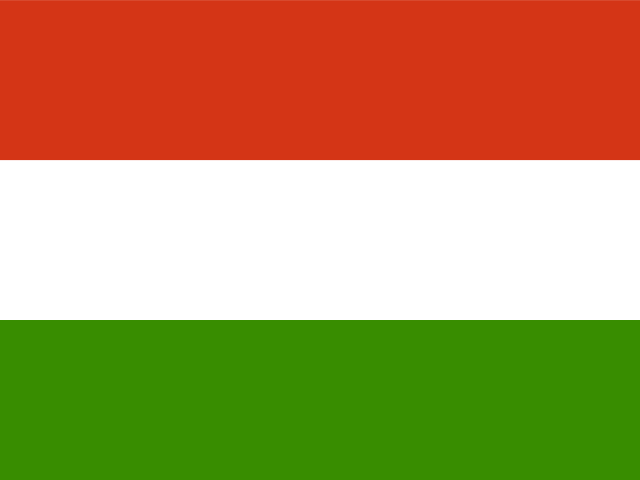
Facts about Hungary
- CapitalBudapest
- Population9.5 million
- Area93,028 km²
- RegionsEurope, Central & Eastern Europe
- LanguageHungarian
- CurrencyHungarian forint (HUF)
Hungary is the 16th most populous of the 46 countries in Europe and the 17th largest by area. Worldwide it ranks 97th by population and 108th by area.
Where is Hungary?
Hungary is a landlocked country in Central Europe, sitting in the flat basin that the Carpathian Mountains curve around. It has seven neighbours: Austria to the west, Slovakia to the north, Ukraine to the north-east, Romania to the east, Serbia and Croatia to the south, and Slovenia to the south-west. The River Danube enters from the north-west, bends sharply south near Budapest and divides the country almost in half. Budapest, the capital, straddles the river – Buda on the hilly western bank, Pest on the flat eastern one.
At world-map zoom Hungary is a compact, rounded shape just east of Austria and directly north of the former Yugoslav countries.
How to find Hungary on the map
- Start from Austria. Hungary is the country immediately east of Austria, at the same latitude.
- Follow the Danube. The river runs along part of the Slovak border, then turns south through Budapest.
- Look south of Slovakia. Slovakia is the thin country along Hungary's northern edge; Hungary is the fatter one below it.
- Find Lake Balaton. On a detailed map the large lake in the west of the country is a giveaway – it is the biggest lake in Central Europe.
Flag
Three horizontal bands: red, white and green from top to bottom. Red is traditionally said to represent strength, white faithfulness and green hope. The flag has been in use in this form since 1957, when the communist coat of arms was removed from the centre.
Italy uses the same three colours but vertically, with green at the hoist. Bulgaria is white, green and red horizontally, so the order is different. Iran also has green, white and red bands but with an emblem in the middle. In the Flags quiz, horizontal red-white-green with nothing on it is Hungary.
A short history of Hungary
Before the Hungarians, the Carpathian Basin had belonged to Celts, the Roman province of Pannonia, Huns and Avars. The Magyars, horse-riding tribes from the east led by Árpád, crossed the Carpathians around 895. For decades they raided deep into western Europe until a heavy defeat at Lechfeld in 955. Their descendant Stephen accepted Christianity and was crowned king in 1000, tying the new kingdom to Catholic Europe.
Medieval Hungary was a large and powerful state. It survived a devastating Mongol invasion in 1241–42 and flourished in the 1400s under King Matthias Corvinus, whose court was a centre of Renaissance learning. Then, at the Battle of Mohács in 1526, the Ottomans crushed the Hungarian army. The country was split in three: the Ottomans held the centre, the Habsburgs the west and north, and Transylvania became a semi-independent principality. Habsburg armies drove the Ottomans out by 1699, but Hungary then lived under Vienna's rule.
A revolution in 1848–49 was put down with Russian help, but in 1867 a compromise created Austria-Hungary, a dual monarchy in which Hungary ran its own affairs. Budapest boomed into a grand modern capital. Defeat in the First World War broke the monarchy apart and left Hungary a much smaller country.
Hungary sided with Germany in the Second World War. After Germany occupied the country in 1944, around 430,000 Jews were deported, most to Auschwitz. Communist rule followed. In 1956 a popular uprising was crushed by Soviet tanks, and thousands fled west. Later the regime allowed a little more freedom, nicknamed "goulash communism". In 1989 Hungary opened its border with Austria, helping to bring down the Iron Curtain.
Hungary joined NATO in 1999. Today its economy is closely tied to Germany's, with car factories, electronics and battery plants among its biggest industries.
Culture and daily life in Hungary
Most Hungarians are Catholic, but the east has a strong Calvinist tradition – Debrecen was once called the "Calvinist Rome". Music holds a special place. Béla Bartók and Zoltán Kodály travelled through villages recording folk songs, and Kodály's method of teaching music through singing is used in schools worldwide.
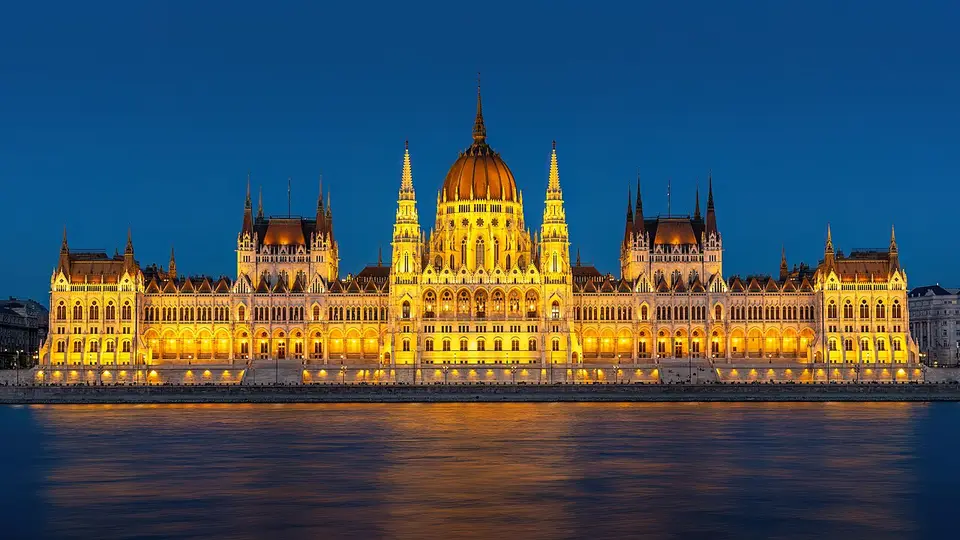
Hungarian inventiveness is a point of pride: László Bíró developed the modern ballpoint pen, and Ernő Rubik created his famous cube in 1974. The writer Imre Kertész won the Nobel Prize in Literature in 2002. The neo-Gothic Parliament building on the Danube is one of Europe's most photographed.
In sport, Hungary has won more Olympic gold medals in water polo than any other country. In 1953 Ferenc Puskás and the "Golden Team" beat England 6–3 at Wembley, a shock still remembered. Paprika, grown around Szeged and Kalocsa, flavours much of the cooking, and colourful Matyó embroidery from Mezőkövesd is a treasured folk art. Herend porcelain, hand-painted since the 1820s, and the decorated eggs given at Easter are other well-loved crafts.
Five facts worth knowing
- Budapest was two cities until 1873, when Buda, Óbuda and Pest merged. The Chain Bridge, the first permanent bridge across the Danube there, opened in 1849.
- Hungarian is not related to its neighbours' languages. It belongs to the Uralic family, along with Finnish and Estonian, not the Indo-European family that covers almost every other European tongue.
- Lake Balaton is about 77 km long and is often called the Hungarian Sea, since the country has no coastline.
- Hungary lost around two-thirds of its territory in the 1920 Treaty of Trianon, which is why there are large Hungarian-speaking communities in Romania, Slovakia and Serbia today.
- Hungary joined the EU in 2004 but still uses the forint, not the euro.
Culture and traditions in Hungary
- Saying hello
A handshake with "Jó napot" (good day); friends say "Szia".
- Food and drink
Gulyás (goulash), a paprika beef soup; lángos, fried dough with sour cream and cheese; Tokaji sweet wine.
- Festivals and traditions
St Stephen's Day on 20 August with fireworks; Busójárás in Mohács, a masked carnival in February.
- Everyday life
Thermal baths are a social tradition. Many Hungarians still avoid clinking beer glasses, a custom tied to history.
- Did you know?
Hungarians write their family name first, so composer Liszt Ferenc is known abroad as Franz Liszt.
Common mistakes
- Tapping Slovakia, the thin country stretched along Hungary's northern border.
- Tapping Romania, which is larger and lies to the east beyond the Carpathians.
- Picking Bulgaria's or Italy's flag in the Flags quiz.
- Assuming the Danube is the border – it is for part of Slovakia, but it then runs straight through the middle of Hungary.
Practise with Hungary
- Europe quiz – the rounded country east of Austria, south of Slovakia.
- Balkans quiz – zooms in on the region directly south of Hungary, useful for learning its neighbours Croatia, Serbia and Romania.
- Europe flags – horizontal red, white, green.
- Europe capitals quiz – Budapest.
- Mystery Country – the squat outline with the Danube bend and Lake Balaton in the west.
Nearby countries
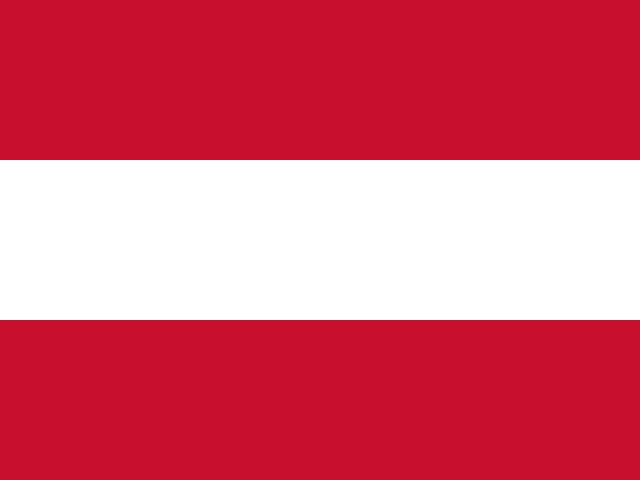 AustriaVienna
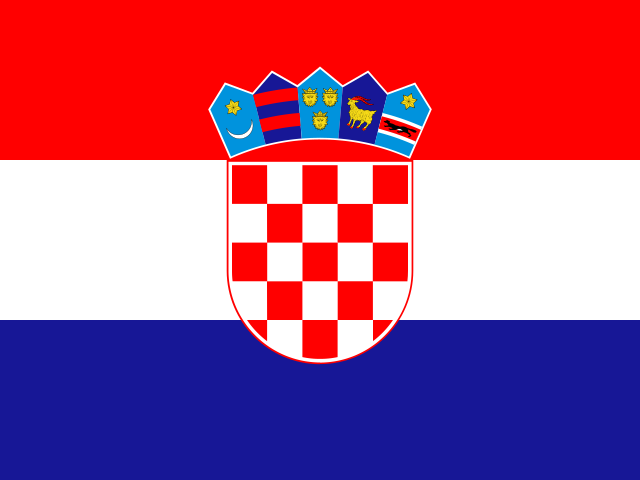 CroatiaZagreb
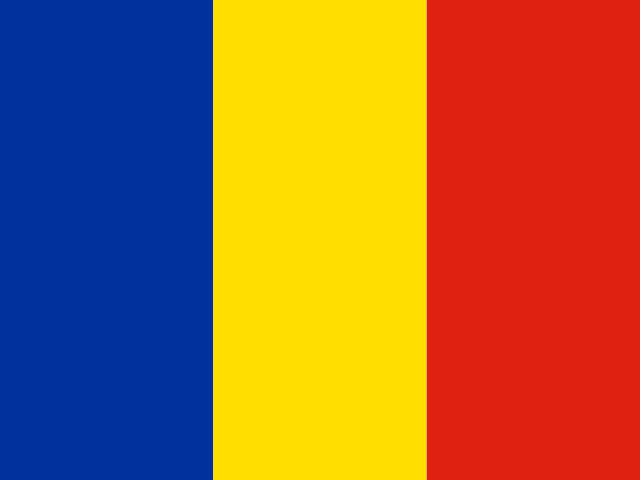 RomaniaBucharest
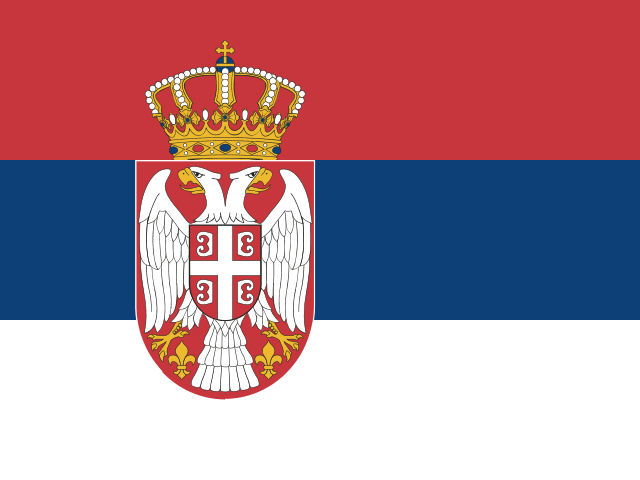 SerbiaBelgrade
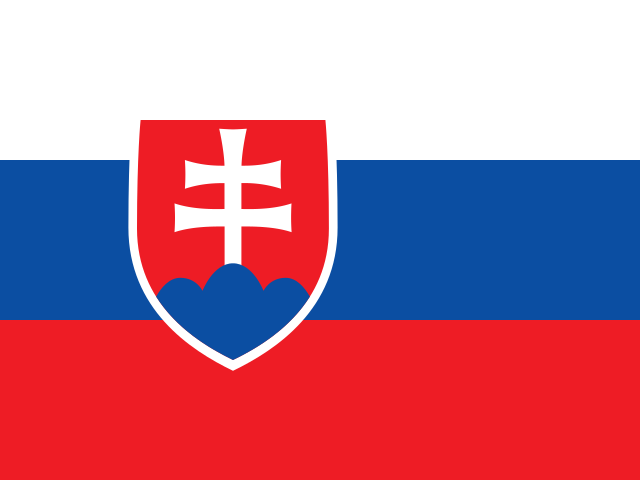 SlovakiaBratislava
 SloveniaLjubljana
 UkraineKyiv
Quick check: how well do you know Hungary?
3 questions, no sign-up. Tap an answer.
1. Which flag belongs to Hungary?
That's the flag of Hungary.
2. What is the capital of Hungary?
The capital of Hungary is Budapest.
3. Which of these countries borders Hungary?
Austria, Croatia, Romania, Serbia, Slovakia, Slovenia and Ukraine border Hungary.
Keep going on the Europe quiz – Hungary is one of 46 countries there.
More ways to practise: find Hungary on the blank map with no borders (hard mode), or play today's Globe and the other daily puzzles.
Frequently asked questions about Hungary
What language is spoken in Hungary?
The official language is Hungarian, which Hungarians call magyar. It is spoken by almost everyone and is famous for its long words built from suffixes and for placing the stress on the first syllable. English and German are the most widely learned foreign languages.
What currency does Hungary use?
Hungary uses the forint (HUF). It was introduced in 1946 to replace the pengő after one of the worst hyperinflations ever recorded. Although Hungary is an EU member, it has not adopted the euro and has set no date to do so.
What time zone is Hungary in?
Hungary uses Central European Time, UTC+1, in winter and Central European Summer Time, UTC+2, from the last Sunday of March to the last Sunday of October. Its clocks match those of Austria, Germany and most of its neighbours.
Which side of the road do they drive on in Hungary?
Hungary drives on the right. It switched from the left in 1941, a few years after Austria made the same change, and today it follows the same road rules as the rest of continental Europe.
What is the highest point in Hungary?
The highest point is Kékes, about 1,014 metres, in the Mátra Mountains north-east of Budapest. Its name means "bluish", and its summit has a TV tower and is a popular day trip with a ski slope in winter.
Why is Hungary called Hungary?
Hungarians call their country Magyarország, "land of the Magyars". The English name probably comes from Onogur, the name of a Turkic tribal alliance the early Hungarians were linked with, and it was later confused in Latin with the Huns.
Quizzes with Hungary
Guides that help with this
- All 46 European capitals, with a memory trick for eachCapitals grouped by region, with hooks for the ones people forget.
- Flags that look alike (and how to tell them apart)Chad or Romania? Australia or New Zealand? The flag pairs that cost quiz points.
- The 25 hardest countries to find on a mapPacific islands, Caribbean islands and landlocked Africa – where they are.