Croatia
Capital: Zagreb. Croatia is one of the 46 countries in the Europe quiz.
Quick answers: What is the capital of Croatia? · Which countries border Croatia?
Facts about Croatia
- CapitalZagreb
- Population3.9 million
- Area56,594 km²
- RegionsEurope, The Balkans
- LanguageCroatian
- CurrencyEuro (EUR)
Croatia is the 27th most populous of the 46 countries in Europe and the 25th largest by area. Worldwide it ranks 130th by population and 124th by area.
Where is Croatia?
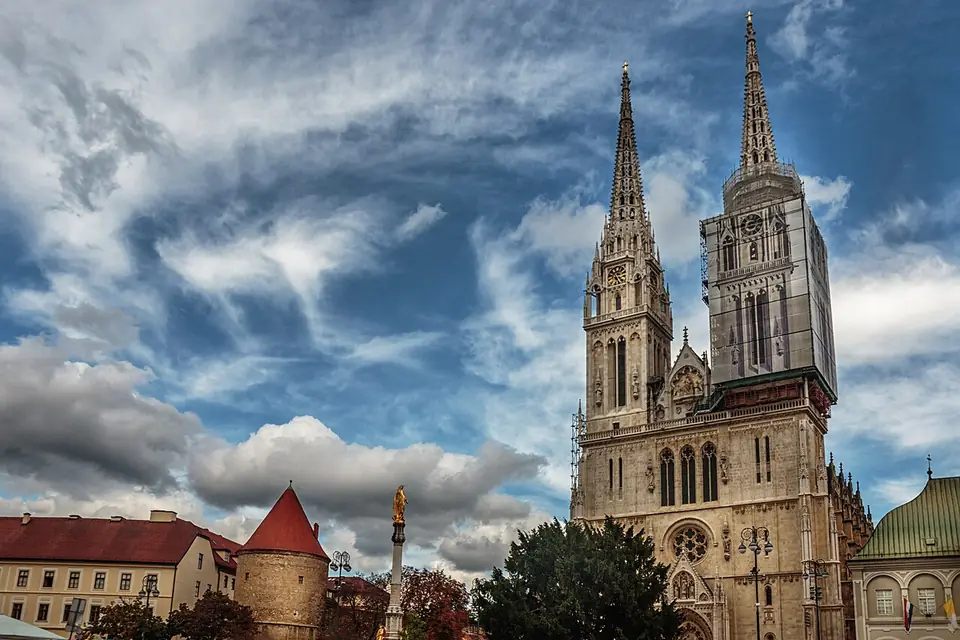
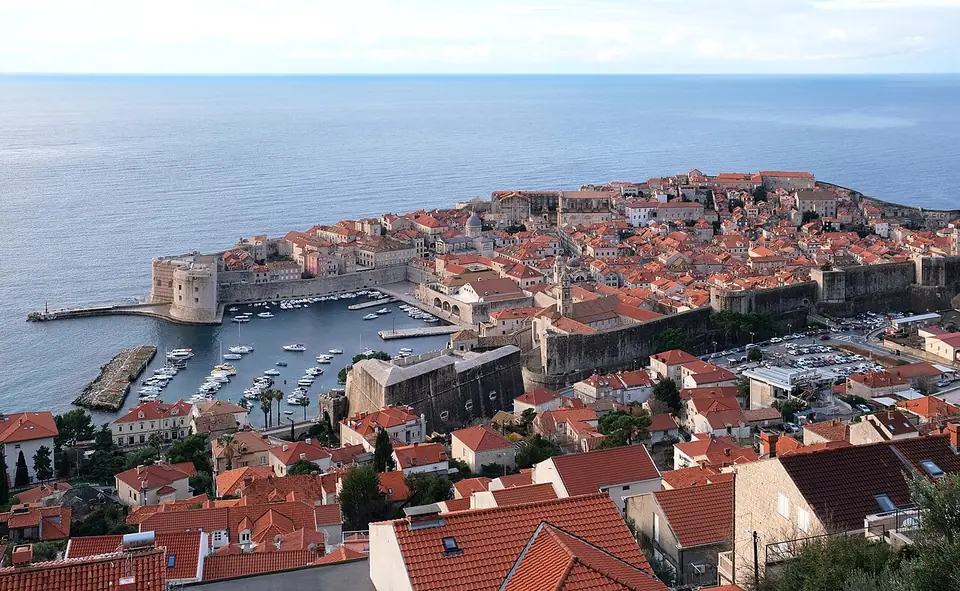
Croatia is in south-eastern Europe, on the eastern shore of the Adriatic Sea opposite Italy. It has one of the strangest shapes in Europe: a crescent or boomerang that runs along the Adriatic coast from the Istrian peninsula in the north-west down to Dubrovnik in the far south, and then swings inland to the north-east along the River Sava. Slovenia and Hungary are to the north, Serbia to the east, Bosnia and Herzegovina fills the hollow of the crescent, and Montenegro touches the southern tip. Zagreb, the capital, is inland in the north, near the Slovenian border.
Croatia also has more than a thousand islands scattered along its coast, which makes the outline look fringed.
How to find Croatia on the map
- Start from Italy. Look across the Adriatic to the east; the long coast facing the Italian boot is Croatia.
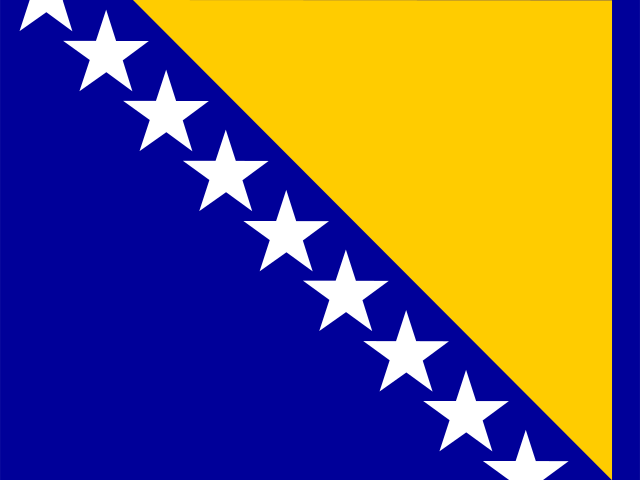
- Look for the crescent. Croatia wraps around Bosnia and Herzegovina like a hook. Bosnia is the country inside the curve.
- Find the Istrian peninsula. The triangular peninsula at the top of the Adriatic is mostly Croatian.
- Don't confuse it with Slovenia. Slovenia is small and sits above Croatia's north-western corner, with only a short strip of coast.
Flag
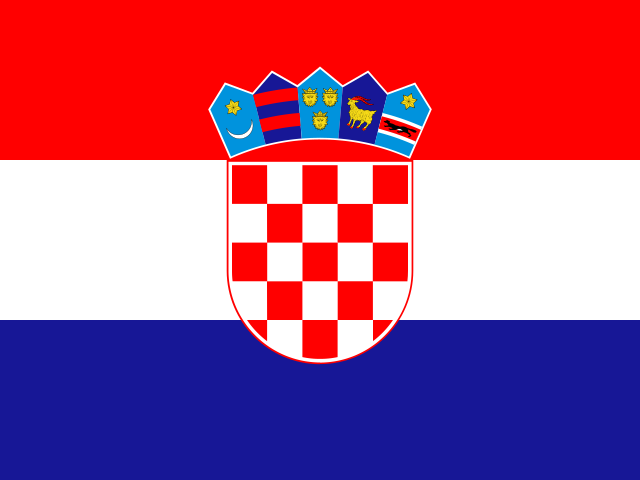
Three horizontal bands – red, white and blue – with the Croatian coat of arms in the centre. The shield is a red and white checkerboard, the šahovnica, topped by a crown of five smaller shields representing the historic regions of Croatia.
Red-white-blue horizontal tricolours are common: the Netherlands, Luxembourg, Russia (white-blue-red), Slovenia and Serbia all use them. The checkerboard is the only reliable tell. In the Flags quiz, if you see the red and white chessboard, it is Croatia.
A short history of Croatia
The Adriatic coast was settled long before Croats arrived. Illyrian tribes lived here, Greek colonists founded towns on islands such as Vis and Hvar, and the Romans turned the region into the province of Dalmatia. The emperor Diocletian built a vast retirement palace at Split around 300 AD, and the old town of Split still sits inside its walls today.
Slavic peoples, including the Croats, settled in the 600s and 700s and gradually adopted Christianity. A Croatian kingdom emerged in the 900s under Tomislav, traditionally its first king. In 1102 the crown passed to the kings of Hungary, beginning more than eight centuries of union with larger neighbours, although Croatia kept its own assembly, the Sabor.
For the next few hundred years the land was pulled in several directions. Venice took most of the Dalmatian coast and islands, which explains the Venetian bell towers and lions found in coastal towns. Dubrovnik, then called Ragusa, survived as an independent merchant republic until Napoleon ended it in 1808. Inland, the Ottoman advance in the 1500s pushed the border close to Zagreb, and the Habsburgs created a fortified Military Frontier that was settled partly by Serbs. That frontier, drawn against Ottoman Bosnia, helps explain why Croatia's territory curves around its neighbour.
After the First World War, Croatia became part of the Kingdom of Serbs, Croats and Slovenes, later Yugoslavia. During the Second World War, Nazi Germany and Italy set up a puppet state run by the fascist Ustaše, which murdered hundreds of thousands of Serbs, Jews and Roma. Communist partisans led by Josip Broz Tito, himself half Croat, won the war and made Croatia a republic within socialist Yugoslavia.
Croatia declared independence in 1991. War with Serb rebels and the Yugoslav army followed, with heavy damage to Vukovar and Dubrovnik, and lasted until 1995. Today Croatia is a democracy whose economy leans heavily on tourism along its coast and islands.
Culture and daily life in Croatia
Croatian is a South Slavic language, and its history mirrors the country's position between East and West. It is written in the Latin alphabet, but medieval monks used Glagolitic, an older Slavic script, and the stone Baška tablet from around 1100 is a treasured early record. Most Croats are Roman Catholic, and church festivals and saints' days still mark the calendar in towns and villages.
Music varies by region. Along the coast, men sing in klapa groups – unaccompanied harmonies that are on UNESCO's heritage list – while the inland east has the tamburica, a lute-like instrument. Ivan Meštrović is the best-known sculptor, and the inventor Nikola Tesla was born in the village of Smiljan, in today's Croatia.
Sport carries enormous weight for such a small country. The football team reached the World Cup final in 2018, with Luka Modrić winning the Golden Ball. Croatia also produces strong handball, water polo and tennis players, and Goran Ivanišević's Wimbledon win in 2001 is a national legend.
Five facts worth knowing
- Croatia's coastline, including its islands, is well over 5,000 km long, far longer than its straight-line length suggests.
- Dubrovnik, in the far south, is cut off from the rest of the country by a few kilometres of Bosnian coastline at Neum. The Pelješac Bridge, opened in 2022, links the two parts without crossing the border.
- Croatia is the EU's newest member, joining in 2013, and adopted the euro and joined the Schengen area in 2023.
- The necktie comes from Croatia. The word "cravat" derives from the Croatian soldiers who wore knotted neckcloths in the seventeenth century.
- Plitvice Lakes National Park, a chain of sixteen terraced lakes joined by waterfalls, was one of the first natural sites on the UNESCO World Heritage list.
Culture and traditions in Croatia
- Saying hello
"Bok" informally or "Dobar dan" more formally, with a handshake.
- Food and drink
Peka (meat or octopus slow-baked under an iron bell) and black squid-ink risotto.
- Festivals and traditions
The Dubrovnik Summer Festival in July and August, and the Rijeka Carnival before Lent.
- Everyday life
Coffee is a long social event, and a single cup can last an hour at a cafe.
- Did you know?
The necktie comes from the scarves worn by Croatian soldiers in the 1600s; the word cravat comes from "Croat".
Common mistakes
- Tapping Bosnia and Herzegovina – the country inside Croatia's curve. Bosnia has almost no coast; Croatia has most of the Adriatic shore.
- Tapping Slovenia at the top of the Adriatic.
- Tapping Serbia, which is landlocked and east of Croatia.
- Picking the Slovenian or Serbian flag; all three are red-white-blue tricolours with arms, but only Croatia's has the checkerboard.
Practise with Croatia
- Europe quiz – the crescent along the Adriatic across from Italy.
- Balkans quiz – Croatia, Bosnia, Serbia, Montenegro and Slovenia up close, where the shapes matter.
- Europe flags – look for the checkerboard among the red-white-blue tricolours.
- Europe capitals quiz – Zagreb.
- Mystery Country – the boomerang with the island fringe is one of the most distinctive outlines in Europe.
Nearby countries
 Bosnia and HerzegovinaSarajevo
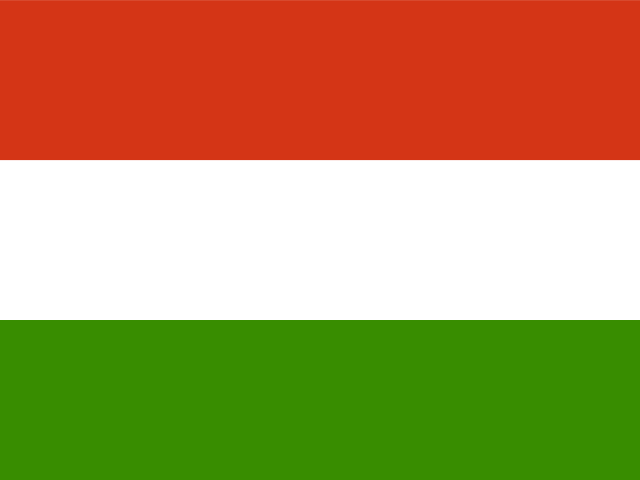 HungaryBudapest
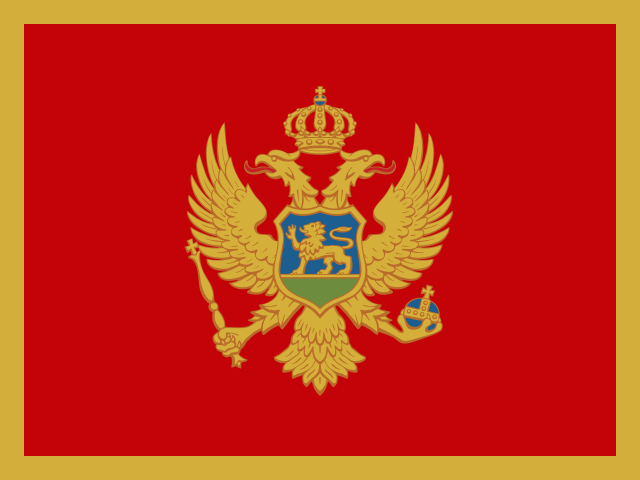 MontenegroPodgorica
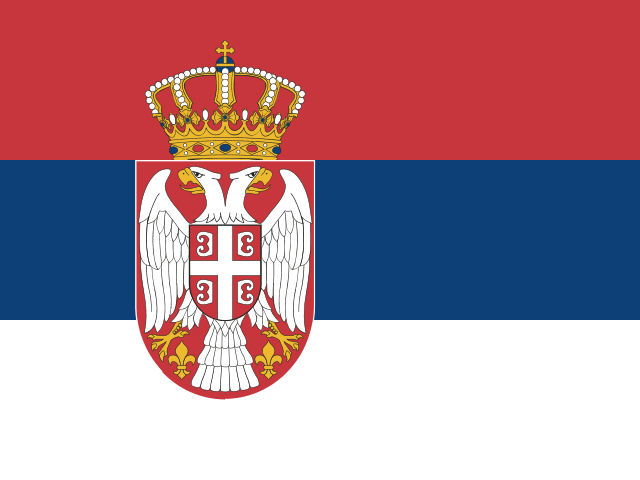 SerbiaBelgrade
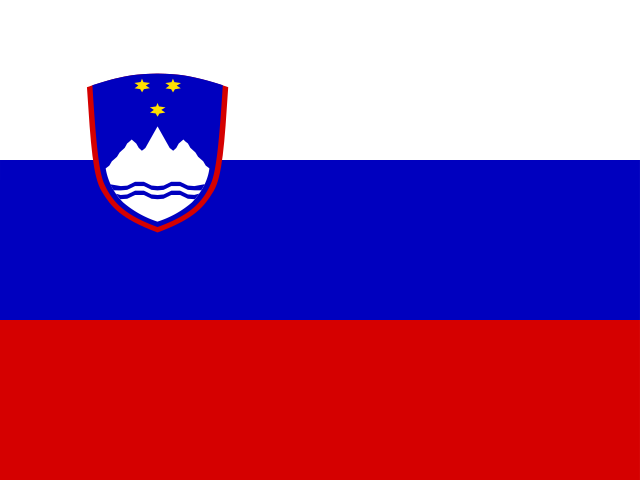 SloveniaLjubljana
Quick check: how well do you know Croatia?
3 questions, no sign-up. Tap an answer.
1. Which flag belongs to Croatia?
That's the flag of Croatia.
2. What is the capital of Croatia?
The capital of Croatia is Zagreb.
3. Which of these countries borders Croatia?
Bosnia and Herzegovina, Hungary, Montenegro, Serbia and Slovenia border Croatia.
Keep going on the Europe quiz – Croatia is one of 46 countries there.
More ways to practise: find Croatia on the blank map with no borders (hard mode), or play today's Globe and the other daily puzzles.
Frequently asked questions about Croatia
What language is spoken in Croatia?
Croatian is the official language. It is written in the Latin alphabet with letters such as č, ć, š and ž, and it is mutually intelligible with Serbian, Bosnian and Montenegrin. Italian has co-official status in parts of Istria.
What currency does Croatia use?
Croatia uses the euro (EUR). It replaced the Croatian kuna on 1 January 2023, making Croatia the 20th country to adopt the euro. The kuna, named after the marten whose pelts were once used in trade, is the design on Croatia's 1-euro coin.
What time zone is Croatia in?
Croatia uses Central European Time, UTC+1, and switches to UTC+2 for summer time from late March to late October, like most of the European Union.
Which side of the road do they drive on in Croatia?
Croatians drive on the right. A modern motorway network connects Zagreb with the coast, and the A1 runs through tunnels and over viaducts across the Dinaric mountains towards Split and Dubrovnik.
What is the highest point in Croatia?
Dinara, on the border with Bosnia and Herzegovina, is Croatia's highest mountain, rising to about 1,830 metres at its peak, Sinjal. It gives its name to the Dinaric Alps, the limestone range running along the Balkan coast.
How many islands does Croatia have?
Croatia has more than 1,000 islands, islets and rocks along its Adriatic coast, but only around 50 of them are inhabited. Krk and Cres are the largest, and Hvar, Brač and Korčula are among the best known.
Quizzes with Croatia
Often confused with
Guides that help with this
- All 46 European capitals, with a memory trick for eachCapitals grouped by region, with hooks for the ones people forget.
- Flags that look alike (and how to tell them apart)Chad or Romania? Australia or New Zealand? The flag pairs that cost quiz points.
- The 25 hardest countries to find on a mapPacific islands, Caribbean islands and landlocked Africa – where they are.