Capitals That Are Not the Largest City – the Full List and Why
On this page
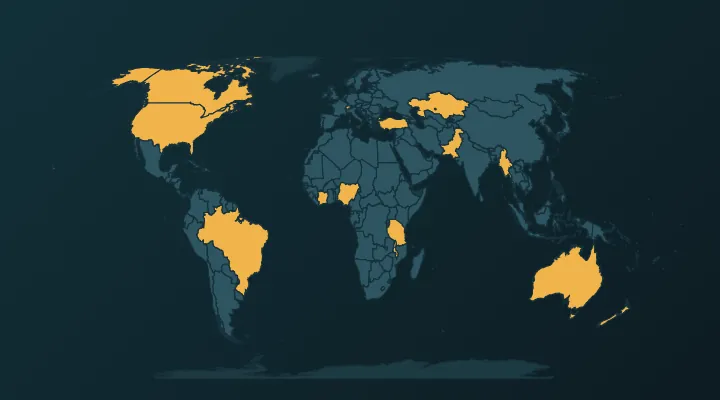
Sydney is not the capital of Australia. Istanbul is not the capital of Turkey. Toronto, New York, Zürich and Lagos are not capitals either. In quizzes, "the famous city" is the single most common wrong answer to a capitals question, and it catches people who know the map well. This guide covers every country where the capital is not the biggest city, groups them by the reason, and gives a hook for each one so the right answer comes first.
Around 35 to 40 countries fall into this group, depending on whether a city is measured inside its boundary or as a metro area.
Why a capital is not the biggest city
Almost every case comes down to one of five reasons:
- A compromise between two rivals. Two big cities both wanted it, so a third place got it (Canberra, Ottawa, Washington, Bern).
- A planned capital in the interior. The government built a new city to pull development inland or away from a crowded coast (Brasília, Abuja, Islamabad, Dodoma, Belmopan).
- A political fresh start. A new state chose a new capital to break with the old regime (Ankara).
- Geography or safety. A central location, or a site away from storms or unrest (Wellington, Naypyidaw, Belmopan).
- The capital stayed, but another city boomed. Trade and ports grew faster than government (Rabat and Casablanca, Hanoi and Ho Chi Minh City, Quito and Guayaquil).
The compromise capitals
Australia – Canberra (largest: Sydney). When the colonies federated in 1901, Sydney and Melbourne could not agree which should be capital. The constitution settled it: the capital would be in New South Wales, but at least 100 miles (about 160 km) from Sydney, and Parliament would sit in Melbourne until it was ready. The Canberra site was chosen in 1908–09, the city was designed by Walter Burley Griffin and Marion Mahony Griffin after an international competition, and Parliament moved there in 1927. Memory hook: Sydney and Melbourne argued, so the prize went to a field in between. (By one official boundary Melbourne overtook Sydney in 2023 – either way, neither is the capital.)
Canada – Ottawa (largest: Toronto). In the 1840s and 1850s the seat of government moved between Kingston, Montreal, Toronto and Quebec City. In 1857 Queen Victoria chose Ottawa to end the dispute; it sits on the river that divides English-speaking Ontario from French-speaking Quebec. Memory hook: Ottawa is on the language border, Toronto is on the lake.
United States – Washington, D.C. (largest: New York City). New York was the first capital under the Constitution, then Philadelphia from 1790 to 1800. The Residence Act of 1790 put the permanent capital on the Potomac, part of a deal in which the federal government took on the states' war debts in return for a southern site. Congress first met in Washington in November 1800. Memory hook: a capital built between North and South.
Switzerland – Bern (largest: Zürich). Switzerland's constitution does not name a capital at all; Bern is officially the "federal city", chosen in 1848 ahead of Zürich and Lucerne partly because it was central and acceptable to the French-speaking cantons. Bern is only the fifth-largest Swiss city, behind Zürich, Geneva, Basel and Lausanne. Memory hook: Zürich has the banks, Geneva has the UN, Bern has the government.
The planned interior capitals
Brazil – Brasília (largest: São Paulo). The idea of an inland capital is in Brazil's 1891 constitution. President Juscelino Kubitschek finally built it in the late 1950s, with Lúcio Costa's city plan and Oscar Niemeyer's buildings, and the government began moving from Rio de Janeiro in April 1960. The city plan is often compared to an aeroplane or a bird. Memory hook: Rio is the postcard, São Paulo is the giant, Brasília is the plan.
Nigeria – Abuja (largest: Lagos). Lagos, on the coast in the Yoruba south-west, was overcrowded and not neutral ground between Nigeria's main ethnic and religious groups. A 1976 decree chose a site near the geographic centre of the country, and Abuja officially became capital on 12 December 1991. Memory hook: Abuja is in the middle of the map on purpose.
Pakistan – Islamabad (largest: Karachi). Karachi, on the Arabian Sea, was capital from 1947. In the 1960s the government moved north to a new city beside Rawalpindi, next to the army headquarters at Rawalpindi and away from the crowded coast. Memory hook: Karachi is the port, Islamabad is the planned city in the north.
Tanzania – Dodoma (largest: Dar es Salaam). Dodoma, in the centre of the country, was designated in the 1970s and became the official capital in 1996, but the move of ministries took decades. Many embassies remain in Dar es Salaam, which is why it is a classic quiz trap. Memory hook: Dar on the coast, Dodoma in the middle.
Belize – Belmopan (largest: Belize City). Hurricane Hattie badly damaged coastal Belize City in 1961. The government built Belmopan about 80 km inland, and it became the capital in 1970.
Ivory Coast – Yamoussoukro (largest: Abidjan). President Félix Houphouët-Boigny made his home town the capital in 1983. Abidjan, the lagoon port, still holds most ministries and embassies. Memory hook: Yamoussoukro is the president's home town; Abidjan is where everyone works.
Myanmar – Naypyidaw (largest: Yangon). The military government moved the capital from Yangon to a newly built city in the centre of the country in 2005–06. Memory hook: Naypyidaw means "abode of kings" – a capital built for the rulers, not for the crowds.
Kazakhstan – Astana (largest: Almaty). Almaty, near the southern mountains and the Chinese border, was capital until 1997. The government moved to the northern steppe city then called Akmola, renamed Astana in 1998 (and called Nur-Sultan from 2019 to 2022). Memory hook: Astana simply means "capital" in Kazakh.
Equatorial Guinea – Ciudad de la Paz (largest: Malabo). The newest case: in January 2026 a presidential decree moved the capital from Malabo, on Bioko island, to Ciudad de la Paz in the mainland forest, with government offices given a year to move. Malabo is still the largest city, and most maps – and our quizzes, for now – still show Malabo as the capital.
The fresh start
Turkey – Ankara (largest: Istanbul). After the First World War the Allies occupied Istanbul (then Constantinople), and Mustafa Kemal (Atatürk) ran the war of independence from Ankara in central Anatolia. When the republic was founded in October 1923, Ankara became capital, cutting the link with the Ottoman court. Istanbul is still nearly three times its size. Memory hook: the empire had Istanbul, the republic chose Ankara.
India – New Delhi (largest: Mumbai). The British moved the capital from Calcutta (Kolkata) to Delhi, announced in 1911, and the new city designed by Edwin Lutyens and Herbert Baker was inaugurated in 1931. Mumbai is the largest city proper, though the wider Delhi region is larger by some metro measures.
The capital stayed, another city grew
- New Zealand – Wellington (largest: Auckland). Auckland was capital from 1841 to 1865. Wellington, on Cook Strait between the two main islands, took over because it was central – partly to calm fears that the South Island might break away.
- China – Beijing (largest: Shanghai). Shanghai is bigger as an urban area.
- Vietnam – Hanoi (largest: Ho Chi Minh City). Saigon (now Ho Chi Minh City) was the capital of South Vietnam; Hanoi became capital of the reunified country in 1976.
- Morocco – Rabat (largest: Casablanca). Casablanca, about 90 km down the coast, is the economic capital.
- United Arab Emirates – Abu Dhabi (largest: Dubai).
- Ecuador – Quito (largest: Guayaquil). Quito is in the Andes, Guayaquil is the Pacific port.
- Cameroon – Yaoundé (largest: Douala).
- Bolivia – Sucre (largest: Santa Cruz de la Sierra). La Paz is the seat of government; see countries with more than one capital.
- South Africa – Pretoria (largest: Johannesburg). Cape Town and Bloemfontein are the other two capitals.
- Benin – Porto-Novo (largest: Cotonou). Cotonou is the de facto seat of government.
- Burundi – Gitega (largest: Bujumbura). Bujumbura was capital until 2019.
- Philippines – Manila (largest: Quezon City). Both are part of Metro Manila.
- Israel – Jerusalem (largest by metro area: Tel Aviv). Jerusalem's status as capital is internationally disputed.
Small countries where the two places share one built-up area: Malta (Valletta / St Paul's Bay), Liechtenstein (Vaduz / Schaan), San Marino (San Marino / Serravalle), Gambia (Banjul / Serekunda), Trinidad and Tobago (Port of Spain / Chaguanas), Micronesia (Palikir / Weno), Palau (Ngerulmud / Koror) and Nauru (Yaren / Meneng).
Quick reference table
| Country | Capital | Largest city | Main reason |
|---|---|---|---|
| Australia | Canberra | Sydney / Melbourne | Compromise |
| Canada | Ottawa | Toronto | Compromise |
| United States | Washington, D.C. | New York | Compromise |
| Switzerland | Bern | Zürich | Compromise |
| Brazil | Brasília | São Paulo | Planned interior |
| Nigeria | Abuja | Lagos | Planned, central and neutral |
| Pakistan | Islamabad | Karachi | Planned |
| Tanzania | Dodoma | Dar es Salaam | Planned, central |
| Belize | Belmopan | Belize City | Hurricane |
| Ivory Coast | Yamoussoukro | Abidjan | President's home town |
| Myanmar | Naypyidaw | Yangon | Military government |
| Kazakhstan | Astana | Almaty | Planned move north |
| Turkey | Ankara | Istanbul | New republic |
| India | New Delhi | Mumbai | Colonial move |
| New Zealand | Wellington | Auckland | Central location |
| Morocco | Rabat | Casablanca | Port grew faster |
| Vietnam | Hanoi | Ho Chi Minh City | Reunification |
| UAE | Abu Dhabi | Dubai | Dubai grew faster |
How to stop falling for the famous city
For the 18 countries in the table, the famous city is always wrong. Learn them as pairs – "Sydney, so Canberra", "Istanbul, so Ankara" – and the trap turns into the cue.
Practise it
- Whole World capitals – all 197 capitals.
- Largest cities – the 53 biggest cities on the map, many of them not capitals.
- Africa capitals and Asia capitals – where most of these traps live.
- Tip: play the capitals quiz, write every wrong answer next to the right one ("Lagos → Abuja"), and read the list once before the next day's game.
FAQ
Why is Sydney not the capital of Australia?
Sydney and Melbourne were rivals, so the 1901 constitution required a new capital in New South Wales at least 100 miles from Sydney. That became Canberra, where Parliament has sat since 1927.
Why is Istanbul not the capital of Turkey?
Atatürk led the independence war from Ankara while Istanbul was occupied by the Allies, and the new republic made Ankara its capital in 1923 to break with the Ottoman past.
Is Toronto the capital of Canada?
No. Toronto is the largest city and the capital of the province of Ontario; the national capital is Ottawa.
Which countries have a planned capital?
Brazil (Brasília), Australia (Canberra), Nigeria (Abuja), Pakistan (Islamabad), Kazakhstan (Astana), Myanmar (Naypyidaw), Belize (Belmopan) and the United States (Washington) are the best-known examples.
Sources
More guides
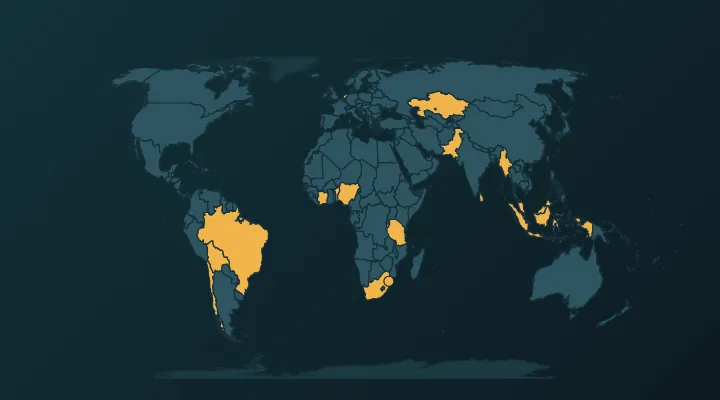 Countries With More Than One Capital (and the Ones That Moved Theirs)
Bolivia, South Africa, the Netherlands… the countries with two or three capitals, and the ones that moved theirs.
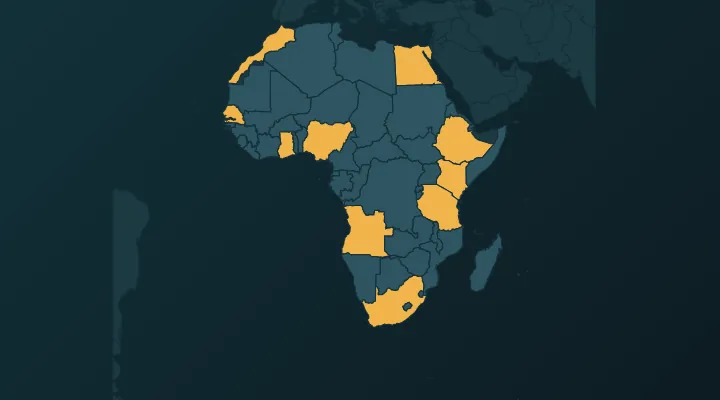 All 54 African Capitals – With a Memory Trick for Each One
All 54 African capitals, region by region – with hooks for the tricky ones like Abuja, Dodoma and Yamoussoukro.
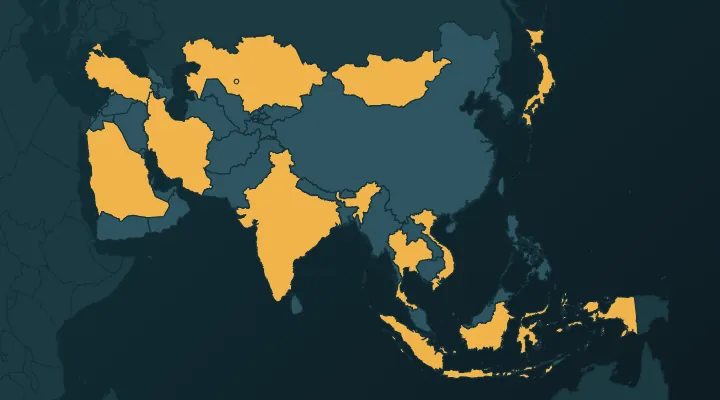 All 48 Asian Capitals – With a Memory Trick for Each One
All 48 Asian capitals grouped by region, with a memory trick for the ones that never stick.