Europe in 1815 quiz
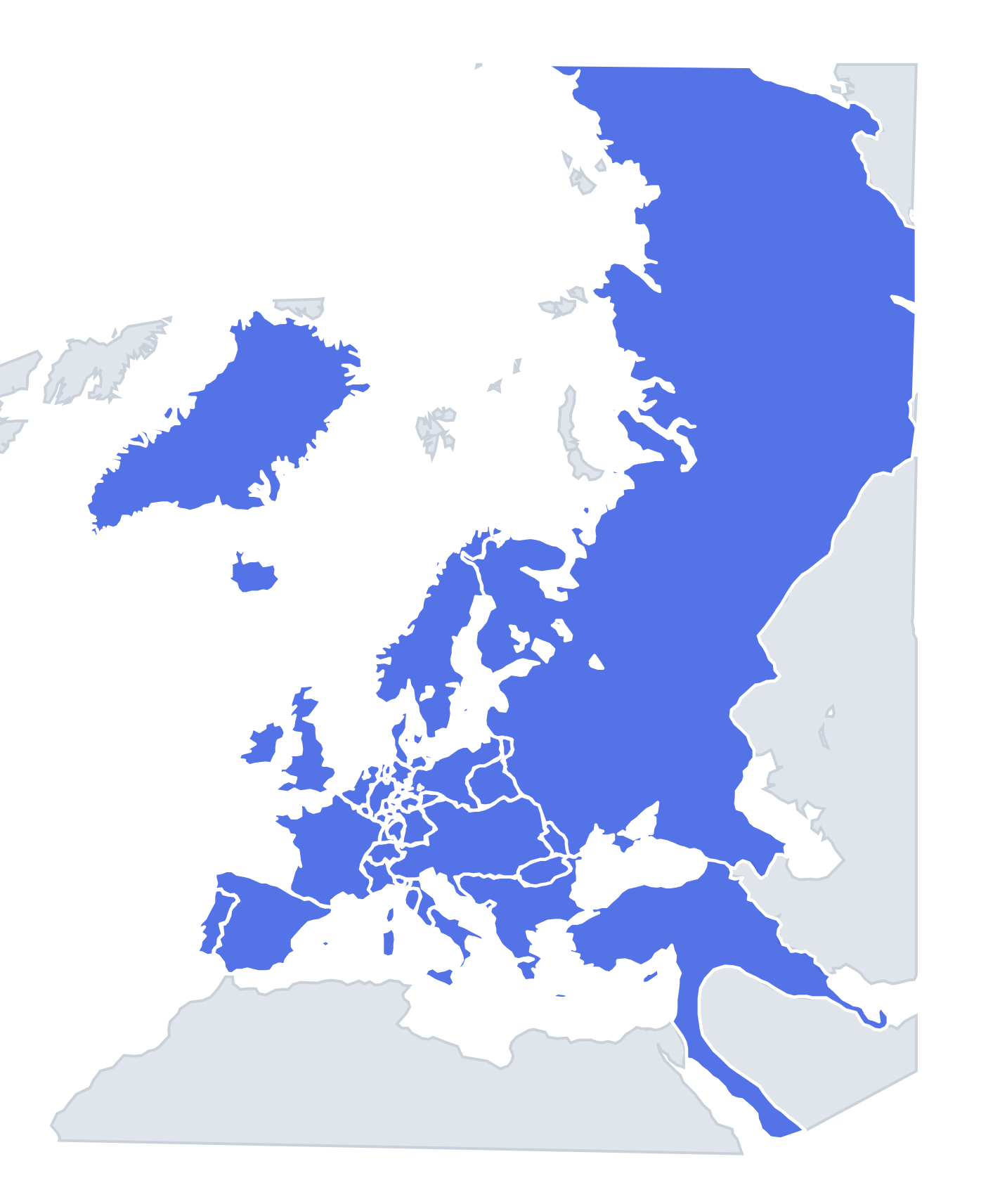
Europe after the Congress of Vienna: the German Confederation with its kingdoms, duchies and free cities, Italy in eight pieces and the Netherlands with Belgium. Can you find every state?
Top scores
- Loading the leaderboard…
Play in full screen, finish with 100% and post your time to get on the board. All leaderboards
Your next quiz
 Roman Empire (AD 117) quiz46 provinces
 Europe in 1914 quiz26 countries
What's on this map
Europe in 1815, after the Congress of Vienna redrew the map following Napoleon's defeat. The great powers came out on top. Prussia gained the Rhineland, Westphalia and the northern part of Saxony, so it now came in two separate pieces. Austria took Lombardy-Venetia and Dalmatia. Russia ruled Finland and the Kingdom of Poland, which had its own constitution but the tsar as its king. Kraków was a tiny free city in between.
The German Confederation replaced the Holy Roman Empire. It was a loose league of 39 states, from kingdoms like Bavaria, Saxony, Hanover and Württemberg down to duchies and four free cities: Frankfurt, Hamburg, Bremen and Lübeck. This map shows the larger states one by one and groups the many small duchies of Thuringia together. Italy was split into eight states, including the Papal States around Rome. The Kingdom of the Netherlands included today's Belgium, and Norway was joined to Sweden under one king.
The places people miss
- Hanover – a kingdom ruled by the British king until 1837.
- Bavaria – also held the Palatinate, a separate piece on the Rhine.
- Luxembourg – a grand duchy ruled by the Dutch king, and a member of the German Confederation.
- Two Sicilies – Naples and Sicily, formally united as one kingdom in 1816.
- Wallachia and Moldavia – principalities under the Ottomans that later formed Romania.
- Ionian Islands – a British protectorate off the coast of Greece; there was no Greek state yet.
How to learn it
- Start with the big shapes: France, Spain, the Austrian Empire, Prussia, Russia and the Ottoman Empire.
- Then learn Italy from north to south, and the German Confederation from the North Sea down to the Alps.
- Learn the free cities and the small duchies last. The tiny ones get a tap circle.
- Finish with Name them all. 51 states is a real challenge.
Guides that help with this
- Oceans, seas, rivers and mountainsThe physical map: seas around each continent, the big rivers and ranges.
- Why you forget countries – and how spaced repetition fixes itThe forgetting curve, and how the Mistake Bank and flashcards use it.
- Flags that look alike (and how to tell them apart)Chad or Romania? Australia or New Zealand? The flag pairs that cost quiz points.
How to play
A name appears at the top. Tap that place on the map. You get three tries: green means first try, yellow second and orange third. After three misses the right place flashes. Tiny places get a circle so they are easy to hit, and you can zoom with two fingers or the mouse wheel.
Want a harder test? Try Name them all (type every state you can remember before the clock runs out) or Sudden death (one mistake and the game is over).
All 51 states
| State | Capital | In 1815 |
|---|---|---|
| Andorra | Andorra la Vella | Co-principality |
| Anhalt | Dessau | Three small duchies (Dessau, Köthen, Bernburg) |
| Austrian Empire | Vienna | Great power; led the German Confederation |
| Baden | Karlsruhe | Grand duchy |
| Bavaria | Munich | Kingdom (with the Palatinate on the Rhine) |
| Bremen | Bremen | Free city |
| Brunswick | Brunswick | Duchy |
| Denmark | Copenhagen | Kingdom; Holstein and Lauenburg in the Confederation |
| Electoral Hesse | Kassel | Electorate (Hesse-Kassel) |
| France | Paris | Kingdom, Bourbons restored |
| Frankfurt | Frankfurt | Free city, seat of the German Confederation's diet |
| Free City of Kraków | Kraków | Free city under Austria, Prussia and Russia |
| Grand Duchy of Hesse | Darmstadt | Grand duchy (Hesse-Darmstadt) |
| Hamburg | Hamburg | Free city |
| Hanover | Hanover | Kingdom, ruled by the British king |
| Ionian Islands | Corfu | British protectorate (United States of the Ionian Islands) |
| Kingdom of Poland | Warsaw | Kingdom ruled by the Russian tsar (Congress Poland) |
| Kingdom of Sardinia | Turin | Kingdom (Piedmont, Savoy, Nice, Genoa, Sardinia) |
| Kingdom of the Netherlands | Amsterdam | Kingdom including today's Belgium |
| Liechtenstein | Vaduz | Principality |
| Lippe | Detmold | Principality |
| Lübeck | Lübeck | Free city |
| Lucca | Lucca | Duchy |
| Luxembourg | Luxembourg | Grand duchy, ruled by the Dutch king |
| Mecklenburg-Schwerin | Schwerin | Grand duchy |
| Mecklenburg-Strelitz | Neustrelitz | Grand duchy |
| Modena | Modena | Duchy, Austrian Habsburg dynasty |
| Moldavia | Iași | Principality under Ottoman rule |
| Monaco | Monaco | Principality under Sardinian protection |
| Montenegro | Cetinje | Prince-bishopric, independent in practice |
| Nassau | Wiesbaden | Duchy |
| Oldenburg | Oldenburg | Grand duchy |
| Ottoman Empire | Constantinople | Empire, ruled the Balkans |
| Papal States | Rome | Ruled by the Pope |
| Parma | Parma | Duchy of Napoleon's wife Marie Louise |
| Portugal | Lisbon | Kingdom (the court was in Rio de Janeiro until 1821) |
| Prussia | Berlin | Kingdom, great power; Rhineland gained in 1815 |
| Russian Empire | Saint Petersburg | Empire; Finland and Bessarabia included |
| San Marino | San Marino | Republic |
| Saxony | Dresden | Kingdom, lost about two-fifths of its land to Prussia in 1815 |
| Schaumburg-Lippe | Bückeburg | Principality |
| Spain | Madrid | Kingdom |
| Sweden–Norway | Stockholm | Two kingdoms under one king (union of 1814) |
| Switzerland | Bern | Confederation, neutrality recognised in 1815 |
| Thuringian states | Weimar | Small duchies and principalities (Saxe-Weimar, Gotha, Meiningen, Schwarzburg, Reuss ...) |
| Tuscany | Florence | Grand duchy, Habsburg dynasty |
| Two Sicilies | Naples | Kingdom (Naples and Sicily, united 1816) |
| United Kingdom | London | Kingdom of Great Britain and Ireland; Malta, Gibraltar, Heligoland |
| Waldeck | Arolsen | Principality |
| Wallachia | Bucharest | Principality under Ottoman rule |
| Württemberg | Stuttgart | Kingdom |
Other Europe in 1815 quizzes
More quizzes
Historical borders: historical-basemaps by A. Ourednik, GPL-3.0 · OpenHistoricalMap (CC0).